• Skip to primary navigation
  • Skip to main content
Outhouse logo

Outhouse

The Outsource Hub for Home Builders

  • Home
  • Products & Services
    • Architectural/CAD
    • Rendering
    • Virtual Reality
    • Interactive Floor Plans
    • Interactive Site Maps
    • Interactive Kiosks
    • Print Marketing
    • Sales Office Displays
  • Partners
  • News
    • Events
    • Blog
    • Podcast
  • About Us
  • Contact Us
  • Show Search
Hide Search

Jim Sorgatz

Not Every Great Digital Marketing Idea at IBS Is Brand New

Jim Sorgatz · 03/16/2026 ·

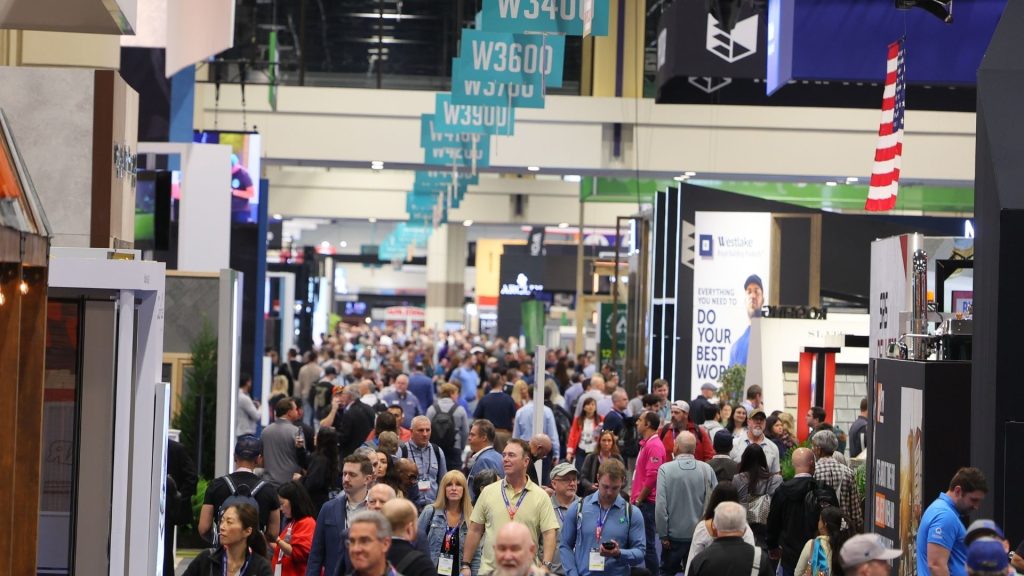
2026 International Builders Show room floor.

© Oscar Einzig Photography
https://www.buildersshow.com/logos-and-photos
© Oscar Einzig Photography
https://www.buildersshow.com/logos-and-photos

Reflections from the 2026 International Builders’ Show

Every year at the International Builders’ Show, thousands of builders walk the exhibit floor looking for the next big thing: the technology that promises to sell homes faster, improve operations, or revolutionize the sales process.

If you’ve attended IBS before, you know the feeling: massive booths, flashing screens, product demos everywhere, and plenty of bold predictions about the future of homebuilding.

It’s exciting, but it can also be a little overwhelming. By the end of the week, many builders head home with a notebook full of ideas and a lingering question: Which of these technologies will actually help us sell more homes today?

I’ve always considered myself a fairly early adopter of new technology. But experience has also taught me to proceed with just a little caution. After choosing the disastrous Ford EXP (EXperimental Prototype should have been the red flag)as my first car, I developed a habit of waiting until the second or third generation before jumping in.

New technologies are exciting, but early versions often bring unexpected challenges and sometimes hefty price tags.

I remember being captivated by the first plasma flat-screen TVs. The picture was incredible, but at $15K+, they weren’t exactly flying into many living rooms. I also waited until the third generation of the iPhone before adopting. I wanted to be sure it offered more than just a cool pinchable screen.

Sometimes patience pays off.

A Surprising Placement at IBS

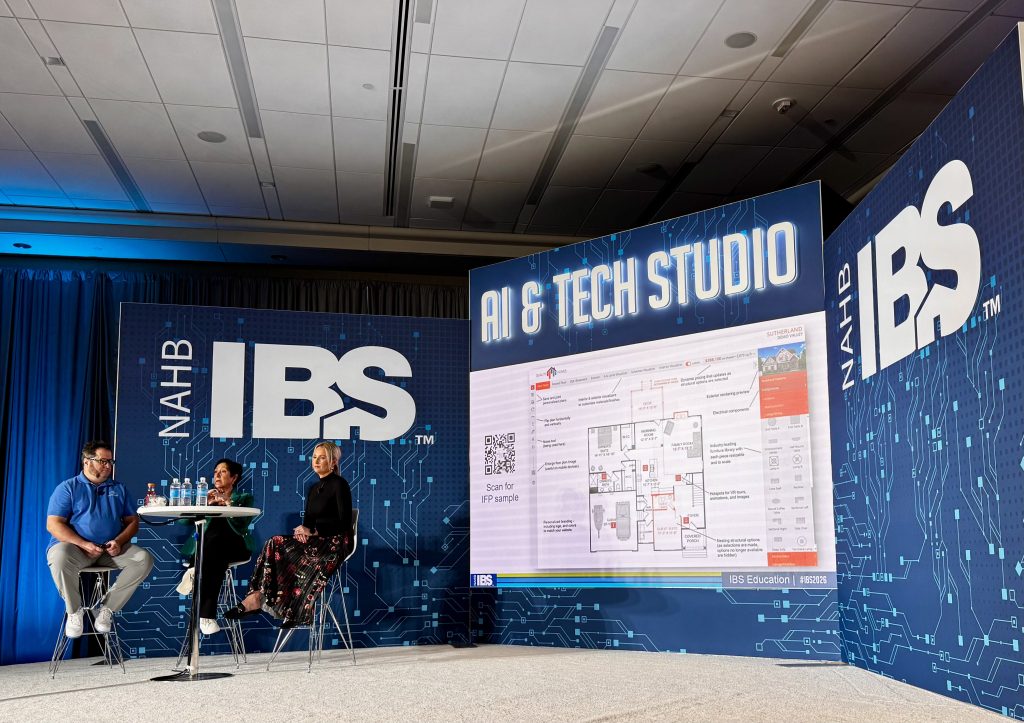
Kevin Weitzel, Outhouse, LLC. Michelle Smallwood, Holiday Builders. Laura Hanson, Builder Designs.

In preparation for IBS 2026, Outhouse submitted a proposal for one of the show’s Knowledge Sessions. Our topic focused on digital tools like interactive floor plans and virtual tours: technologies that have been helping builders engage buyers online for years.

The proposal wasn’t selected for the main education track. Instead, we were invited to present at the Tech Studio.

At first, we were surprised. Interactive floor plans and virtual tours don’t feel cutting-edge. But maybe that’s the point: What’s established can still make a huge difference where it counts.

But the IBS education team explained something important: they’re intentionally expanding programming that speaks directly to the needs of small and mid-size builders.

Outside of the large public builders and some high-end custom firms, many builders simply don’t have the budget or technical resources to adopt every new experimental platform that appears on the market.

And the truth is, they don’t necessarily need to.

What’s “Old Tech” to Us Is Still Amazing to Buyers

A recent episode of the Netflix series Owning Manhattan drove this point home for me.

At the grand opening of a luxury condominium project designed in partnership with Mercedes-Benz, prospects and real estate agents were blown away by VR headset tours of the building.

The interesting part?

Virtual reality tours have been around for more than a decade.

But for many buyers attending the event, it was their first time experiencing one.

We sometimes forget that most families buy only three or four homes in their lifetimes. What might feel like “old tech” to those of us in the industry, VR tours, Matterport scans, visualizers, or interactive floor plans, can feel entirely new and incredibly impressive to them.

After working with builders for more than two decades, we’ve seen plenty of technology trends come and go. But one thing hasn’t changed: buyers want tools that help them visualize their future home.

Start with the Tools That Actually Move the Needle

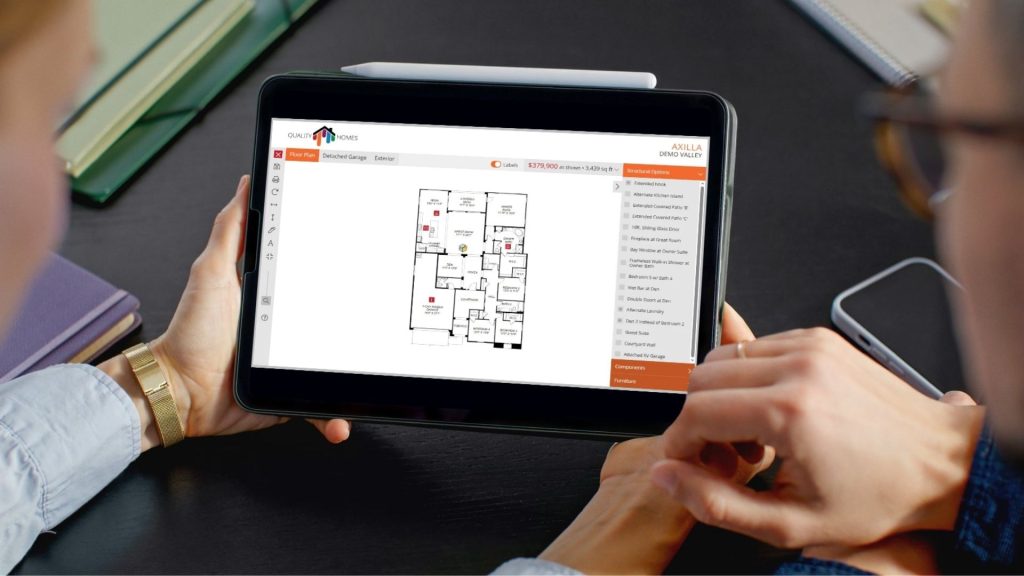
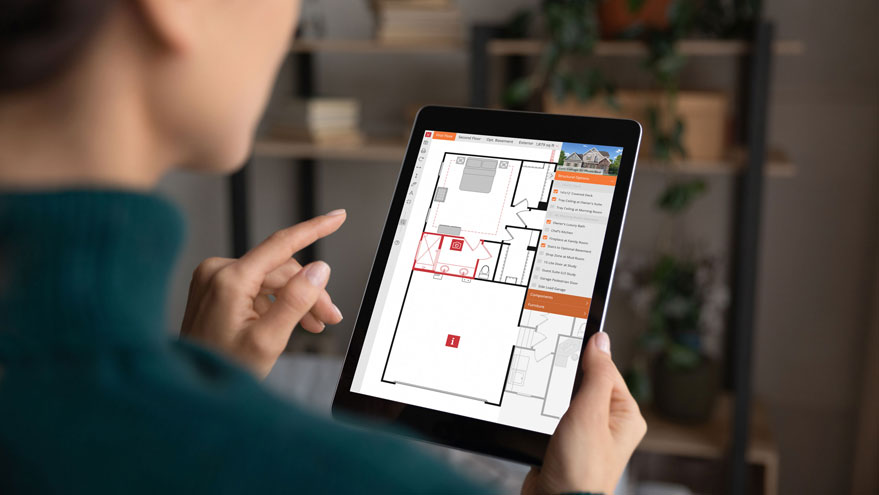
A closeup of users hand interacting with an interactive floor plan on a tablet.

If you’re a small- or mid-size builder using static floor plans and galleries, start with just one interactive upgrade.

A great place to begin is with interactive floor plans.

These tools allow buyers to explore layouts, select options, and even place furniture within the plan. The experience helps them visualize the home more personally, which increases engagement and confidence in the purchase.

They also provide valuable marketing insight. When a prospect saves a plan or configuration, builders gain a high-quality lead along with a better understanding of what that buyer is looking for.

Once interactive floor plans are in place, the next logical step is adding virtual tours to your website. These allow buyers to walk through model homes or completed inventory properties anytime, from anywhere.

For buyers relocating from another city or even another state, that accessibility can be a powerful selling tool.

A Welcome Focus on the Builders Who Make Up the Industry

One of the encouraging takeaways from IBS this year was the show’s renewed focus on small and mid-size builders.

After all, these companies represent roughly 99% of the homebuilding industry.

While the industry will always continue pushing toward the newest technologies, and that’s exciting, many builders will see the greatest immediate impact by adopting tools that are already proven to engage buyers and support the sales process.

Sometimes the smartest move isn’t chasing the newest technology on the exhibit floor.

It’s finally implementing the tools buyers already love.

A Final Thought

If your website is still relying primarily on static floor plans and images, you may not need the newest experimental platform introduced at IBS.

You may simply need to take the next step toward creating a more interactive experience for today’s homebuyers.

Interactive floor plans and virtual tours aren’t futuristic; they’re proven solutions helping builders engage buyers and sell more homes online right now. Embracing these tools is often the innovation that matters most.

And sometimes, that’s exactly where innovation should start.

Take the first step toward a more interactive experience for today’s homebuyers.

contact us

A Lesson for Home Builders from Disney on Customer Experience

Jim Sorgatz · 12/21/2025 ·

Out Door Christmas Gathering with Large Christmas Tree

Disney Has Great Customer Service — Until They Don’t

A recent trip to Disney World provided an important reminder about customer service and experience: The real test isn’t when everything goes right — it’s when things go wrong.

From pre-trip planning through most of our stay, Disney largely lived up to its reputation. Hotel reservations? Check. Dining reservations? Seamless all week. Assistance getting on and off rides due to a bad leg? Absolutely exemplary.

Disney truly shines when it comes to supporting guests with mobility and other challenges — and they do it in a way that makes people feel included, not like an inconvenience. That’s no small thing.

We did encounter a few issues, one of which was a major disappointment. I had booked a special room for one night through the Disney Vacation Club Store. On the morning of our stay, a cast member informed me we’d been moved due to a mechanical issue in the original room.

After explaining that I’m not a DVC member, had purchased points, and may not be returning for years, Disney stepped up. They offered a $250 gift card to cover dinner at Citricos — one of their fancier restaurants — and moved us to a replacement room in the new Polynesian Tower with a spectacular fireworks view.

As my friend and coworker Kevin Weitzel would say, “Not too shabby.”
Despite the disappointment, Disney made every effort to preserve the magic.

Tiki Lamp

Where the Experience Fell Apart

Everything was great… until we got home.

I had purchased a fun tiki lamp at the Polynesian Resort and had it shipped. When it arrived, it was broken. I called customer service and immediately got that sinking “oh no” feeling — the call center was clearly not U.S.-based.

The first representative assured me it would be handled and that I’d receive an email shortly with return instructions.

That email never came.

I called again the next day and was told there was no record of my previous call, so we started over. The representative repeatedly asked for a reference number I couldn’t locate on the receipt. After reviewing it multiple times, she finally asked for a screenshot.

Her first question after seeing it:
“Did you make the purchase with a MagicBand?”

I had.

And that turned out to be the issue. MagicBand purchases are apparently tracked differently than other transactions — despite charging the same credit card on file — which is why they couldn’t locate my order. Once that was sorted out, the return was processed, and a replacement lamp arrived a couple of weeks later.

Lessons That Apply Far Beyond Disney

A few takeaways stood out — and they apply just as much to home builders and their partners as they do to theme parks:

1. Technology must work — and track correctly.
If you’re using tech, it has to function reliably behind the scenes. If you have interactive floor plans on your website, for example, make sure:

  • Furniture planners are scaling correctly
  • Dynamic pricing pulls from the right database
  • Leads are routing to the correct sales team for fast follow-up

Disney isn’t alone here. I’ve had recent inconsistencies between apps and websites from Costco and Bank of America as well. When systems don’t align, customer confidence erodes quickly.

2. When problems arise, don’t hand clients to the “B team.”
Dissatisfied customers are rarely easy — which is exactly why this is when your A team matters most. Clients need to know their concerns are being handled by someone with both the skill and authority to resolve the issue.

3. Consistency prevents (and softens) problems.
This is why Outhouse assigns dedicated account managers instead of using a random project queue system. Clients know exactly who to call — whether placing an order, making revisions, or addressing an issue. Fewer handoffs mean fewer glitches, and stronger relationships mean faster resolutions.

A Home-Building Parallel

This reminds me of a new-construction home I purchased several years ago. During most of the build, the superintendent was excellent — clear communication, quick responses, and deep familiarity with our home.

About two-thirds of the way through construction, he took another job, and a new superintendent was assigned. He was fine, but didn’t have the same knowledge of the home or history of decisions.

On closing day, he couldn’t be there at all. Instead, a builder representative who had never set foot in the home — and wasn’t part of the closing team — handed over the keys. There were still major punch-list items outstanding, and while everything was eventually resolved, the confidence we’d built along the way took a hit. It was a rocky handoff at a critical moment.

A Timely Reflection

A new year is always a great time to step back and assess your customer experience:

  • Where are you excelling?
  • Where are handoffs breaking down?
  • Are your systems and teams aligned?
  • Are you building confidence — or unintentionally creating friction with clients?

The magic isn’t just in getting things right.
It’s in how you respond when they don’t go according to plan.

Merry Christmas, and cheers to you, your family, and coworkers for a happy, healthy and prosperous New Year!

If you need help with any of your home builder marketing and branding needs:

Contact US

Outhouse’s Digital Suite – We’ve Come a Long Way, Baby!

Jim Sorgatz · 11/03/2025 ·

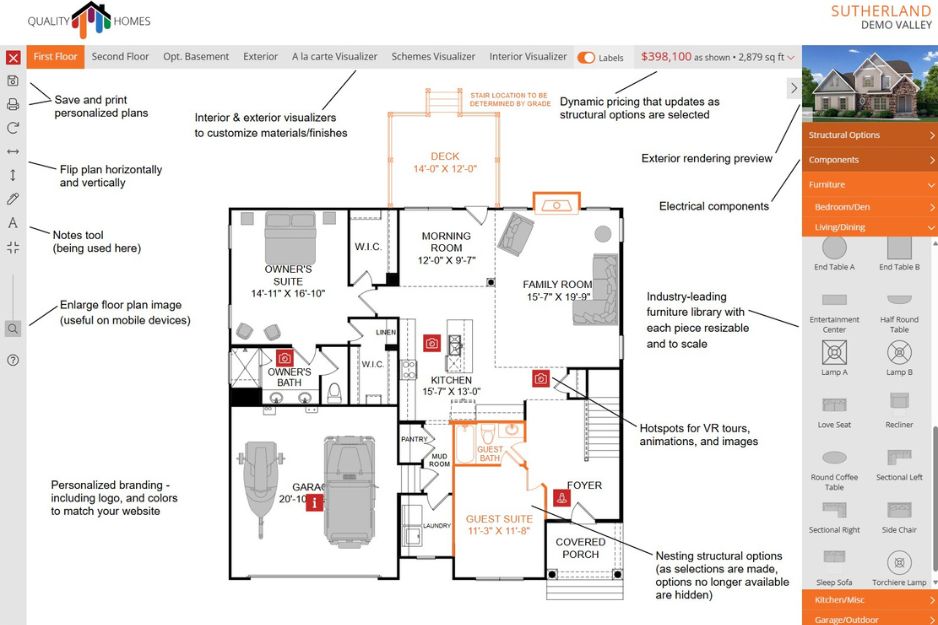
OutHouse IFP with descriptions

Why It Might Be Time for a Refresher Demo, Not a New Vendor

Every so often, we hear from a builder client who asks, “Why doesn’t my widget ‘x’ do this or that?” Maybe you spotted something new on another builder’s website or in a demo from a competitor. We get it, technology moves fast, and digital marketing tools evolve even faster.

But before you assume your current system is outdated, there’s a good chance those new features are already available through Outhouse.

Built for Builders: Designed to Evolve

As one of the original creators of interactive tools for home builders, Outhouse has
spent more than three decades helping builders showcase their homes online. Our
Interactive Floor Plans (IFPs) and Interactive Site Maps (ISMs) are trusted by builders across the U.S. because they’re built to grow with technology, not be replaced by it.

Customized plan emailed and/or texted to homebuyer when they personalize and save a plan.
 

We update our tools regularly to help you stay competitive in digital marketing:

  • Dynamic Pricing: Pricing adjusts instantly as buyers select structural options.
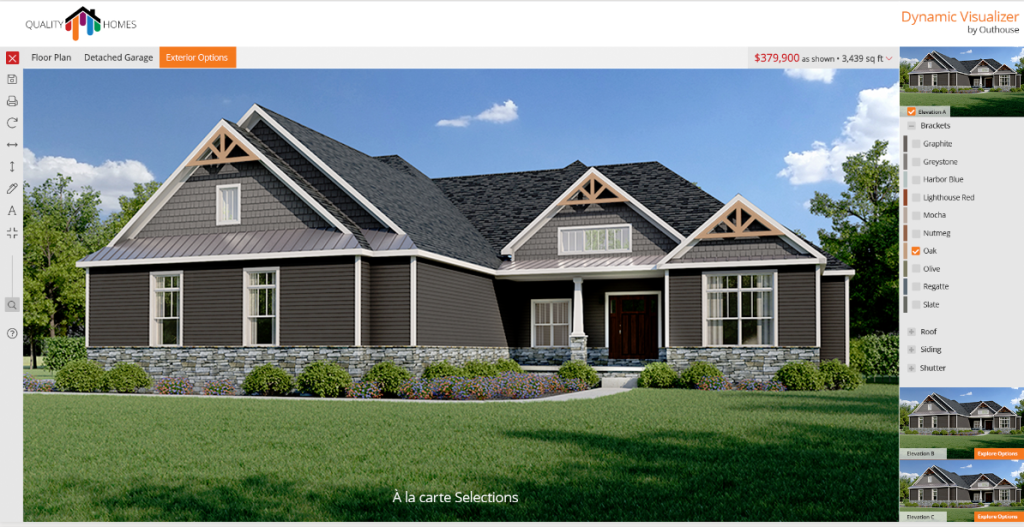
  • Elevation Previews: Show front-elevation changes directly on IFPs.
  • To-Scale Furniture: The most comprehensive furniture library in the industry.
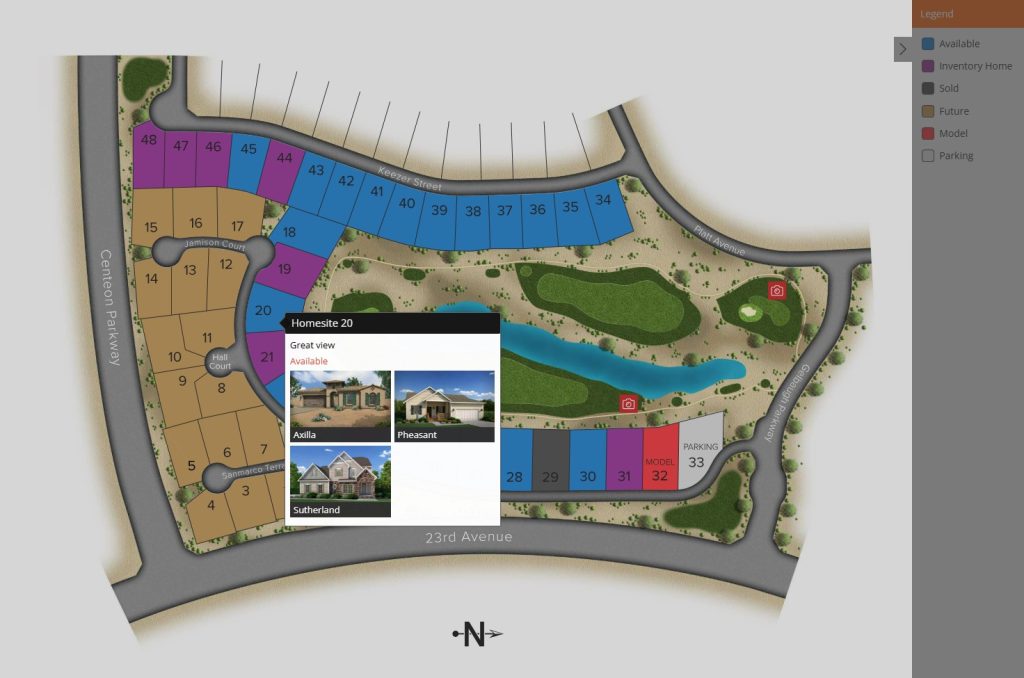
  • Clickable Site Maps: Buyers can view available lots and jump directly to corresponding floor plans.
  • API Integrations: Seamless connections with CRMs, ERPs, and other third- party platforms.

These are just a few ways Outhouse technology sets the standard for builder
interactivity.

Continuous Improvement You Might Not Notice

Much like the homes you build, behind-the-scenes upgrades and changes take place to Outhouse’s interactive tools. Meanwhile, staff changes at your company, website redesigns, and evolving integrations can, over time, lead to features being missed or underused.

That’s why we recommend scheduling a refresher demo with your Outhouse Account Manager at least once every couple of years. You may be surprised at how much has changed, from new functionality and smoother integrations to updated user interfaces designed to convert more leads.

Why Start Over When You Don’t Have To?

Switching vendors can be expensive and disruptive. Data migration, reintegration, and retraining your team take time and resources that could be spent marketing new homes and communities.

A simple demo could reveal that your current Outhouse tools already include the same (or better) features than you’ve seen elsewhere without the high cost of starting from scratch.

With our U.S.-based team of CAD specialists, developers, and account managers, you’ll always have direct support from experts who understand how production builders operate.

Site map with pop out of available plans.  Homebuyers click on elevations to access interactive floor plans.
Site Map Platinum.jpg
Site map with pop out of available plans.  Homebuyers click on elevations to access interactive floor plans.

Let’s Take a Fresh Look Together

If it’s been a while since your last demo, now’s the perfect time. We’ll walk you through the latest IFP, ISM, and VR enhancements, integrations, and customization options so your buyers enjoy the most engaging online experience possible.

Schedule your refresher demo today.

Schedule Here

Because sometimes, the tools you already have are more powerful than you realize.

Why the Smartest Builders Won’t Miss the Home Builder Digital Marketing Summit

Jim Sorgatz · 08/24/2025 ·

If you want to walk away with real strategies, fresh ideas, and actionable insights to grow your home building business, then the Home Builder Digital Marketing Summit, September 24–25 in Atlanta, GA, is the place to be.

“Why this event?” you ask. With so many conferences competing for your time, here’s what makes the Home Builder Digital Marketing Summit stand out:

HBDMS Image showing down town, and attendees raising hands and taking notes.

Scale That Works

Bigger isn’t always better. Sure, massive shows like IBS or mega-hotel events can be exciting, but they’re often overwhelming—too many distractions, too many sessions, not enough takeaways.

The Summit flips the script. With a smaller, more focused setting, you’ll actually get the answers to your burning questions, without being rushed out the door the moment a session ends. It’s all about connection, clarity, and conversation that sticks.


Hosts With Energy

Keeping things engaging are Kevin Weitzel (Partner, Outhouse) and Greg Bray (President, Blue Tangerine)—the same dynamic duo behind the popular Home Builder Digital Marketing Podcast. Their mix of energy, humor, and know-how guarantees no dull moments.


Specialized Tracks

This isn’t a one-size-fits-all program. In addition to the main Marketing Track, you’ll find:

  • OSC Track – Led by Leah Fellows of Blue Gypsy Inc., designed to sharpen online sales counselor skills.
  • Leadership Track – Guided by Kimberly Mackey of New Homes Solutions Consulting, focused on leadership strategies that drive sales teams forward.

Each track is powered by industry experts who live and breathe these roles every day.


Industry Voices You Want to Hear

You’ll also hear directly from some of the brightest minds in home building marketing. A few names lighting up the stage:

  • Patrick Johnson, Head of Home Building Experience / Rilla
  • Melinda Byerley, Founder & CEO / Fiddlehead
  • Heidi Schroeder, Senior Consultant / ECI Lasso
  • Brian Kernohan, Chief Revenue Officer / Lumin AI
  • Sylka Millner, Director of Business Development / Zonda Homes / New Home Source
  • Chris Thornton, VP Digital Marketing & Technology / Ashton Woods Homes
  • Matthew Wilson, Executive Vice President of Innovation / Mironda Homes
  • Jamie Godwin, Director of Marketing Communications / Kolter Group
  • Courtney Stewart, Vice President of Client Services / Denim Marketing
  • Plus many more seasoned voices bringing insights you can apply the moment you return home.

Roundtable Power

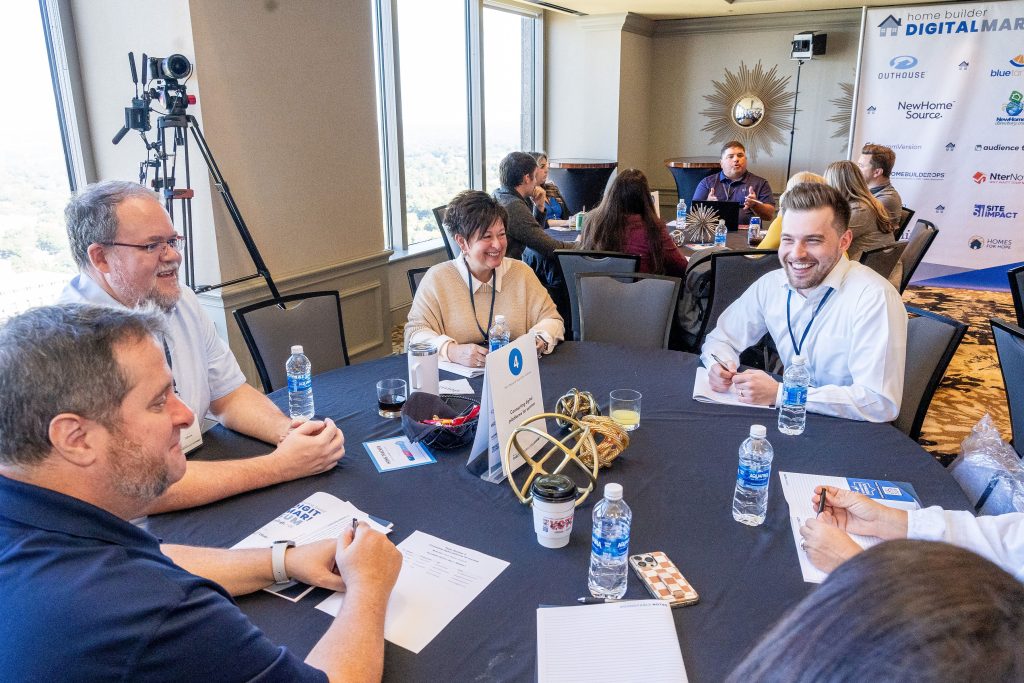
Sometimes the best ideas come from the builder across the table. That’s why roundtable discussions are built into the Summit, giving you a chance to swap stories, share challenges, and uncover peer-driven solutions.

Summit Round table: Outhouse Partners leading fun conversation


Real Value, No Gimmicks

At the Summit, your investment goes straight into learning and growth. That means no nickel-and-diming, no “time-share-style” sponsor pitches—just pure education and insight you can put to work. Our goal is simple: send you home armed with fresh ideas to elevate your marketing, OSC, and leadership game.

And because we know great learning happens when people connect, your registration also covers breakfast and lunch both days, plus a lively evening mixer on Wednesday with heavy hors d’oeuvres and drinks. Oh, and one more perk: this year, we’ve secured rooms for just $125/night—so you can enjoy Atlanta without breaking the bank.


Your Call to Action!

The countdown is on! You’ve got 30 days to lock in your spot, arrange travel, and make your way to Atlanta. Seats are filling quickly, and this intimate setting means space is limited.

Don’t miss the chance to connect, learn, and elevate your marketing game. Reserve your seat today – your future marketing/sales/leadership self will thank you.


Know Your Homebuyer Audience

Jim Sorgatz · 06/30/2025 · Leave a Comment

Are you surprised by new home construction trends in your own city?

Guess which house is the newbie?!

Having been in the industry for nearly 30 years, it is not often that I am surprised by trends in new home construction. The goal is to sell to anyone who financially qualifies. But, I had to laugh when I saw the email announcing the New American Home that is being built for the 2026 NAHB International Builders Show. It has basement space for up to 17 cars! I’ve known a number of people over the years with impressive car collections, but how wide is the audience that has more than a dozen?

In these times of elevated interest rates and sky high home prices there is much buzz about affordability, which theoretically implies to smaller homes. So, I am shocked to see the newest homes being constructed in my “affordable” neighborhood are 50%+ larger and significantly more expensive than my home that was built in the fall of 2022. The families shopping for homes right now are, apparently, looking for space, and they have the means to afford a bigger house. I guess that makes sense. Although there are genuine efforts by cities and builders to create affordable housing, the median price of $409,000 nationally per Zillow (down from $430K last year), doesn’t offer many options for typical first-time homebuyers, or families looking to move up a rung. This “affordability” paradox hammers home the importance of knowing your core audience, building for them, and marketing to them appropriately.

There are many builders who do this well and adapt to the changing environment. One example is Arizona based Meritage Homes whose mission today is, “To design and build homes that are innovative, built with care and superior craftsmanship, which deliver enduring value.” Contrast that with their mission a few years back, “To build move-in-ready affordable homes for entry-level and first move-up buyers,” and you can see the evolution to better reflect the current new home market.

Another builder to successfully navigate trends is Scottsdale-based luxury builder Camelot Homes who have retooled home designs and marketing from an elegant old world look and feel to a vibe that is much more contemporary to attract younger yet still well-heeled homebuyers.

How can you be sure you are targeting the right audience? Begin with a review of your overall marketing strategy. Do your website, sales offices, and print marketing appeal to the potential buyers you are attempting to attract? Although first-time and luxury home buyers are both seeking out their dream homes, the marketing for these two distinct groups looks very different. This is where consultation with marketing experts like Blue Tangerine, Denim Marketing, Group Two, Bokka Group, and Meredith Communications, to name a few, can be highly beneficial.      

Next, review your digital marketing tools, and upgrade them if necessary. If you are still using static floorplans and stick renderings, think again. Interactive floor plans, 3D renderings, virtual tours, animations, and visualizers all play an integral role in engaging homebuyers and selling homes.

Interactive Floor Plans (IFPs) have universal appeal, and every builder website should feature them. Buyers of all demographics love to select structural options and customize their living spaces with the interactive furniture planner. 

Interactive floor plan with furniture.
Outhouse’s colorized Interactive Floor Plan

Quality 3D renderings are essential for all builders as well. Black and white stick drawings are never a good option, even for the simplest of homes. Standard 3D (Outhouse Bronze and Silver) renderings are perfectly acceptable for most homes, especially those at lower price points. For move-up and luxury homes, you may want to consider 3D photoreal renderings (Outhouse Gold). Luxury and custom builders may want to opt for Platinum renderings that can be further customized.

Should your budget for digital marketing tools be a bit larger, investing in animations and virtual tours pays off in two significant ways. First, they enable homebuyers to digitally explore your homes from anywhere. Second, both are available at a fraction of the cost of constructing a model home. Your target buyer should be the top consideration when choosing which format to offer. Younger buyers prefer user-controlled virtual tours. Buyers over 50 often gravitate towards video format animations.

Visualizer showing a before and after kitchen
Visualizer’s allow home buyers to customize interiors and exteriors

Another online tool appealing to home buyers at all price points is the Visualizer. With both interior and exterior versions available, buyers can mix and match colors and finishes to achieve the desired look and feel. The visualization process is so much easier than making selections for an entire house based on one-inch paint chips and tiny floor, counter, and cabinet samples. It also removes some of the pressure and stress from the design center visit.

Here are a couple more ideas to help you connect with your appropriate audience:

Elevate your brand with distinguished print marketing. Consider the hotel industry when investing in print—the swankier the property, the more excellent the print collateral. The manager of the high-end hotel presents you with a “folio” at checkout in lieu of a bill. Although print appeals greatly to buyers in the luxury home market, even younger homebuyers like to walk away from the sales center with a brochure featuring their preferred floor plan and elevations, at a minimum. In today’s digital world, consumers still appreciate a tangible marketing piece when making one of their biggest life purchases. Why not present them with something sophisticated or fun, and memorable?         

Printed brochure showing families participating in various activities
A great print piece makes a lasting impression!

Today, the most progressive builders are transforming their websites with artificial intelligence (AI) to better understand and target their audience. Like that provided by openhouse.ai, AI offers home buyers a personalized shopping experience and predicts where your unique market is going with more accuracy.

So take some time during this evolving housing market to understand your homebuyer and determine if your current marketing strategy is meeting their needs. If not, consider working with online marketing experts to determine which digital and on-site tools will move the needle most with your target audience to increase your new home sales.   

Dip Toes or Dive In? The Case for Going All-In On Digital Marketing

Jim Sorgatz · 06/01/2025 ·

Lady diving into a pool with Kitchen image in the background

A phrase we frequently hear following a demo of our digital marketing tools is, “We’d like to dip our toes in the water.” While this may be a good idea in some instances, say testing the water temperature before stepping into a hot shower, it doesn’t make sense when it comes to your website.

In today’s technology-driven world, your website is the front door to your business. So it is imperative to have one that is attractive, cohesive, easy to navigate, and COMPLETE. With many smaller builders competing in markets dominated by big public builders, professionalism is critical. So, if your website still mainly features black and white drawings and you are gradually replacing them with 3D renderings from random providers, and/or photos of built homes taken with a cell phone, you may want to reconsider that process. Black and white stick renderings captivate no one, and photos, unless professionally shot like ones by Chad Davies, rarely do your homes justice, especially when new landscaping consists of a few small shrubs and twigs for trees. Buyers are looking for their dream home, not one that screams, “weekend projects ahead!”

3D photoreal rendering. Nothing says “dream home” more than a sultry in dusk shot.

Think Like the Big Builders

To see what homebuyers expect when they visit your website, it pays to look at what the bigger builders are doing. A few of the top sites like Toll Brothers and Taylor Morrison include an abundance of professionally shot photographs and videos to create visual interest, meanwhile the individual model pages feature 3D photoreal renderings for consistency. Their sites also include interactive floor plans allowing potential homebuyers to select structural options and oftentimes space plan with a furniture planner.

The top digital lead generator: An Interactive floor plan with elevation previews and furniture planner.

The Small Builder Advantage

Where you can stand out from the big guys is by personalizing and streamlining. Even the most thoughtful big builder sites are rather convoluted due to an excess of homes and communities. With fewer homes to showcase, smaller builders have a distinct advantage. Professional renderings and virtual tours need not break the bank, and they allow homebuyers to explore your homes from anywhere in the world.

View of desert valley from living room of a home on a hill
Still image taken from a virtual tour. The view outside the windows is real.

Smaller inventory encourages deeper exploration of your models, especially when they feature engaging virtual tours, visualizers, and interactive floor plans. And studies show the more time spent customizing a home with digital tools, the more likely the prospect is to purchase that home.

The Best Time to Upgrade a Website is…

NOW is the perfect time to add digital assets or make other upgrades to your website. Yes, the market is down and budgets are stretched, but we know housing will come roaring back at some point – it always does – and builders need to be prepared. Website upgrades also have a small price tag compared to other marketing ventures like building a model home, or even TV ads. So, take some time during this downturn to be thoughtful, strategic, and intentional about website upgrades that will attract homebuyers and generate solid leads as the housing market begins to turn.

Laying Out The Welcome Mat

In summary, as your website is your online front door, be sure to lay out the welcome mat. Draw in prospects with a clean, easy to navigate site, with stimulating imagery and engaging interactive tools. Remember, consistency is critical. Get all renderings from the same provider. Ditto for interactive floor plans. Better yet, use the same vendor for all digital marketing assets for peace of mind and the best results. Hence the reason Outhouse offers CAD services . For all-in clients, assets are automatically updated across all digital product lines when a change is made in the CAD files. This not only ensures accuracy and consistency, but also reduces costs. And, finally, check out big builder sites for inspiration, but be sure to keep an open mind on ways to make your site easier to navigate and more compelling.

Like Iconic Brands and Well-Designed Homes, Skilled Craft Never Goes Out of Style

Jim Sorgatz · 05/04/2025 ·

Fajitas cooking on a flat iron skillet.
Bill Gelbaugh brings the same precision and visual appeal to camp cooking that he delivers at Outhouse.

In today’s world of ever-increasing automation, the role of the craftsman may no longer occupy the center stage it once did—say, during the Renaissance—but the need for skilled craft has never gone away. Whether it’s clothing, jewelry, furniture, or homebuilding, there is still something deeply human—and deeply valuable—about a well-built item. A custom home, for example, with thoughtful design elements and finishes shaped to a buyer’s personality, has a presence and soul you can’t replicate with mass production.

My dad was one of those rare craftsmen. He started a one-man remodeling business at the age of 40. While technically his own company, he served just three clients—two prominent Phoenix attorneys and Rex Maughn, the founder of Forever Living Products. Rex owned properties like Mormon Lake Lodge in Flagstaff and Southfork Ranch in Dallas—yes, that Southfork Ranch. These clients didn’t shop around. They didn’t ask for quotes. They trusted my dad implicitly and paid him hourly, not because it was cheaper, but because they knew he’d deliver something unique, beautiful, and lasting. I’ll never forget the time he was asked to saw down the legs of a $10,000 antique table just to make it fit below a window with a view. That level of trust only comes from knowing the person doing the work is a true master of their craft.

Technology and Craftsmanship – A Winning Pair

Here at Outhouse, we still believe in that kind of craftsmanship. Much of our work is technology-driven, but it takes more than software to create the kind of visual clarity, consistency, and brand integrity our clients expect. It takes a trained eye, experience, and people who genuinely care about what they’re making.

Man in forest leaning over a camp stove
Bill preparing a meal in the Northern Arizona forest.

A Print Department Founded by Craftsmen

Over thirty years ago, the Outhouse print department was founded by three such people: Bill Gelbaugh, Dorian Boese, and Doug Ills. What they built together wasn’t just a production team—it was a workshop, grounded in artistry, precision, and pride in the finished product. Bill brings a meticulous sensibility to everything he touches, from client branding to color theory to campsite organization. He takes camp cooking next level, creating sumptuous, vibrantly colored vegan meals prepared with bespoke cookware . Doug, a lifelong graphic artist, is also an avid photo restorer who brings old memories back to life with an almost reverent attention to detail. And Dory—well, Dory is a man who appreciates nuance. As a devoted bourbon aficionado, he shares weekly tastings with friends, each pour accompanied by storytelling and quiet discernment. These aren’t just hobbies: they’re reflections of character. Together, the three of them infused Outhouse’s print department with the integrity and intentionality that still defines our work today.

Man sharply dressed in pink blazer  and driving cap next to bright red antique convertible sportscar.
A man with style – Pressroom Manager Dorian Boese at the Barrett-Jackson Auction.

We Elevate Builder Brands

That same care is evident in how we treat your brand’s visual details. Bill, for instance, often catches inconsistencies in logos or brand colors that others miss. He’s been known to zoom in pixel by pixel to ensure a logo prints cleanly on a brochure or displays clearly on a touchscreen. It’s the kind of attention that doesn’t just protect a brand—it elevates it.

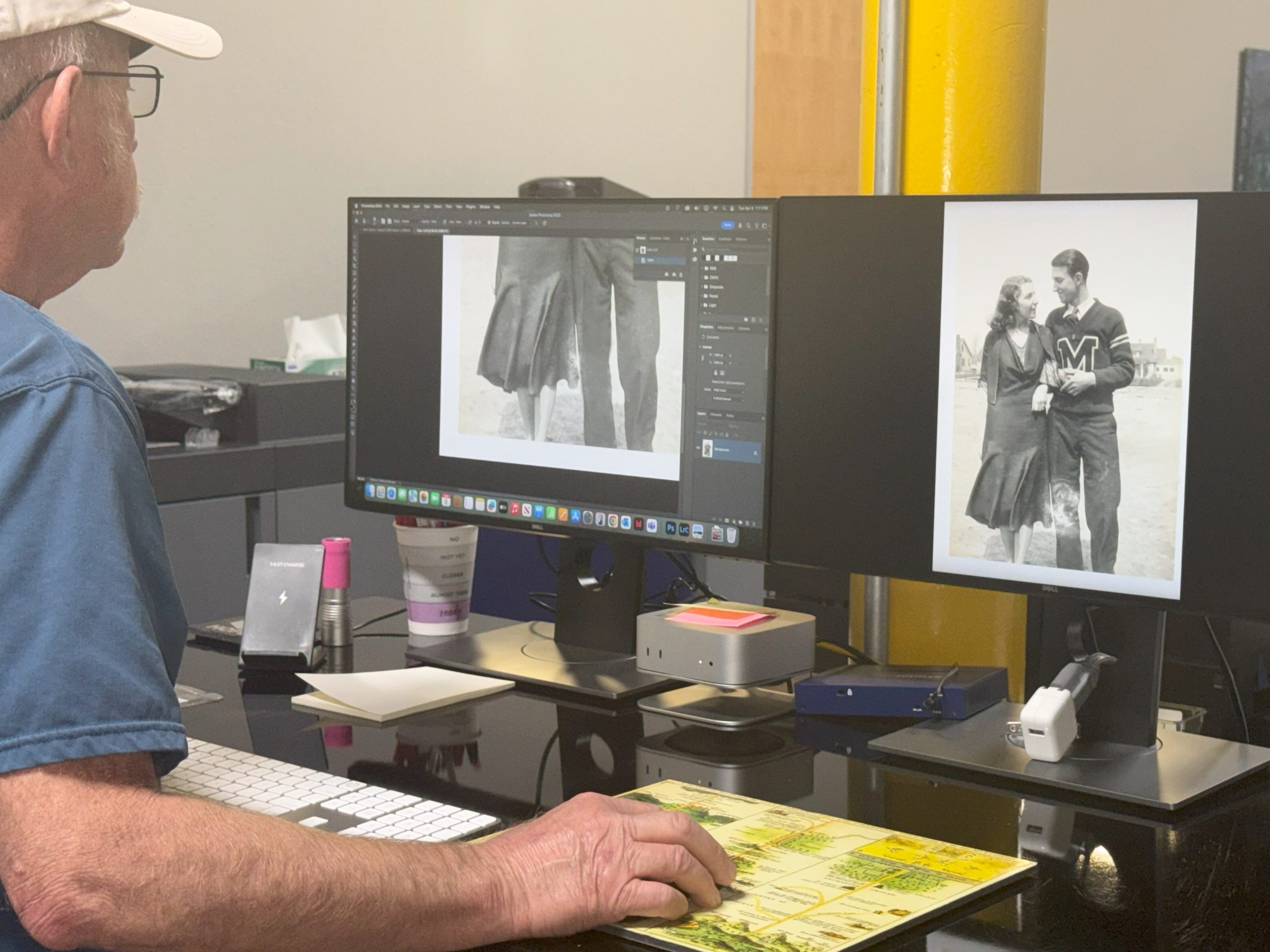
man at computer touching up a vintage photo.
Doug Ills restoring a vintage photo

Brand Consistency Is Paramount

And that brings us to a critical point. Brand consistency matters. You may recall a time, a couple of decades ago, when fast-food chains raced to trademark color combinations. Red may dominate the landscape, but it’s the specific hues, pairings, and logo integrations that make each instantly recognizable. Homebuilders are no different. Your brand guidelines: the way your colors appear online, in print, and in your sales environment are essential to how buyers experience your brand. That’s why you need partners who not only understand that but obsess over it.

At Outhouse, our team of visual professionals ensures that your interactive floor plans, site plans, and renderings reflect your brand precisely as designed. Colors are accurate across platforms: website, brochures, signage, and more. Each run of printed material is consistent. Every rendering and virtual tour carry your identity forward with integrity and impact.

An assortment of cookware and food om a pistachio-colored camp table next to an orange-colored ice chest.
A delicious meal prepared in a meticulously curated setting created by Bill.

Proudly Made In the USA

We take pride in that all our digital marketing tools: interactive maps, renderings, virtual tours, kiosks, visualizers, as well as our print collateral and sales center signage are produced by our team right here in the USA. Our home office in Phoenix, AZ houses the print facility that started it all.

Legs and shoes next to small pistachio-colored camp table with a pair of hand carved coffee mugs.  View of mountains across a field.

The Bots are Coming: Are We Ready for the Disruption Ahead?

Jim Sorgatz · 03/09/2025 ·

Robot with human face

Jimdroid – Created by Tabitha Warren with a little help from A.I,

The past six months have been nothing short of a revelation. Last fall, I experienced an ischemic stroke—an event that was a bit terrifying and life-altering, but also utterly fascinating. While the recovery process has been grueling, it has also given me a rare, firsthand understanding of the intricate connection between the brain and the body—something most people never have to think about.

When a stroke occurs, blood flow to the brain is cut off, damaging nerves and severing their connection to various parts of the body. In my case, I lost control of most of my left side. However, I was fortunate—my face, speech, vision, and cognitive function were largely unaffected. Even more encouraging, my doctors reassured me that I had the potential for full recovery since I could still move my fingers and toes. What they didn’t immediately share, though, was just how difficult that journey would be.

After months of intense physical therapy and relentless effort, I have regained control of most of my muscles. Just last week, I celebrated a significant milestone—full range of motion in my shoulder. Walking, however, remains a work in progress. I can do it, but let’s just say I won’t be winning any style points.

This experience has given me a deep appreciation for something most of us take for granted: the brain-muscle connection. Under normal circumstances, our muscles simply do what they’re supposed to without conscious thought. A stroke doesn’t damage the muscles themselves but disrupts the neural networks that control them. Recovery, therefore, isn’t about healing muscles; it’s about retraining the brain to find new pathways through endless, repetitive exercises.

Army of cartoon robots

What Does This Have to Do with Robotics?

We all know the robots are coming. Many of us have chuckled at videos of Tesla’s Optimus robot tripping down a hill. Skeptics argue that humanoid robots are still decades away from being truly useful, but my stroke recovery has given me a fresh perspective—I now firmly believe they’re coming much sooner than we think.

Why? Because AI learning mirrors stroke recovery in many ways. Just as my brain must repeatedly attempt movements to forge new neural pathways, AI systems refine their capabilities through repetition. The more they practice, the smarter and more autonomous they become, adapting to new tasks without explicit reprogramming. We’ve already seen remarkable advancements in autonomous driving—Tesla’s latest Full Self-Driving (FSD) version 13.2 shows just how close we are to full autonomy.

The Impending Disruption in Homebuilding

It doesn’t take much imagination to picture robots swinging hammers on job sites. But what will push the homebuilding industry toward this reality? Tariffs? Immigration reform? The growing need for affordable housing? The catalyst may not be clear yet, but one thing is certain: innovation is essential for reducing construction costs and ensuring builders can continue to thrive.

Remember Katerra? In 2015, it looked like this technology-driven, off-site construction company would revolutionize the industry. But despite massive funding, the company ultimately collapsed in 2021 due to a combination of overspending, the pandemic, and lender failures. However, Katerra was just the tip of the iceberg. Since then, AI has advanced at an exponential pace, and robotics is poised to play a crucial role in the next wave of construction innovation.

Are We Ready for What’s Next?

Probably not. Most industries are slow to embrace disruption, and homebuilding is no exception. But the shift is inevitable. That’s why homebuilders and trade contractors need to start preparing now—adapting to new technologies and finding ways to integrate AI and robotics into their processes before they get left behind.

At Outhouse.net, we’ve always been at the forefront of innovation. From launching our first interactive floor plan over 20 years ago to developing interactive site maps, kiosks, animations, virtual tours, and visualizers, we’ve continually pushed the boundaries of what’s possible in digital marketing technology. And we’re not stopping anytime soon. We, too, understand the need to stay ahead of the curve.

The future is coming fast—are you ready?

Don’t Retire Print Marketing – Reimagine It

Jim Sorgatz · 02/24/2025 · Leave a Comment

Brochure of a K. Hovnanian Homes house

People often ask us why a print company specializing in print for home builders is necessary. Heck, today, builders sometimes ask us if print marketing is still a valuable sales tool! The answer to both questions is a resounding “Yes!” We explain why in this post.

The Role of Print in New Home Sales

In a recent episode of the Digital Velocity Podcast, co-hosts Erik Martinez of Digital Velocity and Tim Curtis of NaviStone talk with Alex Kupski and Jake Hoffman, co-hosts of the Millennials in Print Podcast, about the Power of Print in the Digital Age. They conclude, “The more channels you’re present on and the more channels you’re marketing to people on, ultimately, the more effective you’re going to be. Print, just like social, just like email, just like your website, just like a commercial on TV, is a channel for you to market on. It’s another arrow in the quiver. It’s another way to reach people you might not have before.”

…the ubiquity of digital media has given print media a strange new power.” –Brandon Ortiz, Salesforce.com

Print marketing works best when paired with digital marketing. Digital marketing is often the most effective way to draw people in. With interactive site plans, interactive floor plans, renderings, virtual tours, visualizers, and Matterport tours, your website is arguably a home builder’s most potent marketing tool. But it is only effective for a home buyer’s few precious moments on your website. Print collateral, on the other hand, has a much longer life span. Brochures and floorplan/elevation minis often sit on a potential buyer’s countertop or table for weeks or months, a lasting reminder of your homes and communities. Not every prospect immediately purchases a home, so print is a great way to keep them focused on yours. 

David Weekley Homes brochure with cactus front cover, and homes on the back

Data shows that print used in tandem with digital marketing is one of the most effective sales strategies as the two mediums strengthen and reinforce each other. A study by InfoTrends found that 66% of direct mail is opened, and 56% of consumers who respond to direct mail go online or visit a physical store. A recent article in SFGate offers some great tips to sync your print and digital marketing efforts:

  • Place QR codes on print materials.
  • Provide digital opt-ins for direct mail.
  • Include social media reviews and comments on print materials.
  • Include hashtags and calls to action on print materials.

Although digital and print marketing take different forms, They work together to engage customers and keep your brand at the top of their minds.

It isn’t game over for print marketing. The game has only changed.”

The game has changed regarding print marketing strategies. When you discover the power of fusing “low-tech with high-tech,” you will separate yourself from the homebuilders who made the mistake of transitioning to 100% digital marketing.

Print is particularly effective where there is a physical customer presence – In industries where customers interact in person, such as model home sales offices, print materials provide tangible takeaways. Homebuilders can leverage brochures, direct mail, and high-quality printed floor plans to keep their homes top of mind for buyers who may not be ready to purchase immediately.

Print Remains Relevant in the Digital Age – As digital marketing becomes more saturated, print marketing offers brands a way to cut through the noise. As digital marketing becomes more easily ignored, physical marketing materials command attention, creating a lasting impression.

Moreover, print campaigns should be fully integrated with digital efforts. Rather than treating print as an afterthought, homebuilders can maximize impact by designing campaigns that blend the strengths of both mediums. Brochures, mailers, even print ads should include QR codes, personalized URLs, or augmented reality elements that direct potential buyers to interactive experiences online. Instead of evaluating print and digital separately, builders should use KPIs that measure how both contribute to lead generation and engagement.

Why Use a Builder-Specific Printing Company?

The challenge builders face that is unique to our industry is the weekly sales cycle. From week to week, home prices may change, lot availability changes, and options may vary. The typical strip-mall printer is not equipped to automate this process. Outhouse built their business to serve a single industry – HOME BUILDING. We do all work in-house, from CAD for your construction documents to print materials for your sales centers. This allows all teams, including architectural, rendering, graphics, interactive, and print, to work in tandem. By doing so, we create accurate, up-to-date print materials that are consistent and coordinated with your digital marketing assets. Utilizing the latest technologies, we print and deliver materials on time every week, on the builder’s schedule. Challenge solved – you send us your edits, and we coordinate these changes across all platforms.  

Professional Artwork Creation: Outhouse provides clients with the considerable advantage of having drafting and rendering services on-site, allowing coordination with the development of their artwork for all printed materials. This coordination offers clients superior accuracy, faster turnaround times, and lower overall costs.

Coordinated File Management:  Another advantage is the ease of managing and coordinating all created artwork with professional digital file and asset management. All artwork is kept up-to-date, consistent, and coordinated between city design reviews, printed sales materials, large format displays, and interactive web products and services.  

Superior Print Quality:  Superior brand standard quality and consistency every time on every product is only possible with the coordination, color calibration, and production of all graphics, printing, and display under one roof. Unlike a mass-market printer like Vista Print, Outhouse is not a WYSIWYG (What You See Is What You Get) printer. We believe that good enough is never good enough, and we have the magnifying glasses to prove it! On rare occasions when colors are incorrect or print quality is not up to snuff the first time off the press, we recalibrate and rerun the job.

Builder-Specific Delivery:  Unlike many industries, home building has a weekly sales cycle, and having your print delivered on time is critical. Outhouse understands this. We meet your deadlines your way on your weekly sales cycle.

Woodside Homes brochure with three homes

The bottom line is print marketing still plays an integral role in new home marketing and sales. There’s a reason the Outhouse Interactive Floor Plan has a save button. It allows prospective homebuyers to save their customized floor plans and print them out for further review. 

What about younger generations? Retail Focus Magazine tells us that print is 30% more memorable than digital. This applies to all age groups. You need look no further than nightclubs which hand out leaflets advertising upcoming events, and university welcome packs to know that print still appeals to young people. The magazine also notes the best campaigns are when print and digital work alongside each other instead of trying to compete. A younger audience may be digitally savvy, but they still appreciate a well-thought-out hard copy campaign.  

Although any printer can give you a halfway decent brochure, only a company like Outhouse coordinates your CAD, rendering, and interactive projects with your print materials and sales office displays. Even if our print pricing is a bit higher, you will save significantly more overall through efficiencies in coordination.     

Woodside Homes floor plan
When you update a plan, Outhouse coordinates the changes across CAD, print, and all digital marketing assets.

Is 2025 the Year to Break Out of the “Home Builder Box?”

Jim Sorgatz · 02/07/2025 ·


There are many brilliant people here at Outhouse, and one of them is our content creator and social media manager, Tabitha Warren. An enthusiastic advocate for the FIRE (Financial Independence, Retire Early) movement, Tabitha made the bold decision to leave her full-time job as a tax accountant in her mid-thirties. But instead of retiring, she pivoted to a new career in digital marketing, joining our team at Outhouse while also helping other companies build websites. It wasn’t an easy transition, but through determination, hard work, and a relentless drive to learn new skills, she made it happen. Today, she’s a Canva expert, crafting stunning graphics and managing social media for most of our marketing efforts. What’s even more inspiring is her constant quest for the “next big thing.” Her curiosity and drive to adopt cutting-edge technologies push me, the old guy, to keep learning and reaching for more.

Tabitha Warren in front of husband Anthony

Tabitha Warren, enjoying some free time with husband Anthony

In a way, Tabitha’s journey mirrors the challenges the home building industry faces. As she mentioned in her January 10th post, “Navigating Labor and Supply Chain Issues,” the industry enters another year trying to stay ahead. It’s not a lack of demand—there are plenty of families looking for new homes—but labor and supply chain bottlenecks, coupled with sticky inflation, that are driving home prices higher (thank you, pandemic). And let’s not forget the high interest rates that persist even after a couple of Fed rate cuts (thanks, lenders).

Builders and contractors who adapted quickly survived.

The housing crash of 2008-2010 showed us that builders and contractors who adapted quickly survived. For many, that meant streamlining operations, letting go of staff (not-so-affectionately called “right-sizing”), and embracing new, cost-saving techniques. Some even chose to be acquired by other companies. Many long-time construction workers faced similar crossroads, and those who were willing to adapt to new careers—sometimes temporarily—are the ones who have thrived today.

The reality is, like the stock market, the home building industry is volatile. It’s a constant roller coaster ride with high highs and low lows, and rare are the moments when things are smooth sailing. The key to surviving and thriving? Being agile. Builders who can pivot quickly, streamline processes, adopt new methods and technologies, or even revert to time-tested strategies when necessary will be the ones who come out on top.

Image of a house blueprint transitioning to 3D exterior rendering

This is exactly why we built the Outhouse CAD department with this roller coaster in mind. Many homebuilders already rely on us for renderings and interactive tools, so it only makes sense to put our 30+ years of CAD expertise to work and help with drafting services. Here’s how outsourcing your drafting to us can benefit you:

• Uniformity for the Field Crew: Our approach ensures that your plans maintain a consistent look and feel across the board, no matter who the designer is.
• Compatibility is Key: Our 2D plans integrate seamlessly with other Outhouse services or external consultants—no hassle, just smooth collaboration.
• You Own the CAD Files: Whether you build one home or a hundred from a single set of plans, the CAD files are yours to keep.
• Accelerated Delivery of Marketing Assets: We can produce your interactive floor plans, site maps, virtual tours, visualizers, renderings, and brochures simultaneously, allowing you to hit the market faster and more cost-effectively.

Embrace the future (or more precisely, the present) with 3D photorealistic renderings, 360-degree virtual tours, and interactive floor plans.

If your website still sports black-and-white stick drawings and static floor plans and site maps, it’s well past time to think outside the box. Embrace the future (or more precisely, the present) with 3D photorealistic renderings, 360-degree virtual tours, and interactive floor plans. Interactive tools are far more engaging than static images—they allow homebuyers to digitally add structural options, rearrange furniture, and even take virtual walks through rooms with integrated VR hotspots. These experiences help families emotionally connect to your homes, turning casual browsers into serious buyers. Plus, interactive features are proven to increase the time visitors spend on your site, which often leads to more sales. In today’s tech-savvy market, these tools aren’t just a nice-to-have—they’re essential. Younger homebuyers, especially, love the gamified, interactive experiences.

Outhouse.net excels at providing all the digital and print marketing assets that today’s homebuyers expect when shopping for new homes, including 3D renderings, virtual tours, visualizers, interactive floor plans, and interactive site maps for your website. And we don’t stop there—we also offer interactive kiosks, print materials, large format signage, and display options for sales offices.

Looking for more ways to expand your horizons? The International Builders Show in Las Vegas, happening February 25-27, is a fantastic place to explore the latest in construction technology and trends. If you’re attending, make sure to stop by and say hello to Outhouse principals and our OSC partner Blue Gypsy Inc. in Sales Central, West Hall W311. We’ll be sponsoring coffee and snacks throughout each day, and we’d love to meet you. All are welcome—even if you have a floor pass only!

Navigating Labor and Supply Chain Issues in Home Building

Jim Sorgatz · 01/10/2025 ·

Challenges Faced by an Aging Construction Worker Due to Delayed Retirement Age and Physical Strain. Concept Retirement Age, Physical Strain, Aging Workers, Construction Challenges, Delayed Retirement generated using AI by Anastasiia on Adobe Stock
Aging Construction Worker Image Generated by AI for Adobe Stock

The home building industry is facing some rough seas. Labor shortages and supply chain disruptions are rocking the boat, messing with project timelines and profits. The industry lost a ton of construction jobs during the pandemic – over a million, in fact. Things have picked up, but the homebuilding industry was still short almost half a million workers at the end of 2023. And it’s not just finding people; getting materials is a headache too. Construction costs have jumped by almost 40% since 2020, and supplies take forever to show up on site. It used to take under 7 months to build a typical house, but now it’s over 8 – all thanks to these problems.  

This isn’t just a temporary storm; it’s a whole new weather pattern for home builders. Builders might want to adjust their sails if they want to stay afloat. In this post, we’ll dive into what’s causing these issues, how they’re affecting the industry, and what can be done about it. Plus, we’ll look at how Outhouse can help builders work smarter, not harder.

Where Have All the Workers Gone?

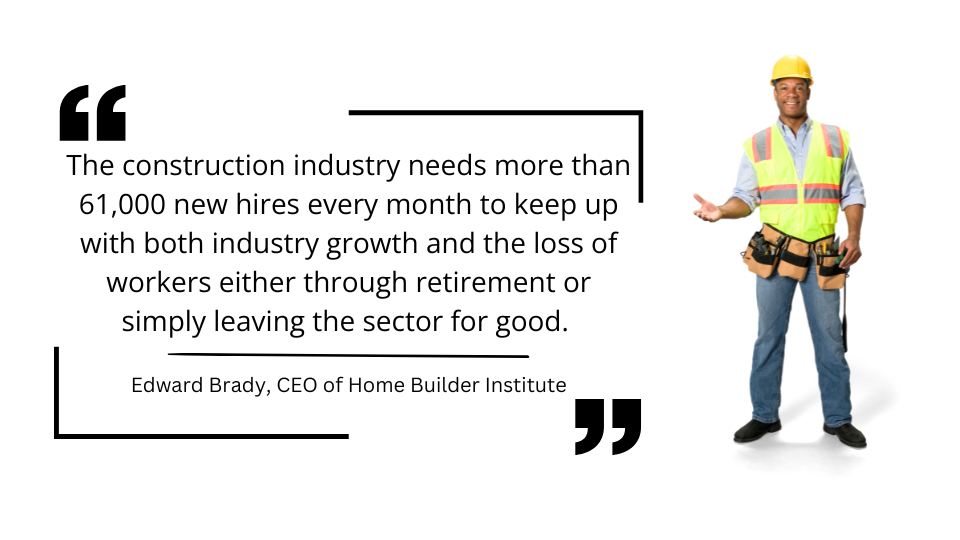
The labor shortage is a big problem with deep roots. One reason is the “silver tsunami” – experienced workers are retiring, and not enough young folks are stepping up to take their place. For every five retirees, the home building industry only gets about two new workers. That gap is getting wider and wider, leaving home building high and dry, especially for skilled trades. Across the U.S., the construction industry has about 8.3 million construction workers, with 3.4 million in home building, but it’s not enough. A whopping 65% of builders can’t find enough finish carpenters. This drives up labor costs and throws off schedules. To put it in perspective, the industry needed over half a million extra workers in 2024 just to keep up. This is even worse than the shortage during the housing boom back in the mid-2000s, even though fewer homes are being built now. Something has to give!  

Image courtesy of CanvaPro

So, why aren’t young people interested in construction?

  • College Craze: Many young people think a college degree is the only ticket to success, so they’re not going to trade schools.
  • Tough Job: Construction can be tough on the body and sometimes dangerous, which doesn’t appeal to everyone.
  • Competition: Other industries like manufacturing are also scrambling for workers, so everyone isl fighting over the same talent pool.

Supply Chain Snags

The pandemic really showed the world how fragile our supply chains are. Closed borders, factories shutting down, and transportation issues created a real mess, making it hard to get materials and driving up prices. It didn’t help that everyone started panic-buying, which made things even worse .  

Lumber prices went through the roof. Appliances, windows, and doors were like gold dust. Projects got delayed, and costs went up all around.  

Even though the pandemic is mostly behind us, the supply chain is still tangled. The war in Ukraine, high energy costs, and ongoing shipping problems are keeping things unpredictable. Some companies are turning to tech to help, using things like “control towers” to track materials and adjust to changes quickly.  

close up architect showing new house project with tablet, empty land plot background generated by AI for Adobe Stock
Tablet computer showing new build generated by AI for Adobe Stock

Strategies for Success

Builders should consider being proactive to navigate these challenges. Here are some strategies that can help:

Finding and Keeping Skilled Workers

  • Invest in the Future: Builders can create apprenticeship programs and on-the-job training to bring in new talent and keep our current workers sharp. Some industry groups like the Home Builders Institute (HBI) and Lowe’s Foundation are putting money into training programs to get more people into the trades. Programs like The House That She Built work to educate young people about the opportunities available in the building industry. 
  • Cast a Wider Net: Look beyond the usual places to find workers. Reach out to women, veterans, and people who were formerly incarcerated. Partnering with community groups and schools can help us connect with potential employees.  
  • Show Appreciation: To keep good workers, consider offering competitive pay, offer great benefits, and give them chances to grow. Think health insurance, retirement plans, paid time off, and opportunities for promotions.  
  • Embrace Technology: Technology can help do more with fewer people. This includes things like automation, prefabrication, and digital tools for managing projects . By investing in technology, home builders can make jobs more efficient and appealing.  

Getting Needed Materials

  • Team Up with Suppliers: Strong relationships with suppliers are key to getting needed materials on time. Open communication and working together can help everyone in the supply chain anticipate problems and find solutions.  
  • Don’t Put All Your Eggs in One Basket: Have backup plans. Find new suppliers and consider using different materials if current suppliers run into shortages or hike up prices.  
  • Plan Ahead: Ordering materials in advance and keeping enough on hand can help avoid delays and price swings.  

Working Smarter, Not Harder

  • Simplify Choices: One way to ease the strain on the supply chain is to offer fewer product choices, sticking with materials that are readily available .  
  • Package Deals: Offering pre-selected material packages can make things easier for everyone and ensure that everything works together.  
  • Order Early: For important things like windows ordering them six months ahead of time and storing them can prevent delays. This takes some planning and space, but it can be worth it.  
  • Speak Up: Advocate for policies that can help fix supply chain problems. This includes supporting efforts to increase production of things like electrical transformers.  

How Outhouse Can Help

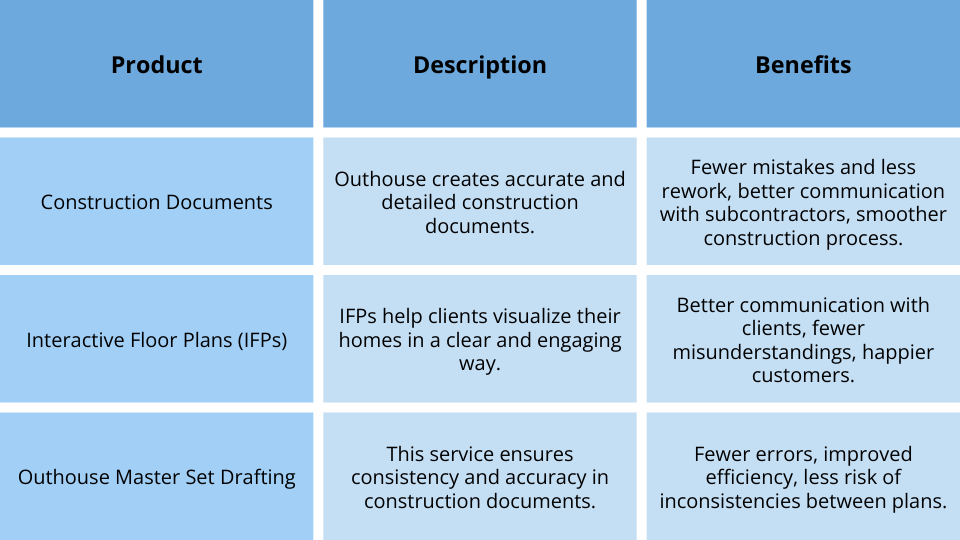
Outhouse.net has some great tools that can help home builders work more efficiently and deal with labor and supply chain issues. By outsourcing your drafting to Outhouse, you can save money and get top-notch expertise .  

Here’s a quick look at what we offer:

Here’s how these tools can help:

  • Less Rework: Accurate plans mean fewer errors and less time and money wasted on fixing mistakes.
  • Clearer Communication: IFPs and other visual tools help everyone understand the plan, preventing confusion and delays.
  • Smoother Operations: Outhouse products help streamline the design and construction process, making things more efficient.

Riding the Wave

The labor shortage and supply chain disruptions are tough challenges, but home builders can overcome them. By investing in the workforce, building strong relationships with suppliers, using technology wisely, and taking advantage of tools like those offered by Outhouse, home builders can weather this storm and continue building quality homes efficiently and profitably.

Unlocking Outhouse’s Potential with OKRs 

Jim Sorgatz · 09/20/2024 ·

Prologue

A few years ago, I found myself at a crossroads. As a partner at Outhouse, I had always prided myself on being a hands-on leader who could inspire creativity and innovation. But despite our successes, I started to feel like we were missing something—a clear, cohesive strategy that could unite our diverse teams around common goals. We were a group of talented individuals, but without a consistent framework to guide our efforts, we often struggled with direction, focus, and accountability. 

Meetings would drag on without concrete outcomes, projects would lose momentum, and our best ideas sometimes got lost in the shuffle. It was frustrating, and I knew we needed a change—a way to harness the full potential of our team and drive Outhouse forward. 

That’s when I discovered OKRs—Objectives and Key Results. I came across them while reading about how companies like Google and Intel had used this framework to achieve remarkable success. The concept was simple but powerful: set clear, ambitious objectives, define measurable key results to track progress, and align everyone around these goals. 

The idea sparked something in me. I saw OKRs as the path forward—a way to bring clarity and purpose to every level of our organization, from leadership to management, product development, and our creative teams. 

Implementing OKRs wasn’t without its challenges. It required a shift in how we thought about goals and accountability. But once we committed to the process, the transformation was undeniable. Suddenly, we had a shared language for success. Our objectives were no longer vague aspirations—they were clear, actionable targets that everyone understood and could rally around. 

OKRs didn’t just help us set goals; they changed how we worked together. Our teams became more focused, our meetings more productive, and our projects more impactful. We were no longer pulled in a hundred different directions—instead, we moved forward with purpose and confidence. 

In this series of blog posts, I’ll share the journey we took at Outhouse to implement OKRs and how they helped us thrive in a competitive market. If you’ve ever felt like your team could achieve more but just needed the right framework, then this series is for you. 

Let’s explore how OKRs can make a real difference—not just in theory, but in the day-to-day realities of running a successful business. 

1. Introducing OKRs: Understanding Why You Should Adopt Them 

Why write a series of blog posts about Objectives and Key Results, or OKRs? At first glance, OKRs might seem like just another goal-setting methodology. But let me tell you, they are so much more. OKRs are a powerful tool that can transform how you execute your business strategy, driving focus, alignment, contribution, and velocity within your team. 

When Silicon Valley startups realized that OKRs were behind the meteoric rise of companies like Google, LinkedIn, and Amazon, a wave of businesses rushed to adopt them, hoping to capture even a fraction of that success. And here at Outhouse, we’ve experienced firsthand the impact OKRs can have, especially in the competitive home-building market. 

In this first post, we’ll explore how the best companies use OKRs to harness that magic. We’ll start with the basics: the OKR framework, the philosophy behind it, the four goals of OKRs, and the incredible benefits you might be missing out on by not adopting them in your organization. 

Let’s Start with a Question—or Four! 

As Ken Coleman wisely said, “Good questions inform. Great questions transform.” Throughout our OKR journey at Outhouse, we’ve discovered four key questions that help us set successful OKRs: 

  1. What do we most want to achieve?
    What’s the right objective for our current goals and challenges? 
  2. How do we want to measure success?  
    What metrics will best show our progress and success? 
  3. What initiatives will get us there?  
    Are we working on the right initiatives to achieve this objective? 
  4. What’s the most efficient way to accomplish this?  
    Are we completing these initiatives as efficiently as possible?   

Is your objective to create a thriving business? What does “thriving” mean to you? Is it growing your user base? By how much? Is it increasing revenue? By what percentage? Is it improving retention? For how long? Combining an aspirational objective with quantitative results and focused initiatives allows you to set inspiring, measurable, and achievable goals. 

But setting a great goal is only half the battle. As a leader, your challenge is ensuring that your organization lives that goal every day. The real power of the OKR system lies in figuring out how to embed those goals into the daily, weekly, and quarterly rhythm of your company—into everything from planning meetings and status updates to celebrating achievements along the way. 

Are you ready to start implementing OKRs in your business? Let’s dive into the basics! 

The OKR Framework 

OKRs are built around three core elements: 

  1. Objective: Where do we want to go? 
  2. Key Results: What are the measurable outcomes we need to get there? 
  3. Initiatives: What do we need to do to achieve those results? 

The Objective is the goal of the company, team, or individual. Key Results are the measurable benchmarks that indicate progress toward the Objective. Initiatives are the tasks you need to perform to achieve those results—essentially, your “to-do list.” This framework is applied from the top of the organization down. Starting with an overall company Objective, each group or team sets their OKRs, and individual employees often have OKRs as well. This cascading interplay of goals keeps everyone aligned and moving in the same direction. 

The OKR Philosophy 

OKRs aren’t just about setting goals—they embody a unique belief system that sets them apart from other goal-setting methodologies: 

  • Ambitious: Objectives are meant to inspire, set just beyond what seems possible. Achieving 70-80% of a stretch goal is considered a success, not a failure. The idea is to push boundaries and aim high. 
  • Measurable: Key Results are tied to tangible milestones and outcomes. They remove ambiguity, providing a clear picture of progress. 
  • Transparent: OKRs are visible across the organization, from the CEO down to the newest intern. This openness fosters accountability and alignment, ensuring everyone is pulling in the same direction. 

This approach to goal setting was pioneered by Andy Grove at Intel and was later popularized by John Doerr, who introduced OKRs to Google. Today, thousands of organizations—from Spotify to the United States Navy—use OKRs as a central part of their management strategy. 

The Goals of OKRs 

When setting OKRs, it’s not just about listing tasks—it’s about strategic focus and collaboration: 

  • Focusing Efforts: OKRs are designed to be strategic rather than a mere checklist of tasks. They help identify the most critical business objectives, ensuring that your team’s efforts are concentrated on what truly matters. Strategy, as they say, is as much about deciding what not to do as it is about deciding what to do. With OKRs, discipline is key—only the most essential objectives should make the cut. 
  • Ensuring Team Collaboration: OKRs are structured to maximize teamwork, driving focused collaboration across the organization. The transparency inherent in OKRs, where everyone can see each other’s objectives and key results, fosters a culture of openness and alignment. It’s about everyone rowing in the same direction. 
  • Making Measurable Contributions: Key Results should be quantitative, providing clear evidence of progress. This removes subjectivity, allowing your team to see exactly how they’re advancing toward their goals. 
  • Driving the Company Forward: Ultimately, the success of your company hinges on achieving your goals. OKRs are the roadmap that keeps you moving forward, ensuring that every step you take is in the right direction. 

The Benefits of OKRs 

There’s a saying that “the simpler, the better,” and OKRs embody this philosophy, bringing tremendous benefits to those who implement them: 

  • OKRs Are Easy to Understand: Their simplicity is one of the biggest advantages. With just three elements—Objectives, Key Results, and Initiatives—OKRs cut through the noise. Unlike other performance management frameworks bogged down by jargon, OKRs are straightforward, making them easy to grasp and adopt. 
  • OKRs Demand Focus on What Matters Most: OKRs help you zero in on the most crucial priorities, guiding your team’s energy toward what truly matters. This focus not only drives performance but also empowers you to say no to tempting distractions that don’t align with your strategic goals. 
  • OKRs Foster Agility and Readiness for Change: OKRs typically operate on a quarterly cycle, allowing for frequent reassessment of priorities. In a fast-changing world, this shorter cadence ensures that your business remains agile, able to adapt quickly to new information and evolving circumstances. 
  • OKRs Promote Transparency and Alignment: With OKRs, transparency is key. Corporate-level objectives are visible to everyone, and team or departmental OKRs are shared across the organization. This openness encourages cross-functional collaboration and alignment, ensuring synchronization of every team’s efforts. 
  • OKRs Facilitate Conversation and Drive Engagement: OKRs aren’t just handed down from the top—they involve input from all levels of the organization. This inclusive approach fosters engagement, as team members feel ownership over their goals. When it comes time to review results, these conversations can boost morale and reveal opportunities for growth and development. 
  • OKRs Encourage Visionary Thinking and a Growth Mindset: At Outhouse, we believe in the power of a growth mindset—a belief that success comes from hard work, learning from failure, and continuously striving for improvement. OKRs embody this philosophy, encouraging audacious goal-setting and a willingness to step out of comfort zones. This mindset is crucial for thriving in today’s competitive environment. 

In Summary 

At Outhouse, we’re fortunate to have a team full of visionary, intelligent, and creative people. But over time, we realized that great ideas alone weren’t enough—we needed a better way to organize and prioritize our efforts. It’s easy to fall into the trap of starting too many projects at once, spreading ourselves too thin. OKRs have allowed us to continue pushing the envelope on innovation while forcing us to focus on the ideas that will have the greatest impact on our company and our clients. 

We believe your business can benefit from implementing OKRs as well. With the right focus, alignment, and execution, you can achieve extraordinary results. 

Next up… Preparing for Our OKR Journey! 

Bill Gelbaugh is one of our Senior Partners here at Outhouse and champions our OKR efforts.

Bill Gelbaugh is one of our Senior Partners here at Outhouse and champions our OKR efforts.

  • Page 1
  • Page 2
  • Page 3
  • Page 4
  • Go to Next Page »

Ready to get started, want more info?

Contact Us
  • Facebook
  • Instagram
  • LinkedIn
  • YouTube

Outhouse

11048 N 23rd Ave #103
Phoenix, AZ 85029

602-371-4394

© 2026 All rights reserved