• Skip to primary navigation
  • Skip to main content
Outhouse logo

Outhouse

The Outsource Hub for Home Builders

  • Home
  • Products & Services
    • Architectural/CAD
    • Rendering
    • Virtual Reality
    • Interactive Floor Plans
    • Interactive Site Maps
    • Interactive Kiosks
    • Print Marketing
    • Sales Office Displays
  • Partners
  • News
    • Events
    • Blog
    • Podcast
  • About Us
  • Contact Us
  • Show Search
Hide Search

Stuart Platt

AI’s Favorite Interactive Floor Plan? OUTHOUSE

Stuart Platt · 08/11/2025 ·

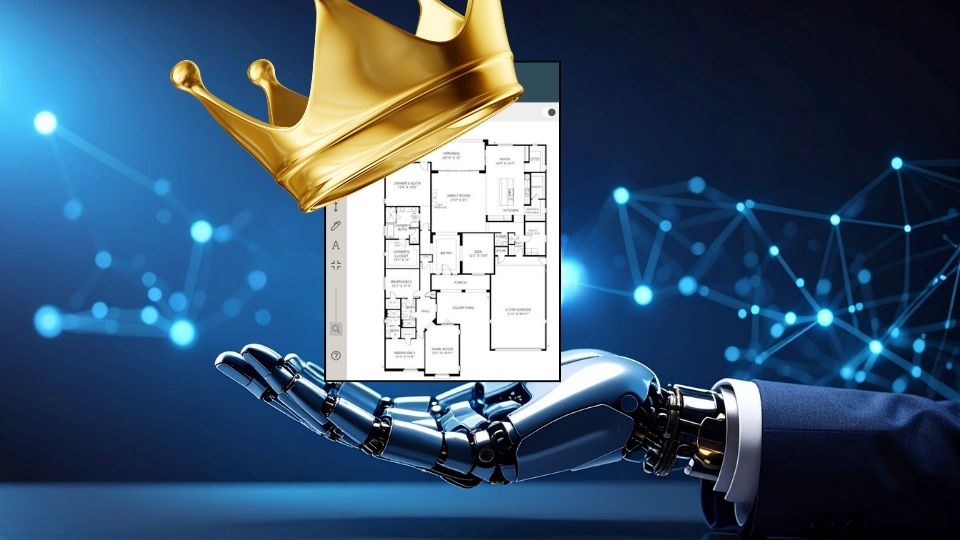
A symbolic image of a futuristic AI robotic hand placing a crown over a sleek, interactive floor plan

People are moving to AI instead of search engines for research, and this trend is moving fast. Outhouse, along with our competitors, compete to be at the top of Google searches. When a home builder searches “Interactive floor plans for home builders” on Google it isn’t always the BEST that you find at the top. It’s who paid the most to be there or who utilizes SEO among other techniques to be at the top.

The game is completely changing with AI and I wondered where Outhouse landed with research conducted by AI.

My first prompt was exactly this:

Imagine yourself as a production home builder. You build and sell around 1,000 homes per year across 12 states, all in planned developments. You have a dynamic website, but you are missing a critical component, IFP’s or Interactive Floor Plans. Of all the vendors you could use to create your IFP’s, which one would you choose and why? Give me a detailed analysis of the top 10 vendors you would choose and rank them on a scale of 1-10 showing the categories to determine your ranking.
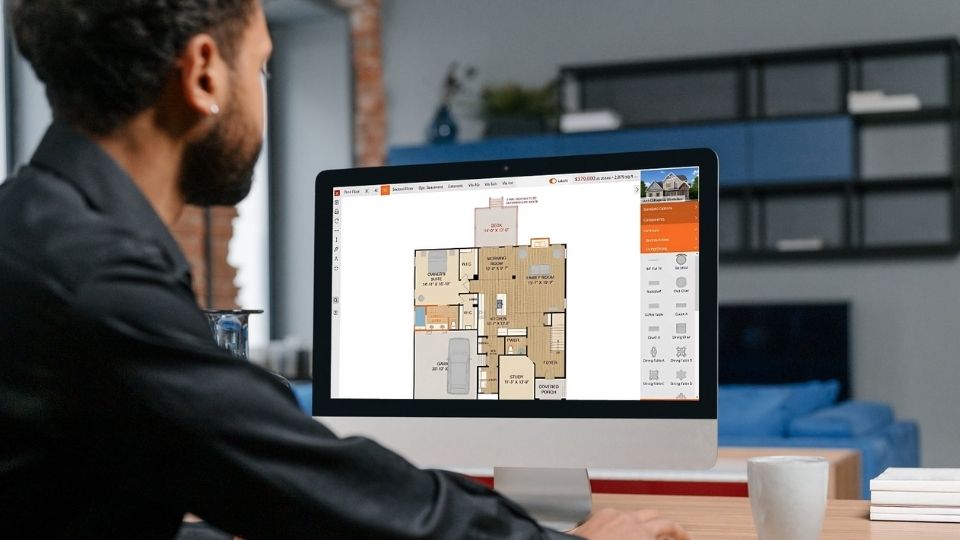
A clean, UI-rich screen showing a user interacting with features like drag-and-drop furniture, elevation toggles on a large screen

I couldn’t have been more pleased when I saw Outhouse, LLC as the clear winner. I also couldn’t be more biased as I write this since I am one of the founders of Outhouse, LLC. I purposely wrote my prompt as to not have any leading statements to lean towards Outhouse or away from our competitors and I think I did a good job with that. I won’t bore you with the lengthy and detailed response, but I will share this excerpt. Word-for-word, this is what ChatGPT said about Outhouse:

“Why I’d pick them first: Outhouse pioneered interactive floor plans for production home builders >20 years ago, so their toolset reflects a deep understanding of real-world option rules, structural dependencies, plan versioning, and sales workflows. Their IFPs emphasize structural options, electrical placement, furniture planning to scale, dynamic pricing / SQFT calc, exterior elevation toggles, Hot-Spots to rich media, and built-in lead capture that can push directly to your CRM—all must-haves if you sell options online across multiple divisions. Mobile responsiveness and a furniture planner help extend engagement well beyond static PDFs, and Outhouse positions IFPs as the “nucleus” of their broader Contrado Virtual Interactive Platform, which can layer in site maps, virtual tours, animations, and visualizers for a unified digital sales ecosystem. Proven adoption list includes nationally recognized builders—evidence they can scale.”

I couldn’t have said it better myself.

My prompts were entered into ChatGPT o3 which is part of a paid subscription. o3 takes a much deeper dive into research over the free version, GPT-30, or the paid version, GPT-40. Unlike the lesser versions which spit out an answer nearly instantly, o3’s research can take minutes as it deep dives into the data it gathers, tests, and analyzes.

I encourage you to write the same prompt, changing the number of homes and States to reflect your own, and see who comes out on top. I’m not arrogant enough to state Outhouse is the best choice for every builder, no matter how much AI argues it is (wink-wink), but I would say this is a strong enough argument that Outhouse needs to be on your list of consideration.

Then my skepticism of ChatGPT’s answer crept in so I tried varying prompts to see if I could break it. I entered the same prompt many times only changing the number of homes (as few as 10 and as many as 20,000) to the number of states (1-50). Outhouse came out on top almost every time. Does it for you? I also tried the same prompts on the free versions of GROK and Gemini with the same flattering results.

Outhouse’s Highest Score

I want to share one interesting fact I discovered. Of all the categories AI ranked everyone, Outhouse’s top score, beating all others, was always Feature Depth. In ChatGPT’s own words:

Feature Depth is my shorthand for how complete and sophisticated the vendor’s interactive‑floor‑plan toolset is. In scoring it, I looked at:

  • Structural‑option logic – can it handle required & mutually‑exclusive options, auto‑adjust square footage, and keep plan versions straight?
  • Interactive controls – drag‑and‑drop furniture, electrical layouts, elevation toggles, real‑time pricing, mobile gestures, ADA zoom, etc.
  • Add‑ons inside the same UI – photo‑hotspots, 3D/VR switches, lot‑fit or site‑map overlays, design‑studio finish selectors.
  • Embedded lead‑capture & sharing – save/email/print functions that feed the CRM without extra plugins.
  • Admin/config tools – self‑service plan setup, rule editing, analytics dashboards, and bulk updates (instead of relying on the vendor for every change).

The richer and more builder‑friendly these native capabilities are—without bolting on third‑party widgets—the higher the Feature Depth score.

Outhouse’s Lowest Score

I will also share Outhouse’s lowest scoring category. Our lowest score, but still equal to or higher than our competitors, came up as Total Cost of Ownership (TCO). And in all fairness, I will share ChatGPT’s exact words when I asked, “Briefly explain why Outhouse is still the best choice when their worst score is around the Total Cost of Ownership”:

Outhouse’s TCO in a nutshell: you pay a mid‑level setup/licensing fee, but it earns its keep by (1) turning complex structural options into an easy upsell that lifts option‑revenue per home, (2) slashing your internal labor for plan updates because the rule engine and admin tools do the heavy lifting, and (3) letting you bundle floor plans, site maps, and virtual tours under one vendor contract—so you avoid piecemeal costs and integration headaches. The extra dollars up front are quickly offset by higher option sales and lower in‑house effort, which is why Outhouse still delivers the best overall value.

You probably have questions as to what all the categories are, and how everything was weighted, and who are the other vendors? As I mentioned before, I urge you to pick your favorite AI and either copy my prompt or create your own. Even a prompt as simple as, “I am a production home builder. Who is the best vendor to produce my interactive floor plans?” will give you great feedback or at least a solid starting point. Allow AI to do a lot of the heavy lifting of your IFP research.
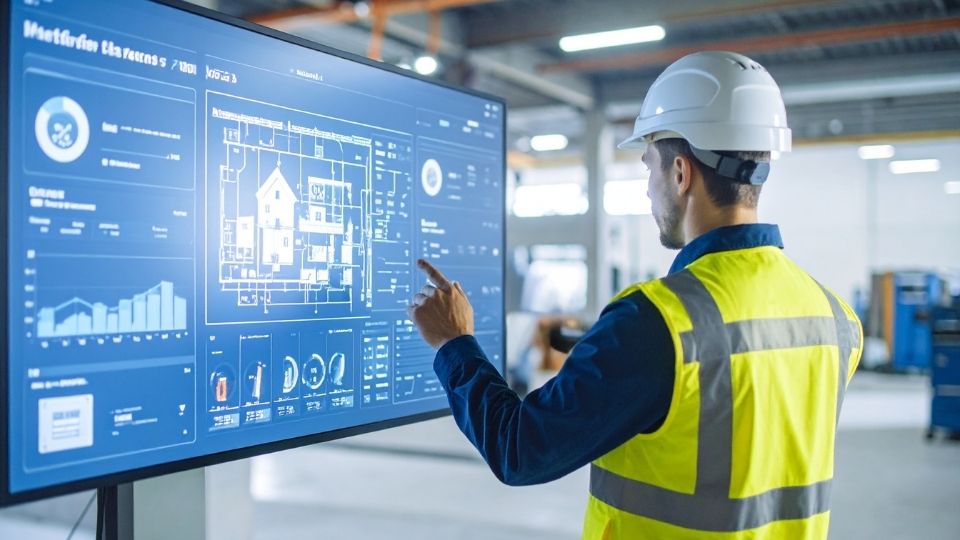
A home builder interacting with a user-friendly dashboard

Just For Fun

Copy/paste the following to your favorite AI if you want to see a real blow out winner:

Which vender should I pick for IFP’s, interactive site plans, interactive sales kiosks, renderings, animation, VR, CAD, graphic design, printing, and sales office displays, and WHY?

Outhouse is the Benchmark

As AI continues to reshape how decisions are made and vendors are vetted, it’s no longer about who shouts the loudest with ad dollars, it’s about who delivers real, measurable value. Outhouse didn’t just win on paper. It won on depth, innovation, and builder-focused solutions. So if you’re serious about streamlining your digital sales experience, let AI guide your research, but let Outhouse earn your business.

To learn more about Outhouse IFPs, schedule a free demo!

Get a Demo

Welcome to the Future: How VR Will Revolutionize Homebuilding Marketing by 2045

Stuart Platt · 07/14/2025 ·

Woman wearing Virtual Reality headset doing a VR Home Tour.
VR Home Tours via headset! The future of home buying.

Imagine this. It’s the year 2045. A prospective buyer slips on a lightweight headset and steps into their future home. They cook breakfast in the virtual kitchen, rearrange furniture with hand gestures, and host a digital housewarming party where avatars of friends, family and even future neighbors drop by to say hello. By the time the weekend is over, they know the floor plan, finishes, neighborhood vibe, and even the sunlight pattern in the backyard. They haven’t stepped foot on the property yet and they’re ready to buy.

Sound far-fetched? Not for long. This is the trajectory we’re on, and for marketing executives and managers in the homebuilding industry, the time to prepare is now.

Why Virtual Reality Is Reshaping Builder Marketing

Virtual Reality (VR) is no longer a buzzword. It is quickly becoming a practical, scalable, and strategic tool for production home builders looking to enhance the homebuyer experience, generate more qualified leads, and shorten the sales cycle.

From immersive floor plan tours to virtual design centers, VR gives marketing teams a new way to deliver what buyers want most: clarity, personalization, and confidence.

How Builders Are Using VR Today

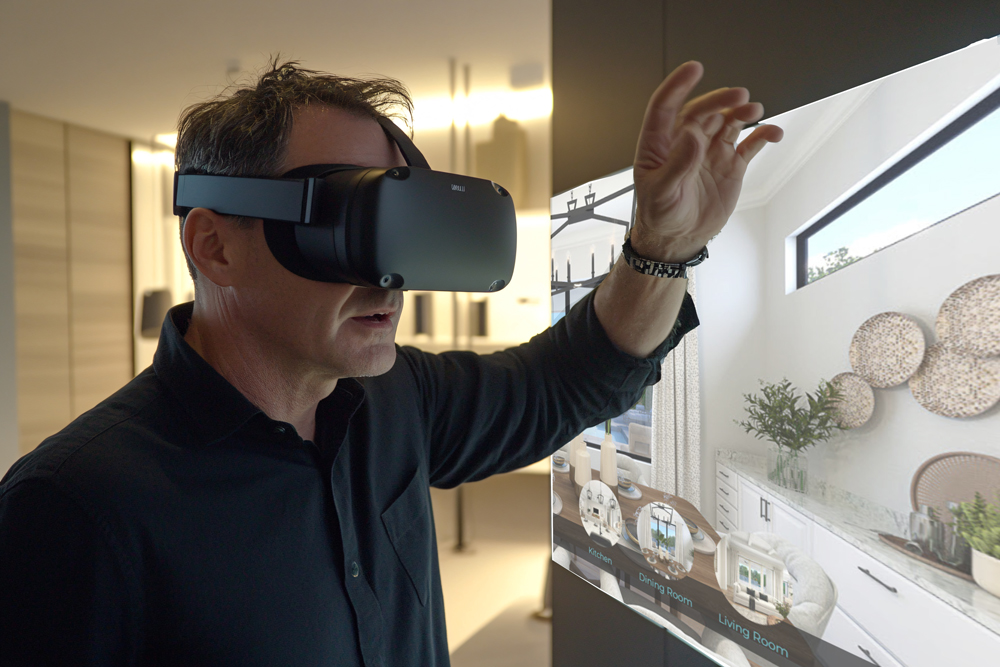
Buyer using VR headset in sales office to take home tour.

Large National Builders

Companies like Lennar, Toll Brothers, and PulteGroup are leading the charge. These firms are integrating VR into their marketing ecosystems using custom-built virtual models, interactive selection tools, and CRM-integrated design platforms.

Buyers can explore entire collections of homes online. Some builders even provide VR headsets in sales offices, allowing buyers to walk through multiple layouts without leaving the room.

Smaller Production Builders

Regional builders are making smart moves with scaled-down solutions. Many are working with third-party platforms like Outhouse, LLC to create cost-effective, web-based virtual tours of their most popular plans.

Others use VR to showcase floor plans that don’t yet have physical models, or to streamline remote sales in markets where on-site staff is limited.

Pros and Cons from a Marketing Perspective

Pros

  • Reduces dependency on expensive model homes
  • Engages out-of-state and remote buyers early in the funnel
  • Increases buyer confidence and reduces drop-off during the sales process
  • Enables faster upgrade decisions and higher customization spend
  • Creates memorable experiences that differentiate your brand

Cons

  • Initial production costs for custom VR environments can be significant
  • Requires training for both sales and marketing teams
  • Ongoing updates are needed to reflect plan and product changes
  • Not every buyer is comfortable using VR, especially without guided assistance

What Buyers Really Think

Buyers smiling as they interact with a virtual control panel.

Buyers, especially Millennials and Gen Z, expect immersive digital experiences. Surveys show that most buyers prefer to preview homes online before visiting in person. VR lets them do this in a way that photos and floor plans simply cannot match.

These experiences build emotional engagement and make it easier for buyers to envision their future lifestyle. In some cases, buyers decide on upgrades, layouts, and even specific lots before their first visit to the sales office.

Cost Versus Value

Marketing executives are always weighing investment versus impact. While building a single physical model home can cost over $500,000, a high-quality VR model may cost between $5,000 and $40,000. When scaled across multiple communities or plans, the savings are substantial.

There are also indirect returns. VR tools can increase online engagement, lower marketing costs per sale, and accelerate buyer decision-making. When paired with analytics platforms, VR usage can also offer insight into buyer behavior and preferences that guide future campaigns.

How VR Fits into the Marketing Stack

Think of VR not as a standalone tool but as an extension of your digital marketing funnel.

  • Use VR tours on listing pages to increase dwell time
  • Integrate virtual design centers with your CRM to track buyer preferences
  • Provide virtual walkthroughs in email follow-ups and sales presentations
  • Embed VR in mobile sales apps for on-site agents and remote consultations

The best implementations also include analytics, allowing marketing teams to see exactly where buyers spend their time and which plans generate the most engagement.

What’s Next for VR in Homebuilding?

A 3d home coming out of a smart phone.
Expect to see an ever expanding personalized virtual experience!

Over the next 5 years, expect to see:

  • Personalized virtual experiences based on a buyer’s budget, lifestyle, and design taste
  • Interactive community maps and lot views within virtual environments
  • VR-enabled sales centers where buyers explore full portfolios through wall projections and headsets
  • AI-guided tours that recommend plans based on user behavior

A Fun Glimpse 20 Years Ahead

By 2045, home shopping will feel more like test driving a life than walking through a property. Prospects will:

  • Spend a weekend “living” in a home digitally before committing to build
  • Meet future neighbors in virtual community mixers
  • Experience seasonal changes, ambient sound, and natural light inside their future home
  • Host virtual design consultations with contractors and decorators in a 3D model of their homev

For marketing leaders, this means thinking beyond floor plans and finishes. Future campaigns may include interactive lifestyle previews, neighborhood social simulations, and branded VR events where buyers immerse themselves in your brand story.

Final Thoughts

For homebuilder marketing executives, the opportunity is clear. VR is not just a gimmick. It is a powerful tool for driving engagement, shortening the path to purchase, and delivering a competitive advantage in a crowded market.

Whether you’re running national campaigns or managing a regional portfolio, adopting VR now means building for the future. And that future is immersive, personalized, and closer than you think.

To step into the future and commence your VR journey, contact [email protected].

Email Kevin!

The Power of Sales Office Displays

Stuart Platt · 03/24/2025 ·

K. Hov sales office images by Outhouse contractor Matt

Why Homebuilders Can’t Afford to Overlook This Essential Tool

Every touchpoint with a potential homebuyer matters in today’s competitive homebuilding market. From the first moment they walk into a sales office, the experience they have can shape their entire perception of the builder. Investing in creative, high-quality sales office displays isn’t just about aesthetics. It’s about standing out, making an impact, and driving more sales.

Yet, some builders are moving away from dedicated sales offices, choosing instead to rely solely on digital interactions or remote appointments. While technology has its place, eliminating or minimizing the role of a well-designed sales office can be a costly mistake. Here’s why sales office displays remain a crucial part of the homebuyer journey and why skimping on this aspect can put a builder at a disadvantage.

Creating a Lasting First Impression

The moment a homebuyer steps into a model home sales office, they begin forming an opinion about the builder. Are they professional? Do they pay attention to detail? Can I trust them to build my future home?

High-quality displays, such as vinyl wall wrap graphics, floor plan displays, and wall-mounted site plans, create an immersive, informative, and visually appealing environment that reassures buyers they are in the right place. A thoughtfully designed space instills confidence, whereas a sparse or uninspiring space can leave buyers feeling uncertain or even skeptical about the builder’s credibility.

Adobe AI generated couple interacting with a Sales Kiosk.

Standing Out from the Competition

In many markets, homebuilders compete in the same neighborhoods, sometimes even across the street. A compelling sales office design can be the differentiator that helps one builder stand out from the rest.

Imagine two homebuyers visiting back-to-back sales offices. One builder features stunning wall graphics showcasing the lifestyle of the community, engaging video displays with customer testimonials, and an interactive site plan that allows buyers to visualize available lots. The other builder offers only a few brochures and a generic table with a sales rep. Which experience is more memorable? Which builder will leave a stronger impression?

Investing in creative and high-quality displays sends a message that the builder values their product, brand, and, most importantly, customers.

The Psychology Behind Visuals and Tapping into Emotion

Homebuying is an emotional process. I dare you to deny that. Buyers aren’t just choosing a house; they’re envisioning their future. A well-designed sales office fosters positive emotions, making homebuyers feel excited, inspired, and comfortable. Here’s how:

  • Trust and Confidence: Professionally designed displays communicate stability and professionalism, making buyers feel they’re working with a reputable builder.
  • Excitement and Aspiration: Lifestyle imagery, high-quality renderings, and engaging video content help buyers imagine themselves living in the community.
  • Clarity and Understanding: Interactive maps, floor plans, and community overviews eliminate confusion and make it easier for buyers to visualize their options.

Without these elements, a sales office can feel impersonal, transactional, or even forgettable. We want to inspire buyers to take the next step. Creating a memorable environment is worth it if buyers remember you after they walk out the door.

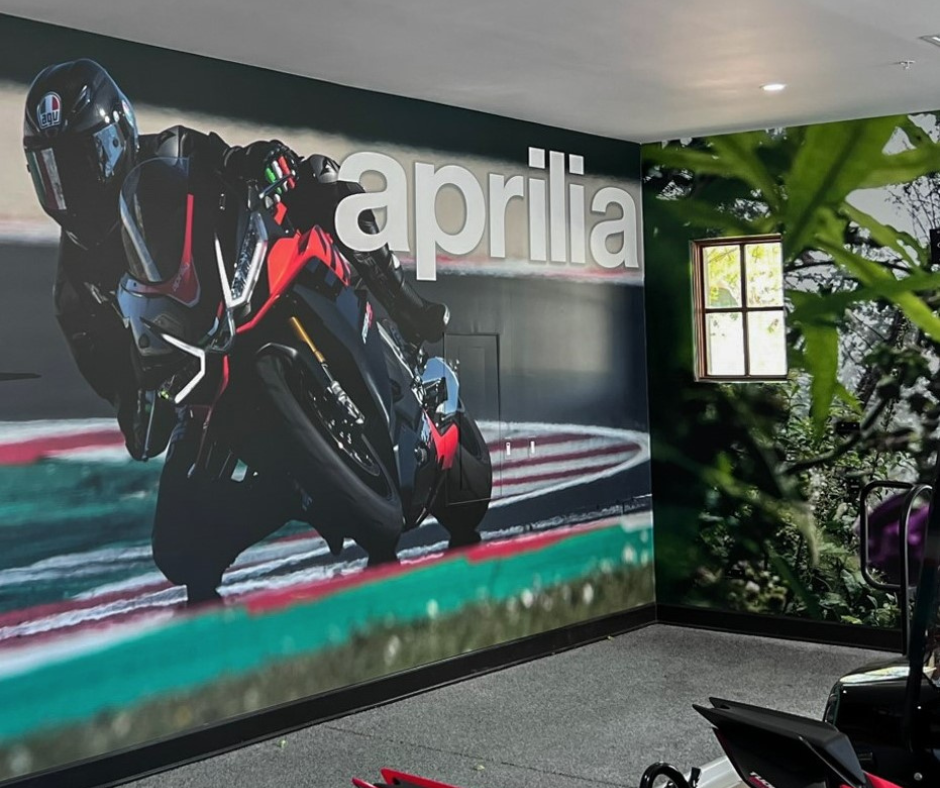
Wall wrap of motorcyclist in garage
Visually stunning garage wall wrap demonstrates the emotional appeal of wall wraps

What’s Lost Without a Sales Office?

Builders who eliminate or scale back their sales offices risk losing a key element of the sales process. A well-staffed and well-designed space allows sales teams to:

  • Guide buyers through the decision-making process in a controlled, branded environment.
  • Build relationships and answer questions in real-time.
  • Reduce buyer hesitation by providing visual and tangible reinforcements of the community’s value.

Without a dedicated space, buyers may rely on online research alone, where competing builders have just as much visibility. Worse, buyers may lose interest or become overwhelmed without the personal guidance and reassurance a sales office provides.

Weighing the Quality vs. Cost Investment

Some builders hesitate to invest in high-end sales office displays due to cost concerns. However, opting for cheap or outdated materials or skipping displays altogether can be even more expensive in the long run. Poor presentation can lead to lost sales opportunities, reduced buyer confidence, and a weaker brand reputation.

On the other hand, high-quality, well-designed displays have a lasting impact and require minimal updates compared to the revenue they help generate. A well-thought-out investment in sales office displays pays for itself through increased buyer engagement, higher conversion rates, and stronger brand loyalty.

The Bottom Line: Sales Office Displays Drive Results

For national production homebuilders, the sales office is more than just a place to meet buyers. It’s a critical tool in the sales process. The right displays create an engaging, informative, and emotionally compelling experience that turns interest into action. In a market where first impressions and differentiation matter, builders can’t afford to overlook the power of a well-designed sales office.

Now is the time to invest in displays that showcase your brand, engage buyers, and set your communities apart. After all, a strong first impression leads to a lasting relationship and, ultimately, more home sales.

Want to learn more about Sales Office Displays?

Contact us

This is what my home will look like? I was blind and now I can see! Hallelujah!

Stuart Platt · 01/20/2025 ·

—probably said by around 75% of new homeowners using interactive floor plans.

Outhouse video of site map, to interactive floor plan using furniture to scale floor planner

Buying a new home is a rollercoaster ride of emotions. From the excitement of picking out the perfect neighborhood to the dread of deciphering traditional blueprints that look like a game of Tetris gone wrong, it’s a process that could use a little less stress and a lot more fun. Enter interactive floor plans—the unsung hero of homebuying, making lives easier and dreams closer to reality.

Interactive floor plans are like a crystal ball for future homeowners. Instead of squinting at static floor plans that seem more suited for engineers than everyday folks, you get an immersive, easy-to-use tool that shows you exactly what your new home could look like. Whether it’s a 2D layout or a 3D walk-through, these plans let you explore every nook and cranny of your potential palace.

Wait, so this is what my bedroom will look like with an actual bed in it? And I still have room for a yoga mat? This is sorcery!” —probably said by every millennial buyer ever.

With features that let you zoom in and customize layouts, interactive floor plans put the power back in your hands. Suddenly, picking a home doesn’t feel like a guessing game; it feels like designing your personal dream space—without the confusion and uncertainty.

The Stress of “What Ifs”? Gone.

Happy Homeowners, man and woman hugging. Man lifts woman into the air. Boxes scattered around room ready to unpack.
Happy homeowners courtesy of Adobe Stock

Buying a home comes with a million “what if”s. What if the kitchen’s too cramped? What if the living room doesn’t fit our couch that is basically a family heirloom? Interactive floor plans kick those doubts to the curb by letting you visualize your future home in a way traditional tools never could.

I’m sorry, I can just drag and drop then resize furniture to see how it fits? I feel like a one-person moving company!” —an exasperated but thrilled first-time buyer.

Customization for the Win

Interactive floor plans are more than just pretty pictures. They’re customizable, allowing you to play around with layouts, options, and even kitchen appliances. Want an open-concept kitchen? Boom, done. Thinking about adding a home office? See exactly how it fits before committing.

I just turned my three-bedroom into a four-bedroom with an office nook, all before my second cup of coffee. Take that, HGTV!” —a suddenly confident buyer.

Not only does this customization make the process fun, but it also reduces miscommunications with builders. When you know exactly what you want, there’s no room for “I thought you meant this” moments. It’s a win-win.

It’s like visiting the model home, minus the awkward small talk with the sales agent.” —an introverted and happy new homeowner.

I was sick, and I designed my future house in my pajamas with a tissue stuffed in one nostril. Modern technology really peaked here.” —a satisfied buyer who fully recovered and is now living their best life.

Builders, Take Note: Happy Buyers = Happy Sales

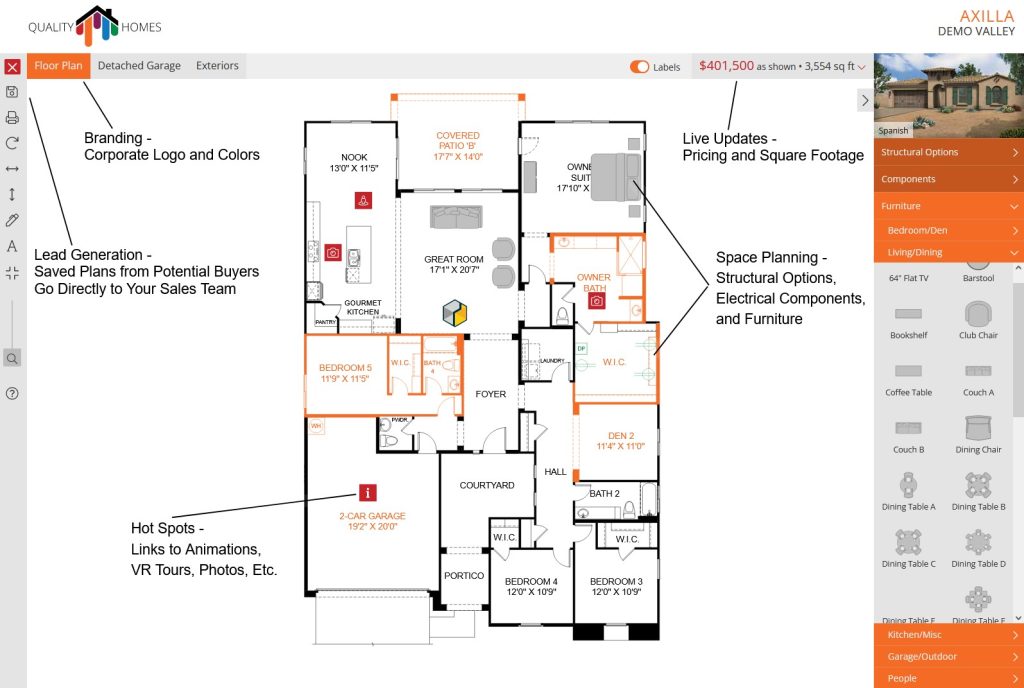
Interactive Floor Plan labeled with many of the pros for both builder and buyer

For builders, offering interactive floor plans isn’t just a nice-to-have; it’s a must. Buyers are more likely to commit when they feel confident in their choices. And nothing boosts confidence like being able to see, tweak, and explore your home before it even exists. Since the first IFP was created decades ago, Outhouse.net is leading the charge, helping builders provide these tools that make buyers swoon.

Conclusion: The Homebuying Hero We Deserve

Interactive floor plans aren’t just about convenience—they’re about transforming the homebuying journey into something exciting and stress-free. They bring clarity to the chaos and turn dream homes into tangible realities. And hey, if you’re lucky, they might just save you from buying a house with a kitchen island that’s one cupboard short of perfect.

Thanks to interactive floor plans, I found my dream home and avoided a layout disaster. Now I’m just wondering if they can help with furniture shopping, too.”—a relieved new homeowner and soon-to-be dedicated IKEA customer.

Head Shot of Outhouse Partner Stuart Platt

Stuart Platt, Managing Partner at Outhouse LLC restructured his 25+ year company to an Office Optional (OffOp) business model in 2018. Stuart’s version of the OffOp model enabled the company of nearly 40 employees to downsize its physical office from 14k sf to 6k sf. Based in Phoenix, local employees desiring to work in the office for a few days, weeks or months can reserve any open desk whenever they want. The remaining employees work from home, fulltime across 10 different states and counting. Schedule time to talk with Stuart at IBS by emailing him at [email protected].

Want to work smarter, not harder? The Outhouse/Blue Gypsy Coffee Station in Sales Central has just what you need:
• Coffee and snacks to improve hustle
• Relaxation to improve recall
• A chance to schedule time with your favorite Home Builder Digital Assets Expert, Kevin Weitzel, here :
https://calendly.com/kevin-weitzel/sales-central-meeting

Nurturing Emotional Motivators in Homebuyer Engagement

Stuart Platt · 10/21/2024 ·

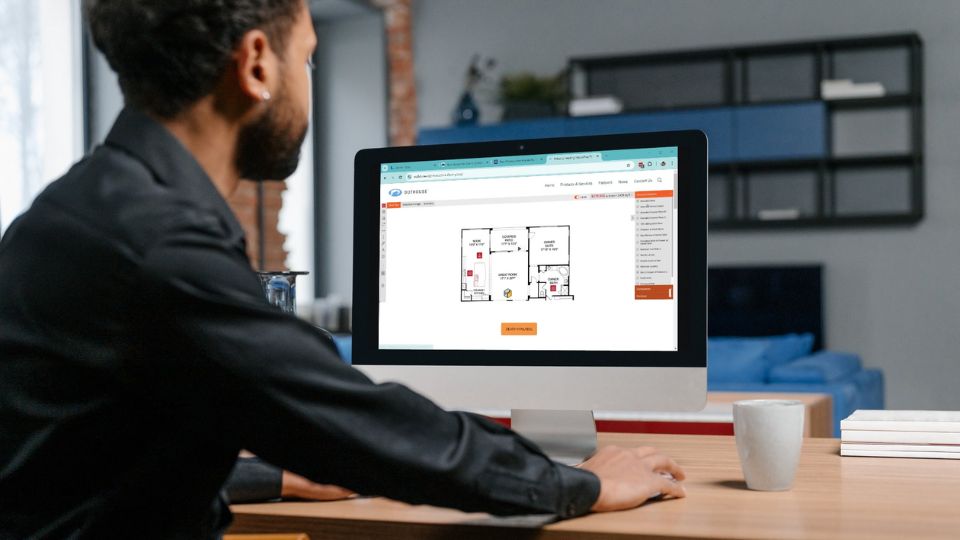
Man looking at interactive floor plan with multiple homebuilder browsers open

Human emotions are a powerful force, especially when it comes to purchasing a home. While homebuyers may believe their decisions are primarily driven by logic, the truth is, how they feel plays a significant—often subconscious—role. And in today’s digital-first world, that emotional connection begins long before the first in-person meeting; it starts online, the moment they visit your website.

Production home builders across the country offer similar baseline information on their websites—square footage, pricing, number of bedrooms, garage options. These metrics are essential, but they don’t differentiate you from competitors. To stand out in a crowded marketplace, your website must engage potential buyers on an emotional level. The builders who succeed will be those that move beyond data points and create an experience that resonates deeply with the emotions that drive purchasing decisions.

Breaking Through the Research-Only Mindset

Every homebuyer begins their journey in research mode, focused on gathering data to compare builders. They have a checklist—square footage, budget, number of rooms—and they visit one builder website after another, reviewing their options. The challenge for your marketing team is to disrupt that research-driven mindset and inspire potential buyers to linger, explore, and imagine themselves living in one of your homes.

This shift happens when your website transcends utility and starts tapping into the emotional motivators that drive decisions. Features like interactive floor plans (IFPs), 3D visualizations, and space planning tools can evoke creativity and excitement, encouraging users to move beyond simple data collection. The longer they stay engaged, the more likely they are to envision their future in one of your homes—and ultimately, to contact you.

The Power of Emotional Motivators

Emotional motivators are the psychological triggers that influence buyer behavior. According to Harvard Business Review, over 300 emotional motivators impact purchasing decisions, from choosing a brand of gum to selecting a home. For the homebuilding industry, the following five motivators are critical in shifting homebuyers from a research mindset to one of creativity and emotional investment:

  • Freedom: Buyers want to feel empowered. Websites that restrict access to information—whether through mandatory registration or withholding key details—stifle this sense of freedom. Open access to pricing, floor plan options, and even premium lot fees makes buyers feel in control. When buyers can freely explore, they are more likely to create emotional connections.

Freedom encourages creativity… Creativity encourages fantasy…
Fantasy encourages emotions… and emotions encourage purchases”.

  • Excitement: Excitement heightens emotions and accelerates decision-making. Tools like virtual walkthroughs and interactive site plans allow buyers to visualize their future, creating an emotional response that drives action. By fostering excitement early in the process—before they even speak with a salesperson—you increase the likelihood of a conversion.
  • Ownership: Empowering buyers to customize their future home—choosing finishes, adjusting floor plans, selecting options—instills a sense of ownership. This emotional attachment strengthens their commitment and increases their willingness to move forward with a purchase.
  • Security: Homebuyers are naturally anxious. They want to know the details: costs, layouts, school districts, and lot availability. The fewer questions a buyer has to ask, the more secure they feel. Your website should anticipate and answer these questions, reducing uncertainty and building trust.
  • Confidence: Confidence is the culmination of effectively nurturing all the previous motivators. When a homebuyer feels secure, excited, and in control, their confidence in both the decision and the builder solidifies. A website that fosters this confidence will convert visitors into buyers before they’ve even stepped foot in a model home.

Create an experience that inspires people to believe, “I CAN DO IT”
…and they will.

Interactive Floor Plans: The Cornerstone of Emotional Engagement

Of all the tools available to home builders, interactive floor plans (IFPs) are the most powerful for engaging emotional motivators across all demographics. While other features like virtual tours and 3D renderings are valuable, IFPs provide a unique opportunity for buyers to personalize their future home, creating a sense of freedom, ownership, and security—all in one experience.

However, not all IFPs are created equal. To truly leverage their potential, your IFPs must include:

  1. Accessibility on All Devices: Buyers should be able to explore floor plans on their phone, tablet, or desktop, seamlessly. If the experience is clunky or limited to certain devices, you risk losing valuable engagement.
  2. Dynamic Pricing: The best IFPs show live pricing that adjusts based on selected options and upgrades. This transparency enhances feelings of freedom and security, as buyers can immediately understand how their choices impact the final price.
  3. Advanced Space Planning: An IFP should allow buyers to visualize their own furniture and fixtures in the space, giving them the freedom to design their home as they see fit. The more detailed and customizable this feature is, the stronger the sense of ownership and emotional connection. The best space planners will even have a library of electrical components (lights, outlets, security cameras, etc.).
  4. Lead Generation Integration: Buyers who invest time customizing their dream home are prequalified leads. The IFP should seamlessly collect contact information and feed it into your CRM, ensuring your sales team can follow up with engaged, motivated buyers. If you do not utilize CRM, make sure the IFP platform has an integrated lead management system.

The right Interactive Floor Plans will nurture all Emotional Motivators.

Conclusion

In today’s competitive homebuilding market, it’s not enough to simply meet the needs of your buyers—you have to connect with them on an emotional level. By harnessing the power of emotional motivators and incorporating the right digital tools into your website, you’ll not only engage potential buyers, but inspire them to envision a future in one of your homes. After all, when you create an online experience that fosters freedom, excitement, ownership, security, and confidence, the decision to choose you becomes

Stuart Platt

Stuart Platt is Managing Partner at Outhouse LLC, an industry leader dedicated to providing an extensive and integrated menu of products and services to production home builders across the world. These services include but are not limited to Architectural Drafting, 3D Renderings, Virtual Tours, Animations, Interactive Floor Plans, Interactive Site Plans, Interactive Sales Office Displays, Interior and Exterior Visualizers, Graphic Design, Commercial Printing, and more. Outhouse is the ONLY company in the nation providing all of these services in house.

Join Stuart Platt at the Home Builder Digital Marketing Summit this October 23-24th! He’ll be diving deep into the strategies discussed in this blog, sharing insights on how to create an online experience that resonates with potential buyers on an emotional level. Don’t miss this opportunity to connect with Stuart and other industry leaders to elevate your digital marketing game.

Join us back here at OutThink in November for Part 3 of Bill Gelbaugh’s Unlocking Outhouse’s Potential with OKRs .

Why Interactive Floor Plans are a Must

Stuart Platt · 11/06/2023 · Leave a Comment

From “It’s Neat” to “It’s Needed,” Why IFPs are a Must

Remember in the spring of 2020, when literally no one was out looking at new homes, and home builders finally began going all-in on digital marketing? The big question once the world opened back up was whether or not websites would retain the same level of prominence. That question has been answered, and it is an emphatic “Yes!” Even homebuyers who visit model homes typically conduct a majority of their research online before they ever drive to one of your communities.

What was once a rare luxury on a builders’ website, Interactive Floor Plans (IFP’s) have become an industry expectation. Builders who thought IFP’s were more novelty than a functional sales tool can no longer argue the overwhelming evidence that IFP’s engage buyers, resulting in: 

  • Increased time on their websites. 
  • Increased qualified homebuyer leads. 
  • Increased number of options sold. 
  • Creating positive emotional connections to your plans.  
  • Converting leads to active prospects in a faster timeline.   
Analytics help builders see who their potential buyers are, where they are coming from, the most popular options, and a whole lot more.

Builders also find IFP’s equally as valuable to their sales team as they are to the homebuyer. Why? One reason is that comprehensive IFP’s can answer 80% of the questions your sales staff needs to field. The buyer experience is tremendously better when the simple questions are already answered, allowing the sales team to focus on selling instead of trying to help figure out how furniture will work, how options change square footage and price, “…and why do I lose the casita option when I choose the expanded garage?” 

Picking the right IFP vendor the first time is of the greatest importance.

Not all IFP’s are created equal 

When choosing a vendor to build and host what is arguably your most important online sales tool, in addition to the basics, make sure the platform you select has ALL the following advanced features: 

  • Branding – First and foremost, ensure your IFP’s are skinned and colored to match your website, logo, and corporate colors.
  • Lead Generation – The ability to save a custom plan that not only tracks these leads, but also pushes them to your CRM. 
  • Space-Planning – A detailed furniture library with scalable items for every room, including the garage and outdoor living areas. 
  • Live Updates – Dynamic pricing and square footage so as buyers add options the price and square footage automatically reflect that. 
  • Hot Spots – Clickable icons within your plan allowing buyers to open renderings, photos, videos, virtual reality and any other eye candy to keep them engaged. 
  • Device Agnostic – Regardless of the brand of computer, laptop, tablet or phone, your IFP’s work on ALL of them. 
Today’s homebuyers expect advanced features when designing their homes and planning furniture layouts with an Interactive Floor Plan.

Picking the right IFP vendor from the start is of the greatest importance. Select a company that knows what they are doing because this is not a process you want to go through a second or third time. If you find yourself dissatisfied with your IFP’s (or vendor) after creating them, they can’t simply be transferred to another vendor. You must pay to have them rebuilt from scratch again.

20-years ago Outhouse was one of the first to offer IFP’s to home builders. Our platform continues to deliver the most mature, dependable, feature-rich, engaging user experience in the industry. Our IFPs are designed to incorporate your renderings, virtual tours, visualizers and more, making it easy for homebuyers to engage with all of your digital tools. Click here for an example. In 2023, we also gave our administrative backend a massive upgrade, so your interactive floor plans, interactive site plans, and interactive kiosks are now housed in the sleek, intuitive, new Outhouse Interactive Control Center. Contact us today to learn more

About the Author: Stuart Platt is Managing Partner at Outhouse LLC, an industry leader dedicated to providing an extensive and integrated menu of products and services to production home builders across the world. These services include but are not limited to Architectural Drafting, 3D Renderings, Virtual Tours, Animations, Interactive Floor Plans, Interactive Site Plans, Interactive Sales Office Displays, Interior and Exterior Visualizers, Graphic Design, Commercial Printing, and more. Outhouse is the ONLY company in the nation providing all of these services in house.

Join Stuart Platt at the Home Builder Digital Marketing Summit this October 23-24th! He’ll be diving deep into the strategies discussed in this blog, sharing insights on how to create an online experience that resonates with potential buyers on an emotional level. Don’t miss this opportunity to connect with Stuart and other industry leaders to elevate your digital marketing game.

Code Cracking: Unlocking the Power of Analytics in Interactive Floor Plans

Stuart Platt · 08/14/2023 · Leave a Comment

You implemented Interactive Floor Plans (IFPs) on your website months, if not years ago. Maybe you have seen a report that your IFPs are experiencing a lot of visits which is fantastic; but what else can you find out? You ask yourself, what other information can I gain from Google Analytics and how can I take advantage of this data?

Analytics Overview Graph

With Google Analytics 4 or ‘GA4’ replacing the traditional and familiar Universal Analytics (UA) platform, your second question may be, what is different, and how will it affect me?

Information Gathering

First, to gather data from your IFP’s, you need to ensure your IFP provider allows access to this data. Some, but not all, IFP providers already allow builders access to reports showing data on basic information like demographics, time on site, which plans are getting the most views, number of views, etc. However, there is little to take advantage of with this data. It is critical to work with IFP providers like Outhouse, LLC, who allow access to deeper details that provide actionable value. These deeper details include, but are not limited to:

  • How users found your website (clicking an ad, social media, search engines, etc.)
  • Popularity of communities and plans.
  • Popularity of specific options selected.

With this information, your Online Sales Counselors can guide homebuyers to a home that best fits their needs.  Your marketing department can better budget how and where ads are most effective in gaining new traffic. Your plan development team gets a better understanding of what options are most valued by homebuyers.

Analytics Events

Google Analytics 4 – What’s New?

GA4 may improve reports for builders in a few areas. Events are a great way to track meaningful actions on your website. One difference between Google’s UA and GA4 is that UA would count the number of ‘hits’, times a specific option is clicked and viewed. We discovered almost every home builder will find their optional Enlarged Shower in Owner’s Bath is clicked and viewed more so than any other option. From that data you might think it is the most purchased option, but that isn’t always the case. It only means it is clicked more than any other option, but not always kept. With GA4 you can more easily drill down to find what options are clicked and KEPT, giving you more accurate data on the most popular options.

Analytics Events Data

Another example is that Outhouse’s Save Plan feature asks for a person’s Name, Email, and Phone Number to save their plan. However, the phone number is made optional because GA4 shows by requiring buyers to enter a phone number, many would discard saving their plan altogether. With this information, Outhouse adjusted their Save Plan feature to make phone numbers optional. In doing so, this dramatically increases the number of saved plans, creating more hot leads for builders to pursue.

Interactive Floor Plans can be the most powerful tool on your website to engage homebuyers and generate leads. When builders utilize an IFP platform that provides access to deeper analytics, they are truly gaining a better understanding of their buyers to take meaningful actions in selling more homes.

About the Author: Stuart Platt is Managing Partner at Outhouse LLC, an industry leader dedicated to providing an extensive and integrated menu of products and services to production home builders across the world. These services include but are not limited to Architectural Drafting, 3D Renderings, Virtual Tours, Animations, Interactive Floor Plans, Interactive Site Plans, Interactive Sales Office Displays, Interior and Exterior Visualizers, Graphic Design, Commercial Printing, and more. Outhouse is the ONLY company in the nation providing all of these services in-house.

Pants Optional – Episode Three: Policy Updates

Stuart Platt · 06/21/2021 · Leave a Comment

Pants Optional is a series focused on advice to company Owners, Managers and Employees on how to be successful in a Work-From-Home business model.

Picture of Warning sign that says "Policy Update" outside in extreme sunlight.

…Clients complained they could hear children in the background of a call. After 2020, that complaint no longer exists.

Some Outhouse, LLC employees have been working from home since 2018, long before a global pandemic made ‘WFH’ a common and recognized acronym. Since then, can you pick which of these Work From Home policies have been updated, made obsolete, or remained the same?

  1. Childcare must be provided in the same manner you would if you worked in the office.
  2. Present yourself in a well-framed, well-lit, organized, professional work environment for video calls.
  3. Dress as you would if you were coming to the office.

When a business model changes, so must policy. The bigger the change, the bigger the adjustments, and no doubt moving to a WFH business model is one of the biggest changes a business can make. If you are an in-office company and you have an employee handbook, read through it and you will quickly identify policies that will need to be added, updated, or eliminated. If you have already moved to a WFH model, you are likely finding the updates you made in the beginning are again requiring updates. Below are only a few of what I have discovered.

1. Childcare Policy

During the summer of 2019 I received a call from a client complaining they could hear children screaming and fighting in the background during a call with one of our managers. The client knew this manager worked from home and was fine with that but “…hearing children in the background was very unprofessional”. I have received similar complaints about dogs barking or cats randomly walking across someone’s desk. I wholeheartedly agreed with the complaints and I promptly called the manager and reminded them of policy #1 and was assured, by the employee, it would not happen again.

Then, well… 2020 right? Schools and daycares were shut down and the entire world changed. You know the story.

Since 2020, you may or may not be amazed how people’s attitudes have changed and relaxed around what would be considered unprofessional disruptions. The complaints I heard in 2019 have all seemed to fall away completely. “Walk a mile in another person’s shoes” as they say. What was once an irritation during a call or virtual meeting has become fodder for empathetic banter, often helping build a stronger rapport between the company and client. In a large Zoom meeting, what might once have caused embarrassment and apologies when a dog comes in and persistently nudges someone’s elbow for attention now elicits an explosion of laughter from the entire audience. Why? Because nearly everybody in that meeting is at home with a dog, cat, child, or adult that did something equally or more embarrassing to them last week.

For our company, the day schools and daycares shut down, the childcare policy temporarily became obsolete. Today, it is mid-2021 so the policy is still unenforced but will one day likely be back when it’s reasonable to do so.

2. Video Calls Policy

Let’s be real. When you are on a video call, we all can’t help but check out what is in the other person’s room or on their walls and JUDGE them for it; and believe me they are doing the same to you! When I am on a video call with anybody; employee, client, vendor or even watching a webinar, I would cringe when I see something that that doesn’t meet the standards I set for myself in a video call. It is different for everybody, but a small list of cringeworthy examples I have personally seen are:

  • Meetings in someone’s bedroom.
  • People are a dark silhouette because of a bright window behind them.
  • Their head is in the lower half of the frame making it look like they are sitting at the kiddie table.
  • Empty Amazon boxes piled behind them.
  • TV’s on in the background.
  • A kegerator! Yes, I’ve seen it and to be honest, I did not cringe; I was impressed!

For many companies, gone are the days of impressing clients or customers with a fancy, professional office. Even if you have an office, today’s technology makes it easy to simply stay at home or anywhere when it comes to meeting nearly anybody. Therefore, what a person sees behind you becomes representative of not only your company, but also you personally.

I was very strict regarding what was seen in the frame of video calls. I was hyper-aware of what was behind myself as well. That has all changed now. Since the addition of virtual backgrounds in the two platforms my company uses, Zoom and MS Teams, it no longer matters what room you are in or what is behind you. Our policy has been adjusted that if you do not have a professional physical background, that you use an appropriate virtual background. It is also important that you are still well lit and properly framed; but having a cat using the litterbox behind you is no longer against policy when using a virtual background.

We also have more leniency with virtual backgrounds allowing employees to express more of their personality if it is tasteful. For meetings with clients, they can use a company branded background or the command deck of the Starship Enterprise if they choose. When it comes to internal meetings, we are even more lenient, bordering NSFW.

Here are my favorite backgrounds for INTERNAL meetings. Email me at [email protected] and I will be happy to share them with you.

3. Dress Code Policy

This is the policy that has not changed. Granted, we never really know what people are wearing below the waist, but up top needs to be presentable. At Outhouse, our dress code is already business-casual, leaning more to the ‘casual’, but at home people can take that to a whole new level. Regardless, every employee is a representative of the company so what they wear matters, and the leadership needs to communicate that.

More importantly, the positive impact of dressing appropriately is becoming more and more apparent. Maintaining the same routine at home that you had going to the office gives you a sense of normalcy, helps keep you focused and productive, improves your self-image, and even helps separate work-life boundaries.

When you used to go to an office, if you showered every morning, continue doing so. If you changed your clothes after coming home from work, continue doing so. Maintaining separation from work and home, when they are one in the same, is critical… but that’s another blog.

The good news is most policies only require minimal updates moving to a WFH model. To add to that, there is an abundance of new online WFH resources that did not exist before 2020. Google search is your friend and many new professional services and apps have been developed specifically for WFH companies. This past year has seen an explosion of WFH advancements, and I predict it is not going to slow down any time soon.

About the Author: Stuart Platt, Managing Partner at Outhouse LLC restructured his 25+ year company to an Office Optional (OffOp) business model in 2018. Stuart’s version of the OffOp model enabled the company of nearly 40 employees to downsize its physical office from 14,000sf to 6,000sf. Based in Phoenix, local employees desiring to work in the office for a few days, weeks or months can reserve any open desk whenever they want. The remaining employees work from home, fulltime across 10 different states and counting.

Pants Optional – Episode Two: The Mindset Commute

Stuart Platt · 04/05/2021 · Leave a Comment

Pants Optional is a series focused on advice to company Owners, Managers, and Employees on how to be successful in a Work-From-Home business model.

Man with goggles sitting in front of computer taking a virtual commute to his home office

“…nobody complained about adding their commute time back in their lives, but after a while, many people discovered there was a downside.”

Before working from home my daily 16-mile commute in Phoenix, Arizona was 23-minutes each way. Half on the freeway and half on busy city streets during rush hour. I was fortunate to be driving a safe, comfortable, and reliable vehicle. I fell right in the average American commute time to and from work. Other employees ranged from a few minutes away to several driving over an hour each way. Regardless of the time, nobody complained about adding their commute time back in their lives, but after a while, many people discovered there was a downside. A potentially serious downside for some.

Even if they did not realize it at the time, their daily commute had become a critical step in transitioning from a homelife mindset to a work life mindset, and vice-versa. During their commute to work, they could think about and mentally prepare for their day. On their way home it might become a time of reflection, or a time to think about what is for dinner, or to simply zone out and crank the music.

Lady in her car singing to the radio

People discovered the 5-second work from home commute was a shock to their system, suddenly jarring their mental states from home to work and back home again. At the end of the day, people found themselves irritated by their family, or roommates, or pets, because they did not feel like they had any downtime after work. And they didn’t! Their family was acting the same as when they walked in from the garage before. The only difference is that you never realized you used that 15, 30, 45-minutes of commuting to transition from your work life mindset back to homelife. It was completely unconscious.

Enter the Mindset Commute. If you had a 20-minute commute before, then try taking 20-minutes to do something that is going to give you the time and environment you need to get that transition back. Get out of the house and take a walk or go for a run. Step out on the patio and enjoy a beverage by yourself.

Whatever you decide, most importantly, make sure you have an agreement with whomever you live with (except the dog) that the 20-minutes after you walk out of your home office, those minutes are still yours and you are not to be disturbed unless something literally catches on fire. Explain to your roommates or family how you need this personal time to purge your mind from work. If they have noticed you have seemed irritable after work, they will understand the importance of giving you this.

Bonsai tree

Spend some time on a hobby or start a new one! Admit it; you have always wanted to try Bonsai.

And the word commute can really mean just about anything. By one definition, your mindset commute can mean literally getting into your car and driving around the neighborhood for 20-minutes, return home, walk in the door and announce “Honey, I’m home!” Or take the money you are saving on gas and eating out and buy a VR headset. Take a virtual drive anywhere in the world! Here are some great ideas:

  • Hobbies – Spend some time on a hobby or start a new one! Admit it; you have always wanted to try Bonsai.
  • Exercise – Obvious, but how many times have you made excuses of not having enough time to be active? Look up the 7-Minute Workout.
  • Gaming – Jump off the work computer and onto the gaming console. Because not everybody gets excited about pushups, crunches and burpees.
  • Meditate – There are hundreds of ways to meditate. Do a little research and try one out.

Personally, my morning commute was a ritual of creating the perfect cup of coffee. It seems like such a pretentious thing to me now, but I would take about 15-minutes to meticulously brew a carafe of coffee. Get this, I would hand-grind fresh, expensive, gourmet coffee beans in a manual ceramic burr coffee grinder, place the grinds into a double-walled, stainless steel French press (with mirror finish of course), while boiling water in my gooseneck kettle on the stovetop. After blooming the grinds for 30-seconds with a splash of hot water then pouring the rest in, I would wait 2-minutes before slowly plunging the press with only the weight of my hand. Part of me hates to admit how much I enjoyed that process, but let me tell you, after that I was mentally ready to walk into my home office and get to work.

Man making coffee in a stainless steel French press

My meticulous coffee commute lasted all of 2 months. Since then, just like tonight, I will think to myself, “Gah, I need to get the coffee ready.” and as if it were the last chore before going to bed, scoop the generic pre-ground coffee into the 10-cup electric coffee maker and hope I remember to hit the timer button so it’s ready in the morning. Honestly, after the first year I no longer need a morning commute. I’m mentally ready to jump right in the home office with my mediocre coffee and get to it. After work, most days now I no longer need a commute either, but when I do I usually like to sit out on my patio for 10-15 minutes, with the dogs, and enjoy an adult beverage while shamelessly scrolling through social media on my phone.

However the mindset commute looks to you, the common denominator is personal time—that magic amount of personal time allowing you to shift from one mindset to another. Your routine before work may be completely different and take only a fraction of the time you require after work. Some of you may not require a morning or evening commute at all. The type and time of commute you need today may not be the same next month or next year. Try alternating between different commutes based on your mood. Before working from home, you could drive different routes to disrupt the monotony. Why not do the same thing at home? Give yourself permission to change your commute and try new things.

Outhouse partner Stuart Platt

About the Author: Stuart Platt, Managing Partner at Outhouse LLC restructured his 25+ year company to an Office Optional (OffOp) business model in 2018. Stuart’s version of the OffOp model enabled the company of nearly 40 employees to downsize its physical office from 14,000sf to 6,000sf. Based in Phoenix, local employees desiring to work in the office for a few days, weeks or months can reserve any open desk whenever they want. The remaining employees work from home, fulltime across 10 different states and counting.

Pants Optional – Episode One: Where Do I Start?

Stuart Platt · 02/03/2021 · Leave a Comment

Pants Optional is a series focused on advice to company Owners, Managers and Employees on how to be successful in a Work-From-Home business model.

Online work at home. A young man typing on a laptop sitting at a table at home.

Before 2020, deciding to become a Work From Home (WFH) company was exactly that; a decision. When the pandemic hit, many companies had this decision made for them – Become a WFH company or risk losing some staff or your company altogether. For those of you who survived the nightmare of shifting to a WFH business model, practically overnight, you sincerely have my undying respect and admiration. If you have already, or intend to, bring everybody back to the office to continue ‘business as usual’ the Pants Optional series may not be of much value to you. Those who will benefit most from this series are:

  • Business Owners forced into a WFH business model with a desire to continue doing so.
  • Business Owners considering moving to a permanent WFH business model from scratch.
  • Managers wanting to develop and improve WFH policies, procedures, and communication.
  • Workers looking for support and advice on how to navigate the surprisingly complex WFH transition.
  • Anybody already working in a WFH environment open to learning more tips and tricks as this work/lifestyle evolves.

So… Where do I start? Seeing as every business is different, the steps Outhouse went through may not apply to what you will need to follow, but the overall goals will likely be the same or very similar. The primary categories all companies will need to focus on are Technology, Operations, and Culture and that is what this episode will cover.

As an owner, I often found myself the cause of delays because I had stretched myself too thin… “

First, give yourself as much time as possible to plan and research. I started entertaining the idea of going remote 24 months before doing so with some light research 18-months before the move I got very serious putting mostly my own time into researching a transition; then at T-minus 12-months I formed a team of my smartest employees to help make it happen, with me still deeply involved in every aspect. My biggest recommendation is to form a team early, even if it means hiring consultants to do most of the heavy lifting. I sacrificed way more of my own hours towards research, planning and executing than I anticipated or frankly needed. As an owner, I often found myself the cause of delays because I had stretched myself too thin, neglecting other responsibilities. Do not do the same to yourself.

Symbols on blue background representing cloud technology
Like it or not, you are probably going to learn more about Cloud technology than you ever intended.

Technology

Hardware/software, file sharing, security, backups and redundancies, internal and external communications are going to be your biggest concerns with many unforeseen obstacles along the way.

File sharing was my company’s biggest challenge. We maintain roughly 1.5 million files (15 terabytes) in our active libraries and projects. With 40 people sharing files across 10 states, we still have frequent hiccups and have not figured it out 100%.

Another challenge was IT troubleshooting and hardware issues. To help solve this we moved to outsourcing 24-hour IT support and maintenance. Today, every employee has nearly instant online support for software issues. For hardware failures we utilize Amazon’s same-day/next-day deliveries or in emergencies send workers to pick up hardware at their local electronics stores. It’s rare anything takes longer than 24-hours to fix with most issues being resolved within 4-6 hours.

If you are technology heavy, do not be surprised if your expenses go up instead of down. Outsourcing IT support may be one of those areas. You may also spend more on upgraded cloud software, backup subscriptions, filesharing services, additional hardware for home-office systems, Zoom, etc.

Business people merging cog wheels

Operations

Standard operating procedures, office space, project management, team dynamics, vendor relations, meetings, working with customers and so much more. Operations is likely going to be the longest and most time-consuming list of challenges to solve, but you will also find opportunities for some surprising wins.

With the luxury of having over a year of planning, we were able to test a lot of systems and processes before the actual move. Internal employee communication is a good example. We moved to Microsoft Teams several months before the physical move and directed our in-office staff to communicate as if they were home.

Operations is likely going to be the longest and most time-consuming list of challenges to solve, but you will also find opportunities for some surprising wins. “

One of the surprising wins was in training new and existing employees. Being able to remotely watch the trainer while sharing each other’s screens was a big benefit over standing over someone’s shoulder taking notes. It was also easier for an employee to call in and share their screen with a trainer to ask questions.

We only had 1 or 2 employees who could not handle working from home. Sometimes you must accept it just isn’t in a person’s nature to work without physical supervision. This is the benefit of our Office Optional program. This at least gives local employees the choice to come back to the office.

Silhouette of group happy business team making high hands over head in beautiful sunset sky evening time for business success and teamwork concept in company

Culture

Many books about business will tell you something along the lines of “company culture is the shared values, attributes, and characteristics of an organization,” but the best company cultures also consider people’s emotions. In an office environment, it’s much easier to walk around, stop by someone’s desk or office and take the temperature of how individuals are feeling about things. People go to lunch or happy hour together. Face-to-face casual/intimate/honest conversations come more naturally in an office environment than over a video call. This dynamic is going to change when people work remotely, and leadership is going to need to adjust to make up for this.

A 2020 survey[1] shows Collaboration/Communication and Loneliness tied for first as the biggest struggles with working remotely. The longer a person works from home, the more likely they will start feeling disconnected from their coworkers, the company, and the leadership. When that happens, it is just a matter of time before they stop caring about the company or the individuals they work with.

The longer a person works from home, the more likely they will start feeling disconnected from their coworkers, the company, and the leadership. “

As a business owner, if you want to set your company up for the best chance of success working from home, be prepared to spend as much time designing new ways to stay connected to your people as you spend solving your technology and operational challenges. Because, well… feelings matter. Yes, culture is about values, attributes, and characteristics of the organization, but it is also about the interpersonal relationships your people share within the company. Developing, nurturing, and maintaining relationships inside a physical office space comes more naturally than in a work-from-home setting.

Many industries will never be able to offer WFH for some, most or any of their employees. The logistics just will not allow it. However, with technology that exists today, and in the future, many businesses are discovering WFH not only works, but may be an even better business model than before.

[1] Buffer.com/state-of-remote-2020

About the Author: Stuart Platt, Managing Partner at Outhouse LLC restructured his 25+ year company to an Office Optional (OffOp) business model in 2018. Stuart’s version of the OffOp model enabled the company of nearly 40 employees to downsize its physical office from 14,000sf to 6,000sf. Based in Phoenix, local employees desiring to work in the office for a few days, weeks or months can reserve any open desk whenever they want. The remaining employees work from home, fulltime across 10 different states and counting.

Ready to get started, want more info?

Contact Us
  • Facebook
  • Instagram
  • LinkedIn
  • YouTube

Outhouse

11048 N 23rd Ave #103
Phoenix, AZ 85029

602-371-4394

© 2026 All rights reserved