
We’ve been making the case in this space that the housing industry’s greatest risk isn’t trying something new; it’s continuing to build for a market that no longer exists. We’ve talked about the gap between affordability and attainability. We’ve talked about who’s competing for starter homes before first-time buyers even get a shot.
We know that pressure because we carry versions of it ourselves. Every decision about which tools to invest in, which capabilities to build, which bets to make in a shifting market; we’ve sat with that uncertainty. If that sounds like where you are right now, this post is for you.
Today we’re talking about a market segment that is quietly solving its own attainability problem. Most builders are still marketing it with the wrong vocabulary.
Fourteen percent of all home purchases in 2026 were made specifically to accommodate multi-generational living. That’s not a niche. That’s not a trend. That’s nearly one in seven transactions driven by a single underlying reality: when families pool resources across generations, the math of homeownership starts to work again in ways it simply doesn’t for a single income or a young couple going it alone.
The demand is there. The product is evolving. What hasn’t caught up is how builders are communicating it.
The Language Is Doing the Work Wrong
Walk into most sales centers today and you’ll hear the same terminology that’s been in use for thirty years. “Mother-in-Law Suite.” “In-Law Apartment.” “Guest Quarters.” These phrases aren’t wrong exactly; they’ve been the best vocabulary anyone offered the industry, and there’s no mystery in why builders are still using them. When a phrase becomes the category name, it sticks. Until something better comes along.
Something better has come along. We’ve started calling it “Zoned Living,” and the difference isn’t semantic. It’s structural.
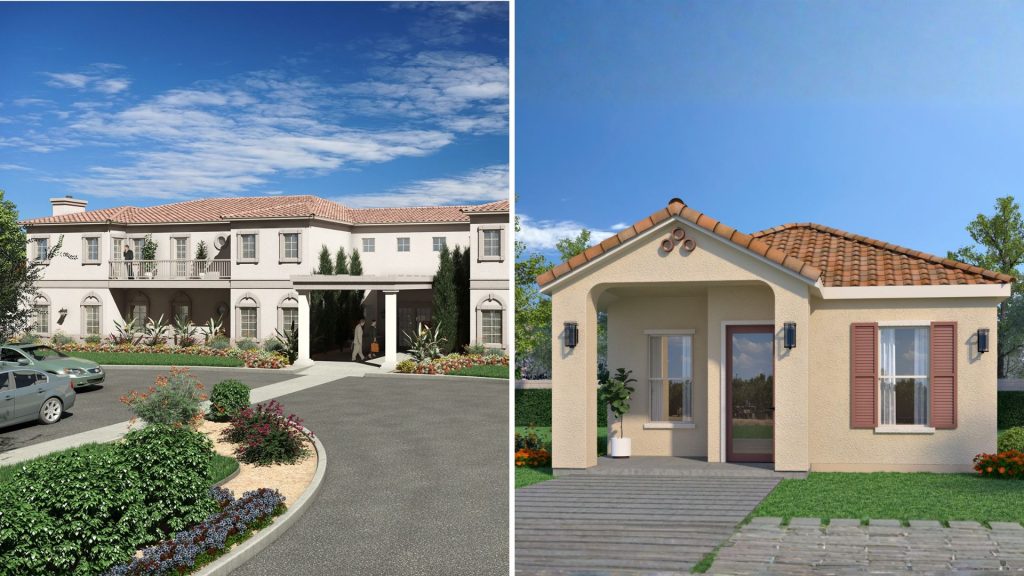
A suite implies a secondary space (something added on, subordinate to the main house). Zoned living implies two complete, private worlds under one roof: dual primary suites, private-entry ADUs, sound-dampened flex zones that can serve as a nursery today, a home office in three years, and a caregiver’s suite in ten. The product can do all of that. The language hasn’t caught up.
And language does real work in a sales conversation. When a buyer hears “Mother-in-Law Suite,” they mentally subtract it from the home; it’s a feature for someone else, a concession to a family circumstance. When they hear “Zoned Living,” they start imagining their own configuration. Two entirely different psychological starting points, two entirely different conversations.
The builders winning the multi-generational market right now are, almost without exception, the ones who’ve made this shift in vocabulary before the competition did.
The Buyers Have Changed
The 14% figure in the 2026 NAR data tells a more nuanced story than it first appears.
It’s a slight decline from the 17% spike we saw in 2024; the mistake is to read that as the trend softening. The underlying drivers haven’t changed. Aging parents who need proximity but not loss of independence. Adult children who can’t carry a mortgage alone in this economy. A Gen Z cohort returning home after early career starts that didn’t land the way previous generations expected. And increasingly, arrangements driven not by necessity but by genuine choice: families who watched the pandemic reshape what proximity means and decided they want to live closer together.
That combination of drivers isn’t going away. The 2024 spike reflected COVID-era urgency. The 2026 number reflects normalized demand at a structurally higher baseline. One in seven home purchases. Sustained.
What’s also changed (and this is what makes this sale feel genuinely different to everyone navigating it) is who shows up to the sales center. And they don’t show up alone.
The traditional home purchase involves one decision-making unit with a relatively contained set of preferences. The multi-generational purchase involves two, sometimes three, stakeholders with genuinely different needs, different physical requirements, and different timelines. The 80-year-old who will live in the private suite has different priorities than the 45-year-old financing it. The adult child who wants a lockable private entrance has different concerns than the grandparent who needs single-floor accessibility.
Here’s what that can feel like from the sales floor: you’re trying to serve both the person who is buying and the person who will be living there, with different concerns and sometimes different ideas about what matters most. It’s not a harder version of the sale you already know. It’s a different conversation altogether.
And most sales tools weren’t built for it.
The Invisible Problem: Selling a Home Buyers Can’t See
This is where families run into the wall. Builders feel it too.
Our clients tell us, consistently, that the multi-generational buyer is one of the most motivated they serve and one of the most difficult to bring to a confident decision. The reason almost always comes back to the same thing: they can’t see what they’re buying. Not really.
For a standard single-family home, the visualization gap is manageable. A floor plan plus some renderings of the primary living areas gets the buyer close enough that they can fill in the rest. A bedroom is a bedroom; a kitchen is a kitchen. The imagination does the rest.
For a multi-generational home, the stakes are much larger; they’re emotional as much as they’re practical. The privacy, the separation, the acoustic independence, the way the private entrance actually feels when you walk from the shared living area to the secondary suite: none of it is visible in a 2D floor plan. You can show the dimensions. You can label the rooms. What you cannot convey is whether this configuration delivers what the family is actually buying: the feeling that two families can share a roof without sharing a life.
And behind every floor plan that fails to convey that, there’s a real family trying to make an enormous decision. A mother in Phoenix trying to buy a home for herself and her parents who are still in Ohio. A daughter who has promised her aging father he’ll have his own front door, his own kitchen, his own sense of independence; she needs to show him what that means before he’ll believe it. These are people navigating some of the most emotionally complex decisions a family makes. And they’re often being asked to do it from a piece of paper.
That gap is where the sale falls apart. Not because the product isn’t right. Not because the buyer isn’t motivated. Because what they need to understand in their body (not their mind) is something the static plan cannot give them.
And when that gap doesn’t get bridged, a family that was ready to make this decision goes home uncertain. That’s the part we can’t stop thinking about.
Two things bridge that gap, and we’ve watched them work.
The Life Stage Visualization. Multi-generational buyers aren’t just buying a home for today. They’re buying a home for a family in motion. The nursery that becomes the teen suite that becomes the parent’s suite. The home office that becomes the caregiver’s room when the moment arrives. What our clients show us, consistently, is that buyers who can see those transitions make decisions with a confidence that buyers working from static materials never reach. The uncertainty lifts. The question shifts from “will this work?” to “when do we move forward?”
The Multi-Stakeholder Virtual Tour. The other challenge specific to multi-generational purchases is that the decision-making unit is often distributed. The adult child in Phoenix is buying with parents in Ohio. The grandparent who will live in the suite can’t make the trip to the sales center. High-fidelity virtual tours don’t just allow remote buyers to see the property; they allow a family to walk through a home together, in real time, from wherever they are. The grandmother can say “I don’t like that the suite is right next to the kitchen” and everyone is looking at the same thing. That conversation (the one that actually resolves the purchase) happens at the sales center for buyers who can be there. For everyone else, it either happens virtually or it doesn’t happen at all.
The Strategic Question
The builders winning the multi-generational market in 2026 aren’t winning because they have a better product than their competitors. Many of them are building the same floor plans. They’re winning because they’ve built the communication infrastructure to sell it.
That means the vocabulary: Zoned Living, not Mother-in-Law Suite. It means the visualization tools: interactive floor plans that show how a space changes, not static renderings of a single configuration. It means the sales process: one designed for a decision-making unit of three, not one designed for a couple.
Building that infrastructure isn’t free; we know that because we’ve made those calls ourselves. It requires investment in tools, in training, in rethinking how the sales conversation unfolds; every one of those decisions carries real weight when resources are finite and the return isn’t guaranteed. We’re not minimizing what that costs. We’re saying that the NAR data tells us this demand is sustained and structural; that the underlying drivers aren’t going away; and that every builder in production housing will be selling to multi-generational buyers whether they’ve built for it intentionally or not.
The question isn’t whether this market is coming. It’s here. The question is whether your marketing infrastructure can close it when it walks through your door.
What Outhouse Can Do
At Outhouse, this particular problem sits at the center of everything we do: the gap between what a multi-generational home can do for a family and what that family can actually understand before they sign. We don’t have a perfect answer for every situation; the sales process is genuinely complex and what works in one builder’s market doesn’t always translate cleanly to another. But we care deeply about getting this right (not just because it’s where we can help most, but because the families on the other side of these decisions deserve to make them with clarity and confidence).
The grandmother who can’t travel. The daughter who made a promise about her father’s independence. The family trying to decide whether this will actually work. When the tools are right, those families get to decide from a place of knowing. When the tools aren’t there, they’re guessing. We’re in this work because we believe that difference matters.
Interactive floor plans that show the life stage trajectory. Virtual tour technology built for distributed family decision-making. Design center tools that let multiple stakeholders configure the same space from different locations, in real time.
These aren’t future capabilities. Builders using them are winning the multi-generational sale today; the families they serve are making decisions they feel genuinely good about.
If you’re seeing this buyer in your sales center and not closing them at the rate your product deserves, we’d love to help. The infrastructure exists. The question is whether it’s working as hard as it should be for you.
Find out how Outhouse can help.
Footnotes
National Association of Realtors, 2026 Home Buyers and Sellers Generational Trends Report. The 14% figure reflects purchases made specifically to accommodate multi-generational household arrangements; the prior-year figure (17%) reflected elevated post-pandemic demand that has since normalized at a structurally higher baseline than pre-2020 levels.