• Skip to primary navigation
  • Skip to main content
Outhouse logo

Outhouse

The Outsource Hub for Home Builders

  • Home
  • Products & Services
    • Architectural/CAD
    • Rendering
    • Virtual Reality
    • Interactive Floor Plans
    • Interactive Site Maps
    • Interactive Kiosks
    • Print Marketing
    • Sales Office Displays
  • Partners
  • News
    • Events
    • Blog
    • Podcast
  • About Us
  • Contact Us
  • Show Search
Hide Search

Tabitha Warren

The Multi-Generational Explosion: Marketing the “Zoned” Revolution

Tabitha Warren · 06/22/2026 · Leave a Comment

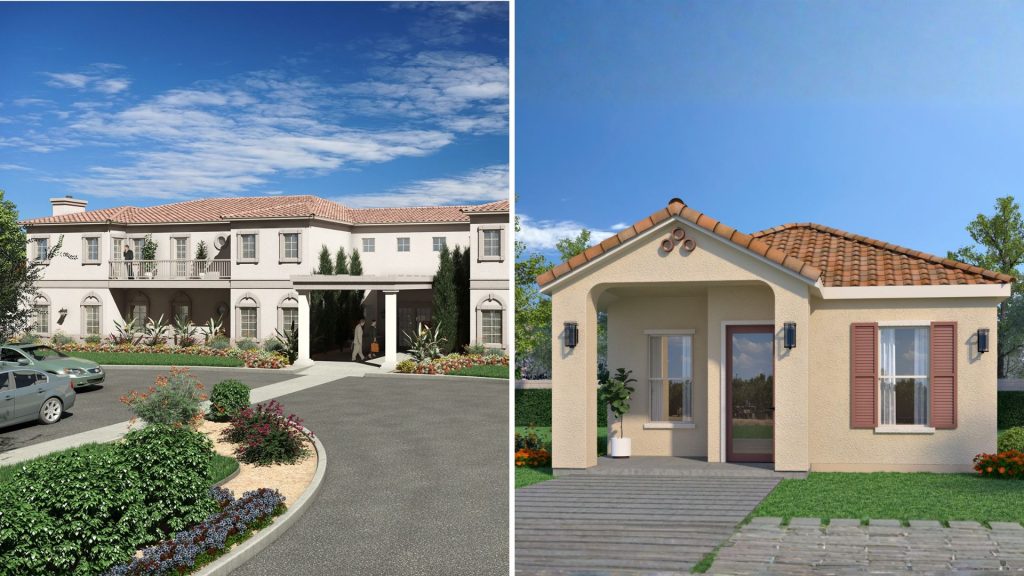
Split image of the front of two houses
Multigenerational home and ADU

We’ve been making the case in this space that the housing industry’s greatest risk isn’t trying something new; it’s continuing to build for a market that no longer exists. We’ve talked about the gap between affordability and attainability. We’ve talked about who’s competing for starter homes before first-time buyers even get a shot.

We know that pressure because we carry versions of it ourselves. Every decision about which tools to invest in, which capabilities to build, which bets to make in a shifting market; we’ve sat with that uncertainty. If that sounds like where you are right now, this post is for you.

Today we’re talking about a market segment that is quietly solving its own attainability problem. Most builders are still marketing it with the wrong vocabulary.

Fourteen percent of all home purchases in 2026 were made specifically to accommodate multi-generational living. That’s not a niche. That’s not a trend. That’s nearly one in seven transactions driven by a single underlying reality: when families pool resources across generations, the math of homeownership starts to work again in ways it simply doesn’t for a single income or a young couple going it alone.

The demand is there. The product is evolving. What hasn’t caught up is how builders are communicating it.

The Language Is Doing the Work Wrong

Walk into most sales centers today and you’ll hear the same terminology that’s been in use for thirty years. “Mother-in-Law Suite.” “In-Law Apartment.” “Guest Quarters.” These phrases aren’t wrong exactly; they’ve been the best vocabulary anyone offered the industry, and there’s no mystery in why builders are still using them. When a phrase becomes the category name, it sticks. Until something better comes along.

Something better has come along. We’ve started calling it “Zoned Living,” and the difference isn’t semantic. It’s structural.

A suite implies a secondary space (something added on, subordinate to the main house). Zoned living implies two complete, private worlds under one roof: dual primary suites, private-entry ADUs, sound-dampened flex zones that can serve as a nursery today, a home office in three years, and a caregiver’s suite in ten. The product can do all of that. The language hasn’t caught up.

And language does real work in a sales conversation. When a buyer hears “Mother-in-Law Suite,” they mentally subtract it from the home; it’s a feature for someone else, a concession to a family circumstance. When they hear “Zoned Living,” they start imagining their own configuration. Two entirely different psychological starting points, two entirely different conversations.

The builders winning the multi-generational market right now are, almost without exception, the ones who’ve made this shift in vocabulary before the competition did.

The Buyers Have Changed

The 14% figure in the 2026 NAR data tells a more nuanced story than it first appears.

It’s a slight decline from the 17% spike we saw in 2024; the mistake is to read that as the trend softening. The underlying drivers haven’t changed. Aging parents who need proximity but not loss of independence. Adult children who can’t carry a mortgage alone in this economy. A Gen Z cohort returning home after early career starts that didn’t land the way previous generations expected. And increasingly, arrangements driven not by necessity but by genuine choice: families who watched the pandemic reshape what proximity means and decided they want to live closer together.

That combination of drivers isn’t going away. The 2024 spike reflected COVID-era urgency. The 2026 number reflects normalized demand at a structurally higher baseline. One in seven home purchases. Sustained.

What’s also changed (and this is what makes this sale feel genuinely different to everyone navigating it) is who shows up to the sales center. And they don’t show up alone.

The traditional home purchase involves one decision-making unit with a relatively contained set of preferences. The multi-generational purchase involves two, sometimes three, stakeholders with genuinely different needs, different physical requirements, and different timelines. The 80-year-old who will live in the private suite has different priorities than the 45-year-old financing it. The adult child who wants a lockable private entrance has different concerns than the grandparent who needs single-floor accessibility.

Here’s what that can feel like from the sales floor: you’re trying to serve both the person who is buying and the person who will be living there, with different concerns and sometimes different ideas about what matters most. It’s not a harder version of the sale you already know. It’s a different conversation altogether.

And most sales tools weren’t built for it.

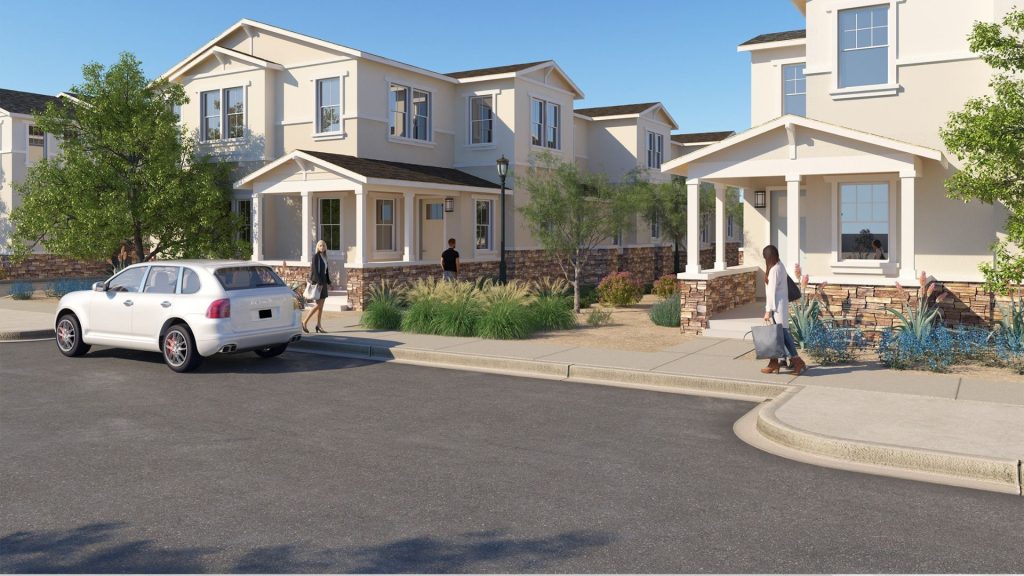
 Outside view of neighborhood with beautiful two story houses.

The Invisible Problem: Selling a Home Buyers Can’t See

This is where families run into the wall. Builders feel it too.

Our clients tell us, consistently, that the multi-generational buyer is one of the most motivated they serve and one of the most difficult to bring to a confident decision. The reason almost always comes back to the same thing: they can’t see what they’re buying. Not really.

For a standard single-family home, the visualization gap is manageable. A floor plan plus some renderings of the primary living areas gets the buyer close enough that they can fill in the rest. A bedroom is a bedroom; a kitchen is a kitchen. The imagination does the rest.

For a multi-generational home, the stakes are much larger; they’re emotional as much as they’re practical. The privacy, the separation, the acoustic independence, the way the private entrance actually feels when you walk from the shared living area to the secondary suite: none of it is visible in a 2D floor plan. You can show the dimensions. You can label the rooms. What you cannot convey is whether this configuration delivers what the family is actually buying: the feeling that two families can share a roof without sharing a life.

And behind every floor plan that fails to convey that, there’s a real family trying to make an enormous decision. A mother in Phoenix trying to buy a home for herself and her parents who are still in Ohio. A daughter who has promised her aging father he’ll have his own front door, his own kitchen, his own sense of independence; she needs to show him what that means before he’ll believe it. These are people navigating some of the most emotionally complex decisions a family makes. And they’re often being asked to do it from a piece of paper.

That gap is where the sale falls apart. Not because the product isn’t right. Not because the buyer isn’t motivated. Because what they need to understand in their body (not their mind) is something the static plan cannot give them.

And when that gap doesn’t get bridged, a family that was ready to make this decision goes home uncertain. That’s the part we can’t stop thinking about.

Two things bridge that gap, and we’ve watched them work.

The Life Stage Visualization. Multi-generational buyers aren’t just buying a home for today. They’re buying a home for a family in motion. The nursery that becomes the teen suite that becomes the parent’s suite. The home office that becomes the caregiver’s room when the moment arrives. What our clients show us, consistently, is that buyers who can see those transitions make decisions with a confidence that buyers working from static materials never reach. The uncertainty lifts. The question shifts from “will this work?” to “when do we move forward?”

The Multi-Stakeholder Virtual Tour. The other challenge specific to multi-generational purchases is that the decision-making unit is often distributed. The adult child in Phoenix is buying with parents in Ohio. The grandparent who will live in the suite can’t make the trip to the sales center. High-fidelity virtual tours don’t just allow remote buyers to see the property; they allow a family to walk through a home together, in real time, from wherever they are. The grandmother can say “I don’t like that the suite is right next to the kitchen” and everyone is looking at the same thing. That conversation (the one that actually resolves the purchase) happens at the sales center for buyers who can be there. For everyone else, it either happens virtually or it doesn’t happen at all.

The Strategic Question

The builders winning the multi-generational market in 2026 aren’t winning because they have a better product than their competitors. Many of them are building the same floor plans. They’re winning because they’ve built the communication infrastructure to sell it.

That means the vocabulary: Zoned Living, not Mother-in-Law Suite. It means the visualization tools: interactive floor plans that show how a space changes, not static renderings of a single configuration. It means the sales process: one designed for a decision-making unit of three, not one designed for a couple.

Building that infrastructure isn’t free; we know that because we’ve made those calls ourselves. It requires investment in tools, in training, in rethinking how the sales conversation unfolds; every one of those decisions carries real weight when resources are finite and the return isn’t guaranteed. We’re not minimizing what that costs. We’re saying that the NAR data tells us this demand is sustained and structural; that the underlying drivers aren’t going away; and that every builder in production housing will be selling to multi-generational buyers whether they’ve built for it intentionally or not.

The question isn’t whether this market is coming. It’s here. The question is whether your marketing infrastructure can close it when it walks through your door.

What Outhouse Can Do

At Outhouse, this particular problem sits at the center of everything we do: the gap between what a multi-generational home can do for a family and what that family can actually understand before they sign. We don’t have a perfect answer for every situation; the sales process is genuinely complex and what works in one builder’s market doesn’t always translate cleanly to another. But we care deeply about getting this right (not just because it’s where we can help most, but because the families on the other side of these decisions deserve to make them with clarity and confidence).

The grandmother who can’t travel. The daughter who made a promise about her father’s independence. The family trying to decide whether this will actually work. When the tools are right, those families get to decide from a place of knowing. When the tools aren’t there, they’re guessing. We’re in this work because we believe that difference matters.

Interactive floor plans that show the life stage trajectory. Virtual tour technology built for distributed family decision-making. Design center tools that let multiple stakeholders configure the same space from different locations, in real time.

These aren’t future capabilities. Builders using them are winning the multi-generational sale today; the families they serve are making decisions they feel genuinely good about.

If you’re seeing this buyer in your sales center and not closing them at the rate your product deserves, we’d love to help. The infrastructure exists. The question is whether it’s working as hard as it should be for you.

Find out how Outhouse can help.

LEARN MORE

Footnotes

National Association of Realtors, 2026 Home Buyers and Sellers Generational Trends Report. The 14% figure reflects purchases made specifically to accommodate multi-generational household arrangements; the prior-year figure (17%) reflected elevated post-pandemic demand that has since normalized at a structurally higher baseline than pre-2020 levels.

Texture, Tone, and Trust: The Neuroscience of High-Fidelity Visualization

Tabitha Warren · 06/08/2026 · Leave a Comment

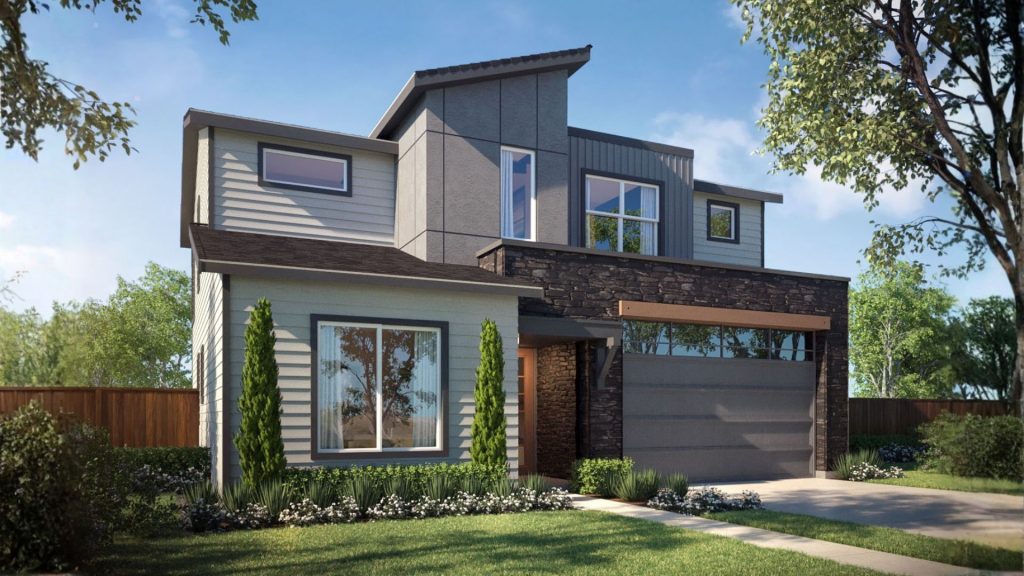
Front yard rendering of a Postmodern House.

The 2.5-Second Threshold

Curb appeal used to happen at the street. Now it happens on a smartphone screen, and the judgment window is tighter than most builders realize. 

Your buyer’s brain makes a brand assessment in just 2.5 seconds. In that heartbeat, they decide whether your brand represents quality or a compromise. When 3D renderings appear flat or poorly lit, the brain’s amygdala, the center for processing emotions and trust, can register a “fake” signal. In a market where trust is the primary currency, a low-fidelity image doesn’t just look bad; it creates subconscious doubt. 

Why the Moment Is Especially Demanding Right Now

Current 2026 design trends are dominated by Organic Modernism. This style relies heavily on tactile surfaces: lime-wash walls, white oak cabinetry, tumbled stone, and linen textures. These materials aren’t just colors; they are experiences defined by how light interacts with their surfaces. 

And here’s the thing: that’s exactly what makes them so demanding to render. Lime-wash has depth that shifts with lighting conditions. White oak has a grain that catches light differently at different angles. Tumbled stone carries shadow and dimension at scales a standard CAD export can’t resolve. When a rendering flattens those surfaces, when the grain maps as texture, when the lime-wash reads as paint, the amygdala fires. The buyer doesn’t know why something feels off. But something feels off. 

You aren’t selling a floor plan. You’re selling the feeling of home. And the materials that evoke that feeling most powerfully right now are the exact materials that demand the most from your visuals. 

Organic Modernism

The Technical Bridge to Certainty

Getting there means moving beyond “good enough.” It requires a commitment to physical accuracy in the rendering that matches the commitment to the actual construction. 

Two capabilities make the real difference. 

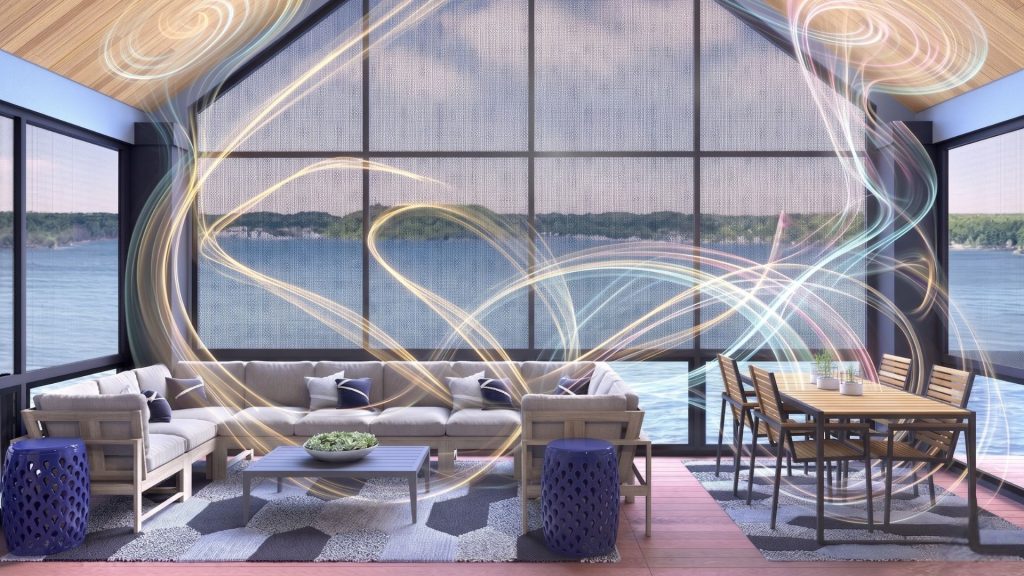
Global Illumination isn’t about adding a light source to a scene. It’s about simulating how light actually moves through a space, how it bounces, casts shadows, and shifts by the hour and the season. The sun hitting a breakfast nook at 8:00 AM in September creates a quality of light the brain recognizes as real before the conscious mind has processed anything. That recognition is what “sense of place” actually means, not a stylistic quality, but a neurological one. 

PBR  (Physically Based Rendering) uses advanced material science so buyers can practically feel the wood grain and the coolness of the quartz through the screen. When materials respond to light the way they would in the actual room, the brain’s “fake” detector stays quiet. Your buyer stops scrutinizing and starts feeling, and feeling is what buying is all about. 

Global Illumination

What the Data Shows

Neuroscience is backed by real outcomes. According to the Dodge Construction Network’s 2026 Outlook, builders using high-fidelity, photorealistic renderings see a 30% higher engagement rate than those using standard CAD exports. The reason is biological: high-fidelity visuals bypass the logical brain and trigger an immediate emotional response. 

The Institute of Residential Marketing reports that homes marketed with high-quality 3D visuals can command a 3–5% price premium during pre-sales. On a $600,000 home, that’s $18,000 to $30,000. Not because the home changed, but because the buyer’s perceived risk went down. When you provide visual certainty, you reduce the doubt that the amygdala was protecting against. 

Building Trust Through Detail

In a crowded market, the builders who earn trust earliest earn the most. And trust isn’t built through the sales conversation alone; it’s built in the 2.5 seconds before the conversation begins. 

When your visuals are indistinguishable from reality, you aren’t just showing a house. You’re demonstrating a standard of care, a signal that the quality of your construction and your communication are one and the same. 

The visual standard should match the build standard. At Outhouse, we believe that high-fidelity visualization is the shortest path to buyer confidence. We help builders bridge the gap between “imagining” and “knowing.” 

To see how we can bring your next project to life with neurological precision,

Explore our visualization gallery

The Scalability Shift: Why High-Tech Sales Centers are No Longer Only for Luxury Communities

Tabitha Warren · 05/11/2026 ·

Man flipping through kiosk in front room.

The Democratization of Sales Technology

Historically, interactive kiosks were the crown jewel of a builder’s flagship community. Due to high production costs and complex setups, these high-spec tools were often reserved for luxury developments, while smaller or mid-market communities were left with paper brochures and static foam-core boards.

However, as we move through 2026, the industry is witnessing a significant shift. Smarter Production has democratized technology, making it possible to provide a premium digital experience across every community in a builder’s portfolio, regardless of the price point.

Why Scalability Matters Now

1. Consistency is King

The modern homebuyer does not lower their digital expectations based on the price of the home. Whether they are looking at an entry-level townhome or a custom estate, they expect the same immersive, self-guided experience. Providing a consistent digital interface across all communities strengthens your brand’s reputation for innovation and transparency.

2. The “Silent Salesman”

In smaller communities where a sales office might be lightly staffed, an interactive kiosk acts as a 24/7 virtual assistant. It allows buyers to explore floor plans, community maps, and site availability autonomously, ensuring no lead is lost even when your team is busy with other clients.

3. Future-Proofing the Budget

While static displays seem cheaper upfront, they are “one-and-done” investments. Every time a phase sells out or pricing changes, those boards become obsolete. Digital kiosks allow for instant updates across your entire fleet, offering radical savings over the lifecycle of the project.

A Reimagined Process

At Outhouse, we’ve completely reimagined how our Interactive Sales Kiosks are built. By streamlining production without sacrificing the high-spec quality your brand deserves, we’ve made high-end tech more accessible for every 2026 budget.

Ready to upgrade your fleet?

Let’s Build Something Together

Mobile-First Design for Home Builders: Why Digital Tools Must Match How Buyers Actually Shop

Tabitha Warren · 03/02/2026 ·

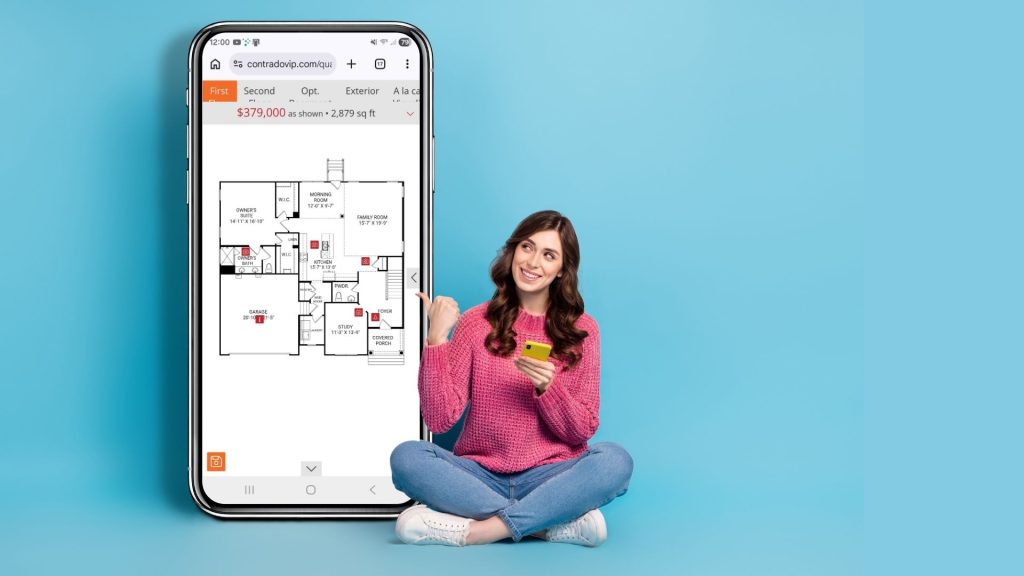
Interactive floor plan on mobile phone women pointing at it.

For today’s home buyer, mobile isn’t a secondary experience. It’s the starting point. Before a buyer ever walks into a sales office, they’ve already browsed communities, compared neighborhoods, checked lot availability, and shared links with a spouse or agent, all from a phone. In her latest book on social media marketing, Carol Morgan with Denim Marketing notes, “Approximately 63% of all Google searches start on a smartphone, this isn’t an audience to ignore.”

In many cases, that mobile experience determines whether a community makes the short list or gets skipped entirely. For builders, that reality changes the stakes. If your digital tools aren’t designed mobile-first, you’re not just behind on technology; you’re losing attention at the exact moment buyers are forming opinions. At Outhouse, we see mobile-first not as a trend but as a practical shift in how communities and homes are presented.

Mobile-First Design Isn’t Smaller. It’s Smarter for Home Builders

A common misconception is that mobile-first means “responsive” or “shrunk down.” In practice, mobile-first means designing the experience around clarity, speed, and ease of understanding, especially on smaller screens. For homebuilders, that means:

  • Clear visual hierarchy instead of crowded information
  • Touch-friendly navigation that works naturally on tablets and phones
  • Fast load times that don’t depend on perfect connectivity
  • Visual storytelling that replaces long explanations

When mobile-first is done well, buyers don’t feel like they’re using a limited version of your website. They feel like they’re getting the best version.

Why Interactive Site Maps Matter More on Mobile Than Anywhere Else

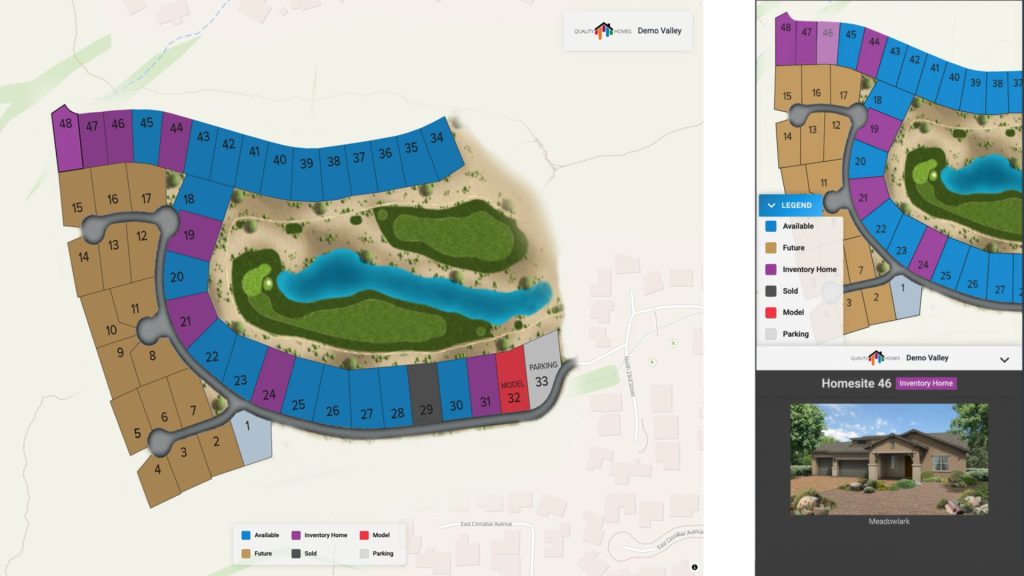
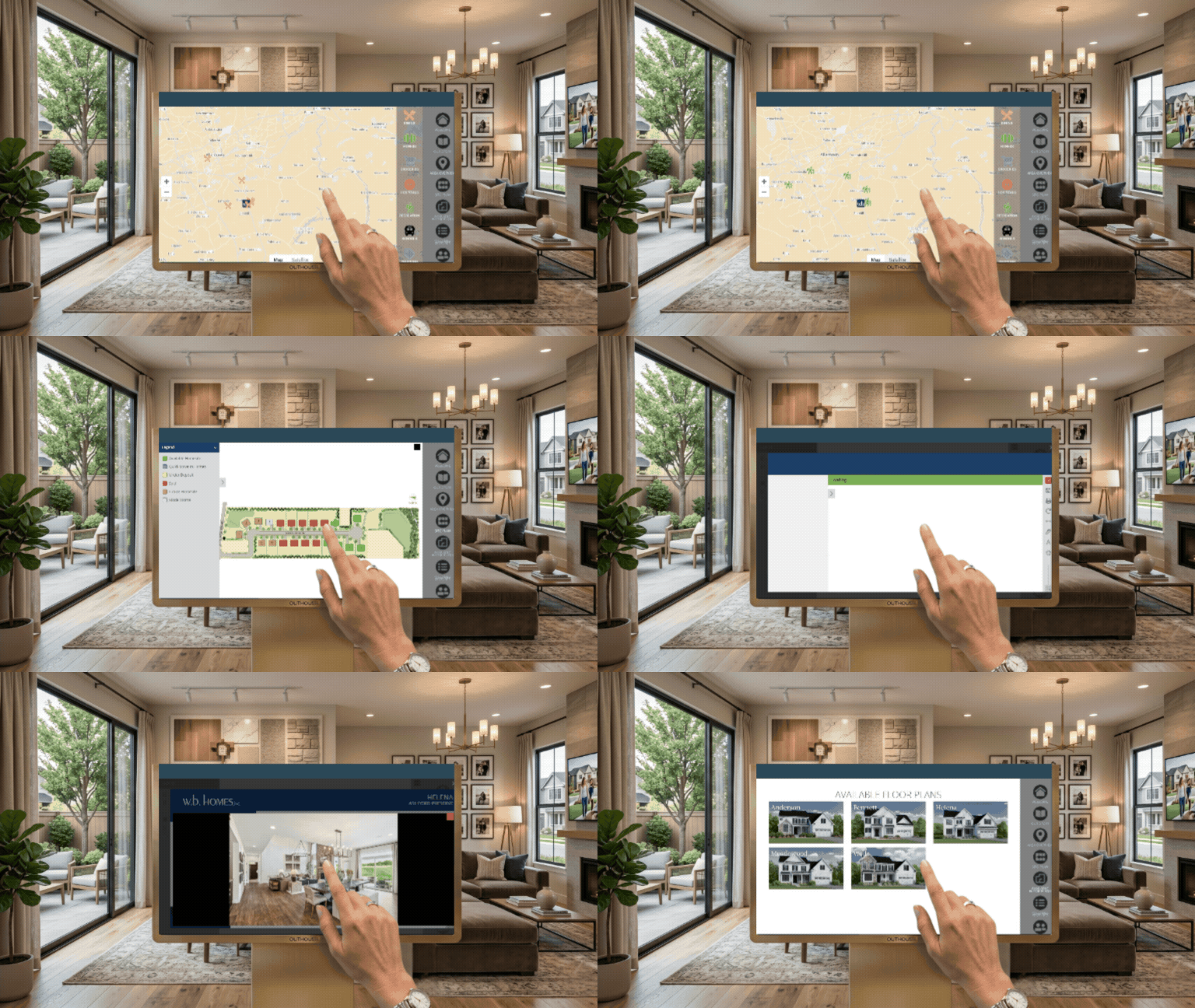
Site maps are often the most-used interactive tool on a builder’s website, and also one of the easiest places to lose buyers if the experience feels clunky. On a desktop, buyers may tolerate extra clicks or small details. On mobile, they won’t. We built our Interactive Geospatial Site Maps with this reality in mind. Instead of forcing buyers to pinch, zoom, and hunt for information, the experience is designed to guide them visually.

Mobile-first advantages include:

  • Wall-to-wall, immersive layouts without headers or footers competing for attention
  • Clear lot-level detail that’s readable at a glance
  • Elevation imagery that helps buyers understand location, views, and surroundings
  • A full-screen experience that feels native, not bolted on

Bringing the Interior to Life: 

Interactive Floor Plans on the go.  The mobile journey doesn’t stop at the lot line. Once a buyer finds the right community, they want to see if the home fits their life. Our Interactive Floor Plans are designed to be just as intuitive as our site maps. Instead of squinting at a static PDF, buyers can:

  • Toggle options and structural changes (like adding a 4th bedroom or a covered patio) with a single tap.
  • Visualize furniture placement to see how their current belongings fit the space.
  • Save and share their custom configurations directly from their phone. By giving buyers, the power to “build” their home digitally while sitting on their couch, you create an emotional connection before they ever set foot in a model.

Built for the Way Production and Regional Builders Actually Work

Many new digital tools promise innovation but often come with expensive software, steep learning curves, or workflows that don’t align with how production builders operate. That’s not our approach. With more than 30 years of experience, Outhouse focuses on tools that integrate with your existing processes. Our mobile-first solutions are built around AutoCAD-based workflows, because that’s what most builders already use.

What that means:

  • No need to switch to Revit or invest in costly new platforms
  • No retraining your drafting, sales, or marketing teams
  • Faster turnaround, from CAD files to sales-ready tools in days or weeks, not months
  • Budget-smart solutions that deliver value without unnecessary complexity

This isn’t about flashy technology for its own sake. It’s about practical tools that help you sell homes.

Mobile-First Benefits for Home Builder Sales Teams in the Field

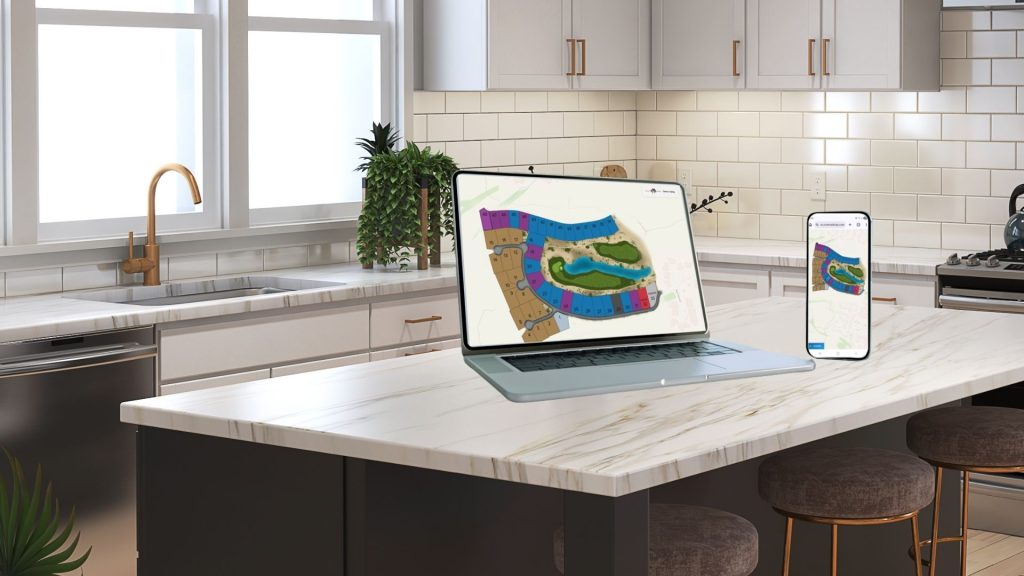
Interactive site map on laptop in kitchen setting.

buyers through communities. A mobile-first site map and interactive floor plan make those conversations easier. Sales teams can quickly show:

  • Where a specific lot sits within the neighborhood
  • Exactly how a specific floor plan can be customized for a buyer’s needs
  • How elevation and surroundings impact the homesite
  • What amenities, schools, or conveniences are nearby

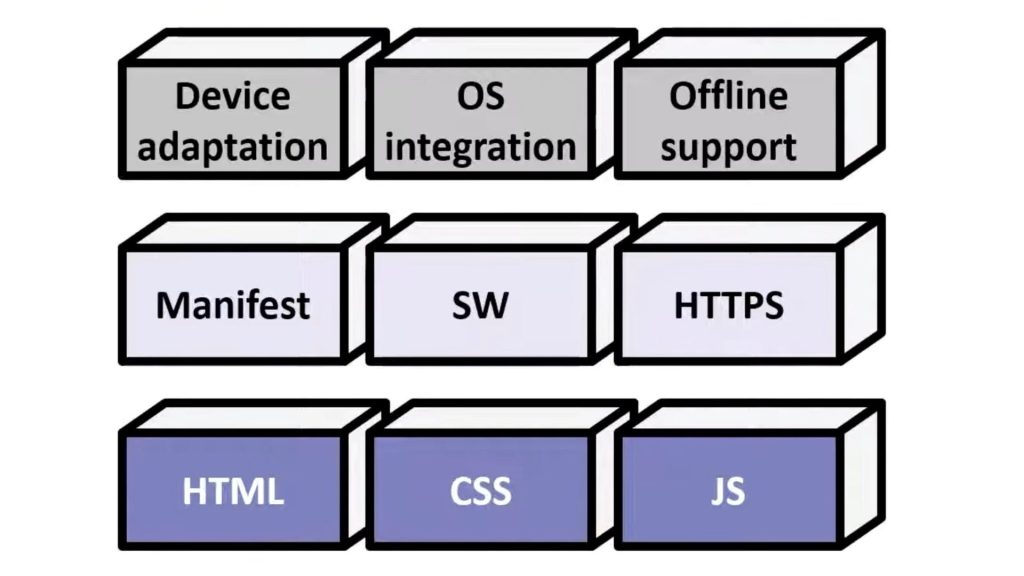
And with Progressive Web App (PWA) capabilities, these tools can be installed directly on tablets, providing a full-screen, app-like experience, even when internet access is spotty. For teams working on active construction sites, reliability matters.

A Better Buyer Experience, Without Disrupting Your Workflow

One of the biggest barriers to adopting new tools is fear of disruption. Builders don’t want to slow down sales cycles or overhaul systems that already work. Mobile-first geospatial site maps and interactive floor plans are designed as an evolution, not a replacement. Builders can:

  • Upgrade existing interactive site maps to a mobile-first geospatial experience
  • Incorporate interactive floor plans that sync with your inventory
  • Integrate seamlessly into existing websites and sales workflows

The result is more capability without added friction.

Why Mobile-First Digital Tools Help Builders Win in Competitive Markets

Mid-size and regional builders are often caught in the middle, too large to rely on static tools, but not positioned to chase expensive, enterprise-level platforms. Mobile-first digital assets level the playing field. They help builders:

  • Stand out earlier in the buyer journey
  • Tell a clearer story about communities and locations
  • Support both digital marketing and in-person sales
  • Present their neighborhoods with confidence and clarity

More homes sold. Less hassle.

Designed for Today’s Buyers, and What Comes Next for Builders

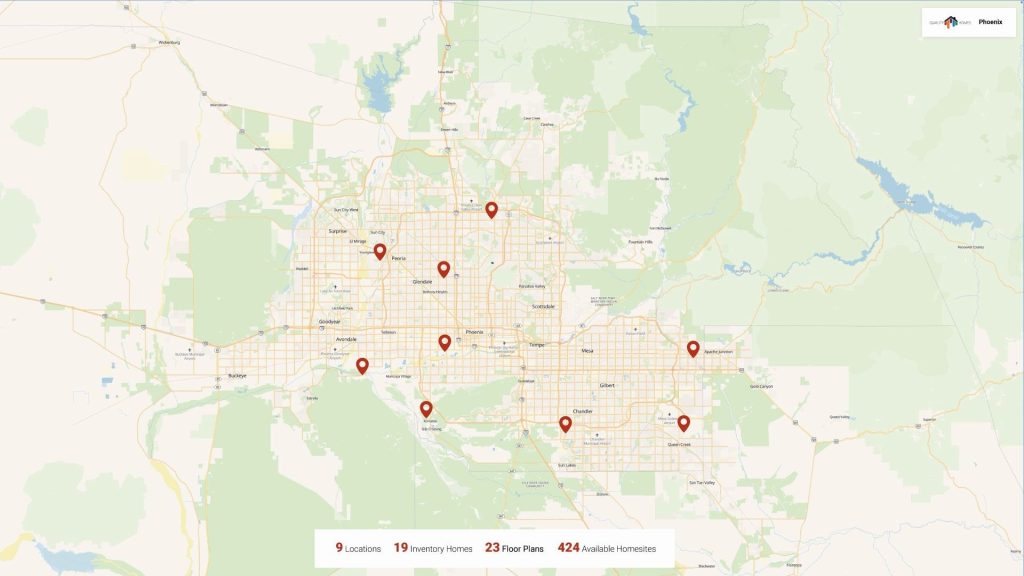
Mobile-first geospatial site maps also serve as the foundation for a broader view of your market. As builders manage multiple communities across a metro area, the ability to view everything on a single, geo-positioned screen becomes increasingly valuable. Imagine:

  • Seeing all communities in one market at once
  • Understanding proximity to schools, transit, and amenities instantly
  • Knowing which floor plans are offered in which communities, down to individual lots

It’s clarity without jumping between tools, and it starts with mobile-first design.

Want to See What Mobile-First Could Look Like for Your Communities?

If you’re curious how a mobile-first approach could improve your site maps, floor plans, sales conversations, and buyer experience, we’d be happy to show you. No hard sell, just a walkthrough and a practical conversation. Reach out to Kevin to see Interactive Geospatial Site Maps and Interactive Floor Plans in action.

If you’d like to learn more, reach out to Kevin.

Learn more

Building the Future: Why the Labor Gap is the Greatest Opportunity for the Next Generation

Tabitha Warren · 02/16/2026 ·

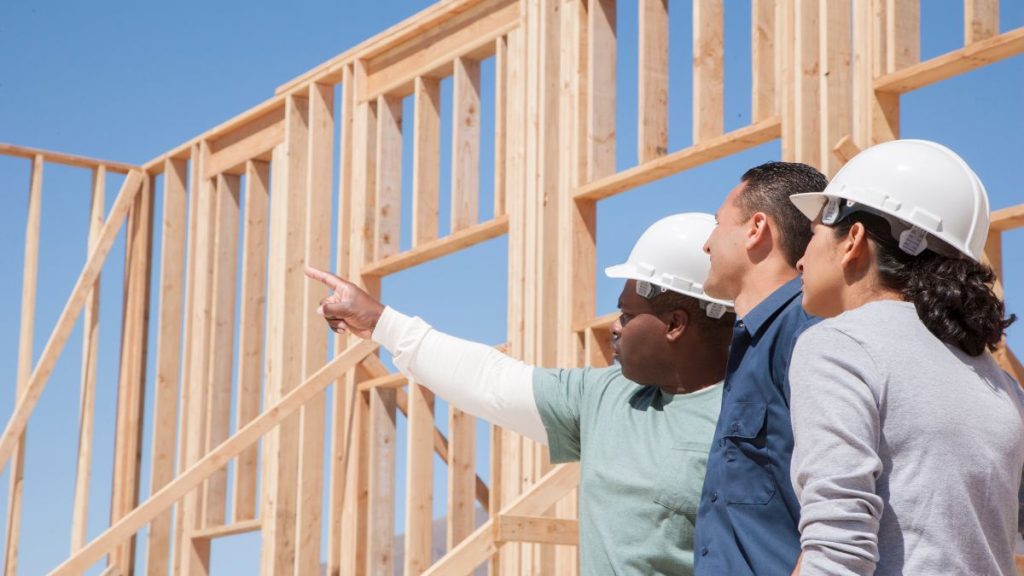
3Construction workers on job site

For years, headlines about the homebuilding industry have focused on a singular, daunting challenge: the labor shortage. At Outhouse, LLC, we spend our days looking at the industry through a digital lens, creating the visualizations and tools that help builders sell homes. But lately, when we look at the data, we aren’t seeing a “crisis.” We’re seeing a massive, wide-open door for the next generation of builders, creators, and innovators.

If you’ve been following the news, the narrative is shifting. Here is why we believe the future of home building has never looked brighter, and how the industry is evolving to welcome Gen Z and beyond.

The Numbers: A Gap That’s Beginning to Bridge

It is no secret that we need more hands on deck. According to the National Association of Home Builders (NAHB), the U.S. is currently facing a shortage of roughly 1.5 million homes. This is driven by what they call the “5 L’s”: Labor, Lots, Laws, Lumber, and Lending. Labor remains one of the most significant hurdles to providing the housing the country desperately needs.

However, recent data from Construction Dive and the Associated Builders and Contractors (ABC) suggest we are making progress. While the industry needs to hire an estimated 416,000 additional workers beyond normal hiring to meet demand in 2026, that number is down from the 501,000 projected the year prior.

The “labor demand gap” is shrinking. This means the message is getting out, and more people are realizing that construction isn’t just a “job”; it’s a high-demand, high-stability career path.

Redefining the “Builder” for Gen Z

To attract Gen Z and the generations that follow, the industry is moving away from “boots and mud” stereotypes toward a focus on purpose, technology, and inclusivity. Today’s young professionals want careers that offer tangible results and a sense of community.

There are two incredible programs leading this charge that we are particularly inspired by:

  • The Home Building Academy: This initiative is revolutionizing how we train the workforce. By offering accessible, hands-on training, The Home Building Academy is removing the barriers to entry. They aren’t just teaching people how to swing a hammer; they are preparing them for a modern workforce where precision and efficiency are paramount.
  • The House That She Built: Diversity is the key to solving the labor shortage. The House That She Built is a movement (and a wonderful book!) inspired by a real-life home built entirely by women. By reaching out to young girls and underrepresented groups, they are showing the next generation that there is a place for everyone on the job site, from architects and engineers to electricians and site supervisors.

A Tech-Forward Industry

At Outhouse, we see firsthand how technology is changing the face of construction. Gen Z is the first truly digital-native generation, and the modern building industry is speaking their language. From 3D renderings and virtual reality walkthroughs to BIM (Building Information Modeling) and AI-driven logistics, the “construction site” of the future involves as much software as it does steel.

We like to think that by providing digital tools that make home building more visual and accessible, we’re helping modernize the industry’s image. When a young person sees a stunning 3D model of a home before it’s even built, they start to see the industry for what it really is: a blend of high-tech innovation and timeless craftsmanship.

Modern construction worker at desk drawing blueprints on tablet.

The Bottom Line

The “shortage” is really an invitation. It is a call for a new generation to step up and solve one of the most fundamental human needs: shelter. With stable wages, the opportunity to work with cutting-edge technology, and the satisfaction of building something that will last for decades, the home building industry is ready for its next chapter.

The gap is shrinking, the tools are evolving, and the door is open. Let’s get to work.

If you need help with your digital work flows, Outhouse is here.

Contact us

2026 Outlook: The Year of the “Smart Pivot” for Home Builders

Tabitha Warren · 01/19/2026 ·

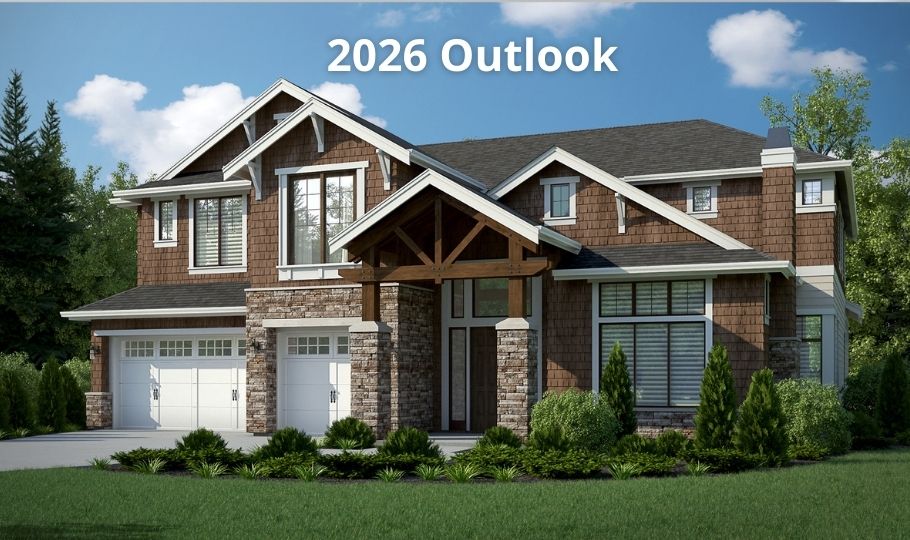
3D Rendering of a transitional home

As we look toward 2026, the home building industry is entering what experts are calling a “transition to growth” period. Following the volatility of the mid-2020s, the National Association of Home Builders (NAHB) is signaling a shift where cautious optimism meets a tech-driven evolution.
For builders, 2026 won’t just be about building more; it will be about building smarter. Here are the four key predictions for 2026, and how Outhouse is helping our partners stay ahead of the curve.

  1. The “Rate Relief” Rebound
    According to NAHB Chief Economist Robert Dietz and the latest NAR forecasts, mortgage rates are expected to settle into a more stable range (averaging around 6.0%) throughout 2026. This stability is predicted to unlock a “long-awaited surge” in activity, with new home sales projected to rise by 5% and overall home sales potentially jumping by double digits as buyers finally move off the sidelines.
    • The Prediction: Competition for these new buyers will be fierce. Builders who provide the most transparent and engaging digital experiences will win the “early bird” buyers of 2026.
    • The Outhouse Edge: With buyers ready to jump back in, your digital footprint is your first model home. Our Interactive Floor Plans allow buyers to “lock in” their dream layout before they even set foot on your lot.
  2. AI & The Digital Sales Center
    A central theme for the 2026 International Builders’ Show (IBS) is the “AI & Tech Studio.” The NAHB highlights that technology is no longer optional; it is a differentiator. Specifically, the industry is moving toward “Lead-Converting AI” tools that leverage data and visualization to accelerate a prospect from a click to a contract.
    • The Prediction: In 2026, the traditional sales office will be secondary to the Virtual Sales Center. Builders will use AI-driven tools and high-fidelity renderings to pre-sell communities before the first shovel hits the ground.
    • The Outhouse Edge: We specialize in Photo-Realistic Renderings and Virtual Reality that serve as the backbone for these AI-driven sales journeys. We don’t just show a house; we sell a lifestyle.
  3. “Right-Sizing” and High-Performance Design
    NAHB’s latest research on “What Home Buyers Really Want” shows a continued shift toward “right-sizing.” Buyers in 2026 are looking for smaller, more efficient footprints that don’t sacrifice luxury. Key design trends include “garden rooms” for indoor-outdoor living and a focus on “Healthy Homes” (superior air quality and energy-efficient building).
    • The Prediction: Homes will get smaller, but the details will get richer. Builders will need to prove the value of every square inch through better design and performance metrics.
    • The Outhouse Edge: Smaller spaces require better visualization. Our Animations and 3D Virtual Tours help buyers visualize how “smaller” can actually feel “better” through smart design and multifunctional spaces.
  4. Labor Realities Drive Off-Site Innovation
    Labor shortages remain a persistent challenge in the NAHB’s 2026 forecast. As a result, 2026 is expected to be the “tipping point” for off-site and panelized construction. Builders are moving toward predictable, repeatable systems to reduce on-site dependency and cost volatility.
    • The Prediction: Systematized building means your marketing must be systematized, too. As construction speeds up, your ability to update and pivot your marketing collateral must keep pace.
    • The Outhouse Edge: Our CRM integration tools are designed for the modern, fast-paced builder. If you are a CAD Client, when your building systems change, your interactive assets can be updated seamlessly, ensuring your sales team always has the most current data.
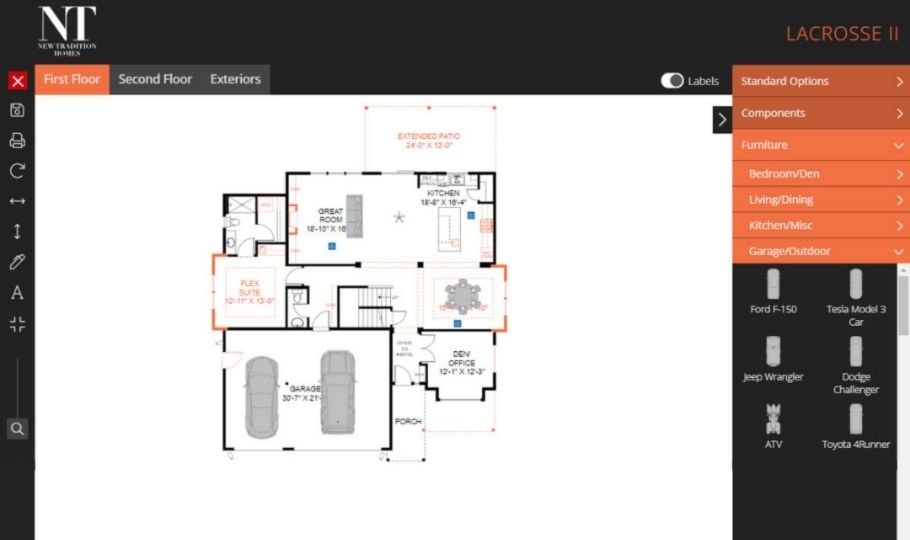
Interactive floor plan

Preparing for 2026 Today

The NAHB’s outlook for 2026 is clear: the builders who thrive will be those who embrace the Digital Pivot. By combining economic stability with cutting-edge visualization and AI integration, you can ensure that 2026 isn’t just a recovery year: it’s your best year yet.
Ready to visualize your 2026 success? Contact Outhouse today to see how our tools can bring your future communities to life.

If you need help preparing your strategies for 2026.

Contact Outhouse

Link to these blogs for more reading: All-in on Digital Marketing

Good, Better, Best: What Home Builders Can Learn from the Auto Industry

Tabitha Warren · 12/08/2025 ·

picture of 3 different houses in order from worst to best quality. with good better best under them.

If you’ve ever shopped for a new car, you know how the game goes. You walk in thinking you’ll drive home in the base model. But then you see the “better” version: leather seats, Apple CarPlay, maybe even a moonroof calling your name. Before long, you’re test-driving the fully loaded edition, grinning from ear to ear, convincing yourself it’s totally worth it. That, my friends, is the “Good, Better, Best” strategy in action, and it works just as well for home builders as it does for car manufacturers.

Why the “Good, Better, Best” Approach Works

People love choices, but not too many. When you present clear tiers (good, better, best), you help buyers make confident decisions without confusion or overwhelm.

Home builders already use this psychology every day:

  • Standard finishes (good)
  • Designer upgrades (better)
  • Custom luxury features (best)

So why not apply that same logic to your digital marketing tools?

The Digital Marketing Version of “Good, Better, Best”

At Outhouse, we help builders of every size and price point choose the tools that fit their goals, just as you would pick the right trim level on a car.

GOOD: The Reliable Workhorse

Best for: Builders who want quality visuals and efficiency.
Includes:

  • 2D floor plans
  • Basic static renderings
  • Standard community maps

This is your “base model”: straightforward, affordable, and professional. It gets your homes online quickly with clear, accurate visuals that attract buyers.

BETTER: The Performance Upgrade

Best for: Builders who want to boost buyer engagement.
Includes:

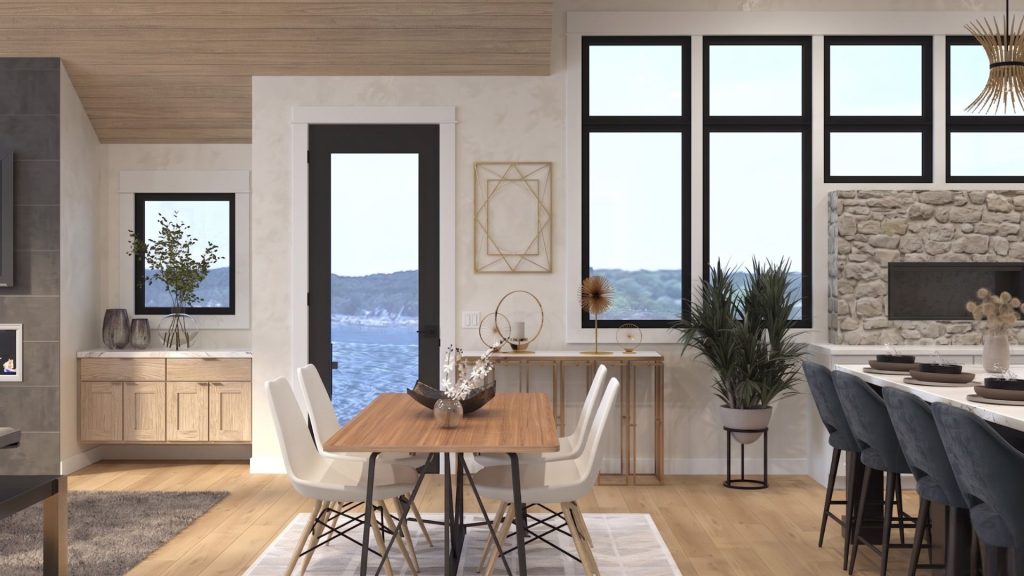
  • Interactive Floor Plans (IFPs)
  • Enhanced 3D renderings with realistic lighting and textures
  • Custom-branded community brochures

Now you’re adding some horsepower. Buyers can click, explore, and visualize, creating an emotional connection before they ever visit your model home.

BEST: The Fully Loaded Experience

Best for: Builders selling high-end or design-driven homes.
Includes:

  • Interactive Floor Plans (IFPs)
  • Immersive 3D tours and virtual reality walkthroughs
  • Option visualizers and customization platforms
  • Interactive site maps and lot selection tools

This is the premium package, all the bells and whistles. Buyers can “drive” through your community online, walk inside virtual homes, and fall in love before the slab is even poured.

Match the Tools to Your Market

Just like car shoppers, not every builder needs the top-of-the-line model.

A regional builder focused on affordability doesn’t need VR goggles in every sales office, but they do need clean visuals that communicate trust and professionalism.

Luxury builders, on the other hand, can’t afford to cut corners. Their audience expects a polished, immersive experience to match the price tag.

The key? Know your audience, then choose digital marketing tools that meet them where they are.

The Bottom Line: Be Strategic, Not Flashy

At Outhouse, we don’t believe in cookie-cutter solutions. Our team helps builders find the perfect mix of tools to fit their goals, budget, and buyer expectations. Just like cars, not everyone needs a convertible, but nobody wants to drive a lemon. So what’s your version of leather seats and a moonroof? Let’s find out.

Ready to Choose Your Perfect Fit?

Not sure which digital marketing tools fit your business best?


Contact your Outhouse account manager or reach out to our team.

Contact us


We’ll help you build a “Good, Better, Best” strategy that drives results and turns browsers into buyers.

Keep Learning: How Strong Visuals Drive Builder Success

If you liked this article, you’ll love our post on Why Your Home Building Brand Needs a Strong Visual Identity.
It digs into how powerful visuals shape buyer perception, and how consistent, high-quality imagery can elevate your brand just as much as the tools that deliver it. Because at the end of the day, great marketing isn’t just about what you show: it’s how you show it.

Speaking the Same Language: Making Home Buying Less Jargon-Heavy

Tabitha Warren · 10/06/2025 ·

Man and women in front of house.

When my husband and I bought our most recent home, it was our very first time considering a new build. We were both in our mid-30s, college-educated, and comfortable with big decisions. But after our first visit to a builder, we left completely confused.

Words were flying around, elevations, spec homes, lots, fascia, and we found ourselves whispering to each other in the car, “Did you understand any of that?” Honestly, it was uncomfortable not knowing, and it almost turned us off new builds altogether. Thankfully, our amazing realtor provided us with a quick “builder-lingo 101” before our next round of visits, which was helpful. But the experience stuck with me: why should a buyer feel left out of the conversation when they’re making such an exciting purchase?

The turning point came when we finally walked into a True Homes model. For the first time, we felt like we could relax. Their sales team used plain, easy-to-understand language and even their brochures spoke in terms that made sense to us. Instead of feeling left out of the conversation, we felt welcomed into it. That made all the difference.

When Jargon Creates a Barrier

Builders, designers, and sales reps know their stuff inside and out. But when they use industry terms without explanation, it can feel like buyers are being spoken at instead of with. That’s not the intent, of course, but perception matters.

A few examples:

  1. Elevations → Exterior Views: “Elevation” makes perfect sense to architects, but to buyers, “exterior view” paints a clearer picture. Lifestyle Home Builders even wrote a helpful post explaining elevations in buyer-friendly language.
  2. Spec Home → Build-to-Purchase Home or Move-In Ready Home: “Spec” sounds clinical. “Build-to-purchase” or “move-in ready” highlights the buyer’s benefit: they can have a home without the wait.
  3. Lot → Home Site: “Lot” sounds like a piece of land. “Home site” invites buyers to imagine life unfolding there.
  4. Unit → Home: No one dreams of living in a “unit.” Buyers want a home.
  5. Fascia → Trim: A technical word, sure. But “trim” helps buyers understand the detail at a glance.
House exterior at dusk.

Why It Matters

Changing a few words isn’t about oversimplifying. It’s about helping buyers feel included in the process. Buying a home is one of the most significant investments people make. It should fee exciting, not intimidating.

By swapping out jargon for approachable, everyday words, all of us in the building industry can create conversations that feel welcoming and clear. And if buyers feel understood, they’ll feel more confident moving forward, which is a win for everyone.

At Outhouse, we believe that tools and language should empower homebuyers, not overwhelm them. From interactive site maps to digital design experiences, our goal is to help builders showcase homes in a way that feels intuitive, engaging, and clear. We want to help every buyer feel right at home, right from the start.

New Homes Are Cheaper Than Resale 

Tabitha Warren · 09/22/2025 ·

Here’s How Builders Can Use This to Win Buyers 

Surprised women in front of new home.

For years, buyers have assumed that new construction means paying a premium. Not anymore. According to Zillow, resale home prices have surged 52% since 2019, while new home prices have increased by only 26%. In fact, new homes are now selling for $3.50 less per square foot on average than resale homes, and in some markets, like Raleigh, NC, they’re even 2% cheaper overall. 

This change in market dynamics is an opportunity builders can’t afford to miss. The message is simple: new homes are not only brand-new; they’re often the more affordable choice. 

The Cost Advantage 

  1. Lower purchase price per square foot (new: $161 vs resale: $164). States where homes can still be purchased this low are in the South and Midwest and include: Texas, Oklahoma, Arkansas, and Mississippi.
  2. Fewer hidden costs: buyers avoid roof replacements, HVAC failures, and aging appliances. 
  3. Energy efficiency: modern codes mean savings on monthly bills. 
  4. Builder incentives: mortgage rate buydowns, upgrades, or closing cost help make new builds even more attractive. 
Sources: https://www.energy.gov/eere/articles/energy-saving-homes-buildings-manufacturing-fact-sheet-office-energy-efficiency-and
https://www.energystar.gov/about/impacts
https://www.zillow.com/research/new-con-existing-price-34235/
https://homelight.com/blog/average-home-maintenance-costs/
https://www.angi.com/research/reports/spending/

Total 5-Year Ownership Costs 

Here’s a breakdown of what buyers really spend over the first 5 years: 

Cost CategoryNew Home (avg) Resale Home (avg) 
Repairs & Replacements$2,500$12,500 
Energy Bills$9,000$12,000 
Maintenance $3,000$7,500
Warranty CoverageIncludedBuyer pays ~$2,000
Total (5 years)$14,500$34,000
Result: New construction saves the average homeowner nearly $20,000 in just 5 years. 

How All of Us in the Building Industry Can Market This 

  1. Lead with affordability: Position new homes as the smarter financial choice. 
  2. Educate buyers: Provide total cost of ownership comparisons in sales centers and online. 
  3. Show it visually: Use infographics, calculators, and virtual tours to make the data relatable. 
  4. Highlight incentives: Show how buydowns, upgrades, and warranties reduce risk. 

At Outhouse, LLC, we help turn data into powerful visuals, including interactive floor plans, renderings, virtual tours, and branded marketing that clearly and compellingly highlight affordability. 

Let’s help you capture more buyers by showcasing why new construction isn’t just beautiful. It’s the best value in the market.

Contact us

From Blueprint to Buyer: How Builders Use the Fibonacci Sequence and Golden Ratio to Captivate Homebuyers

Tabitha Warren · 08/26/2025 ·

Cachet Homes McKinley Glenn Interior Rendering with Fibonacci overlay.
Cachet Homes McKinley Glenn’s Designs follow Fibonacci principles beautifully.

When I first explored the Fibonacci sequence and the Golden Ratio in my previous blog, I focused on the hidden mathematics behind beauty in architecture and home design. Since then, I’ve had the opportunity to see how our builders are actively incorporating these timeless ratios into their designs, and how that mathematical harmony directly impacts what buyers see, feel, and fall in love with.

Why Buyers Respond to Fibonacci and Golden Ratio Designs

Homebuyers may not be consciously measuring a window’s width against the wall, but our eyes instinctively respond to balance and proportion. Spaces designed with the Golden Ratio, approximately 1:1.618, tend to feel “right” without buyers knowing why.

  1. Front elevations often feature gables, windows, and doors arranged according to Fibonacci-inspired proportions, creating an inviting, well-balanced first impression.
  2. Interior layouts that follow these sequences allow rooms to “flow,” subtly guiding the eye and making spaces feel larger and more comfortable.
  3. Detailing and décor, from staircases that spiral like a nautilus shell to the placement of pendant lights, enhance the sense of visual harmony.

In other words, math becomes emotion. A home with good proportions doesn’t just look appealing. It feels like home.

WB Homes Brexley Wells Exterior Elevation Home Rendering with Fibonacci overlay.
WB Homes Brexley Wells Elevation is an excellent example of Fibonacci exteriors.

Seeing the Golden Ratio in Renderings and Virtual Tours

Today’s homebuying experience often begins online, and it is here that the Fibonacci sequence and the Golden Ratio quietly work their magic. Builders using 3D renderings and virtual tours showcase these balanced designs in ways that engage buyers before they even step foot on a property.

  1. Renderings highlight proportional windows, rooflines, and façade elements that instantly register as beautiful to the human eye.
  2. Virtual tours allow buyers to experience how balanced room proportions create a seamless flow from a living room to a kitchen, with sightlines that feel natural and expansive.

We’ve seen this come to life in the interactive kiosks we create with our builder partners:

  1. WB Homes – Ashford Preserve showcases harmonious front elevations and open interiors that naturally guide the eye.
  2. Cachet Homes – McKinley Glen allows buyers to virtually walk through spaces designed with balance in mind, noticing (even subconsciously) how the proportions create comfort and appeal.

By the time a buyer books a tour, the mathematical “magic” of these homes has already done its work.

The Subtle Science Behind a “Dream Home”

What makes a buyer say, “I could see myself living here”? Often, it’s not just square footage or finishes. It’s the harmony created by the Golden Ratio and the Fibonacci sequence. Builders who embrace these principles aren’t just designing structures; they’re creating spaces that resonate on a psychological level.

Whether you’re walking through a model home, scrolling through a virtual tour, or admiring a rendering, those invisible spirals and ratios are quietly at work. They’re the bridge between mathematics and emotion, blueprint and dream home.

If you have any questions about creating beautiful digital assets, feel free to reach out!

Contact us!

“Wow… This Is My Home!” How Interactive Kiosks Are Turning Model Homes Into Sales Machines

Tabitha Warren · 07/28/2025 ·

Happy couple using sales kiosk to use interactive site map with helpful sales agent. Image created with the help of ChatGPT, CanvaPro, and Outhouse Rendering

Picture this: a couple walks into a model home, unsure of where to begin. They’re greeted by a warm smile and an interactive kiosk glowing with floor plans, community maps, virtual renderings, and dream-home inspiration. Within minutes, they’re immersed. They’ve found the lot they love, the model that fits, and a vision of their future. No waiting. No confusion. Just clarity and connection.

Welcome to the modern model home, where interactive kiosks, like those produced by Outhouse, are transforming the sales experience from flat and fragmented to fully alive.

Real Builders. Real Success. Real Sales.

Van Metre Homes (Northern Virginia)

Van Metre Homes introduced wall-mounted kiosks to showcase community layouts and floor plans. The displays blend right into their model home aesthetic. They look more like high-end TVs than technology hubs. Behind the scenes, IT teams can manage content remotely, eliminating the need for in-person updates.

To gauge success, Van Metre conducted a case study. The result? Each kiosk draws 25–50 visitor interactions per week and generates an average of three qualified leads per day.

Outcome: Less paperwork. More leads. A smoother sales experience.

Prospective customer using portable kiosk to explore and Interactive Floor Plan (IFP)

Interactive Kiosks: From Browsers to Believers

Across the U.S. and Canada, Iinteractive kiosks help home builders level up their customer experience. With tools like:

  • Interactive markup: Lets buyers make notes on floor plans, plan furniture layouts, and dream big.
  • Lot-Fit tools: Match models to available lots and help buyers visualize the perfect fit.
  • Localized presentations: Like W.B. Home in Pennsylvania, many builders use kiosks to highlight nearby attractions that matter to modern buyers.

Outcome: Buyers go from passive browsers to active planners. Engagement deepens. Sales teams gain insight.

5 Reasons Kiosks Make Sales Centers Smarter

Benefits from Kiosk Deployments

BenefitWhy It Matters
Lead GenerationForms capture buyer info fast .
Remote Content ControlUpdates can happen across properties without lifting a finger onsite.
Buyer EmpowermentTools like lot-fit and floor plan personalization give buyers control and clarity.
Stronger Community StoryHighlight local attractions and perks that make a buyer feel at home.
Operational EfficiencyLess paper. Less chasing. More selling.

Best Practices for Building a Kiosk Experience That Sells

A freestanding kiosk in a cozy, well-lit model home corner.

Want to build kiosks buyers actually use? Here’s what the pros are doing:

  • Make them look good: Design kiosks that blend in beautifully with model home decor.
  • Go interactive: Give buyers tools to personalize, explore, and engage.
  • Keep it fresh: Use a CMS to manage content remotely and keep it relevant.
  • Capture leads smartly: Let buyers submit preferences and inquiries right from the screen.
  • Tell the neighborhood story: Use visuals and maps to sell the whole lifestyle, not just the house.

More Than a Screen: It’s Their First Step Home

At Outhouse.net, we don’t just build kiosks. We craft interactive experiences that help buyers fall in love with their future home. From touchscreen site maps to immersive renderings and beyond, we help builders put their best foot forward in the sales center, online, and everywhere in between.

So when buyers walk through your door, they don’t just see a model. They see their home.

Want to see how your sales center could evolve? Visit:

Interactive Kiosks
Branded Kiosk Display with Outhouse.net Logo

Outhouse.net Interactive Kiosks: Smart, Seamless, Stunning

At Outhouse.net, we believe the model home experience should be as beautiful and intuitive as the homes themselves. Our interactive kiosks are designed to do more than just display information: they invite buyers into a fully immersive, self-guided journey.

Here’s what sets Outhouse kiosks apart:

  • Tailored Content: Showcase site maps, floor plans, renderings, and even photo-realistic virtual tours.
  • Remote Updates: Change content instantly across multiple locations—no IT visit required.
  • Lead Capture: Integrated forms turn engagement into real sales conversations.
  • Beautifully Designed: From wall-mounted screens to sleek freestanding displays, they look like part of the model home.

Whether during a sales tour or after hours, our kiosks ensure buyers always have access to the inspiration and information they need.

Outcome: More engagement. More qualified leads. A seamless experience that sells.

Great Home Builder Social Media Accounts and Posts

Tabitha Warren · 06/16/2025 ·

Image of Toll Brothers Facebook page

In reply to a recent blog, a reader wrote into us and asked us for a few examples of great home builder social media. First, we were flattered to be asked this question, and we are happy to give our opinion. If you’d like expert advice, you might want to check out this post by Carol Morgan and this podcast featuring Carol Morgan. I think many of us are always trying to keep current. We read the blogs of several amazing Home Builder Marketers, such as Denim Marketing, Bokka Group, and Meredith Communications, to stay current ourselves. What we’ve learned at Outhouse is that there are quite a few things that make home builder social media great and inspiring at different levels.

The bottom line is a strong social media presence is a crucial tool for brand building, lead generation, and fostering connections with potential homeowners. After years of scouting social media, there are some home builders and related personalities who are truly knocking it out of the park with their engaging and high-performing accounts.

Whether you’re a home builder looking for inspiration or a prospective homeowner wanting to see what’s out there, these examples showcase the power of a well-crafted social media strategy in the home building industry.

Home Building Companies with a Powerful Platform Presence

Larger home building companies are also leveraging social media to showcase their homes, communities, and connect with potential buyers. Here are a few examples of companies that consistently demonstrate a strong platform presence:

  • Abrazo Homes (@abrazohomes): Known for their dynamic social media presence across various platforms like Facebook, Abrazo Homes consistently shares engaging content that resonates with their audience. Their commitment to storytelling is clearly a key to their success. In fact, you can hear directly from their “Chief Story Teller,” Shane Austin, in this insightful episode of the Home Builder Digital Marketing Podcast.**
  • Toll Brothers (@tollbrothers): Known for their luxurious homes, Toll Brothers excels on Instagram with stunning, high-quality visuals of their properties and sophisticated design elements. Their Pinterest presence is also noteworthy, offering a wealth of aspirational home inspiration. You can find their well-organized Facebook page here.
  • Lennar (@lennar): As one of the nation’s largest home builders, Lennar maintains a significant following across platforms like Facebook, Instagram, and Pinterest. They effectively use these channels to showcase their diverse range of home models, highlight community features, and share updates with their audience.
  • David Weekley Homes (@davidweekleyhomes): Historically recognized for their strong Instagram presence, David Weekley Homes consistently shares beautiful, high-quality photographs of their thoughtfully designed homes. Their visual content often emphasizes architectural details and inviting living spaces.
  • Meritage Homes (@meritagehomes): Meritage Homes stands out for its engaging and varied content on Facebook. They effectively blend community updates, customer stories, and behind-the-scenes glimpses into their building processes, creating a well-rounded online presence.
  • KB Home (@kbhome): KB Home frequently utilizes Facebook to share important updates, company news, and valuable customer success stories. They also provide helpful home buying tips and resources, positioning themselves as a knowledgeable partner in the homeownership journey.

Individual Builders and Influencers Setting the Standard

Image of Matt Risinger's, RR Buildings', and Perkings Builder Brother's YouTube accounts

Sometimes, the most compelling stories come directly from the individuals shaping the industry. These builders and influencers have cultivated strong followings by sharing their expertise, passion, and behind-the-scenes glimpses into the world of construction and renovation:

  • Matt Risinger (@risingerbuild): If you’re interested in the science behind high-performance building, look no further than Matt Risinger. His Instagram account and incredibly popular YouTube channel, “The Build Show,” are treasure troves of information on building science principles, meticulous craftsmanship, and the latest construction technologies. Expect in-depth explanations, on-site demonstrations, and a focus on quality and durability.
  • Kyle Stympenhorst / RR Buildings (@rrb_buildings): Specializing in post-frame construction, Kyle’s presence across YouTube, Instagram, and Facebook offers a deep dive into this specific building method. His content is often practical, providing valuable tips and insights for those interested in or involved in post-frame projects.
  • Perkins Builder Brothers (@perkinsbuilderbrothers): Get a genuine behind-the-scenes look at home building and renovation projects with the Perkins Builder Brothers. Their engaging “Builder Brothers” series on YouTube, Instagram, and Facebook provides a relatable and often entertaining perspective on the challenges and triumphs of construction.

What Makes Their Social Media Shine?

These high-performing accounts share several key characteristics that contribute to their success:

  • Stunning Visuals: They understand the importance of high-quality photography and videography to showcase the beauty and craftsmanship of their homes.
  • Consistent Engagement: Regular posting keeps their audience interested and coming back for more.
  • Diverse Content: They go beyond just showcasing homes, offering project updates, behind-the-scenes peeks, client testimonials, and informative tips.
  • Active Interaction: They actively respond to comments, answer questions, and foster a sense of community among their followers.
  • Platform Optimization: They tailor their content to suit the strengths of each platform. These builders use visuals on Instagram and Pinterest, community on Facebook, and in-depth videos on YouTube.
  • Strategic Use of Hashtags: They utilize relevant keywords to increase the discoverability of their content.
  • Compelling Storytelling: They connect with potential buyers on an emotional level by sharing the journey of building a home and highlighting the benefits of homeownership.

Staying Ahead of the Curve

The world of social media is constantly changing and evolving. To find the most current top performers, it’s always a good idea to explore these platforms yourself and see which accounts are generating the most engagement on their recent posts. Keep an eye on those with high levels of likes, comments, and shares. These metrics are often indicators of a strong and active audience.

By studying these successful examples, home builders can gain valuable insights into creating their own compelling social media strategies and connecting with their target audience in meaningful ways.

**Shane Austin has since moved on from a brilliant career at Abrazo Homes, but his thoughts and wisdom still ring very true.

Got questions about home builder digital assets? Call us today for a chat!

Contact Us

  • Page 1
  • Page 2
  • Page 3
  • Go to Next Page »

Ready to get started, want more info?

Contact Us
  • Facebook
  • Instagram
  • LinkedIn
  • YouTube

Outhouse

11048 N 23rd Ave #103
Phoenix, AZ 85029

602-371-4394

© 2026 All rights reserved