• Skip to primary navigation
  • Skip to main content
Outhouse logo

Outhouse

The Outsource Hub for Home Builders

  • Home
  • Products & Services
    • Architectural/CAD
    • Rendering
    • Virtual Reality
    • Interactive Floor Plans
    • Interactive Site Maps
    • Interactive Kiosks
    • Print Marketing
    • Sales Office Displays
  • Partners
  • News
    • Events
    • Blog
    • Podcast
  • About Us
  • Contact Us
  • Show Search
Hide Search

Tabitha Warren

Build It & Post It

Tabitha Warren · 05/19/2025 ·

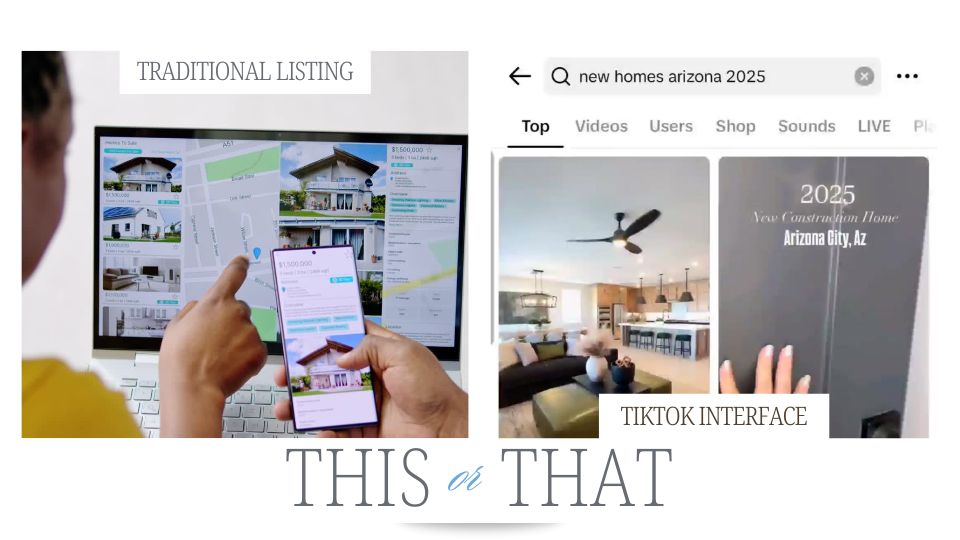
Traditional listing vs tiktok homebuilder search

TikTok is Now Essential Marketing for Homebuilders

If you think TikTok is just for teenagers, think again. It’s rapidly evolving into a powerful search and discovery engine, and yes, that includes finding new homes. Consider this foundational statistic highlighted by Atlas RTX: “84% of home buyers use the internet as their primary research tool…” In today’s digital landscape, TikTok represents a significant and growing slice of that online activity, particularly for demographics crucial to the future of homebuilding. For builders aiming to connect with modern buyers, establishing a presence on TikTok isn’t just a novelty; it’s becoming a strategic marketing imperative.

Showcasing Properties in a New, Dynamic Light

Static photos and full-length virtual tours have their place, but TikTok’s short-form video format demands a different approach – one that can be incredibly effective for showcasing homes. Builders are using engaging, fast-paced videos to:

  • Offer Quick Walkthroughs: Highlighting key areas and features in under 60 seconds.
  • Spotlight Unique Selling Points: Zeroing in on a stunning kitchen island, a spa-like bathroom, or energy-efficient windows.
  • Use Trending Sounds & Styles: Making property tours feel current, relatable, and shareable.
  • Tell Visual Stories: Capturing the feeling of living in the space, not just the dimensions.

This dynamic format grabs attention quickly and allows builders to convey personality and key features in a way traditional marketing often struggles to match.

Reaching the Next Generation (and Current Buyers Too)

While TikTok initially gained fame with Gen Z, its user base has significantly broadened. Millennials, now the largest cohort of home buyers, are active on the platform, as are increasing numbers of Gen X. Builders can use TikTok to:

  • Build Brand Awareness Early: Connect with potential buyers long before they are actively searching.
  • Target Specific Demographics: Utilize TikTok’s algorithm and ad tools to reach relevant audiences in specific locations or with particular interests (e.g., first-time buyers, eco-conscious consumers).
  • Humanize the Brand: Show the faces behind the company, share construction progress, and create a more relatable image.

Leveraging Trends and Influencers

Smart builders on TikTok don’t just post, they participate. This means:

  • Highlighting Trendy Features: If home offices are trending, showcase your best office spaces. If outdoor living is hot, feature your patios and decks.
  • Engaging with Comments: Answer questions and interact with potential leads directly on the platform.
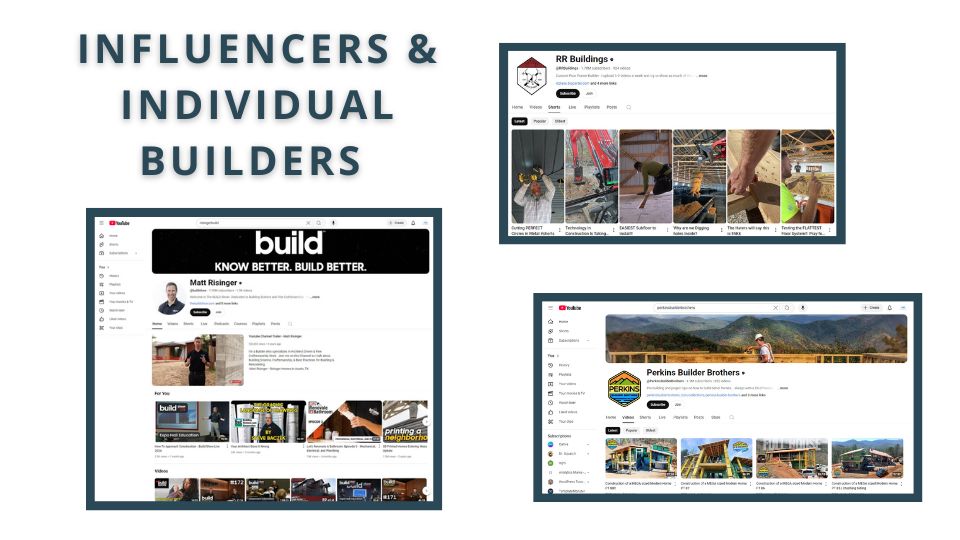
  • Considering Influencer Collaborations: Partnering with local home decor or lifestyle influencers can expose a builder’s projects to a large, engaged, and relevant audience, generating buzz and credibility.
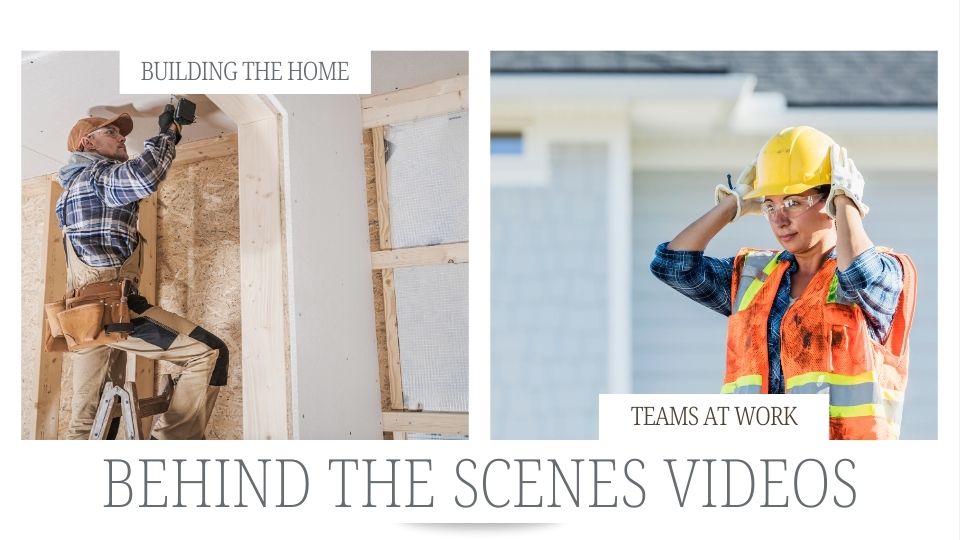
Construction workers doing their jobs. One man on a ladder, woman putting her gear on
Behind the Scene images courtesy of Canva Pro

Building Community and Trust Beyond the Sale

TikTok offers builders a unique channel to build relationships, not just generate leads. Sharing behind-the-scenes glimpses of the construction process, introducing the build team, offering quick home maintenance tips, or answering frequently asked questions in a casual video format can foster trust and community around the brand. This authenticity resonates with modern consumers.

Log In or Lose Out

The way people discover, and research homes is evolving rapidly. TikTok is no longer a fringe platform but a major player in the online attention economy. Homebuilders who embrace it, mastering its unique style and leveraging its reach, are positioning themselves to connect effectively with today’s buyers. Those who ignore it risk becoming invisible on a channel where their future customers are increasingly spending their time. In the current market, being active and strategic on TikTok isn’t just marketing; it’s essential business development.

Need help with digital assets for your website to use in your home builder marketing?

Contact Us

TikTok’s Blueprint

Tabitha Warren · 04/21/2025 ·

Viral Trends Forcing a Rethink in New Home Design

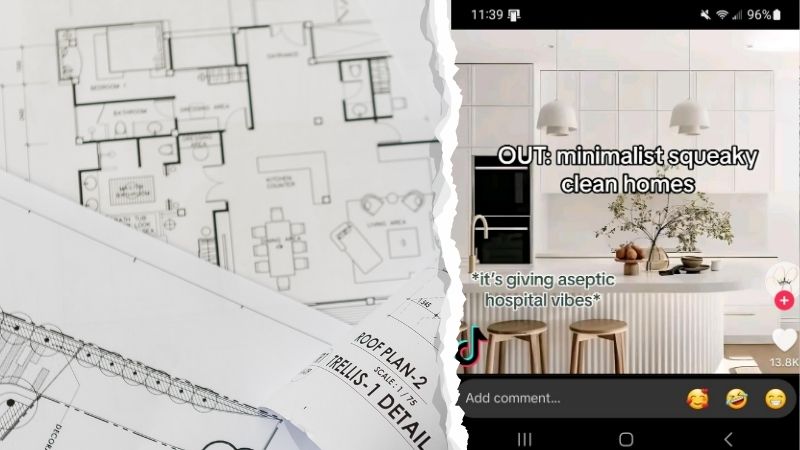
A split screen of classic, slow to produce, blue prints vs TikTok's constantly evolving word of trends
A split screen of classic, slow to produce, blue prints vs TikTok’s constantly evolving word of trends

Remember when home design trends evolved over years, maybe decades? Then, BAM, in comes the hit platform TikTok, where a 60-second video can launch a design craze overnight. From hidden pantry doors going viral to the sudden ubiquity of “cloffices,” the social media giant isn’t just for dance challenges anymore. It’s becoming a powerful, if sometimes unpredictable, force shaping buyer expectations and, consequently, influencing the very blueprints of new construction homes. For builders and designers, understanding this rapid shift is key to staying relevant.

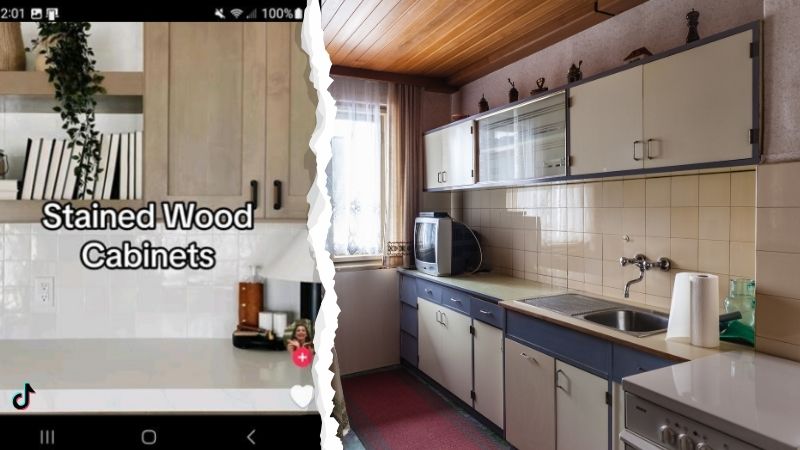
Split screen of TikTok trend video & a dated kitchen created in Canva Pro

Open Concepts & Flexible Spaces a Layout Revolution?

The desire for open-concept living isn’t new, but TikTok has amplified it, showcasing seamless flows between kitchens, dining areas, and living rooms perfect for entertaining and family life. Videos often highlight the airiness and connectivity these layouts provide. Beyond just openness, there’s a growing demand for flexible spaces. A room might need to serve as a home office during the week, a homework station in the afternoon, and a yoga spot on weekends. Builders are responding by designing floor plans with bonus rooms, lofts, or dens explicitly marketed for their adaptability, moving away from rigidly defined room purposes.

Home office & Yoga Gyme hybrid space generated by Adobe Firefly
Home office/Yoga Gym hybrid space generated by Adobe Firefly

The Rise of Hyper-Specific Room Requests

TikTok thrives on showcasing unique and aspirational home features, often turning niche ideas into mainstream demands. Dedicated home offices became essential during the pandemic, but TikTok introduced us to the “cloffice,” a cleverly converted closet space, appealing to those needing a compact workspace. Elaborate, hyper-organized pantries (sometimes with secondary “prep kitchens” or coffee bars hidden within) are another viral hit. Mudrooms with custom built-ins for coats, shoes, and even pet supplies are frequently highlighted. While not every buyer needs these specific features, their visibility on TikTok means builders are increasingly fielding requests and considering incorporating them as standard options or upgrades.

From Modern Farmhouse to Maximalist Flair Aesthetics and Finishes are Key

Visual trends spread like wildfire on platforms like TikTok, influencing homeowner preferences at an accelerating pace. While the enduring appeal of Modern Farmhouse persists, we’re also witnessing significant interest in aesthetics like Maximalism, with its bold embrace of colors, patterns, and textures; Biophilic Design, emphasizing natural light, indoor plants, and earthy materials; and the allure of moody, dramatic interiors. Specific finishes, as noted by industry observers such as Coldwell Banker, are also gaining viral traction, with “Bold Wallpapers” emerging as a popular choice for creating striking accent walls or transforming entire rooms, often inspired by online showcases.

Builder Kitchen, plain colors, easy for a lot of people to like
Sego Homes Rendering, follows classic concepts of design, but also on trend: healthy, green, available smart technology.

However, builders often navigate different landscapes. While customization remains a powerful tool for showcasing possibilities in model homes and catering to pre-sale buyers, the need for broad market appeal in spec homes often necessitates a more neutral foundation. Color palettes leaning towards versatile browns and grays, along with universally accepted tile and fixture choices, provide a safe harbor, ensuring a wider range of potential buyers can envision themselves in the space should a deal fall through. This doesn’t negate the influence of trending aesthetics but rather highlights the strategic balance builders must strike between capturing current design enthusiasm and ensuring long-term marketability.

Smart Homes are Non-Negotiable

Smart home technology is frequently featured in TikTok home tours and gadget reviews. Integrated lighting controlled by phone, smart thermostats learning preferences, keyless entry systems, and whole-home audio are becoming baseline expectations for many tech-savvy buyers. Green Builder Media writes about tech mega trends and the evolution of technology in building regularly. The advances and demand are astounding. Builders at all levels are increasingly integrating robust Wi-Fi infrastructure and offering smart home packages as standard or easily accessible upgrades, recognizing that a “connected home” is now a major selling point fueled by online visibility.

Balancing Trends and Timelessness

TikTok’s influence on home design is undeniable, pushing builders to innovate and adapt faster than ever. The challenge lies in balancing fleeting viral trends with timeless design principles that ensure a home’s broad appeal and long-term value. While incorporating a trendy feature might attract buyers today, core elements like a functional layout and quality construction remain paramount. The blueprint for new homes is indeed being sketched by social media, but savvy builders will use the eraser wisely, blending the best of the ‘now’ with designs built to last.

At Outhouse.net, our highly customizable interactive floorplans can help builders showcase their flexible options. We can help builders give homebuyers the home of their TikTok fantasies. Contacts us now to find out how.

Contact Us

A La Carte or Package Deal? Lessons Home Builders Can Borrow from Automakers

Tabitha Warren · 01/05/2025 ·

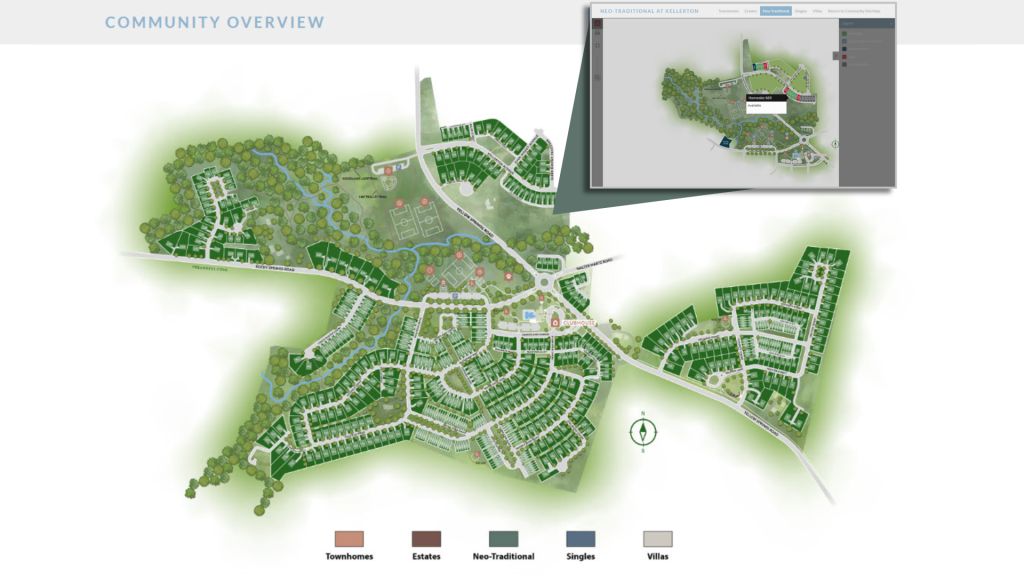
interactive site map zooming in on home site.

When it comes to marketing and visualization tools, home builders often face a familiar question: Should I buy individual products a la carte or go with a bundled package?

At first glance, buying just what you need seems efficient. Maybe you only need renderings right now or just a few virtual tours for your latest community. But over time, a piecemeal approach can lead to higher costs, inconsistent results, and more time spent managing vendors than building homes.

The auto industry figured this out long ago.

Built to Standard, Not to Chaos

When you buy a new car, you don’t choose every nut, bolt, and feature separately. A team thoughtfully designed the trim package you selected to meet your needs, whether it’s an affordable commuter or a luxury performance vehicle.

That’s not just convenience. It’s a strategy. The buyer inherits the cost savings delivered by standardized packages, simplified production, and streamlined quality control.

Home builders can benefit from that same mindset.

When Outhouse tools are created together, design, scale, and branding stay perfectly aligned.

Efficiency Through Bundling

Bundling services, like interactive floor plans, renderings, virtual tours, and interactive site maps, can lower costs in the long run. Procurement in quantity allows teams like Outhouse to offer competitive pricing while ensuring consistent design, branding, and technical accuracy across every asset.

For example:

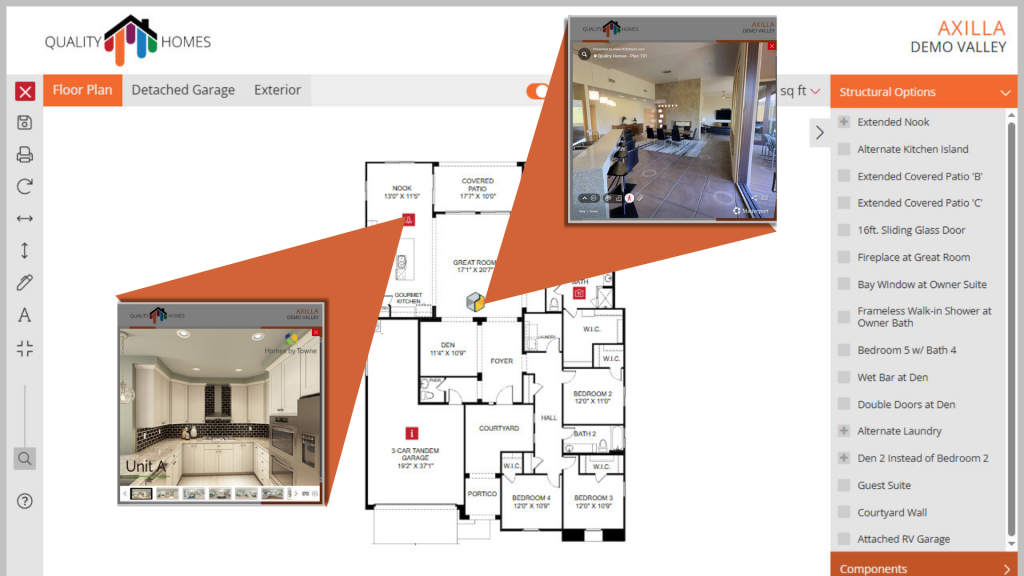
  • Renderings & Interactive Floor Plans: When the same team creates both, they align perfectly in scale and style, saving time on revisions.
  • Interactive Floor Plans (IFPs) & Virtual Tours: These tools share data and visual assets, which means your buyers see the same details online that they’ll experience in person.
  • Sitemaps & Interactive Floor Plans: When designers create these tools at the same time, your buyers experience a seamless journey, from understanding where a home sits on the site to exploring how they would live inside, reinforcing brand consistency and improving usability.

And just like in the auto industry, bundling creates a smoother, more predictable workflow. You spend less time managing separate vendors and more time focusing on what you do best: building dream homes for your buyers.

Simplifying the Buyer’s Journey

A well-structured package also makes things easier for your customers. When your digital tools, renderings: interactive floor plans (IFPs), interactive site maps, work together seamlessly, buyers can visualize their new home faster and with more confidence.

That consistency builds trust and reduces confusion, helping potential buyers move from browsing to building more quickly.

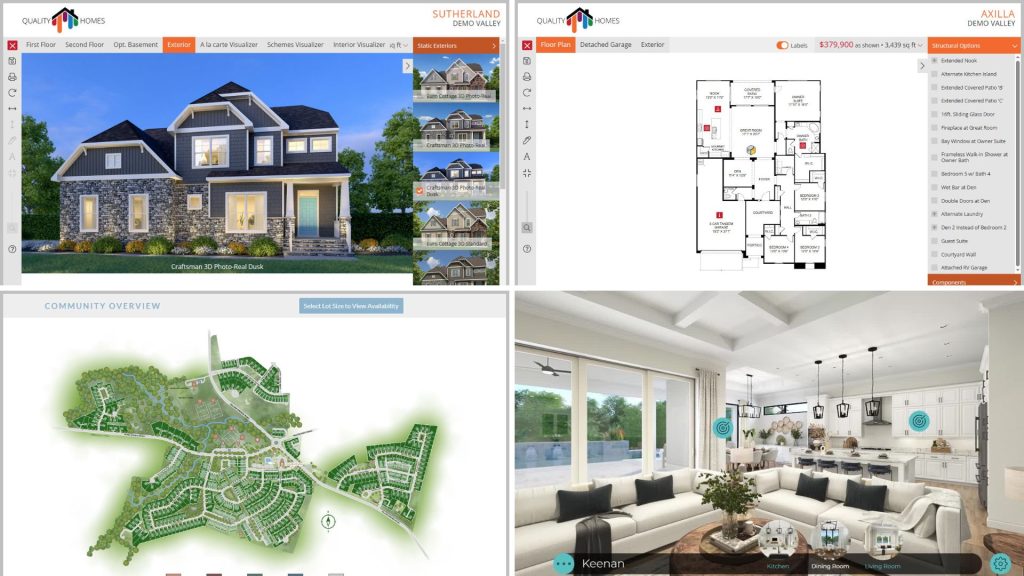
3D rendering, interactive floor plan, interactive site map

How Outhouse Can Help

At Outhouse, we understand that every builder’s needs are different, but efficiency doesn’t have to mean compromise. Whether you’re ready for a full-service visualization package or want to start small and grow, we’ll help you find the right fit.

We offer bundled solutions that bring consistency, quality, and savings together under one roof, just like the auto industry’s most trusted brands. From renderings to virtual tours to interactive tools, our products work together beautifully.

When you keep your marketing materials built to the same standard, you’ll see better results: faster, smoother, and more affordable.

Want to learn more about choosing the right level of service?

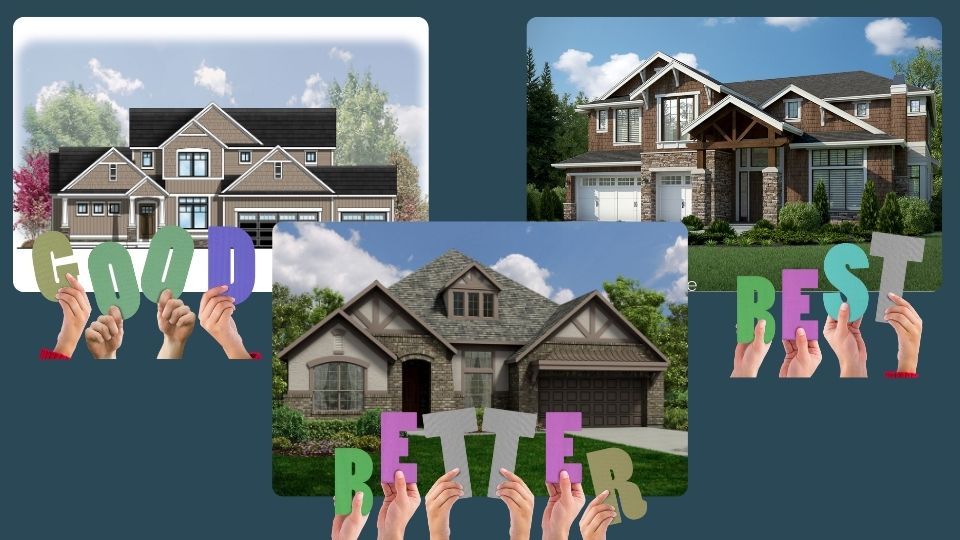
Check out our blog: Good, Better, Best: Finding the Right Fit for Your Builder Marketing Needs.

Contact Outhouse, LLC to find out how we can help with all your home-building website needs

Contact Us

Multigenerational Living: A New Era in Home Design

Tabitha Warren · 12/02/2024 ·

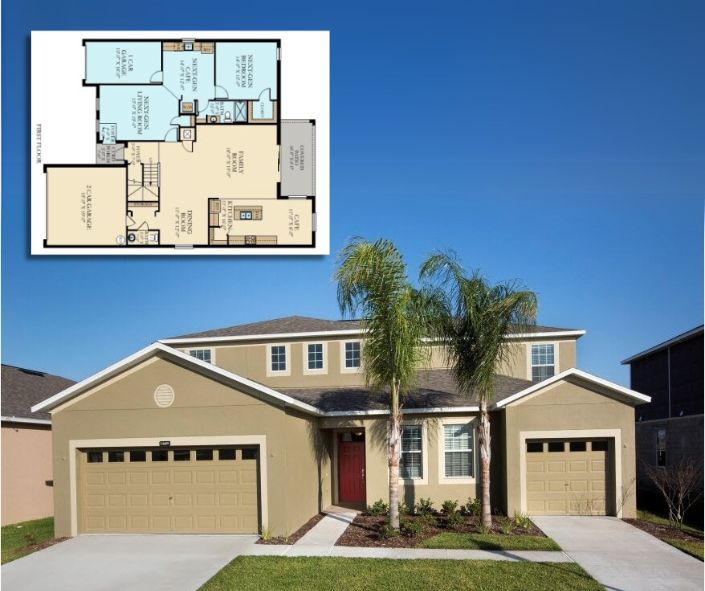
The landscape of American households is undergoing a significant transformation, with multigenerational living on the rise. This trend, highlighted by industry voices like Sara Gutterman of Green Builder Media, has sparked a demand for innovative housing solutions that cater to the needs of families across different generations. Lennar Homes, a leading homebuilder recognized for its commitment to sustainable and forward-thinking practices, has risen to the occasion with its NextGen® – The Home Within A Home® concept. This innovative approach revolutionizing how families live together is at the forefront of this movement. .

Lennar's NextGen Home Exterior Elevation with first level floor plan
Lennar’s NextGen home courtesy of Builderonline.com

NextGen: Redefining Multigenerational Living 

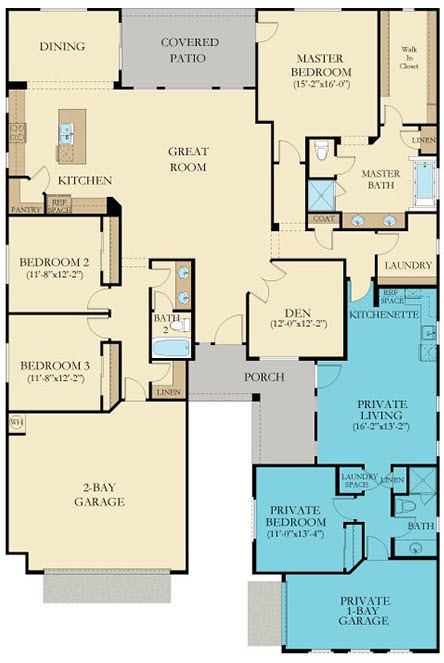
Lennar’s NextGen homes offer a unique solution to the challenges of multigenerational living. These homes feature a private suite with its own entrance, kitchenette, living room, bedroom, and bathroom. This design allows families to live together while maintaining privacy and independence. Lennar emphasizes the importance of flexibility in housing design, stating, “NextGen homes offer the perfect blend of togetherness and autonomy, allowing families to live in harmony while respecting individual needs.” 

Lennar NextGen Floor Plan

The Rise of Multigenerational Households 

The trend towards multigenerational living, echoed by publications like Green Builder Media, is driven by a variety of factors, including economic pressures, cultural shifts, and the desire for closer family ties. Sara Gutterman notes, “Multigenerational living is not just a trend; it’s a reflection of the changing dynamics of American families. Forward thinking builders provide solutions that supports these evolving needs.” 

The Benefits of Multigenerational Living 

Multigenerational living offers a range of benefits for families. It can provide financial support, shared responsibilities, and emotional closeness. Sara Gutterman believes that “Multigenerational living can foster a sense of community and belonging, creating a supportive environment for all family members.” Here more about generational homes and marketing on Sara’s interview on the Home Builder Digital Marketing Podcast.  

Green Builder Media’s Next Generation Influencer Group: Amplifying the Conversation 

Green Builder Media’s commitment to understanding and shaping the future of housing extends beyond construction. Through initiatives like the Next Generation Influencer Group, the company actively engages with thought leaders and influencers like Sara Gutterman, fostering conversations about emerging trends and innovative solutions in the housing industry. You can learn more about it at their webpage: Influencing the Future.

A young man and two young women collaborating in front of a computer screen.
Happy business people working on computer by wavebreakmedia courtesy of CanvaPro

The Future of Generational Housing 

As the demand for multigenerational housing continues to grow, companies like Lennar Homes and Green Builder Media are committed to leading the way with innovative solutions. Sara Gutterman envisions a future where “homes are designed to adapt to the changing needs of families, fostering connection and support across generations.” 

Conclusion 

Lennar Homes’ NextGen concept and Green Builder Media are a few of the companies redefining multigenerational living. These companies provide innovations like flexible and supportive environment for families of all sizes, fostering connection and independence. As the landscape of American households continues to evolve, builders could learn from these smart companies and be poised to meet the needs of families with innovative and adaptable housing solutions. 

*Floor plan image courtesy of www.lennar.com/nextgen/.

The Fibonacci Sequence and The Golden Ratio in Home Design

Tabitha Warren · 09/05/2024 · Leave a Comment

The Secret Formula Behind Beautiful Homes: The Fibonacci Sequence and the Golden Ratio Use Math to Create Beauty in Your Home

Examples of the Fibonacci spiral: stair cases, grapefruit, shells, sunflower, plants
Fibonacci spirals in a variety of contexts courtesy of Canva Pro

Coming from a financial background, when I think about the Fibonacci sequence, I think of a mathematical tool that market analysts use to understand and project market trends. I think of debatable market theory that sparks hot button discussions. For me, the Fibonacci sequence elicits thoughts of pie charts and trend lines. It’s an interesting tool in a market analyst’s toolbox.

When a colleague mentioned it to me in the realm of homebuilding, art, and aesthetics, my mind was blown. I had to learn more about this versatile sequence.

A Bit About the Fibonacci Sequence

The origin of the Fibonacci sequence is much discussed, but it’s believed that it has a hodgepodge evolution with both ancient Indian and medieval European ancestry. The mathematical concept itself seems to have appeared in Indian history as early as 200BC. Sanskrit poetry suggested the sequence in its rhythmic patterns.

In the West, the sequence became more widely known around 1202 as a result of Leonardo of Pisa, aka Fibonacci, when he introduced it to discuss the nature of rabbit population growth. The name “Fibonacci Sequence” wasn’t made popular until much later by a French mathematician named Edouard Lucas. Lucas conducted extensive research on the sequence. He realized that it had deeper relationships with other mathematical concepts. His formalization of this mathematical study allowed for a broader understanding of underlying mathematical structures and eventually led to his development of his own sequences, Lucas sequences, as well as the Lucas-Lehmer primality test.

Vector Set by Studioworkstock courtesy of AdobeStock

The Journey from Mathematics to Nature and Art

The Fibonacci sequence is a series of numbers in which each number is the sum of the two preceding numbers (0, 1, 1, 2, 3, 5, 8, 13). In nature, it is often seen in the arrangement of leaves, petals, seeds, and even galaxies. The Golden Ratio is a mathematical constant approximately equal to 1.618. It can be found in plenty in nature from the ratio of the length of a human arm to the length of the forearm, to the ratio of the length of a snail shell to its width, to the ratio of the distance between branches of a tree to the distance between the trunk and its branches.

If you look around you, you’re bound to notice the repeating patterns at work. Scientists hypothesize that the Fibonacci sequence and the Golden Ratio often lead to the most efficient arrangement for space-saving in nature. An example of this might be the number of seeds that can fit into the head of a sunflower, any other arrangement would not allow this maximized number of seeds. If you take the time to explore, you’ll notice this same thing in pinecones, lilies, and tree branches. All these things grow in spirals and often demonstrate Fibonacci patterns. Beyond plant life, you can observe this pattern in honeybee colonies and the nautilus shell. Look around, and you’ll be surprised to see mathematical sequences everywhere adding to the beauty of the visuals we assume happen at random.

In art, one need only look for a subtle spiral flow to recognize the influence of the Fibonacci sequence, guiding the viewer’s eye through the piece. Artists have embraced the Fibonacci sequence and the Golden Ratio for centuries. Master artists like Leonardo da Vinci had an affinity for mathematics, incorporating it into their art. The Mona Lisa and The Last Supper create a sense of balance and harmony that have captured the hearts and minds of audiences across the world. Leonardo employed the Golden Ratio to create a visual flow that captivates viewers.

The Fibonacci House by Square Three Architecture

Fibonacci Sequence and the Golden Ratio in Architecture and Home Design

Ancient structures like the Parthenon in Greece are testament to the Golden Ratio as far as showcasing adherence to proportions. The influence of these mathematical principles lends a timeless elegance to historical structures. Modern architects can draw inspiration from these architectural beauties when designing for enduring appeal. The golden ratio helps create a balance that makes sure that buildings are both visually pleasing and functional.

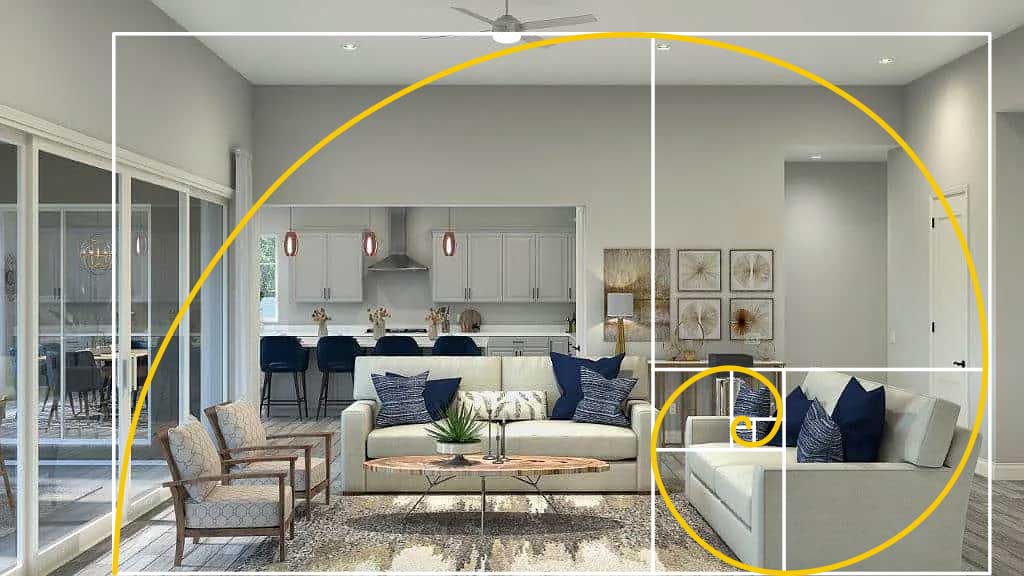
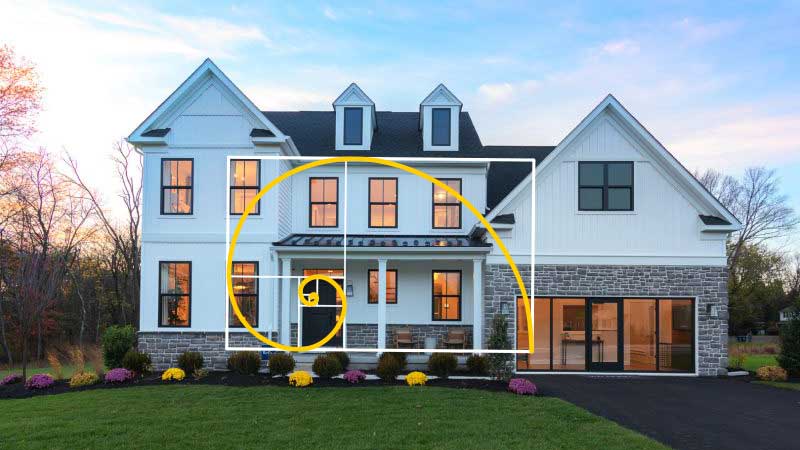
In home design, the Golden Ratio and the Fibonacci sequence offer a blueprint for creating spaces that feel instinctively balanced and inviting. Room dimensions, furniture placement, window and door sizes, and even decorative elements can all be guided by these principles. Notably, some architects have even designed entire homes based on the Fibonacci sequence. If you have a chance, take a look at this home by Square Three Architecture. They call it the Fibonacci House, and it is designed entirely around a Fibonacci spiral, incorporating the sequence throughout. The Fibonacci House is an extreme example, but it effectively demonstrates how the sequence and the Golden Ratio can be used to create pleasing flows within a design.

Other Ratios in Home Design

The Golden Ratio and the Fibonacci sequence may be the most used ratios in home design, but there are other mathematical sequences that can be used to create aesthetically pleasing spaces. Another approach to explore might be the Rule of Thirds. This rule divides a space into nine equal parts, with the points of intersection serving as focal points for furniture or decor. While not directly related to the Fibonacci sequence, the Rule of Thirds offers a similar approach to achieving visual balance and appeal.

The Fibonacci sequence and the Golden Ratio are more than just mathematical tools or systems; they are the underlying architects of wonder and coherence in our physical environments. From the beauty of nature to the style of art and the hygge of our homes, their influence is everywhere. A timeless aesthetic can be brought into our designs through balance and proportion if we understand these principles and incorporate them into our designs properly. The next time you’re awestruck by the sunsetting over the ocean, a fascinating painting, or a stunning room design, consider the Fibonacci sequence and the Golden Ratio. They might just be the underlying mathematical forces that harmonize the beauty you sense.

Generative AI Unleashed: Real-World Applications and Implications of Generative AI for Businesses

Tabitha Warren · 08/26/2024 · Leave a Comment

In an era where tech is sprinting forward, generative AI is shaking things up across the board. Companies are using it for all sorts of things, like whipping up content or fine-tuning their workflows. This game-changing tech is totally reshaping how businesses innovate and stay ahead. In this blog, we’ll investigate the possibilities and hurdles that come with generative AI, and how savvy companies can harness its power.

Opportunities with Generative AI

Generative AI can create text, speech, images, music, video, and even code, making it a versatile tool for various applications. Here are some key opportunities:

1. Content Creation: Businesses can produce a consistent online presence by using Generative AI to help develop high-quality content.

Nike, known for its innovative digital marketing, leverages AI technology to add emotional depth to its campaigns. By using AI to analyze the emotional traits of audience segments, Nike creates ad content that deeply resonates with consumers, boosting ROI.

One of their campaigns driven by AI-powered emotional analysis was the launch of Serena William’s sports apparel and the celebration of women in sports. Nike showcased a successful blend of influencer marketing and advanced technology. This approach has been a key factor in the brand’s ongoing success. Much of the content could have been produced without AI.

2. Customer Service: Human agents can find more time for complex issues by leveraging AI-driven chatbots and virtual assistants to handle repetitive customer inquiries. Sometimes, the technology can even produce high quality customer services in an environment where none existed before.

Sephora makes innovative use of AI to enhance the customer experience. Recognizing that many shoppers felt overwhelmed by their extensive product range, Sephora implemented an interactive chatbot-driven quiz to guide users through the shopping process. This not only personalizes the experience but also makes it more enjoyable.

Their success led to the launch of an AI-powered shopping service on Facebook Messenger, featuring tools like a virtual color match assistant and KikBot, an AI makeup expert offering tips. The results are impressive: Sephora has seen a 44% increase in customer engagement, and their chatbot now handles 72% of routine inquiries autonomously. This blend of technology and personalization truly sets Sephora apart in the beauty industry.

Sephora Chat Bot Images
Photo Credit: https://www.chatbotguide.org/sephora-bot

3. Product Design: Generative AI is transforming physical product design by significantly shortening design cycles and sparking unprecedented innovation.

This technology enables rapid generation and high-fidelity visualization of design concepts, making it easier to gather precise consumer feedback and refine designs. McKinsey estimates that generative AI could unlock $60 billion in productivity within product research and design alone.

3. Product Design: Generative AI is transforming physical product design by significantly shortening design cycles and sparking unprecedented innovation.

This technology enables rapid generation and high-fidelity visualization of design concepts, making it easier to gather precise consumer feedback and refine designs. McKinsey estimates that generative AI could unlock $60 billion in productivity within product research and design alone.

4. Marketing: AI can improve customer engagement and conversion rates by personalizing marketing campaigns.

Heinz A.I Ketchup, ‘Draw Ketchup’ campaign, property of Heinz Ketchup

Heinz has taken a creative approach to customer engagement by leveraging AI image generators following the success of their ‘Draw Ketchup’ campaign, which saw a remarkable 1,500% uplift. The brand encouraged both employees and fans to use AI tools to create artistic interpretations of their iconic ketchup bottle.

This initiative not only produced a wealth of amusing content (both user and AI generated) but also fostered a deeper connection with customers, as they actively participated in the brand’s narrative. The creative use of modern digital technologies has led to high engagement levels, showcasing Heinz’s ability to stay relevant and innovative in the marketing landscape.

Challenges and Ethical Considerations

While the potential of generative AI is vast, it also comes with significant challenges:

1. Bias and Fairness: AI systems can inherit biases from the data they are trained on, leading to unfair or discriminatory outcomes.

AI systems can pick up on hidden patterns that exist in our minds, leading to unintended consequences in how they operate. These biases can sneak in at different points during the AI’s creation, from gathering the initial data to teaching it how to work and finally putting it into action. It’s important to recognize both the obvious biases we know about and the more subtle ones we might not be aware of. Both types can interfere with the results an AI system gives us and even make existing unfairness worse.

Selection bias occurs when the training data is unrepresentative. Confirmation bias arises from over-reliance on existing trends. Measurement bias results from systematic data collection errors. Stereotyping bias reinforces harmful stereotypes, while out-group homogeneity bias leads to inaccurate handling of minority groups.

For more on this, check out this article from Forbes that discusses how racial bias can exist in AI systems: Forbes

Addressing these biases involves using mindful language, seeking diverse perspectives, and continuously monitoring AI systems to ensure they are fair and just.

2. Privacy and Transparency: The use of personal data in AI systems raises concerns about privacy, data security, and how that information will be used.

As AI technology advances, privacy and transparency are crucial. Governments and organizations worldwide are tightening controls to ensure ethical AI development and data protection. For instance, Europe’s upcoming AI Act sets new standards for AI usage.

Addressing AI privacy involves several strategies. Secure account management, robust data encryption, and regular security updates are essential for protecting sensitive information. Allowing users to customize privacy settings and access their data ensures transparency and control. Embedding privacy measures in AI systems from the design stage and having dedicated security teams to address threats are also key practices.

Educating users about AI technologies and adhering to regulations like General Data Protection Regulation (GDPR) and the California Consumer Privacy Act (CCPA) further bolster privacy efforts. By prioritizing these measures, AI can be developed and used ethically, safeguarding personal data and fostering user trust.

3. Job Displacement: The automation of tasks could lead to job losses.  This will make it necessary to have strategies for reskilling the workforce.

AI is likely to transform our lives in profound ways, reshaping how we work, live, and play. AI is predicted to add up to $15.7 trillion in global GDP by 2030. This statistic alone makes it crucial to cut through the hype and understand its real impact on the job market.

AI will influence jobs in two fundamental ways: automation and augmentation. Routine tasks like data entry and basic customer service will likely be automated, streamlining workflows and freeing humans from repetitive work. More complex tasks will see AI augmenting human abilities, such as helping healthcare professionals analyze medical images or assisting lawyers in summarizing documents.

The balance between automation and augmentation will determine AI’s impact on jobs. Automation will handle everyday tasks, while augmentation will, hopefully, improve human creativity and problem-solving. This shift will make roles requiring human ingenuity more valuable, whereas manual, repetitive jobs may face higher risks of automation.

The future of work could turn out in a couple of ways. One possibility, AI handles all routine tasks, allowing humans to focus on deep and creative work. This will hopefully lead to a happier, more productive society. Another possibility is that people displaced by AI will struggle to transition into new roles, worsening inequalities and straining social support systems.

The reality will probably fall between these possibilities. Companies might want to think about the social consequences of automation, not just what they might gain in efficiencies. This includes assessing AI’s impact on their workers, and companies may want to put measures in place to help workers transition to higher-skilled roles. Governments could also play a role in supporting workers through legislation and frameworks.

Overall, generative AI holds tremendous potential for companies who are willing to explore.  And this includes home builders!  Check out our recent webinar with Al Trellis, President of Home Builders Network, where he discusses AI in home building with Bill Gelbaugh and Kevin Weitzel from the Outhouse team.


From Income Tax Accounting to Web Design: Navigating Career Shifts and New Opportunities

Tabitha Warren · 04/23/2024 · Leave a Comment

Accounting Female to Video Editing Female Courtesy of Canva Pro

During the global pandemic, many of us found ourselves reevaluating our career paths, seeking new opportunities, and embracing change in unexpected ways. My journey from being an income tax accountant to venturing into the realms of web design and social media coordination is a testament to the transformative power of adaptation and seizing new avenues for growth.

As a former income tax accountant, I never imagined myself delving into the creative realms of web design and digital marketing. Honestly, web design was my husband’s area. However, the pandemic presented unforeseen challenges and opportunities that compelled me to explore alternative career paths. With the traditional job market feeling dangerous to an immunocompromised woman, I decided to leverage my skills in finance and analytical thinking to venture into the digital landscape.

One of the most rewarding aspects of this transition has been the opportunity to collaborate with small businesses and the people that run them, particularly in the realms of homebuilding and trail racing. These industries, often operating on tight budgets and with limited digital presence, were initially hesitant to entrust their online presence to a relatively inexperienced designer and marketer. However, through open communication, dedication, and a willingness to learn, we embarked on a journey of growth and success together. Three years later, we continue to work together and implement new technologies and data to strengthen their strategies.

Shendo Cat Racing Home Page

A reader might be thinking, “Homebuilding and trail racing? What do these two markets have in common? How did this woman end up working in two markets that are so completely different?” The truth is twofold. First, I was a little bit lucky. The first project, the home builder marketer, fell in my lap through social connections. The second project, the trail race event coordinator, came by word of mouth after an employee from the home builder marketing company admired what I was doing and recommended me to a friend. But second, the heart of the businesses was the same. Both businesses want to help customers live happier, healthier lives. To achieve this, they needed to generate leads. They need to get their service offerings seen online.

Small and medium-sized homebuilders, in particular, stand to benefit immensely from embracing digital transformation and investing in a robust online presence. A well-designed website serves as the virtual storefront, offering a platform to showcase past projects, highlight expertise, and engage potential clients. Moreover, leveraging analytics and SEO practices can significantly enhance visibility and attract qualified leads, ultimately driving business growth and expansion.

Many people, new to web design and social media believe that having a digital presence will be cost prohibitive, but that isn’t true. The addition of a website and social media often pays for themselves. Especially, if you find a designer or coordinator that is the right fit for your company. Don’t be afraid to outsource to a designer or marketing firm that can help you grow.

According to a survey by Clutch, 46% of small businesses still do not have a website, representing a significant untapped market for digital growth.  Although many small builders have a website, some include little more than a logo, a couple of pictures, and contact info. By harnessing the power of web development and digital marketing, homebuilders can differentiate themselves in a competitive landscape, reach new audiences, and establish credibility in the industry.

Outhouse – The outsource Hub for Home Builders Home Page

In my experience, working closely with homebuilders and race coordinators to develop and optimize their websites has been immensely gratifying. By incorporating user-friendly design elements, compelling content, and strategic SEO tactics, we have witnessed tangible results, from increased website traffic to higher conversion rates. Moreover, the ability to track and analyze data enables us to refine our strategies continuously, ensuring maximum ROI.

As we navigate an ever-changing post-pandemic world, the importance of digital presence and online visibility cannot be overstated. Small companies that embrace innovation and adaptability stand poised to thrive in this evolving landscape. By partnering with skilled web developers and digital marketers, small businesses can harness the full potential of the digital realm, driving growth, and success in the years to come.

My journey from income tax accounting to web design symbolizes embracing change, adaptation, and accepting new opportunities. By collaborating with small businesses, I have not only found success but also forged meaningful partnerships built on trust, creativity, and mutual growth. As I look to the future, the potential for innovation and transformation in the digital sphere is limitless, offering boundless opportunities for those willing to seize them.

Tabitha Warren was an Income Tax Accountant for 15+ years.  In the first months of the pandemic, she took a chance and re-careered to freelance in Marketing.  She currently, and very happily, works with video and photo editing, social media marketing, website building, and now blog writing.

From Clicks to Community: Mastering Visitor Engagement Using Your Home Site Blog

Tabitha Warren · 01/08/2024 · Leave a Comment

Classic Home Builder Website, theoretical banner for dream homes

Alright, buckle up because we’re diving into the wild world of website success! Hey, you’ve decked out your website with new site maps and floor plans. That’s step one. You’re off to a great start!

You’re imagining the floodgates of customers, right? Well, hold on to your blueprint! It’s a bit more intricate than that.

First off, these shiny interactive floor plans (IFPs) and interactive site maps (ISPs) are stellar, no doubt. They’re like the red-carpet welcoming buyers, but they won’t drive the traffic there.

Enter SEO, the wizardry behind getting eyeballs on your site. Sure, it’s a complex dance with algorithms, but here’s a nifty trick—blogging. Yes, yes, you might be rolling your eyes at the thought of writing, but bear with us!

Think about it. You’ve got these incredible interactive tools showcasing house layouts, upgrades, and the whole spiel. But why stop there? Your site maps aren’t just about the house, they’re your gateway to the neighborhood. Nearby eateries, local schools, hangouts—all the soul of community life.

That’s where blogs become your ace in the sleeve! Write about the hidden gems around your communities. Neighborhood secrets, the best tacos in town, or where to grab the perfect latte on a Sunday morning. Take screen shots of your ISPs to show homebuyers what is in the area, helping them feel like they are already living there and how to plan a perfect day out. It’s not just about homes; it’s about crafting a lifestyle!1

So, next time you grumble about blogging, remember you’re not just selling houses; you’re curating experiences. Give it a whirl. Who knows, your blog might just be the key to unlocking a new world of buyers!2


Now, about the magic of blogs—they aren’t just there for show. Businesses that blog rake in more traffic. It’s a magnet for potential buyers scouring the web for their dream home. Plus, it gives your website some serious SEO brownie points.2

The thing is your website isn’t merely a digital property catalogue. It’s an immersive experience—a sneak peek into a potential life. Every blog post isn’t just a blurb; it’s an invitation, a snippet of the world they could be stepping into.3

See, the key isn’t just in flashing your interactive tools; it’s in telling a compelling story. So, the next time you sigh about blogging, think about the universe you’re creating for your buyers—one engaging post at a time.4

Get tapping those keys; your buyers might just be scrolling, waiting to discover their new home sweet home!

Remember, it’s not just about selling houses; it’s about selling a lifestyle. Cheers to blogging beyond the blueprints!

Tabitha Warren was an Income Tax Accountant for 15+ years.  In the first months of the pandemic, she took a chance and re-careered to freelance in Marketing.  She currently, and very happily, works with video and photo editing, social media marketing, and now blog writing.

  1. (Source: Moz – SEO Basics)
  2. (Source: HubSpot – The Benefits of Business Blogging)
  3. (Source: Forbes – Blogging for Business)
  4. (Source: WordStream – 55 Blogging Statistics and Facts)

Year-End Takeaways for the Home Building Industry

Tabitha Warren · 12/04/2023 · Leave a Comment

As we approach the end of another eventful year in the home building industry, it’s the perfect time to reflect on the key lessons and takeaways that can guide us into a promising future. Despite the challenges and uncertainties, there’s much to learn from the experiences of the past 12 months. Here are some crucial year-end takeaways for the home building industry:

  1. Adaptability Is Key: The year 2023 highlighted the importance of adaptability. Home builders who quickly adjusted their strategies in response to changing market conditions were better positioned for success. Flexibility and the ability to pivot in the face of challenges have become valuable assets.
  2. Digital Dominance Continues: The digital transformation in the home building industry is no longer a trend; it’s a necessity. With homebuyers relying on online research and interactive tools like never before, having a robust online presence, including virtual tours and interactive floor plans, is essential. There is some good news here: the costs of these digital technologies are dropping. This is an excellent opportunity for smaller homebuilders seeking a competitive advantage. Builders who want to stay ahead of the curve in 2024 should consider implementing digital assets they may have believed to be out of reach. Pricing has become much more competitive in recent years. Putting some digital tools in place could mean the difference between staying in the game and being unable to remain competitive.
  3. Supply Chain Management: The global supply chain disruptions served as a reminder of the significance of efficient supply chain management. Home builders should build resilient supply chains to prevent delays and maintain construction timelines. Resilience is essential in every part of the supply chain, from labor to subcontractors to materials and technology. 1
  4. Sustainability Matters: The demand for sustainable and energy-efficient homes is rising. Incorporating green building practices appeals to eco-conscious buyers and helps reduce long-term operating costs. The home building industry is waking up to the importance of green building. Even NAHB and IBS are getting involved by funding a Green Building Scholarship. Please find out more by visiting their website: https://www.nahb.org/advocacy/industry-issues/sustainability-and-green-building/sgb-scholarship-for-ibs
  5. Quality Over Quantity: Prioritizing quality over quantity is becoming the mantra of successful homebuilders. Delivering superior craftsmanship and focusing on customer satisfaction can lead to lasting success in the industry. For an interesting read about improving housing in America, check out what the Joint Center for Housing Studies of Harvard University found about the impact of COVID-19 on our current market. They have some interesting statistics on home repair ($420 billion spent in 2020), DIY vs professional, and the demand for quality housing. https://www.jchs.harvard.edu/improving-americas-housing-2021
  6. Teamwork and Talent: The importance of a skilled and motivated workforce cannot be overstated. Investing in employee training and well-being can improve productivity, retention, and overall company success. Continuing education for your Online Sales Counselors and Marketing team is imperative. The digital landscape is ever changing. Marketers need help to stay current. Summits and conferences can pay 100-fold. Online Sales Counselors are only as good as their sales experience and education. Help them by ensuring they have all the tools in their toolbox.
  7. Customer-Centric Approach: Home builders who put the customer at the center of their operations tend to thrive. Excellent customer service and transparent communication go a long way in building trust and loyalty. More and more builders are discussing that a customer-centric approach might involve having transparent online pricing. Just listen to what Reilly LePage of Logel Homes had to say on The Home Builder Digital Marketing Podcast: https://www.buildermarketingpodcast.com/episodes/190-elevating-the-online-home-buying-process-reilly-lepage Builder Online thought this was such an important topic that they featured the podcast this month on their Builder 100.
  8. Risk Management: With uncertainties in the market, effective risk management strategies are crucial. Planning for potential disruptions and having backup plans can mitigate unexpected challenges. Conducting market analysis before starting a project, having a robust financial reserve, and securing contracts with backup suppliers are just a few ways to mitigate risk.
  9. Local Market Insight: Understanding the unique dynamics of local markets is essential. Tailoring strategies to meet each community’s specific needs and preferences can make a significant difference. Home builders can always hire an independent market research team. If that is outside the budget, local home builders associations, real estate associations, and chambers of commerce often publish market reports, housing data, and economic indicators for specific regions. Additionally, the U.S. Census Bureau, local planning departments, and housing authorities publish data providing demographic information, building permits, and economic data. If all else fails, there are the good old real estate platforms Zillow, Realtor.com, and Redfin to peruse for statistics, pricing trends, and property listings.
  10. Continual Learning: The home building industry is constantly evolving. Those who commit to ongoing learning and staying updated on industry trends and regulations will remain ahead of the competition. Educational events like the National Association of Home Builders International Builders Show (IBS) and The Home Builder Digital Marketing Summit are key. Summits and Conferences help builders keep up with the ever-evolving industry. Monthly learning like that provided in Builder Town Hall by Meredith Communications is also a great way to keep your ear out.

As we bid farewell to this year, let’s carry these valuable takeaways into the future. The home building industry’s resilience and adaptability have been on full display. With the right strategies in place, the opportunities for growth and success in the coming year are boundless. Cheers to a promising and prosperous future in the world of home building!

Tabitha Warren was an Income Tax Accountant for 15+ years.  In the first months of the pandemic, she took a chance and re-careered to freelance in Marketing.  She currently, and very happily, works with video and photo editing, social media marketing, and now blog writing.

  1. https://buildertrend.com/blog/construction-supply-chain/

Building a House in Arizona: Expert Guidance From Local Builders | Redfin

Tabitha Warren · 11/20/2023 · Leave a Comment

Outside view of white home with palm trees

Redfin is featuring Outhouse in an article, and we encourage you to check it out. Although we provide computer-aided design (CAD) and interactive marketing tools to builders nationwide, we are pleased to be included in an article about home building in our home state of Arizona.

Embarking on the journey of building your dream home in the Grand Canyon State of Arizona is an exciting adventure filled with unique considerations. From the vibrant energy of Phoenix’s city life to the tranquility of Flagstaff’s pine-scented forests, constructing a home here requires careful planning and consideration.

In this article, Redfin has gathered insights from seasoned Arizona builders to walk you through the essential steps, from understanding zoning laws to choosing the right materials for the Arizona climate. With practical advice and tips from start to finish, you’ll gain the confidence to manage your building project effectively and make informed decisions that bring your vision of an Arizona home to life.

Read the full article here: Building a House in Arizona: Expert Guidance From Local Builders | Redfin

Consider an Integrated Build/Market/Sell Process for Speed

Whether you live in Arizona or one of the other 49 states, when you are ready to design, build, and sell some new homes, it pays to consider a digital marketing provider like Outhouse, which offers in-house drafting services. Outhouse’s experienced CAD team works with some of the most successful production home builders across the nation on everything from master sets to redline revisions to plot plans. And, while your homes are being drawn, our production teams are simultaneously creating interactive floor plans, renderings, virtual tours, visualizers, print collateral, and more, helping you bring homes to market faster than the competition. Starting with Outhouse CAD as the foundation, integration is the key to streamlining the build/market/sell process.

As we head into the holiday season, Outhouse would like to thank all our clients and friends. We appreciate you and are grateful for the business you bring us throughout the year. Happy Thanksgiving!

Unlocking Success in the Competitive Home Sales Market: How Interactive Tools and Incentives Make New Builds a Smart Choice

Tabitha Warren · 10/09/2023 · Leave a Comment

Architect checking house floor plan for new build on tablet device
Architect checking new build floor plan on tablet courtesy of Envato Elements

For the past few years, potential homeowners have been facing a challenging scenario – soaring mortgage rates that threaten to make their dream of owning a home harder and harder to reach. The low supply of existing inventory due to families not moving from their low-interest-rate homes is making the situation even worse. The financial waves of the housing market have left many potential buyers contemplating their options.  Is it still feasible to dive into the deep waters of mortgage loans when the rates are riding too high? Or should they seek the calmer shores and consider a different route altogether?

In this blog, we’ll explore why the alternative path that more and more prospective homeowners are setting their sights on, purchasing a new build home, might be a better option. We’ll also talk about some of the most alluring incentives that home builders can leverage to take advantage of this market. Finally, we’ll talk about the need for home builders to have an effective website with engaging digital tools to set themselves apart from their competitors.

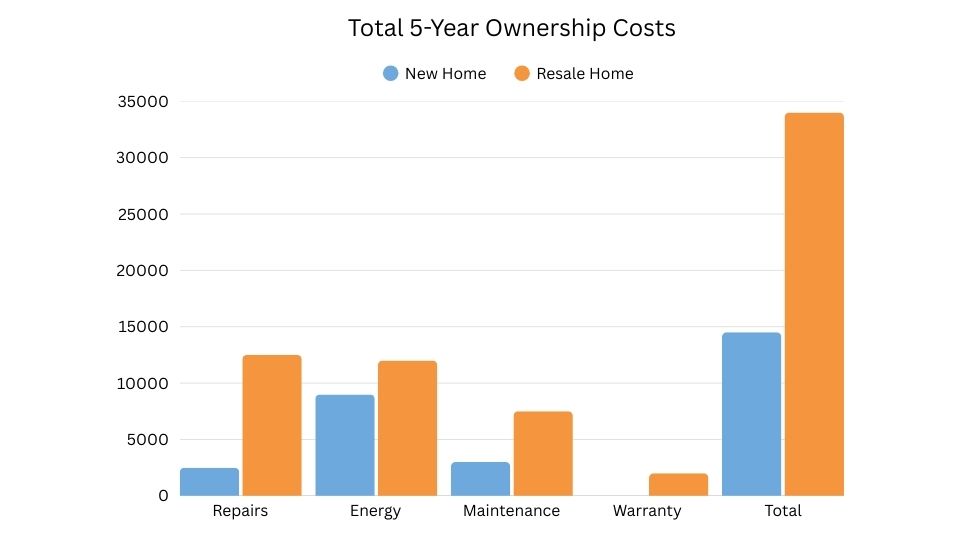
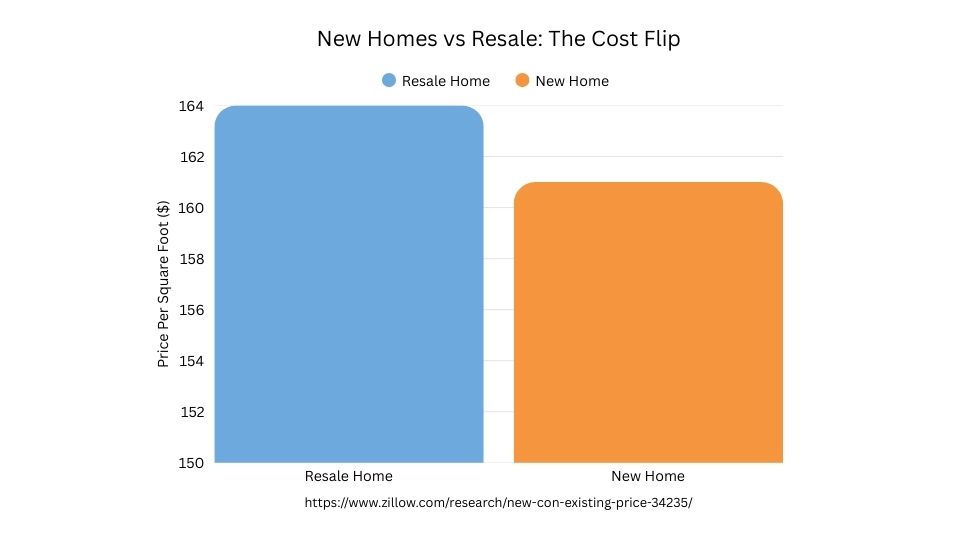
New builds come with some advantages to existing properties. Among these advantages might be the ability to customize the home, energy efficiency, warranty coverage for the initial year of ownership, and lower immediate maintenance costs. Builders that can market these advantages as cost saving advantages might just win prospective buyers from the resale market.  What home buyer doesn’t want to save on every aspect possible of homeownership?

So, what home builder incentives are the most attractive to new home buyers? As mortgage loan interest rates soar, there are two stand out incentives.  First, closing cost assistance can reduce the financial burden of a new home buyer at the time of closing.  This makes homeownership much more attainable to buyers at these heightened rates. The second is interest rate buydowns! Some builders are offering to buy down the buyers’ mortgage rate to get the prospective buyer to a more manageable monthly mortgage payment. From this writer’s logic, this frees the buyer to only need finances for one of the two things themselves. They either need enough money for a down payment or an interest rate buy down if they want a nice low payment for the term of their dream home.

Housing market affordability is so strained that this Fortune 500 homebuilder is offering a fixed 4.25% mortgage rate in some communities

Check out this article from Forbes!

Builders have a myriad of other incentives aside from these two.  They can offer base price discounts on specific homes. This usually happens with the first few homes in a new development.  They can offer free or discounted upgrades, customizations, or appliance packages.  They can also offer to pay HOA fees for the first year. These are just a few of the incentives available that can make new construction more financially attractive than purchasing an existing home.

Never Underestimate the Value of a Good First Impression.”

You’re with me this far. You’re a builder. You offer some of these incentives, but you want to know how to set yourself apart from other builders when marketing to potential homebuyers. Interactive tools may be key in the real estate market.  These tools offer a more engaging and informative experience to potential buyers, making it easier for them to visualize themselves in a potential new home. It can also make sure they clearly understand what the properties have to offer. 

Don’t believe us?  Here’s some statistical proof provided by the Content Marketing Institute:

  • 88% of marketers say interactive content differentiates them from competitors giving them a significant advantage in a crowded market.
  • 93% of marketers agree that interactive content is effective in educating buyers as compared to 70% for static content.
  • Interactive content attracts 2x the engagement of similar static content.

Those numbers are hard to refute, and they are just some highlights. If you want more information, head over to the Content Marketing Institute’s website to read more of their studies.

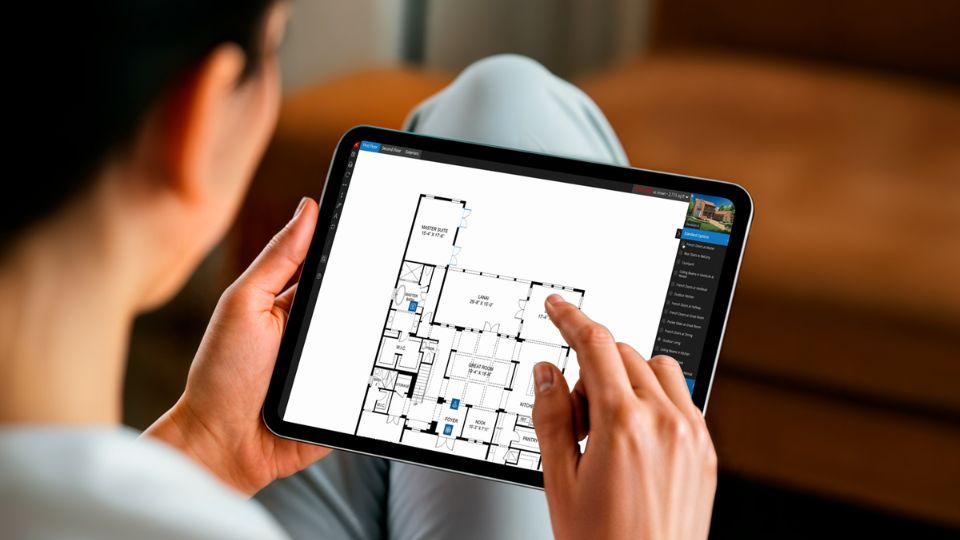
Some of the best interactive tools come in a few different categories: visualization, personalization, and lead generation, to name a few. When it comes to visualization, the most useful tools for new home buyers tend to be interactive floor plans, virtual tours, and real-time online booking and scheduling. Interactive floor plans (IFPS) allow buyers to customize layouts and explore different design options. Buyers can visualize a space and personalize it to their needs.  This can be a powerful selling point for new construction homes where there are often many customization options.

Interactive Floor Plans Top New Buyers’ Useful Tools Lists

Virtual tours or 3D tours allow a homeowner to experience a home, whether it is real or 3D rendered, from the comfort of their own home.  Builders can showcase the home in detail. This is incredibly important in times when physical access may be limited or just plain inconvenient.

Further, websites can integrate features that allow buyers to schedule appointments, book showings, or attend virtual open houses. This is a convenience for both the buyer and the home builder!

Once the potential buyer is interested in a builder, the best interactive tools need to be personalized; this can be achieved with real-time updates on available homes, pricing, and promotions. After all, everything else on the builder’s site hooked this potential home buyer; the builder will want to keep them interested! A great addition after purchase might be online sales tools. Many websites allow buyers to complete the purchase process online, including signing contracts and making payments.

Finally, lead generation might be the final piece of the interactive tool puzzle. Home builders can use website analytics to gain insights into user behavior. A data-driven approach can help them refine their marketing strategies and help them understand what features are most appealing to buyers. They might use this information to improve their sales tactics. Moreover, valuable data about user engagement and preferences can be provided to builders from their interactive tools. When potential buyers engage with these tools, builders can collect information and follow up with targeted marketing and sales efforts specific to individual buyers.  

Modern websites can capture leads and integrate with customer relationship management (CRM) systems. Sales teams can use this information to effectively nurture leads and follow-up. The best way to turn a potential buyer into a homeowner is with timely and personalized information. Search Engine Optimization (SEO) and social media integration might be the bow on the package. A well-optimized website can rank higher in search and make it easier for potential buyers to find and explore a builder’s properties.  SEO strategies can drive organic traffic to the builder’s site.  With the addition of well-thought-out social media integrations, builders can leverage social networks for marketing and referrals.

To sum it up, modern website assets empower homebuilders to provide a superior online experience, engage potential buyers effectively, and leverage data to optimize their sales strategies.  By staying up-to-date with the latest web technologies and user experience trends, homebuilders can gain a competitive edge in this competitive home sales market. There is definitely room for new home sales to outpace resale with the proper online strategies!

If all of this sounds a little mind blowing to you, a great place to learn about all of these digital tools, and the corresponding analytics would be from the experts at The Home Builders Digital Marketing Summit, and some of the amazing companies sponsoring and hosting the event.

http://buildermarketingsummit.com

Tabitha Warren was an Income Tax Accountant for 15+ years.  In the first months of the pandemic, she took a chance and re-careered to freelance in Marketing.  She currently, and very happily, works with video and photo editing, social media marketing, and now blog writing.

10 Lessons Ted Lasso Would Have for the Home Building Industry in 2023

Tabitha Warren · 08/28/2023 · Leave a Comment

This image was taken from the official press kit for “Ted Lasso,” distributed by AppleTV+ 

The final season of Ted Lasso was loved by some and flopped for many. I was one of the people who was a tried-and-true fan in the same manner that I’m a fan of the home building industry.  Ted wants us to be better, happier, more hopeful people. The home building industry wants people to find a home for their family and build happy, hopeful lives there. They want us to continue to “believe” in the American dream and a place to call our own. On that note, I believe that Ted Lasso has a few more lessons for home builders. But this time around we’ll take a few quotes from the entire cast. 

The series finale of Ted Lasso shows the team comes together; each has a piece of the iconic “BELIEVE” sign.  They put it together. It’s ripped, it’s tattered, but it’s all there. It’s beautiful. It stands for something.   

When I saw it, I saw the home building industry. It has had a several-year struggle from materials shortages to housing shortages and long waits to labor shortages to skyrocketing interest rates. Like A.F.C. Richmond, it often feels like the housing industry can’t get a win.  

Many of us in the housing industry just need to take some of the Lasso lessons and above all remember to “Believe in Believe.” 

You guys are more distracted than a bunch of cats playing laser tag.”

Ted Lasso
  1. Focus on Relationships: The key point here is focus. One of the lessons from Ted Lasso is the importance of building strong relationships with clients, customers, and colleagues. In season 3, we see Ted continue to prioritize his connections with the team and work to build trust with new players like Dani Rojas. With these fictional characters as well as in home building, focus on relationships creates trust and confidence among all parties. New homes are significant investments, so home buyers need to believe builders and contractors will deliver quality work within agreed-upon terms.

Well, I don’t want comfort.”

Roy Kent
  1. Embrace Change: The willingness of homebuilders to adapt and embrace new technologies and building practices is critical to staying ahead of the curve. By adopting new technologies, trends, and practices, home builders can offer better homes, enhance customer satisfaction, and position themselves for success in an ever-evolving market. Ted Lasso is all about embracing change and adapting to new situations. In the final season, A.F.C. Richmond undergo some significant changes as they adjust to new coaching and playing styles. This inevitably leads them to advance to the Champions League. Embracing change can make many of us champions in our own rights.

Unless it’s Animal Crossing. That sh! t’s ‘clucking’ soothing.”

Isaac Macadoo
  1. Communication is Key: Effective communication is essential in any industry. Home builders should prioritize clear and open communication with clients and trade partners to ensure everyone is on the same page. Ted Lasso is a shining example of effective communication. Ted and the team continuously work to improve their communication on and off the field. Communication takes many different forms, and sometimes we all need to calm down and make sure we are playing from the same rule book.

Right now, y’all brains are basically in London in 1857. They’re blocked up by other people’s dookie.”

Ted Lasso
  1. Prioritize Customer Experience: Ted Lasso understands the importance of providing a great customer experience, and builders should too. Ted works to create a positive and supportive environment for the team. He often takes them on strange and winding journeys if it will result in them understanding the process better. Ultimately, this helps them perform better on the field. Similarly, home builders should prioritize their clients’ experience, from the initial consultation to the final walkthrough. That’s the idea of the home buyer journey.

I’m a work in prog-mess.”

Ted Lasso
  1. Emphasize Quality: In season 3, we see the team working to improve their skills and techniques to produce better results on the field. Ted Lasso is known for his attention to detail and emphasis on quality, which should also be a priority for home builders. Prioritizing quality materials and craftsmanship to ensure projects stand the test of time is a good business practice. Things don’t always have to be perfect, but we in the homebuilding industry should strive to improve every day.

Can I say a bad word? I think you’re being stupid.”

Phoebe (Kent)
  1. Be Authentic: Authenticity is a fundamental aspect of successful homebuilding. It establishes trust, strengthens relationships, and fosters customer and trade loyalty, all of which are vital for sustained success in our competitive market. Authenticity benefits the homebuilding business and ensures a positive and fulfilling experience for the buyer who entrusts home builders with their dreams of a new home. Ted Lasso is all about being true to yourself and your values, which often involves a lot of honesty.

“Time is a construct, like gender and many of the alphabets.”

Zava
  1. Embrace Diversity: Diversity and inclusion are essential themes in Ted Lasso, and these values also play an important role in new home construction and sales. This season, we see the team welcome new players from different backgrounds and work to create a more inclusive environment. Home builders also benefit by striving to gather diverse and inclusive teams to foster innovation and creativity. Like Ted Lasso, homebuilders will find that different viewpoints and experiences enable them to innovate, problem-solve, and attract a broader group of homebuyers.

We are now one. There is no we; there is no you; there is only we and us and the ‘wenus.'”

Zava
  1. Collaborate: Collaboration is vital in any industry, including home building. Prioritizing collaboration with contractors, designers, and other stakeholders helps builders ensure projects are completed on time and within budget. Partnerships also enable builders to manage complex projects, maintain quality control, creatively innovate, and manage costs. I think Zava said it all.

I’ve had more psychotic episodes than Twin Peaks.”

Ted Lasso
  1. Be Resilient: Ted Lasso is all about resilience and overcoming adversity. In the final season, the team faces some tough challenges, but they bounce back and come out stronger in the end. Home builders should also be resilient in the face of setbacks and challenges and work to solve problems as they arise. In the past year, we have faced economic uncertainties such as rising interest rates, inflation, and fluctuating housing demand. Being resilient allows home builders to adapt to these changing economic conditions.

I look like Ned Flanders is doing cosplay with Ned Flanders.”

Ted Lasso
  1. Have Fun: Last but not least, Ted Lasso reminds us to have fun and enjoy the journey. The boys at A.F.C Richmond work hard but also take time to enjoy each other’s company and have fun on and off the field. Home builders should also remember to enjoy the process and take pride in their work while finding ways to have fun along the way.
The Mayfair – by Hampstead Living with Believe sign added

The wonder of Ted Lasso comes from within the process of growth and connection. It doesn’t have anything to do with wins and losses. Just like the continued beauty of home building should be connections and community. Connections to quality business partners and connections to the families we come together to help. We are building a community on so many levels. Community of like-minded builders and vendors. But most of all, communities of new homeowners will be proud to have bought a home from us and will want to come back the next time they purchase. I think we all need to take notes from Ted Lasso and Believe in Believe.

  • « Go to Previous Page
  • Page 1
  • Page 2
  • Page 3
  • Go to Next Page »

Ready to get started, want more info?

Contact Us
  • Facebook
  • Instagram
  • LinkedIn
  • YouTube

Outhouse

11048 N 23rd Ave #103
Phoenix, AZ 85029

602-371-4394

© 2026 All rights reserved