
• Skip to primary navigation
  • Skip to main content
Outhouse logo

Outhouse

The Outsource Hub for Home Builders

  • Home
  • Products & Services
    • Architectural/CAD
    • Rendering
    • Virtual Reality
    • Interactive Floor Plans
    • Interactive Site Maps
    • Interactive Kiosks
    • Print Marketing
    • Sales Office Displays
  • Partners
  • News
    • Events
    • Blog
    • Podcast
  • About Us
  • Contact Us
  • Show Search
Hide Search

home design

TikTok’s Blueprint

Tabitha Warren · 04/21/2025 ·

Viral Trends Forcing a Rethink in New Home Design
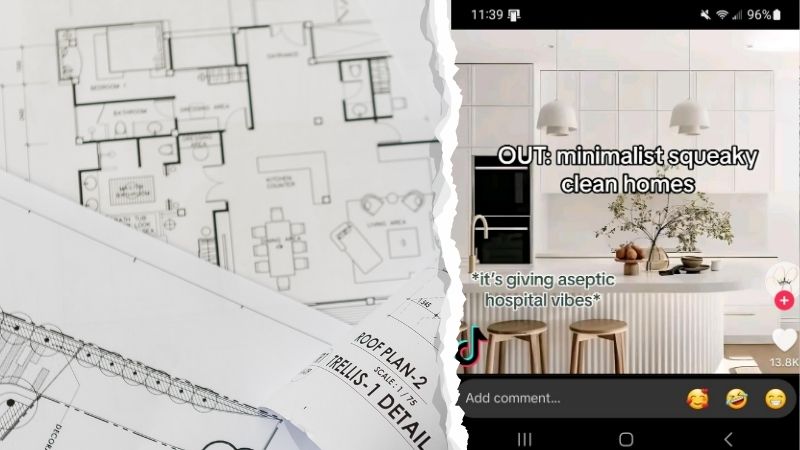
A split screen of classic, slow to produce, blue prints vs TikTok's constantly evolving word of trends
A split screen of classic, slow to produce, blue prints vs TikTok’s constantly evolving word of trends

Remember when home design trends evolved over years, maybe decades? Then, BAM, in comes the hit platform TikTok, where a 60-second video can launch a design craze overnight. From hidden pantry doors going viral to the sudden ubiquity of “cloffices,” the social media giant isn’t just for dance challenges anymore. It’s becoming a powerful, if sometimes unpredictable, force shaping buyer expectations and, consequently, influencing the very blueprints of new construction homes. For builders and designers, understanding this rapid shift is key to staying relevant.
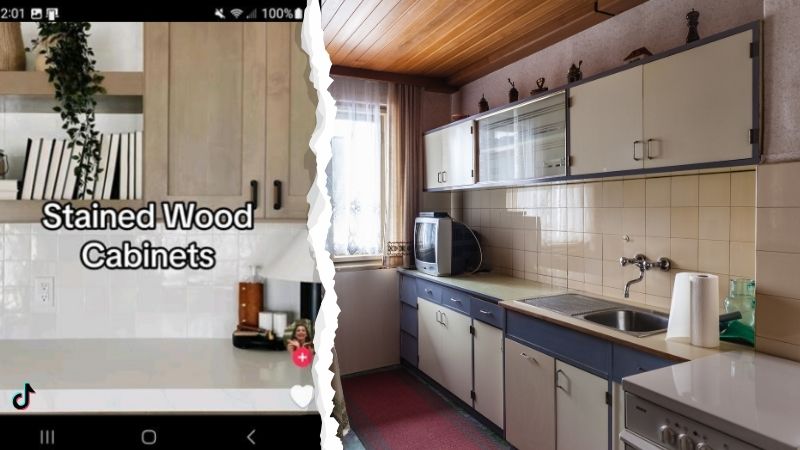
Split screen of TikTok trend video & a dated kitchen created in Canva Pro

Open Concepts & Flexible Spaces a Layout Revolution?

The desire for open-concept living isn’t new, but TikTok has amplified it, showcasing seamless flows between kitchens, dining areas, and living rooms perfect for entertaining and family life. Videos often highlight the airiness and connectivity these layouts provide. Beyond just openness, there’s a growing demand for flexible spaces. A room might need to serve as a home office during the week, a homework station in the afternoon, and a yoga spot on weekends. Builders are responding by designing floor plans with bonus rooms, lofts, or dens explicitly marketed for their adaptability, moving away from rigidly defined room purposes.
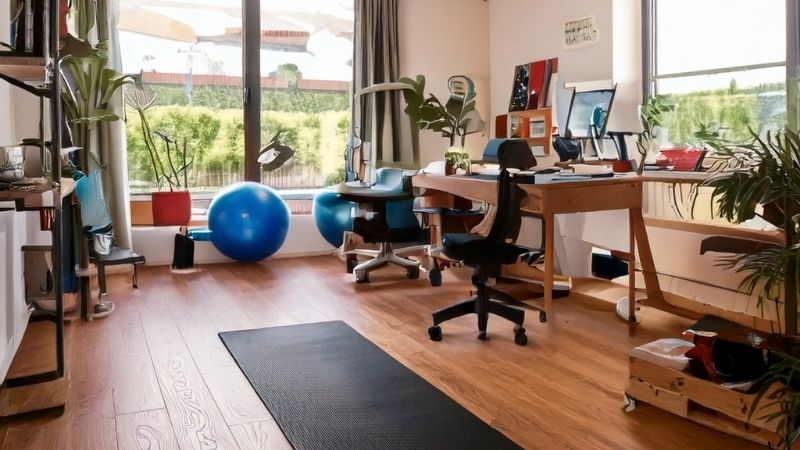
Home office & Yoga Gyme hybrid space generated by Adobe Firefly
Home office/Yoga Gym hybrid space generated by Adobe Firefly

The Rise of Hyper-Specific Room Requests

TikTok thrives on showcasing unique and aspirational home features, often turning niche ideas into mainstream demands. Dedicated home offices became essential during the pandemic, but TikTok introduced us to the “cloffice,” a cleverly converted closet space, appealing to those needing a compact workspace. Elaborate, hyper-organized pantries (sometimes with secondary “prep kitchens” or coffee bars hidden within) are another viral hit. Mudrooms with custom built-ins for coats, shoes, and even pet supplies are frequently highlighted. While not every buyer needs these specific features, their visibility on TikTok means builders are increasingly fielding requests and considering incorporating them as standard options or upgrades.

From Modern Farmhouse to Maximalist Flair Aesthetics and Finishes are Key

Visual trends spread like wildfire on platforms like TikTok, influencing homeowner preferences at an accelerating pace. While the enduring appeal of Modern Farmhouse persists, we’re also witnessing significant interest in aesthetics like Maximalism, with its bold embrace of colors, patterns, and textures; Biophilic Design, emphasizing natural light, indoor plants, and earthy materials; and the allure of moody, dramatic interiors. Specific finishes, as noted by industry observers such as Coldwell Banker, are also gaining viral traction, with “Bold Wallpapers” emerging as a popular choice for creating striking accent walls or transforming entire rooms, often inspired by online showcases.
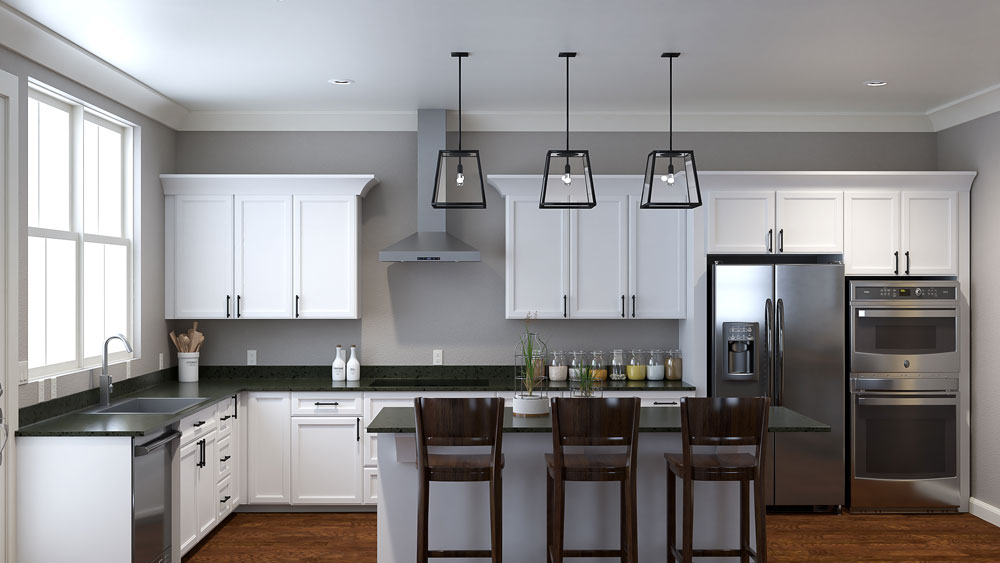
Builder Kitchen, plain colors, easy for a lot of people to like
Sego Homes Rendering, follows classic concepts of design, but also on trend: healthy, green, available smart technology.

However, builders often navigate different landscapes. While customization remains a powerful tool for showcasing possibilities in model homes and catering to pre-sale buyers, the need for broad market appeal in spec homes often necessitates a more neutral foundation. Color palettes leaning towards versatile browns and grays, along with universally accepted tile and fixture choices, provide a safe harbor, ensuring a wider range of potential buyers can envision themselves in the space should a deal fall through. This doesn’t negate the influence of trending aesthetics but rather highlights the strategic balance builders must strike between capturing current design enthusiasm and ensuring long-term marketability.

Smart Homes are Non-Negotiable

Smart home technology is frequently featured in TikTok home tours and gadget reviews. Integrated lighting controlled by phone, smart thermostats learning preferences, keyless entry systems, and whole-home audio are becoming baseline expectations for many tech-savvy buyers. Green Builder Media writes about tech mega trends and the evolution of technology in building regularly. The advances and demand are astounding. Builders at all levels are increasingly integrating robust Wi-Fi infrastructure and offering smart home packages as standard or easily accessible upgrades, recognizing that a “connected home” is now a major selling point fueled by online visibility.

Balancing Trends and Timelessness

TikTok’s influence on home design is undeniable, pushing builders to innovate and adapt faster than ever. The challenge lies in balancing fleeting viral trends with timeless design principles that ensure a home’s broad appeal and long-term value. While incorporating a trendy feature might attract buyers today, core elements like a functional layout and quality construction remain paramount. The blueprint for new homes is indeed being sketched by social media, but savvy builders will use the eraser wisely, blending the best of the ‘now’ with designs built to last.

At Outhouse.net, our highly customizable interactive floorplans can help builders showcase their flexible options. We can help builders give homebuyers the home of their TikTok fantasies. Contacts us now to find out how.

Contact Us

Creating Great Plans

Bill Gelbaugh · 02/21/2021 · Leave a Comment

Front view of Two story grey brick house .
Beautiful dusk rendering of the top selling Values That Matter 50-2695 Floor Plan.

Offering outstanding home plans is one of the most fundamental requirements of a successful home building business. Business writers and academics alike constantly refer to price and product as two of the cornerstones for success in any business. In this section, I will discuss the individual components that determine whether a plan is perceived as outstanding or just another “nice house.”

Essentially, the factors that determine the market success of a home design can be broken down into three broad categories: (1) functionality, (2) aesthetics, and (3) perceived value. To a certain degree, these categories are in conflict, with the most successful plans finding the correct balance between them. Trying to sell a home that is very livable but ugly is difficult. Attempting to sell one that is beautiful but totally non-functional is almost impossible. Creating a home that is both beautiful and functional but beyond the financial reach of your customers is nothing more than an exercise in irrelevance.

Creating a home that is both beautiful and functional but beyond the financial reach of your customers is nothing more than an exercise in irrelevance. “

Because it is the most complex, and I believe the most important, of the three categories, I will focus on functionality, specifically the following eight aspects of design that are at the very heart of creating a plan that provides customers with the home they truly want and need:

Square footage:
In many markets, square footage assumes even greater importance than it should, due to the market (and its realtors) focusing on dollars per square foot as a key indicator of value. Astute buyers understand that discussing price per square foot without a detailed discussion of what is included in those square feet is meaningless at best and misleading at worst. However, not all buyers are sophisticated, so by increasing the size with minimally expensive footage (i.e., pumping air into a plan for the sole purpose of making it bigger), we can drive down the selling price per square foot. I am not a proponent of this technique but I am pragmatic enough to utilize this methodology in those markets that require or, at least, reward it. My fundamental advice about square footage when creating great plans is this: Design houses that feel bigger than they are by using diagonal-view corridors, opening up public spaces to each other, and, in narrow plans, trying as hard as you can to have a section of the house that is open across its entire width. Try to hit the targeted price point with a design that appears bigger than it is. For most buyers, how a plan feels is as important as the advertised size. On that subject, we shouldn’t automatically believe the size claims of our competitors. I have seen numerous house measurements that were grossly inaccurate – from builders who measure to the outside of brick instead of framing (common in some markets) to those who count a 2-story great room at 1.5 or 2 times its area. We should always check the square footage claims of our competitors.

Room count:
As size goes up, well-designed houses typically add rooms. The most common is bedrooms, but once we get to four, master bedroom sitting rooms often enter the picture as a substitute for a fifth bedroom. In public rooms, studies and formal dining rooms are the most common add-ons as size increases. The point I want to make here is simply this: While it is nice to enhance the size of marginal rooms as our plans get bigger, once we have achieved room sizes that are acceptable, the best thing to do with additional square footage is to create more rooms, specifically rooms that give targeted buyers what they want and need.

Room size:
When discussing design, it is always difficult for me to decide whether to talk about room count first and room size second, or vice versa. They are, basically, two competing uses for the space we add to a home, so which is more important? I think the paradigm goes like this. First, for the targeted footage of the plan, we should decide which rooms are absolutely required. Then, based on accurate information for our marketplace, we should determine the minimal acceptable dimensions for those rooms. After doing the preliminary design, if we have what we need and are under the targeted square footage, we need to decide whether to add the excess footage to existing rooms or add an additional room (or possibly a mini-room). If we decide to add the square footage to existing rooms, we must determine where the increased dimensions will have the most impact. For example, taking a 10’9” bedroom to 11 feet can be a significant marketing benefit. Adding 8 inches to the width of a single loaded (L-shaped) 5’6” walk-in closet allows it to become a 6’2”-wide double loaded closet, with 50 to 60% more hanging rod. If we decide instead to add a room, we need to think carefully about what room to add for maximum perceived value.

For most Americans, every day is a day when we have more possessions than the day before. “

Storage:
For most Americans, every day is a day when we have more possessions than the day before. Without realizing it, we are constantly acquiring clothes, electronics, tools, furniture, and countless other items at a much greater rate than we are discarding these items. This is why storage space is such a crucial consideration when creating home designs. Let me sum this up succinctly: It is virtually impossible to include too much closet space. No one will say they can’t buy the house because there are too many closets. Almost everyone would prefer a 3-car garage to a 2-car garage if they could afford it. So what does this mean at the micro level?

  • Have a great master bedroom closet or closets – this room still belongs to the people who are paying the freight.
  • Learn how to be a great closet designer overall – truly understand what works and what doesn’t – and don’t skimp or cheat on closet layouts.
  • Have as good a pantry as you can fit – people love to have food in the house, and the rise of Walmart and Costco has them buying in greater quantities than ever before.
  • For many people, the garage is a place to store more than cars – go for oversized garages whenever possible.

Circulation space:
Minimizing circulation square footage is important because it utilizes space that would have a higher perceived value if its functionality were better defined; that is, bigger rooms or more rooms. Aside from this general comment, the most important thing to remember is that the halls, stairways, and foyers that comprise circulation space need to be sized correctly for the specific product we are designing. Just as a 4-foot-wide hallway is a waste of space in a 1400 square foot home, so too is a 3-foot-wide hallway inappropriate for a 2800 square foot home. Circulation spaces, such as the rooms we discussed previously, must be sized proportionately to the product we are building.

A great plan, the 50-2695 features big, open rooms and minimal circulation space. Take our Interactive Floor Plans, with Furniture Planner, for a spin today!

Special spaces and memory points:
In the competitive new homes marketplace, it is more important than ever to create plans that buyers remember. Good design requires memorable spaces and features that inspire buyers and put the greatest degree of difference possible between the home they currently occupy and the one we want them to buy. We need not only an island in the kitchen but one with a different and notable shape. We want built-ins, details, work spaces, and time-saving features that convince the buyer that there is more going on than a simple change of address. We need to convince them that their lifestyle in the new house will be better – more interesting, more exciting, more productive, and more fulfilling. We need to make the move a requirement in their minds, not just a desire.

Good design requires memorable spaces and features that inspire buyers and put the greatest degree of difference possible between the home they currently occupy and the one we want them to buy. “

Features and spaces for today’s lifestyle:
I’ve discussed many specific features up to this point that are related to today’s lifestyle, but let me be even more specific. Today’s buyers want more time to do what they want to do. They want lower maintenance, lower utility bills, and a home that supports their increasingly technologically dependent life. They work at home. They surf the Web. They need to charge phones, iPads, computers, and battery-powered tools. If they have children, these children require power and bandwidth just as their parents do. They want to eat breakfast in a hurry, but they also want to have the entire family over for Thanksgiving. They want a place for the 60” TV, as well as the microwave oven. Most of all, “they” is really not one demographic group but many. Non-traditional families make up a huge proportion of new homebuyers, and the specific needs of diverse ethnic buyers are a factor that must be recognized. The builder who designs his or her product without understanding the lifestyle and needs of the targeted buyers is doomed to mediocrity at best, but more likely to failure.

Flexibility:
It is fitting that the last of the functional design aspects we will discuss is flexibility, because I believe that it summarizes a necessary attribute not only of a winning plan but also of a winning builder. Never before has the marketplace changed as rapidly as it is changing today, and never before has it been as diverse as it is today. This requires plans with rooms that can serve multiple functions, plans created with additions, modifications, and personalization in mind. We live in an age of specialization, but the smart builder creates home plans that allow that specialization from a well-created portfolio of great, flexible plans.

Submitted by
Alan Trellis, Author, NAHB Speaker, and co-founder of Home Builders Network.

With 40 years of experience as a custom home builder and consultant for the home building industry, Al is co-founder of Home Builders Network, which provides management consulting, marketing, residential design, and land planning for home builders throughout North America. Collectively, their clients build 3,000 homes per year, for a sales value of $1.2 billion. Al is the author of many books on residential construction; has served as chairman of the NAHB Custom Builder, Education, and Business Management committees; and is a leading speaker at the NAHB International Builders Show (IBS).

Ready to get started, want more info?

Contact Us
  • Facebook
  • Instagram
  • LinkedIn
  • YouTube

Outhouse

11048 N 23rd Ave #103
Phoenix, AZ 85029

602-371-4394

© 2026 All rights reserved