• Skip to primary navigation
  • Skip to main content
Outhouse logo

Outhouse

The Outsource Hub for Home Builders

  • Home
  • Products & Services
    • Architectural/CAD
    • Rendering
    • Virtual Reality
    • Interactive Floor Plans
    • Interactive Site Maps
    • Interactive Kiosks
    • Print Marketing
    • Sales Office Displays
  • Partners
  • News
    • Events
    • Blog
    • Podcast
  • About Us
  • Contact Us
  • Show Search
Hide Search

interactive site maps

Mobile-First Design for Home Builders: Why Digital Tools Must Match How Buyers Actually Shop

Tabitha Warren · 03/02/2026 ·

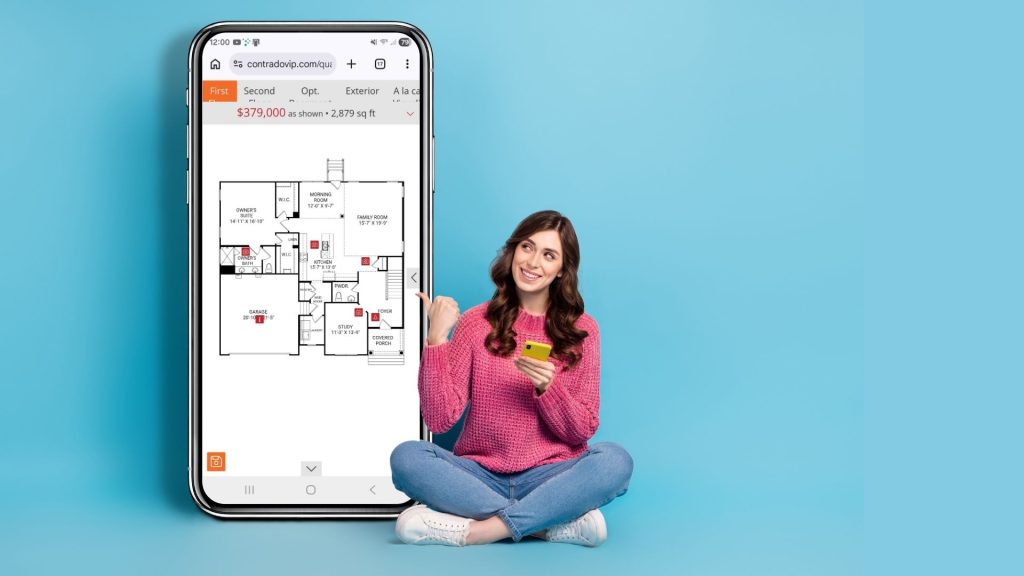
Interactive floor plan on mobile phone women pointing at it.

For today’s home buyer, mobile isn’t a secondary experience. It’s the starting point. Before a buyer ever walks into a sales office, they’ve already browsed communities, compared neighborhoods, checked lot availability, and shared links with a spouse or agent, all from a phone. In her latest book on social media marketing, Carol Morgan with Denim Marketing notes, “Approximately 63% of all Google searches start on a smartphone, this isn’t an audience to ignore.”

In many cases, that mobile experience determines whether a community makes the short list or gets skipped entirely. For builders, that reality changes the stakes. If your digital tools aren’t designed mobile-first, you’re not just behind on technology; you’re losing attention at the exact moment buyers are forming opinions. At Outhouse, we see mobile-first not as a trend but as a practical shift in how communities and homes are presented.

Mobile-First Design Isn’t Smaller. It’s Smarter for Home Builders

A common misconception is that mobile-first means “responsive” or “shrunk down.” In practice, mobile-first means designing the experience around clarity, speed, and ease of understanding, especially on smaller screens. For homebuilders, that means:

  • Clear visual hierarchy instead of crowded information
  • Touch-friendly navigation that works naturally on tablets and phones
  • Fast load times that don’t depend on perfect connectivity
  • Visual storytelling that replaces long explanations

When mobile-first is done well, buyers don’t feel like they’re using a limited version of your website. They feel like they’re getting the best version.

Why Interactive Site Maps Matter More on Mobile Than Anywhere Else

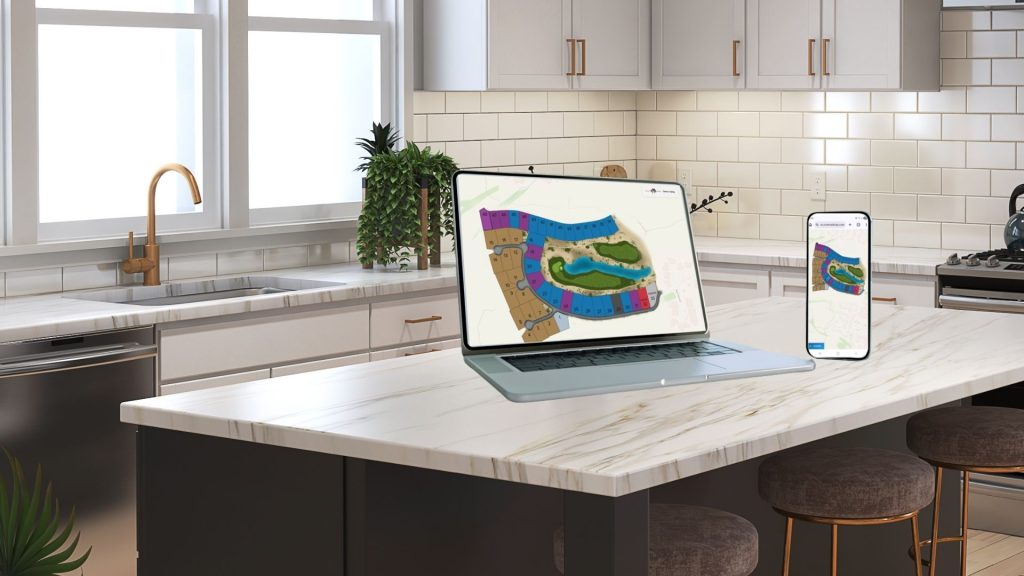
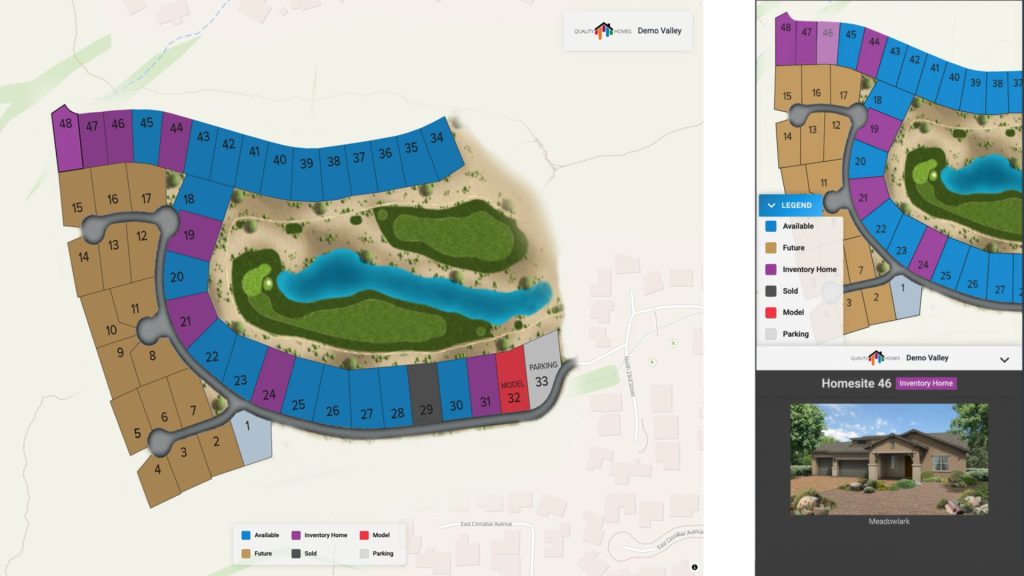
Site maps are often the most-used interactive tool on a builder’s website, and also one of the easiest places to lose buyers if the experience feels clunky. On a desktop, buyers may tolerate extra clicks or small details. On mobile, they won’t. We built our Interactive Geospatial Site Maps with this reality in mind. Instead of forcing buyers to pinch, zoom, and hunt for information, the experience is designed to guide them visually.

Mobile-first advantages include:

  • Wall-to-wall, immersive layouts without headers or footers competing for attention
  • Clear lot-level detail that’s readable at a glance
  • Elevation imagery that helps buyers understand location, views, and surroundings
  • A full-screen experience that feels native, not bolted on

Bringing the Interior to Life: 

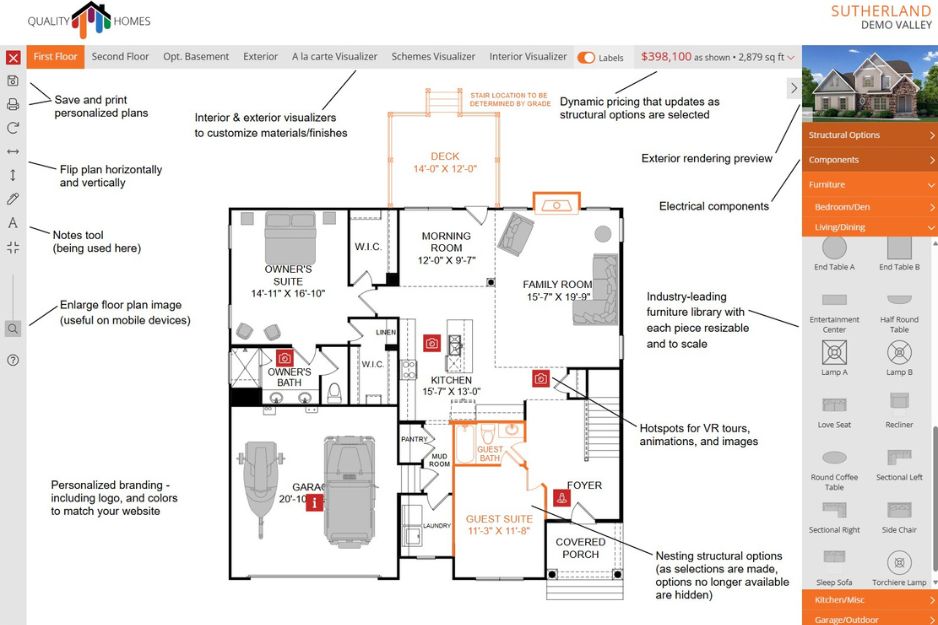
Interactive Floor Plans on the go.  The mobile journey doesn’t stop at the lot line. Once a buyer finds the right community, they want to see if the home fits their life. Our Interactive Floor Plans are designed to be just as intuitive as our site maps. Instead of squinting at a static PDF, buyers can:

  • Toggle options and structural changes (like adding a 4th bedroom or a covered patio) with a single tap.
  • Visualize furniture placement to see how their current belongings fit the space.
  • Save and share their custom configurations directly from their phone. By giving buyers, the power to “build” their home digitally while sitting on their couch, you create an emotional connection before they ever set foot in a model.

Built for the Way Production and Regional Builders Actually Work

Many new digital tools promise innovation but often come with expensive software, steep learning curves, or workflows that don’t align with how production builders operate. That’s not our approach. With more than 30 years of experience, Outhouse focuses on tools that integrate with your existing processes. Our mobile-first solutions are built around AutoCAD-based workflows, because that’s what most builders already use.

What that means:

  • No need to switch to Revit or invest in costly new platforms
  • No retraining your drafting, sales, or marketing teams
  • Faster turnaround, from CAD files to sales-ready tools in days or weeks, not months
  • Budget-smart solutions that deliver value without unnecessary complexity

This isn’t about flashy technology for its own sake. It’s about practical tools that help you sell homes.

Mobile-First Benefits for Home Builder Sales Teams in the Field

Interactive site map on laptop in kitchen setting.

buyers through communities. A mobile-first site map and interactive floor plan make those conversations easier. Sales teams can quickly show:

  • Where a specific lot sits within the neighborhood
  • Exactly how a specific floor plan can be customized for a buyer’s needs
  • How elevation and surroundings impact the homesite
  • What amenities, schools, or conveniences are nearby

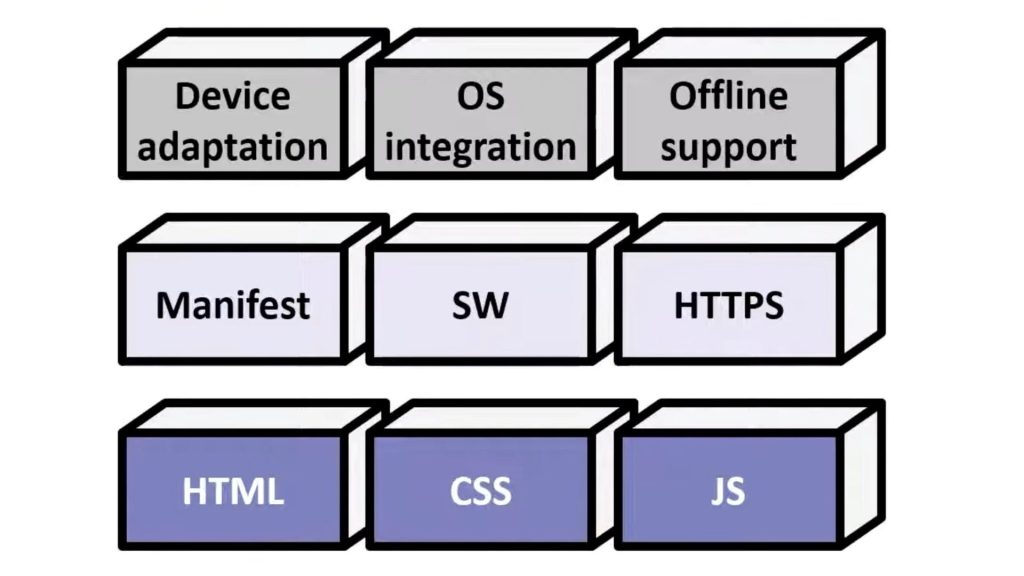
And with Progressive Web App (PWA) capabilities, these tools can be installed directly on tablets, providing a full-screen, app-like experience, even when internet access is spotty. For teams working on active construction sites, reliability matters.

A Better Buyer Experience, Without Disrupting Your Workflow

One of the biggest barriers to adopting new tools is fear of disruption. Builders don’t want to slow down sales cycles or overhaul systems that already work. Mobile-first geospatial site maps and interactive floor plans are designed as an evolution, not a replacement. Builders can:

  • Upgrade existing interactive site maps to a mobile-first geospatial experience
  • Incorporate interactive floor plans that sync with your inventory
  • Integrate seamlessly into existing websites and sales workflows

The result is more capability without added friction.

Why Mobile-First Digital Tools Help Builders Win in Competitive Markets

Mid-size and regional builders are often caught in the middle, too large to rely on static tools, but not positioned to chase expensive, enterprise-level platforms. Mobile-first digital assets level the playing field. They help builders:

  • Stand out earlier in the buyer journey
  • Tell a clearer story about communities and locations
  • Support both digital marketing and in-person sales
  • Present their neighborhoods with confidence and clarity

More homes sold. Less hassle.

Designed for Today’s Buyers, and What Comes Next for Builders

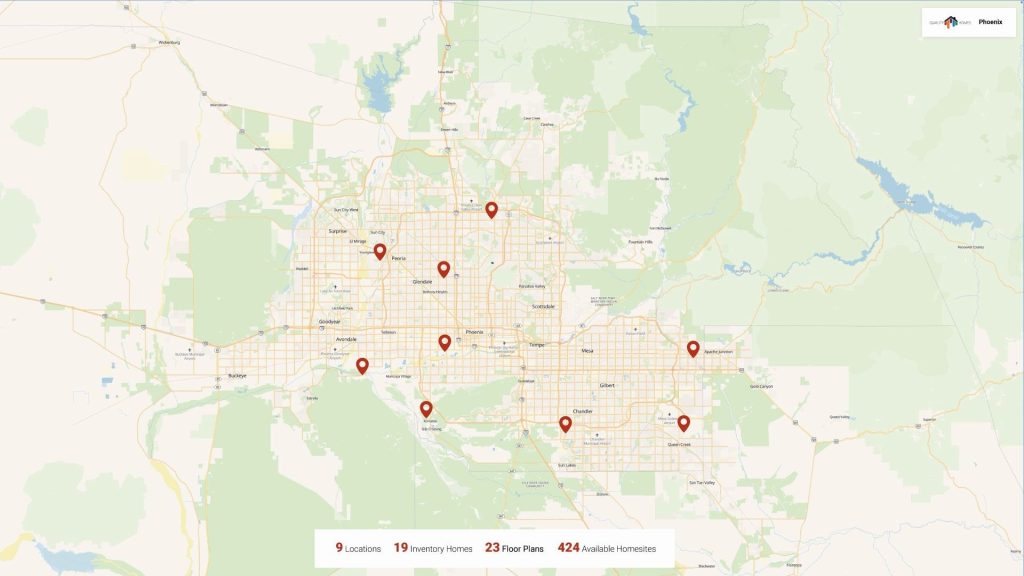
Mobile-first geospatial site maps also serve as the foundation for a broader view of your market. As builders manage multiple communities across a metro area, the ability to view everything on a single, geo-positioned screen becomes increasingly valuable. Imagine:

  • Seeing all communities in one market at once
  • Understanding proximity to schools, transit, and amenities instantly
  • Knowing which floor plans are offered in which communities, down to individual lots

It’s clarity without jumping between tools, and it starts with mobile-first design.

Want to See What Mobile-First Could Look Like for Your Communities?

If you’re curious how a mobile-first approach could improve your site maps, floor plans, sales conversations, and buyer experience, we’d be happy to show you. No hard sell, just a walkthrough and a practical conversation. Reach out to Kevin to see Interactive Geospatial Site Maps and Interactive Floor Plans in action.

If you’d like to learn more, reach out to Kevin.

Learn more

Outhouse’s Digital Suite – We’ve Come a Long Way, Baby!

Jim Sorgatz · 11/03/2025 ·

OutHouse IFP with descriptions

Why It Might Be Time for a Refresher Demo, Not a New Vendor

Every so often, we hear from a builder client who asks, “Why doesn’t my widget ‘x’ do this or that?” Maybe you spotted something new on another builder’s website or in a demo from a competitor. We get it, technology moves fast, and digital marketing tools evolve even faster.

But before you assume your current system is outdated, there’s a good chance those new features are already available through Outhouse.

Built for Builders: Designed to Evolve

As one of the original creators of interactive tools for home builders, Outhouse has
spent more than three decades helping builders showcase their homes online. Our
Interactive Floor Plans (IFPs) and Interactive Site Maps (ISMs) are trusted by builders across the U.S. because they’re built to grow with technology, not be replaced by it.

Customized plan emailed and/or texted to homebuyer when they personalize and save a plan.
 

We update our tools regularly to help you stay competitive in digital marketing:

  • Dynamic Pricing: Pricing adjusts instantly as buyers select structural options.
  • Elevation Previews: Show front-elevation changes directly on IFPs.
  • To-Scale Furniture: The most comprehensive furniture library in the industry.
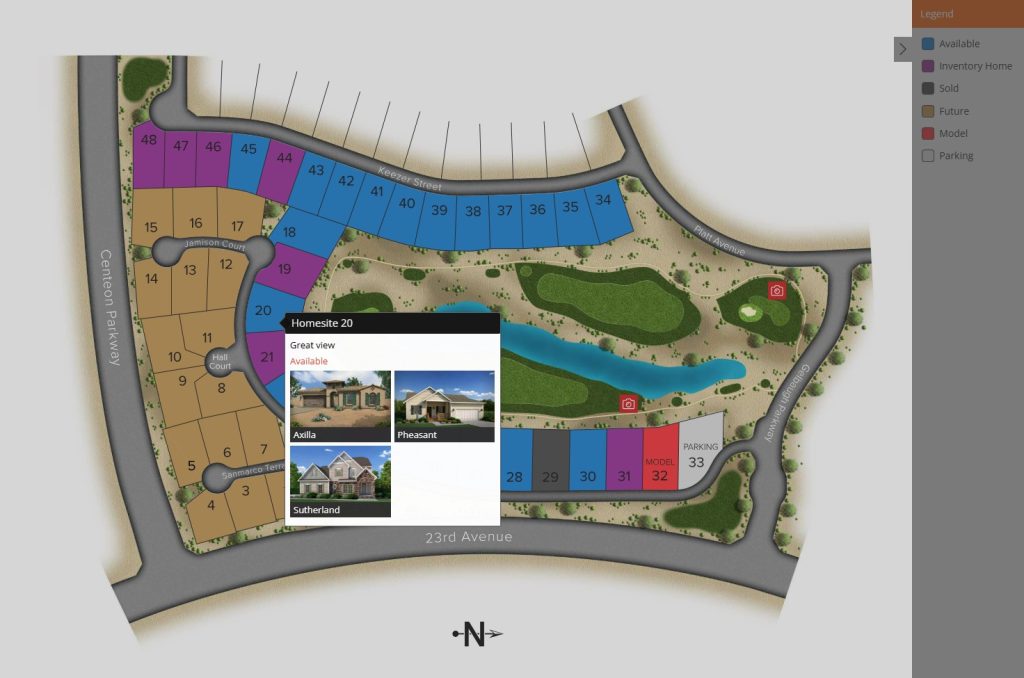
  • Clickable Site Maps: Buyers can view available lots and jump directly to corresponding floor plans.
  • API Integrations: Seamless connections with CRMs, ERPs, and other third- party platforms.

These are just a few ways Outhouse technology sets the standard for builder
interactivity.

Continuous Improvement You Might Not Notice

Much like the homes you build, behind-the-scenes upgrades and changes take place to Outhouse’s interactive tools. Meanwhile, staff changes at your company, website redesigns, and evolving integrations can, over time, lead to features being missed or underused.

That’s why we recommend scheduling a refresher demo with your Outhouse Account Manager at least once every couple of years. You may be surprised at how much has changed, from new functionality and smoother integrations to updated user interfaces designed to convert more leads.

Why Start Over When You Don’t Have To?

Switching vendors can be expensive and disruptive. Data migration, reintegration, and retraining your team take time and resources that could be spent marketing new homes and communities.

A simple demo could reveal that your current Outhouse tools already include the same (or better) features than you’ve seen elsewhere without the high cost of starting from scratch.

With our U.S.-based team of CAD specialists, developers, and account managers, you’ll always have direct support from experts who understand how production builders operate.

Site map with pop out of available plans.  Homebuyers click on elevations to access interactive floor plans.
Site Map Platinum.jpg
Site map with pop out of available plans.  Homebuyers click on elevations to access interactive floor plans.

Let’s Take a Fresh Look Together

If it’s been a while since your last demo, now’s the perfect time. We’ll walk you through the latest IFP, ISM, and VR enhancements, integrations, and customization options so your buyers enjoy the most engaging online experience possible.

Schedule your refresher demo today.

Schedule Here

Because sometimes, the tools you already have are more powerful than you realize.

The Bots are Coming: Are We Ready for the Disruption Ahead?

Jim Sorgatz · 03/09/2025 ·

Robot with human face

Jimdroid – Created by Tabitha Warren with a little help from A.I,

The past six months have been nothing short of a revelation. Last fall, I experienced an ischemic stroke—an event that was a bit terrifying and life-altering, but also utterly fascinating. While the recovery process has been grueling, it has also given me a rare, firsthand understanding of the intricate connection between the brain and the body—something most people never have to think about.

When a stroke occurs, blood flow to the brain is cut off, damaging nerves and severing their connection to various parts of the body. In my case, I lost control of most of my left side. However, I was fortunate—my face, speech, vision, and cognitive function were largely unaffected. Even more encouraging, my doctors reassured me that I had the potential for full recovery since I could still move my fingers and toes. What they didn’t immediately share, though, was just how difficult that journey would be.

After months of intense physical therapy and relentless effort, I have regained control of most of my muscles. Just last week, I celebrated a significant milestone—full range of motion in my shoulder. Walking, however, remains a work in progress. I can do it, but let’s just say I won’t be winning any style points.

This experience has given me a deep appreciation for something most of us take for granted: the brain-muscle connection. Under normal circumstances, our muscles simply do what they’re supposed to without conscious thought. A stroke doesn’t damage the muscles themselves but disrupts the neural networks that control them. Recovery, therefore, isn’t about healing muscles; it’s about retraining the brain to find new pathways through endless, repetitive exercises.

Army of cartoon robots

What Does This Have to Do with Robotics?

We all know the robots are coming. Many of us have chuckled at videos of Tesla’s Optimus robot tripping down a hill. Skeptics argue that humanoid robots are still decades away from being truly useful, but my stroke recovery has given me a fresh perspective—I now firmly believe they’re coming much sooner than we think.

Why? Because AI learning mirrors stroke recovery in many ways. Just as my brain must repeatedly attempt movements to forge new neural pathways, AI systems refine their capabilities through repetition. The more they practice, the smarter and more autonomous they become, adapting to new tasks without explicit reprogramming. We’ve already seen remarkable advancements in autonomous driving—Tesla’s latest Full Self-Driving (FSD) version 13.2 shows just how close we are to full autonomy.

The Impending Disruption in Homebuilding

It doesn’t take much imagination to picture robots swinging hammers on job sites. But what will push the homebuilding industry toward this reality? Tariffs? Immigration reform? The growing need for affordable housing? The catalyst may not be clear yet, but one thing is certain: innovation is essential for reducing construction costs and ensuring builders can continue to thrive.

Remember Katerra? In 2015, it looked like this technology-driven, off-site construction company would revolutionize the industry. But despite massive funding, the company ultimately collapsed in 2021 due to a combination of overspending, the pandemic, and lender failures. However, Katerra was just the tip of the iceberg. Since then, AI has advanced at an exponential pace, and robotics is poised to play a crucial role in the next wave of construction innovation.

Are We Ready for What’s Next?

Probably not. Most industries are slow to embrace disruption, and homebuilding is no exception. But the shift is inevitable. That’s why homebuilders and trade contractors need to start preparing now—adapting to new technologies and finding ways to integrate AI and robotics into their processes before they get left behind.

At Outhouse.net, we’ve always been at the forefront of innovation. From launching our first interactive floor plan over 20 years ago to developing interactive site maps, kiosks, animations, virtual tours, and visualizers, we’ve continually pushed the boundaries of what’s possible in digital marketing technology. And we’re not stopping anytime soon. We, too, understand the need to stay ahead of the curve.

The future is coming fast—are you ready?

Design Inspiration: The High Line, NYC

Jim Sorgatz · 08/08/2024 · Leave a Comment

Bring Your Home Designs to Fruition at Outhouse

Sculpture by NYC artist Danny Cole.

Have you ever stumbled upon a place so unexpected and exhilarating that it floods your mind with creative ideas and inspiration? That’s exactly what I experienced on a recent trip to New York City while exploring the High Line, an elevated linear park built on a former rail line. This isn’t just any public park; the High Line is a unique blend of art, architecture, and urban design. Stretching 1.45 miles through Manhattan’s West Side it offers stunning views of the city’s skyline and showcases some of its most innovative buildings.

Iconic Architectural Landmarks

From the elevated perch, high above the crowds, the view of iconic buildings, like the Empire State Building, is astonishing. Here are a few of the wonderful buildings you see along the way:

  • The Eleventh (BIG): Designed by the Bjarke Ingels Group, this striking complex features two twisting towers at 76 Eleventh Avenue. Known for its bold geometry and expansive glass walls, The Eleventh offers panoramic views and a modern twist on traditional skyscraper aesthetics​.
The Eleventh – designed by the Bjarke Ingels Group.
  • 520 West 28th Street (Zaha Hadid Architects): A hallmark of contemporary design, this building is noted for its curving metallic façade and futuristic appeal. It is one of the last projects by the legendary architect Zaha Hadid, making it a significant landmark on the High Line​.
Condo designed by Zaha Hadid.
  • Chelsea Market: Originally a factory for the National Biscuit Company, this historic building now serves as a vibrant market with various food vendors and shops. The High Line runs through the building, showcasing its blend of old and new architectural elements​.
The High Line making it’s way through Chelsea Market.
  • 10 Hudson Yards (Coach Building): This skyscraper marks the northern terminus of the High Line and is a central part of the Hudson Yards development, a massive urban revitalization project often compared to Rockefeller Center in scale and impact​.
10 Hudson Yards building in the distance.

Unique Experiences and Sights

Walking along the High Line offers more than just architectural wonders. The park itself is a showcase of landscape design, featuring over 500 species of plants. Areas like the Gansevoort Woodland and the Washington Grasslands offer serene green spaces amidst the urban hustle​

Gansevoort Woodland

The High Line also functions as an outdoor art gallery. With installations like Paola Pivi’s “You know who I am” and Nina Beier’s “Women & Children,” the park provides a continuous rotation of thought-provoking art that enhances the visitor experience​.

Mural by renowned Brazilian street artist Eduardo Kobra.

Although some people don’t love these, beauty is in the eye of the beholder and I found “The Vessel,” and a whimsical sculpture by artist Danny Cole to be quite entertaining as well.

The Vessel – centerpiece of Hudson Yards. This interactive sculpture was imagined by British designer Thomas Heatherwick.

What’s The Connection Here to Home Building?

Wherever you find inspiration for new homes, whether it be the High Line in Manhattan, an out-of-this-world experience elsewhere, or a simple walk in the neighborhood park, Outhouse, the outsource hub for home builders, can help bring your wildest ideas to fruition. Give us a sketch on a napkin, and our architectural team will produce a full set of construction documents.

While plans are in progress, our rendering team will meticulously craft your 3D exterior and interior elevations, virtual tours, and visualizers. Our interactive team works their magic to build digital tools like interactive floor plans and interactive site maps that will engage your homebuyers. We can also coordinate digital assets with your web designer including industry experts Blue Tangerine, Bokka Group, Group Two, Meredith Communications, and Adlanta Creative,

All of this can be accomplished simultaneously in a compressed timeline bringing your homes to market faster, and increasing your ROI. 

The juxtaposition of old and new is striking. The iconic Empire State Building in the background.

Conclusion

The High Line is a testament to New York City’s ability to innovate and adapt, transforming an old rail line into a vibrant public space that seamlessly blends nature, art, and architecture. Whether you’re an architecture enthusiast or just looking for a unique urban experience, the High Line offers a fascinating journey through some of the city’s most captivating sights.

If you visit the High Line, or anywhere else that inspires some fresh design ideas, draw a quick sketch, and send it over to Outhouse.  We will take it from there to bring your idea to life!

Optimizing the Design-Market-Sell Continuum: Tips for Home Builders – Part 2

Jim Sorgatz · 03/16/2024 · Leave a Comment

In the dynamic world of homebuilding, a term that often echoes through the corridors of innovation is “value engineering.” Investopedia defines it as a strategic method aimed at delivering essential project functions at the minimum possible cost. This approach champions swapping out materials and methods for more cost-effective alternatives while maintaining the integrity of functionality—and, we’d argue, quality, too.

At Outhouse, this principle is at the heart of our Design-Market-Sell methodology. Our suite of services—from drafting to visual aids and digital innovations to print solutions—caters to builders across the spectrum. Yet production home builders crafting anywhere from 30 to 3,000 homes annually, stand to gain the most from our holistic approach. By integrating our seasoned Computer-Aided Design (CAD) expertise, builders can forego the hefty expense of maintaining an in-house drafting team. As our CAD wizards work their magic, our graphics and rendering teams get cracking on interactive floor plans, site maps, virtual tours, and much more, paving the way for a seamless transition to print media and sales office displays. This cohesive strategy not only accelerates your market entry but does so with significant cost efficiency. And therein lies the secret to mastering the Design-Market-Sell continuum.

In the first chapter of this series, we unpacked the foundational tools every builder needs to design, market, and sell new homes. Now, let’s dive into the digital realm that captivates homebuyers and enriches their purchasing journey.

Crafting Emotional Connections: The Power of Interactive Floor Plans and Site Maps

Outhouse has been at the forefront of Interactive Floor Plans (IFPs) and Interactive Site Maps (ISMs) for over two decades, boasting a portfolio that’s as robust as it is innovative. Optimized for mobile use, these tools work like a dream on any device, aligning perfectly with the preferences of over 70% of today’s homebuyers.

Headshot of Outhouse VP of National Accounts Erin Kearney against a wood plank backdrop with the words, "Helpful Tips - Visualizers"
Erin Kearney, VP of National Accounts

Erin Kearney, our VP of National Accounts, emphasizes the importance of understanding buyer needs and adopting a personalized sales narrative. The ability to swiftly capture and analyze consumer preferences sets a builder apart in a market brimming with competition. IFPs and ISMs are more than mere marketing gimmicks; they are bridges to potential buyers’ hearts and minds, allowing them to visualize and tailor their future homes. This emotional engagement is akin to the bond formed during a car’s test drive, transforming a potential purchase of “your house” into “my home.”

Moreover, ISMs offer a comprehensive view of available lots, linking directly to elevations, IFPs, virtual tours, and more, thus streamlining the journey from lot selection to home customization.

Marrying market insights with interactive tools is critical to truly excel in sales. These technologies elevate customer interaction and deepen the emotional bond with their future homes, positioning builders as pioneers in their field.

Sketch of Marilyn Monroe against a wood plank backdrop with the words, "Helpful Tips - Interactive"

Maximizing Engagement with IFPs and ISMs

Success with IFPs and ISMs hinges on precise construction documents and strategic website placement. Marcy Smith, our incredibly talented but media-averse Graphic Department Production Manager, shares invaluable tips for optimizing these tools:

  • Ensure clarity and accuracy in your CAD files before engaging with a digital tools provider. Autodesk offers a free ‘DWG TrueView’ for this purpose.
  • Incorporate a PDF version of your CAD files for ease of reference.
  • For IFP projects, detailed CAD files minimize back-and-forth, saving time and resources.
  • Clearly delineate desired lots for ISMs, especially in master-planned communities, to avoid unnecessary costs.
  • The placement of these tools on the website is crucial; they should be prominently displayed for easy access by potential buyers, enhancing engagement and site retention.
Headshot of Outhouse partner Stuart Platt against a wood plank backdrop with the words, "Helpful Tips - Visualizers"
Outhouse partner Stuart Platt

Virtual Reality: The Frontier of Digital Engagement

Virtual Reality (VR) stands as the latest marvel in digital homebuilding tools, offering virtual tours, animations, and visualizers that transport the model home experience to buyers worldwide. Stuart Platt, an Outhouse partner, advises:

  • For interior VR projects, consider selecting from Outhouse’s extensive library of interior designs to save on costs, unless custom designs are necessary.
  • Utilize color and material visualizers to give buyers a comprehensive view of their customization options, though it’s wise to limit exterior color schemes to maintain community aesthetics.

As a quick VR refresher: Virtual Tours are user-controlled tours – buyers click from room to room. Animations are essentially a video tour. And, Visualizers are customization tools that allow buyers to select options, colors, and finishes whether it be interior cabinets and countertops, or exterior roofing, stone, and siding.

In Summary

The key to optimizing the design-market-sell continuum is to work with a sole provider like Outhouse – the outsource hub for home builders. Whether launching a new community or seeking innovative cost-saving strategies, Outhouse is here to guide you through optimizing your design, market, and sell process. Reach out today to explore how we can transform your homebuilding journey.

What a Move to Small Town America Taught Me About the Marketing Potential of Small Volume Builders

Jim Sorgatz · 01/27/2024 · Leave a Comment

a caboose in snow hosing the Railway Cafe
Railway Cafe. One of the first places you see when you enter downtown Blaine.

When my spouse and I decided to leave the hustle and bustle of Phoenix, Arizona and head to the Pacific Northwest, we were pretty clueless about where exactly we wanted to settle down. It was a couple of our long-time friends who suggested we check out Bellingham, WA, a city of around 100,000 people that I knew absolutely nothing about. This city, tucked away in the northwestern corner of Washington State, is primarily known for its vibrant brewery scene and its closeness to Vancouver, BC. I found the idea intriguing, especially since our friends had also moved here from a big city and were loving every moment of it. My main concern was whether I’d miss the conveniences I’d gotten used to during my 45 years in a bustling metropolis.

Soon enough, I realized that Bellingham has a surprising cosmopolitan flair for a city of its size. This is partly due to its proximity to Canada and the presence of Western Washington University, both of which add a certain liveliness to the place. Bellingham has quite a lot going for it, including a multiplex movie theater, Costco, Target, Trader Joe’s, Whole Foods, Home Depot, Lowe’s, Macy’s, Dick’s Sporting Goods, a decent dining scene, and an impressive farmers market. This makes it feel much bigger than many cities of similar size. The only thing missing from Phoenix is Sprouts! The stunning ocean views and the abundance of nature sealed the deal. Or so I thought!

two small dogs, one tan and one white in front of a Canadian obelisk sign
My pups walking across the US/Canadian border in Peace Arch State Park.

As fate would have it, we ultimately fell head over heels for Blaine, a cozy town of just 6,000 people located a mere 18 miles further north, right on the Canadian border; and that is where we settled. Was it a culture shock? Absolutely, but when you’re used to driving in Phoenix, a 20-minute commute to the “big city” is a walk in the park. We chose this area because of its breathtaking surroundings and a home in a neighborhood that stole our hearts. Blaine is nestled around Drayton Harbor and is adjacent to Birch Bay, both of which are absolutely unique. Every time I make the drive between the two, I can’t help but appreciate how fortunate we are to live in this picturesque seaside community.

a loaf of chive dill pickle sourdough bread
Anna’s Sourdough Bread which comes in some interesting flavors!

Despite not having all the amenities of a big city, Blaine has its own charm that makes it an amazing place to live. We’ve got L & L Bakery with some of the most scrumptious cakes and macaroons you’ll ever taste, Anna’s Bread that comes in the most unusual flavors (Dill Pickle or Taco Tuesday anyone?), and The Vault Wine Bar with a wine list that rivals most big-city fine-dining establishments. There’s even a trendy speakeasy that recently opened in the lower level of the 1890 Taphouse. The Semiahmoo Resort is located on a picturesque spit reaching out into the bay. And then there’s the Railway Cafe, housed inside a caboose, which is one of the cutest and most meticulously designed spots I’ve ever seen. Adding to Blaine’s uniqueness is Peace Arch State Park, the only park in the country where you can stroll freely between two countries, Canada and the USA. And remember, we’re just a short 20-minute drive away from all those big-city conveniences in Bellingham, and 30 minutes to Vancouver B.C.

a walkway of paves in front of boats in a harbor
Blaine Harbor.

Now, you might be wondering, what does all of this have to do with home building? Well, the lesson here is that you can be a small builder and still pack a punch. For starters, smaller builders often have more control over the quality of their homes. The biggest challenge I see for both small and some larger builders is in the online sales and marketing department. It mainly boils down to a lack of staff and the misconception that having a comprehensive digital marketing strategy is prohibitively expensive. This is where it really pays to seek help from the experts.

Did you know that for as little as $2,700, plus subscription fees, you can have a top-notch digital marketing firm like Blue Tangerine design and manage a professional, high-performing website for you? It’s a website that seamlessly integrates Search Engine Optimization (SEO) tools and comes with ongoing support. Since your website is frequently the first point of contact for potential buyers, investing in one that’s done right and generates leads is crucial. As Greg Bray, President of Blue Tangerine, puts it, “A website visitor’s first goal is to eliminate you! A cluttered website with too much information and a lack of focus can easily turn them away.” Never underestimate the power of your website when it comes to selling new homes.

bar with a rack of bottles wall in front of a wall of windows
Packers Bar at the Semiahmoo Resort.

While you’re upgrading your website, don’t forget to incorporate digital marketing tools like interactive floor plans, site maps, 3D photorealistic renderings, virtual tours, and visualizers. These are engagement tools that bigger builders already have on their websites. The good news is that these assets don’t have to break the bank. Interactive floor plans from Outhouse, LLC, the most robust in the industry, start at just $285 per plan. Virtual tours of pre-built homes kick off at $2,800. Compare that to the cost of constructing a physical model, and virtual tours and visualizers become a no-brainer.

In today’s digital age, with homebuyers doing most of their research online, another tool that larger builders use is AI chatbots, such as those provided by AtasRTX, or human-powered live chat services from providers like CommVersion. You don’t necessarily need to hire additional sales personnel to answer homebuyer questions around the clock. As more and more buyers turn to the internet to purchase homes, having an exceptional Online Sales Counselor (OSC) is crucial. To ensure success, you might want to consider training from a consultant like Blue Gypsy, Inc., or outsourcing the role of OSC entirely to a provider like Shared Drive.

old stone bridge over a stream
Whatcom Falls Bridge in Bellingham.

The bottom line is this: being a smaller builder with a limited budget doesn’t mean you have to settle for an inferior online marketing program. If you prioritize digital marketing and invest a bit upfront, you’ll likely recoup the costs with the sale of just one or two homes. With the rapid advancements in artificial intelligence, it’s essential to bring your website and online marketing tools into the digital age if you want to thrive in the world of new home sales.

horse pulling carriage down street in a small town
Carriage rides at Blain’s downtown holiday celebration.

From Clicks to Community: Mastering Visitor Engagement Using Your Home Site Blog

Tabitha Warren · 01/08/2024 · Leave a Comment

Classic Home Builder Website, theoretical banner for dream homes

Alright, buckle up because we’re diving into the wild world of website success! Hey, you’ve decked out your website with new site maps and floor plans. That’s step one. You’re off to a great start!

You’re imagining the floodgates of customers, right? Well, hold on to your blueprint! It’s a bit more intricate than that.

First off, these shiny interactive floor plans (IFPs) and interactive site maps (ISPs) are stellar, no doubt. They’re like the red-carpet welcoming buyers, but they won’t drive the traffic there.

Enter SEO, the wizardry behind getting eyeballs on your site. Sure, it’s a complex dance with algorithms, but here’s a nifty trick—blogging. Yes, yes, you might be rolling your eyes at the thought of writing, but bear with us!

Think about it. You’ve got these incredible interactive tools showcasing house layouts, upgrades, and the whole spiel. But why stop there? Your site maps aren’t just about the house, they’re your gateway to the neighborhood. Nearby eateries, local schools, hangouts—all the soul of community life.

That’s where blogs become your ace in the sleeve! Write about the hidden gems around your communities. Neighborhood secrets, the best tacos in town, or where to grab the perfect latte on a Sunday morning. Take screen shots of your ISPs to show homebuyers what is in the area, helping them feel like they are already living there and how to plan a perfect day out. It’s not just about homes; it’s about crafting a lifestyle!1

So, next time you grumble about blogging, remember you’re not just selling houses; you’re curating experiences. Give it a whirl. Who knows, your blog might just be the key to unlocking a new world of buyers!2


Now, about the magic of blogs—they aren’t just there for show. Businesses that blog rake in more traffic. It’s a magnet for potential buyers scouring the web for their dream home. Plus, it gives your website some serious SEO brownie points.2

The thing is your website isn’t merely a digital property catalogue. It’s an immersive experience—a sneak peek into a potential life. Every blog post isn’t just a blurb; it’s an invitation, a snippet of the world they could be stepping into.3

See, the key isn’t just in flashing your interactive tools; it’s in telling a compelling story. So, the next time you sigh about blogging, think about the universe you’re creating for your buyers—one engaging post at a time.4

Get tapping those keys; your buyers might just be scrolling, waiting to discover their new home sweet home!

Remember, it’s not just about selling houses; it’s about selling a lifestyle. Cheers to blogging beyond the blueprints!

Tabitha Warren was an Income Tax Accountant for 15+ years.  In the first months of the pandemic, she took a chance and re-careered to freelance in Marketing.  She currently, and very happily, works with video and photo editing, social media marketing, and now blog writing.

  1. (Source: Moz – SEO Basics)
  2. (Source: HubSpot – The Benefits of Business Blogging)
  3. (Source: Forbes – Blogging for Business)
  4. (Source: WordStream – 55 Blogging Statistics and Facts)

Rules of Engagement

Jim Sorgatz · 03/07/2022 · Leave a Comment

Penguins surrounding expedition gear sitting on rocks.

In the military, rules of engagement are a directive specifying the circumstances and limitations under which forces will engage in combat with the enemy.

In Antarctica, the rule of engagement is – bring on the penguins!

Hundreds of penguins walking along a beach.  Snow covered ice shelf and mountain in the background.

I recently had the good fortune of taking an expedition to the great white continent. Superlatives are not unwarranted. The icebergs are astounding. The clouds are incredible, unlike anywhere else I have ever been. They feel so close you can touch them. The landscape is otherworldly. And the penguins are utterly captivating and engaging. The Antarctic Treaty dictates that visitors maintain a distance of 15 metres from the penguins, but that doesn’t mean they won’t come to check you out! Penguins are as curious about us as we are about them.

Leopard seal lazily resting on black sand.

Not only are penguins the stars of the show for adventurers like me, they also draw crowds of other animals by sea to Antarctica. Technically, it all starts with the krill, but penguins are a favorite food of leopard seals, fur seals, sea lions, and sharks. And all are prey to killer whales. Watching the circle of life play out in real-time has its sad moments, but it is also one of the most fascinating spectacles on earth. With landings in both Antarctica and the Falkland Islands, I saw more penguins than I could count. Is it possible to get tired of them? For countless other explorers and me, the answer is an emphatic NO! They are SO engaging!

Rules of engagement apply to home builders as well. To sell homes, you need to engage home buyers. Traditionally, this has been accomplished with model home tours and glossy brochures. Although those still play an essential role in new home sales, today, home builder websites are the stars of the show. What used to be seen as a sales mechanism for younger buyers is now the primary marketing vehicle for home builders to reach all generations. This means engaging tools like interactive floor plans and site maps, visualizers, virtual tours, Matterport tours, and interactive sales kiosks are no longer options. In the home building industry, they are a necessity.

Penguin with baby chicks sitting in their pebble nest.

As potential home buyers become more web-savvy, they seek a more sophisticated online experience. This is where connected, interactive platforms, like the Virtual Interactive Platform (VIP) by Outhouse, come into play. Beginning with an interactive site map, potential buyers can click on lots to view interactive floor plans, renderings, animations, virtual tours, visualizers, and more. The beauty is entire platform is built upon a single site map.

Penguins relaxing on a white sand beach.  Tall grass in the foreground.

Do not underestimate the power of virtual tours and visualizers. As builders begin moving towards a “buy now” option online, these interactive tools contribute significantly to your website’s ability to engage homebuyers and sell new homes. User-controlled virtual tours allow families to tour your homes from anywhere in the world. Interior and exterior visualizers encourage potential buyers to customize homes, increasing their vested interest.

In addition to incorporating interactive tools on your website, boosting engagement with these tools should also be part of the conversation. There are several best practices to accomplish this. The 2-3 click rule, for example, is the maximum number of clicks to get to your interactive floor plans. Other guidelines relate to how your interactive floor plans and site maps open (iFrames vs. responsive opens). Some of these apply specifically to one tool or another. The team here at Outhouse, or one of our website development partners like Blue Tangerine, Bokka Group, Adlanta Creative, Kovach Marketing, 616 Marketing, Power Marketing, Group Two, or Meredith Communications, are happy to review these with you.

A group of 9 King Penguins.You can see their orange necks.

The goal is to draw homebuyers in and keep them engaged on your website. Like the penguins in Antarctica, interactive tools are the star of the show on home builder websites. Implemented correctly, they keep buyers coming back and, ultimately, increase your conversion rate.

Penguins floating on an iceberg.

Ready to get started, want more info?

Contact Us
  • Facebook
  • Instagram
  • LinkedIn
  • YouTube

Outhouse

11048 N 23rd Ave #103
Phoenix, AZ 85029

602-371-4394

© 2026 All rights reserved