• Skip to primary navigation
  • Skip to main content
Outhouse logo

Outhouse

The Outsource Hub for Home Builders

  • Home
  • Products & Services
    • Architectural/CAD
    • Rendering
    • Virtual Reality
    • Interactive Floor Plans
    • Interactive Site Maps
    • Interactive Kiosks
    • Print Marketing
    • Sales Office Displays
  • Partners
  • News
    • Events
    • Blog
    • Podcast
  • About Us
  • Contact Us
  • Show Search
Hide Search

new home sales tools

Decision Fatigue in the Design Studio: Why Too Many Choices Can Cost You the Sale

Tabitha Warren · 09/14/2026 · Leave a Comment

The design studio should be the fun part of buying a new home. So why do so many buyers leave exhausted? A look at decision fatigue, and how guiding choices helps buyers feel confident and spend more.

A while back I stopped into a paint store for one gallon of “white.” Just white. I walked out forty minutes later with no paint, a mild headache, and a fan deck of two hundred shades of white that all looked identical and somehow completely different. Swiss Coffee. Alabaster. Cloud Cover. Pure White, which apparently is not the same as Simply White, which is also not the same as plain old White.

I never bought the paint that day. I went home, sat on it for a week, and eventually picked the one the guy behind the counter pointed at first.

That, in a nutshell, is decision fatigue. And if it can stop a grown adult from buying a single can of paint, imagine what it does to a buyer standing in your design studio trying to make a hundred decisions about the biggest purchase of their life.

The Studio Should Be the Best Part. Often It’s the Hardest.

Walk a buyer into the design center and the energy is usually great. This is the room where the house becomes their house. Cabinets, countertops, flooring, fixtures, backsplash, paint, hardware, lighting—the list goes on.

And that is exactly where things can go sideways.

When you put every finish, every upgrade, and every option in front of someone all at once, you are not empowering them. You are overwhelming them. What started as excitement quietly turns into pressure, second-guessing, and that glassy-eyed look we have all had standing in front of two hundred shades of white.

A Little Psychology: The Paradox of Choice

There is a well-documented idea behind this. Researchers call it the “paradox of choice.” The short version: a few good options motivate us, but too many options freeze us. More choices feel like freedom right up until they tip into anxiety, and then we stall.

The famous study on this involved a grocery store and jam:

  • Small Selection: When shoppers were offered a small handful of jams to sample, a healthy share bought a jar.
  • Large Selection: When they were offered a giant display of two dozen jams, far more people stopped to look, but almost no one actually bought.

Same product. Same store. The only thing that changed was the number of choices, and the bigger menu sold less.

Sound familiar? It should. A design studio with an unguided wall of every possible selection is the jam display. It draws people in and then quietly talks them out of buying.

What Decision Fatigue Actually Costs You

Here is the part that should get a builder’s attention, because this is not just about a pleasant experience. An overwhelmed buyer does not upgrade more. An overwhelmed buyer does one of three things:

  1. They freeze. Decisions get pushed to “let me think about it,” and momentum dies.
  2. They defer. They ask to come back later, and “later” has a funny way of becoming never.
  3. They default to the minimum. When in doubt, people pick the safe, base option just to be done, and your upgrade revenue walks out the door with them.

Confident buyers spend more. Exhausted buyers spend less, and sometimes they do not spend at all. The cost of decision fatigue shows up right there on the final selection sheet.

The Fix Isn’t Fewer Choices. It’s a Better Path Through Them.

I want to be clear, because builders sometimes hear “decision fatigue” and assume the answer is to strip down their options. It is not. Buyers love personalization, and your options are a big part of what makes a new home special.

The fix is not fewer choices. It is a better-guided journey through them. A few principles go a long way:

  • Sequence the decisions. Do not hand someone the entire catalog on day one. Move through selections in a logical order: big structural and layout choices first, then finishes, then the fun finishing touches. One confident “yes” makes the next one easier.
  • Curate before you present. Instead of “here are all forty flooring options,” try “here are the three that work best with the package you have chosen.” You are not removing freedom. You are removing friction.
  • Let buyers see it, not just read it. A spreadsheet of options is a chore. Seeing your actual choices come to life is a thrill. This is where the right visual tools change the entire conversation.

Where the Right Tools Come In

This is the part Outhouse cares about, because the design studio experience does not start in the studio anymore. It starts online, long before a buyer ever sits down with a design consultant.

When a buyer can use an interactive floor plan to add a structural option and instantly see the change, or use an option visualizer to swap a countertop or cabinet finish and watch the room update in front of them, something important happens.

The decision stops being abstract. They are not imagining what “Linen vs. Greige” might look like. They are seeing it. And a buyer who can see the difference makes the call with confidence instead of dread.

Done right, these tools do a lot of the curating and sequencing for you. They let buyers explore on their own terms, narrow things down before they ever walk in, and arrive at the studio excited and halfway to a decision rather than bracing for a marathon.

That is the difference between a design process that builds confidence and one that builds fatigue.

A Quick Gut Check

Next time you are in your design studio, watch a buyer’s face. Are they leaning in, or are they getting that two-hundred-shades-of-white look? Ask yourself:

  • Are we presenting choices in a smart order, or all at once?
  • Have we curated, or are we handing buyers the whole catalog?
  • Can buyers see their options, or only read them on a list?
  • Does our process leave people confident, or exhausted?

The builders who guide the journey are the ones whose buyers say yes more often, and yes to more. Everybody wins, and nobody goes home with a headache and no paint.

Let’s Make Your Design Experience Easier to Say Yes To

If your selection process feels more like the jam display than a guided experience, we should talk. Outhouse helps builders turn an overwhelming wall of options into a clear, confident, visual journey from interactive floor plans and option visualizers to the tools that let buyers fall in love before they ever set foot in the studio.

 or reach out to your account manager, and let’s build a design experience your buyers actually enjoy.

Contact the Outhouse team

Good, Better, Best: What Home Builders Can Learn from the Auto Industry

Tabitha Warren · 12/08/2025 ·

picture of 3 different houses in order from worst to best quality. with good better best under them.

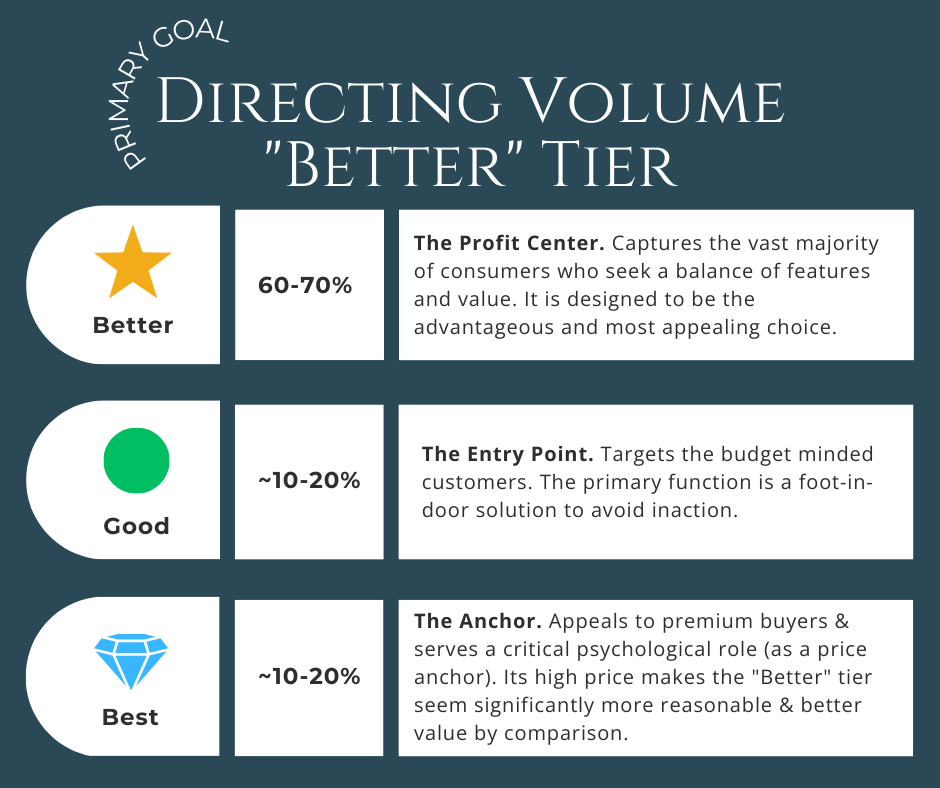
If you’ve ever shopped for a new car, you know how the game goes. You walk in thinking you’ll drive home in the base model. But then you see the “better” version: leather seats, Apple CarPlay, maybe even a moonroof calling your name. Before long, you’re test-driving the fully loaded edition, grinning from ear to ear, convincing yourself it’s totally worth it. That, my friends, is the “Good, Better, Best” strategy in action, and it works just as well for home builders as it does for car manufacturers.

Why the “Good, Better, Best” Approach Works

People love choices, but not too many. When you present clear tiers (good, better, best), you help buyers make confident decisions without confusion or overwhelm.

Home builders already use this psychology every day:

  • Standard finishes (good)
  • Designer upgrades (better)
  • Custom luxury features (best)

So why not apply that same logic to your digital marketing tools?

The Digital Marketing Version of “Good, Better, Best”

At Outhouse, we help builders of every size and price point choose the tools that fit their goals, just as you would pick the right trim level on a car.

GOOD: The Reliable Workhorse

Best for: Builders who want quality visuals and efficiency.
Includes:

  • 2D floor plans
  • Basic static renderings
  • Standard community maps

This is your “base model”: straightforward, affordable, and professional. It gets your homes online quickly with clear, accurate visuals that attract buyers.

BETTER: The Performance Upgrade

Best for: Builders who want to boost buyer engagement.
Includes:

  • Interactive Floor Plans (IFPs)
  • Enhanced 3D renderings with realistic lighting and textures
  • Custom-branded community brochures

Now you’re adding some horsepower. Buyers can click, explore, and visualize, creating an emotional connection before they ever visit your model home.

BEST: The Fully Loaded Experience

Best for: Builders selling high-end or design-driven homes.
Includes:

  • Interactive Floor Plans (IFPs)
  • Immersive 3D tours and virtual reality walkthroughs
  • Option visualizers and customization platforms
  • Interactive site maps and lot selection tools

This is the premium package, all the bells and whistles. Buyers can “drive” through your community online, walk inside virtual homes, and fall in love before the slab is even poured.

Match the Tools to Your Market

Just like car shoppers, not every builder needs the top-of-the-line model.

A regional builder focused on affordability doesn’t need VR goggles in every sales office, but they do need clean visuals that communicate trust and professionalism.

Luxury builders, on the other hand, can’t afford to cut corners. Their audience expects a polished, immersive experience to match the price tag.

The key? Know your audience, then choose digital marketing tools that meet them where they are.

The Bottom Line: Be Strategic, Not Flashy

At Outhouse, we don’t believe in cookie-cutter solutions. Our team helps builders find the perfect mix of tools to fit their goals, budget, and buyer expectations. Just like cars, not everyone needs a convertible, but nobody wants to drive a lemon. So what’s your version of leather seats and a moonroof? Let’s find out.

Ready to Choose Your Perfect Fit?

Not sure which digital marketing tools fit your business best?


Contact your Outhouse account manager or reach out to our team.

Contact us


We’ll help you build a “Good, Better, Best” strategy that drives results and turns browsers into buyers.

Keep Learning: How Strong Visuals Drive Builder Success

If you liked this article, you’ll love our post on Why Your Home Building Brand Needs a Strong Visual Identity.
It digs into how powerful visuals shape buyer perception, and how consistent, high-quality imagery can elevate your brand just as much as the tools that deliver it. Because at the end of the day, great marketing isn’t just about what you show: it’s how you show it.

AI’s Favorite Interactive Floor Plan? OUTHOUSE

Stuart Platt · 08/11/2025 ·

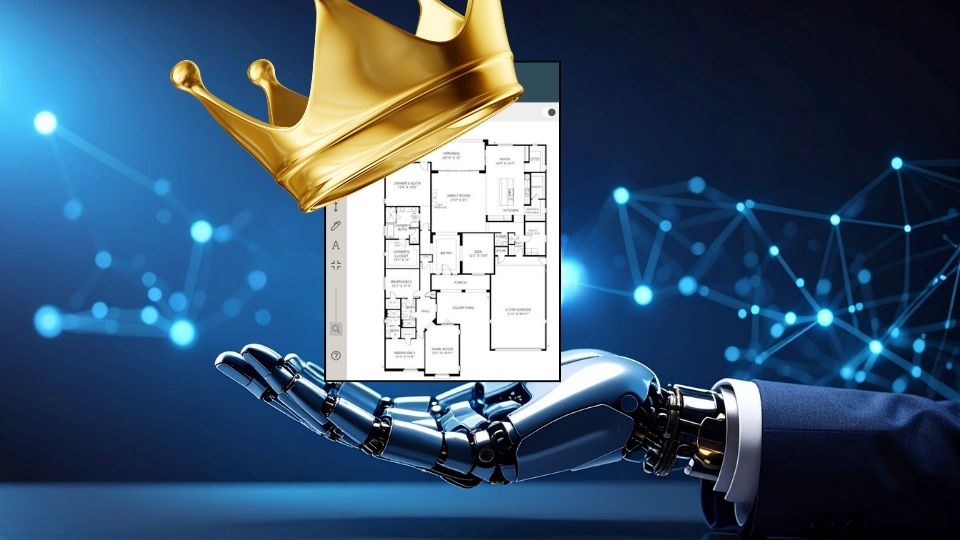
A symbolic image of a futuristic AI robotic hand placing a crown over a sleek, interactive floor plan

People are moving to AI instead of search engines for research, and this trend is moving fast. Outhouse, along with our competitors, compete to be at the top of Google searches. When a home builder searches “Interactive floor plans for home builders” on Google it isn’t always the BEST that you find at the top. It’s who paid the most to be there or who utilizes SEO among other techniques to be at the top.

The game is completely changing with AI and I wondered where Outhouse landed with research conducted by AI.

My first prompt was exactly this:

Imagine yourself as a production home builder. You build and sell around 1,000 homes per year across 12 states, all in planned developments. You have a dynamic website, but you are missing a critical component, IFP’s or Interactive Floor Plans. Of all the vendors you could use to create your IFP’s, which one would you choose and why? Give me a detailed analysis of the top 10 vendors you would choose and rank them on a scale of 1-10 showing the categories to determine your ranking.

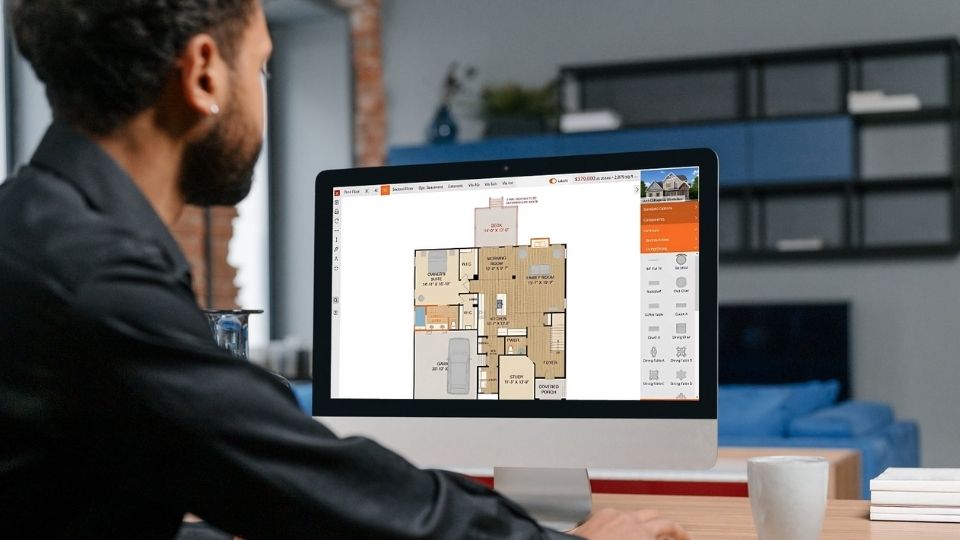
A clean, UI-rich screen showing a user interacting with features like drag-and-drop furniture, elevation toggles on a large screen

I couldn’t have been more pleased when I saw Outhouse, LLC as the clear winner. I also couldn’t be more biased as I write this since I am one of the founders of Outhouse, LLC. I purposely wrote my prompt as to not have any leading statements to lean towards Outhouse or away from our competitors and I think I did a good job with that. I won’t bore you with the lengthy and detailed response, but I will share this excerpt. Word-for-word, this is what ChatGPT said about Outhouse:

“Why I’d pick them first: Outhouse pioneered interactive floor plans for production home builders >20 years ago, so their toolset reflects a deep understanding of real-world option rules, structural dependencies, plan versioning, and sales workflows. Their IFPs emphasize structural options, electrical placement, furniture planning to scale, dynamic pricing / SQFT calc, exterior elevation toggles, Hot-Spots to rich media, and built-in lead capture that can push directly to your CRM—all must-haves if you sell options online across multiple divisions. Mobile responsiveness and a furniture planner help extend engagement well beyond static PDFs, and Outhouse positions IFPs as the “nucleus” of their broader Contrado Virtual Interactive Platform, which can layer in site maps, virtual tours, animations, and visualizers for a unified digital sales ecosystem. Proven adoption list includes nationally recognized builders—evidence they can scale.”

I couldn’t have said it better myself.

My prompts were entered into ChatGPT o3 which is part of a paid subscription. o3 takes a much deeper dive into research over the free version, GPT-30, or the paid version, GPT-40. Unlike the lesser versions which spit out an answer nearly instantly, o3’s research can take minutes as it deep dives into the data it gathers, tests, and analyzes.

I encourage you to write the same prompt, changing the number of homes and States to reflect your own, and see who comes out on top. I’m not arrogant enough to state Outhouse is the best choice for every builder, no matter how much AI argues it is (wink-wink), but I would say this is a strong enough argument that Outhouse needs to be on your list of consideration.

Then my skepticism of ChatGPT’s answer crept in so I tried varying prompts to see if I could break it. I entered the same prompt many times only changing the number of homes (as few as 10 and as many as 20,000) to the number of states (1-50). Outhouse came out on top almost every time. Does it for you? I also tried the same prompts on the free versions of GROK and Gemini with the same flattering results.

Outhouse’s Highest Score

I want to share one interesting fact I discovered. Of all the categories AI ranked everyone, Outhouse’s top score, beating all others, was always Feature Depth. In ChatGPT’s own words:

Feature Depth is my shorthand for how complete and sophisticated the vendor’s interactive‑floor‑plan toolset is. In scoring it, I looked at:

  • Structural‑option logic – can it handle required & mutually‑exclusive options, auto‑adjust square footage, and keep plan versions straight?
  • Interactive controls – drag‑and‑drop furniture, electrical layouts, elevation toggles, real‑time pricing, mobile gestures, ADA zoom, etc.
  • Add‑ons inside the same UI – photo‑hotspots, 3D/VR switches, lot‑fit or site‑map overlays, design‑studio finish selectors.
  • Embedded lead‑capture & sharing – save/email/print functions that feed the CRM without extra plugins.
  • Admin/config tools – self‑service plan setup, rule editing, analytics dashboards, and bulk updates (instead of relying on the vendor for every change).

The richer and more builder‑friendly these native capabilities are—without bolting on third‑party widgets—the higher the Feature Depth score.

Outhouse’s Lowest Score

I will also share Outhouse’s lowest scoring category. Our lowest score, but still equal to or higher than our competitors, came up as Total Cost of Ownership (TCO). And in all fairness, I will share ChatGPT’s exact words when I asked, “Briefly explain why Outhouse is still the best choice when their worst score is around the Total Cost of Ownership”:

Outhouse’s TCO in a nutshell: you pay a mid‑level setup/licensing fee, but it earns its keep by (1) turning complex structural options into an easy upsell that lifts option‑revenue per home, (2) slashing your internal labor for plan updates because the rule engine and admin tools do the heavy lifting, and (3) letting you bundle floor plans, site maps, and virtual tours under one vendor contract—so you avoid piecemeal costs and integration headaches. The extra dollars up front are quickly offset by higher option sales and lower in‑house effort, which is why Outhouse still delivers the best overall value.

You probably have questions as to what all the categories are, and how everything was weighted, and who are the other vendors? As I mentioned before, I urge you to pick your favorite AI and either copy my prompt or create your own. Even a prompt as simple as, “I am a production home builder. Who is the best vendor to produce my interactive floor plans?” will give you great feedback or at least a solid starting point. Allow AI to do a lot of the heavy lifting of your IFP research.

A home builder interacting with a user-friendly dashboard

Just For Fun

Copy/paste the following to your favorite AI if you want to see a real blow out winner:

Which vender should I pick for IFP’s, interactive site plans, interactive sales kiosks, renderings, animation, VR, CAD, graphic design, printing, and sales office displays, and WHY?

Outhouse is the Benchmark

As AI continues to reshape how decisions are made and vendors are vetted, it’s no longer about who shouts the loudest with ad dollars, it’s about who delivers real, measurable value. Outhouse didn’t just win on paper. It won on depth, innovation, and builder-focused solutions. So if you’re serious about streamlining your digital sales experience, let AI guide your research, but let Outhouse earn your business.

To learn more about Outhouse IFPs, schedule a free demo!

Get a Demo

Ready to get started, want more info?

Contact Us
  • Facebook
  • Instagram
  • LinkedIn
  • YouTube

Outhouse

11048 N 23rd Ave #103
Phoenix, AZ 85029

602-371-4394

© 2026 All rights reserved