• Skip to primary navigation
  • Skip to main content
Outhouse logo

Outhouse

The Outsource Hub for Home Builders

  • Home
  • Products & Services
    • Architectural/CAD
    • Rendering
    • Virtual Reality
    • Interactive Floor Plans
    • Interactive Site Maps
    • Interactive Kiosks
    • Print Marketing
    • Sales Office Displays
  • Partners
  • News
    • Events
    • Blog
    • Podcast
  • About Us
  • Contact Us
  • Show Search
Hide Search

Kevin Weitzel

The 40/40/40 Effect

Kevin Weitzel · 05/25/2026 · Leave a Comment

You can’t afford to do “X”?… but what if you can’t afford NOT to?

The Evolution of Buyer Expectations

For years, static floor plans on builder websites have been the norm. But today’s buyers want more, and frankly, they expect it.

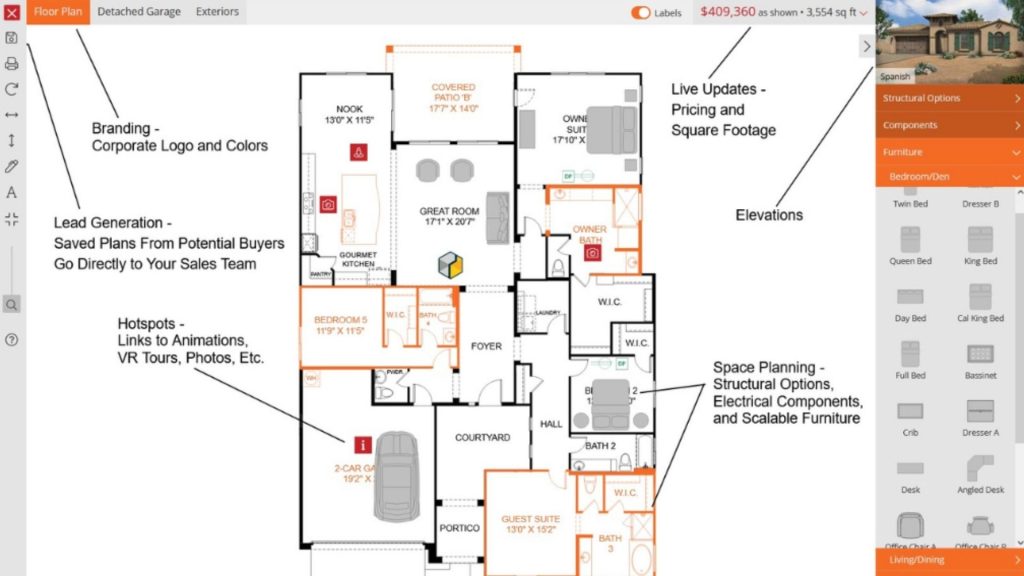
Interactive Floor Plans aren’t new. Outhouse introduced the first version back in 1994. Since then, they’ve produced tens of thousands of IFPs for builders across the U.S. and Canada, tracking every interaction along the way. When you combine that data with insights from Google Analytics and real-world builder results, a clear pattern emerges, one that continues to hold up across case study after case study.

The Results

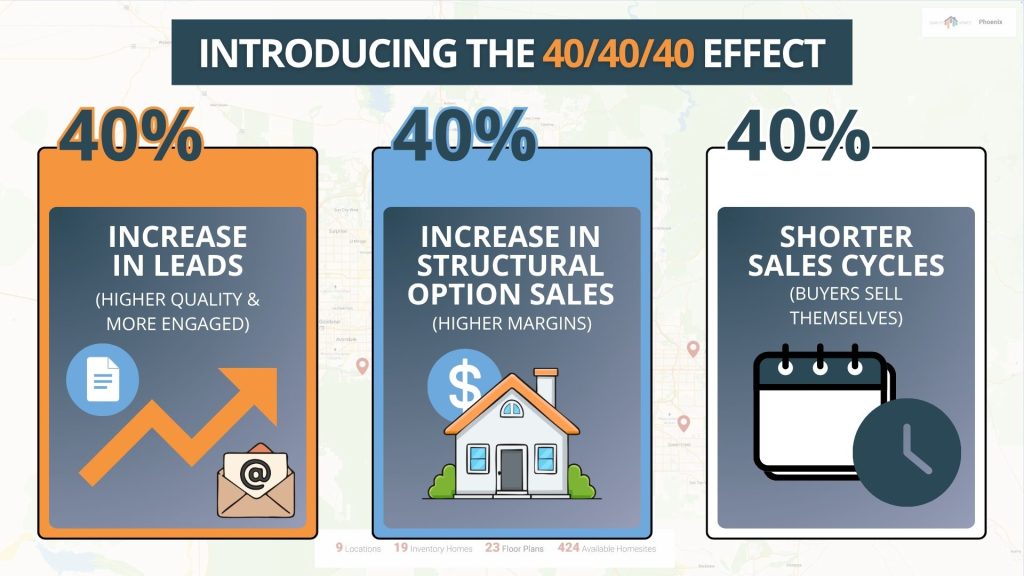
It’s the 40/40/40 effect:

  • 40% increase in leads, and not just more leads, but better ones. More engaged. More qualified. More likely to convert.
  • 40% increase in structural option sales; the kind that drives higher margins compared to base builds.
  • 40% shorter sales cycle; because buyers who personalize their home feel more connected to it… and often sell themselves before they even step foot in the builders’ sales office or model home.
The Bottom Line

Put it together, and it’s a true win across the board: more leads, higher margin sales, and faster closings.

So maybe the better question isn’t, “What does this cost?”

It’s “What is it costing you not to have it?”
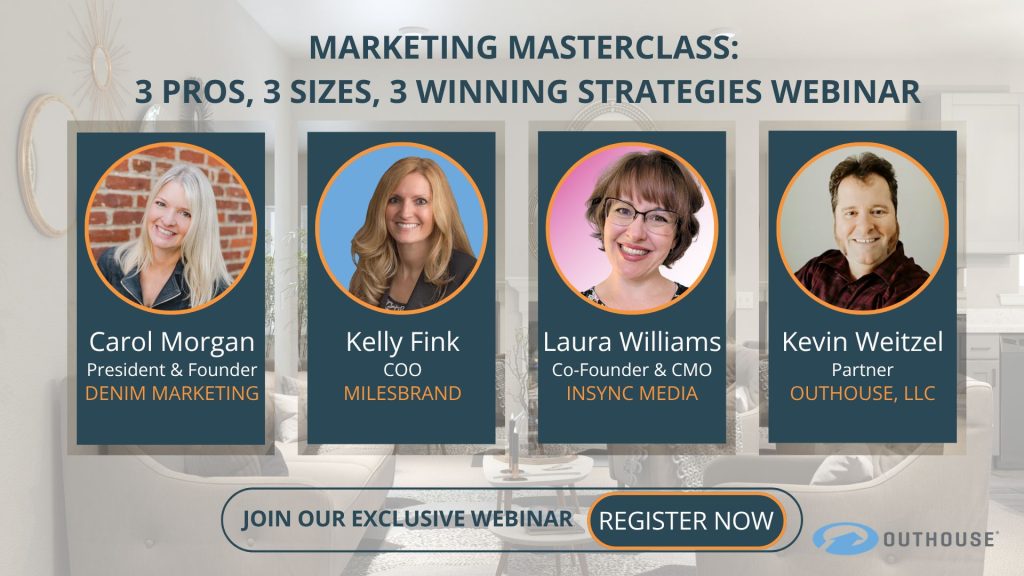
Webinar Preview! Marketing Masterclass: 3 Pros, 3 Sizes, 3 Winning Strategies

Kevin Weitzel · 04/27/2026 ·

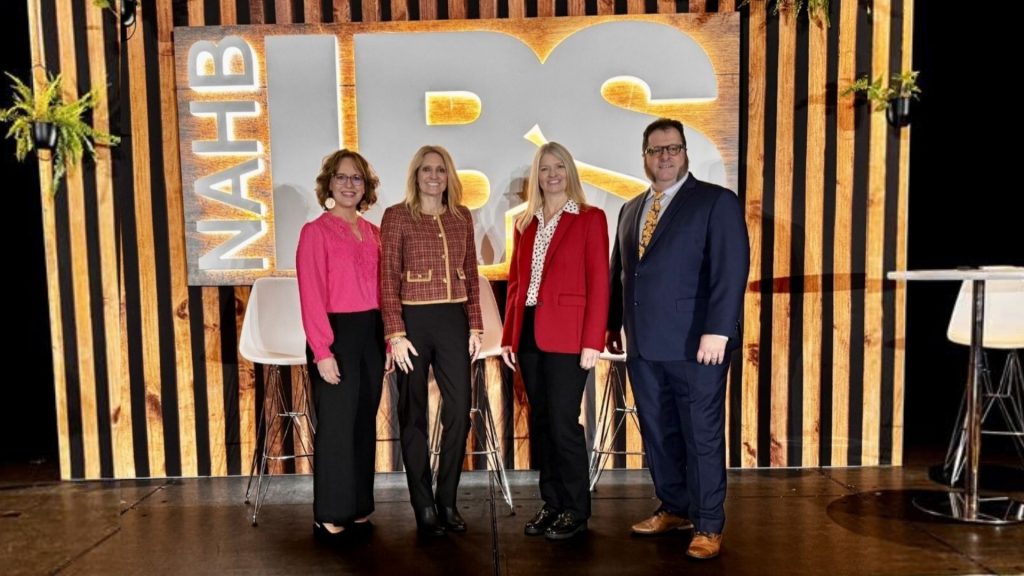
Laura Williams with Insync Media, Kelly Fink with Milesbrand, Carol Morgan with Denim Marketing, Kevin Weitzel with Outhouse

At the recent International Builders Show (IBS), I had the privilege of sharing the stage with three of the brightest minds in our industry: Kelly Fink, Carol Morgan, and Laura Williams. Our session, “Budget-Friendly Marketing: 3 Strategies for 3 Builder Sizes,” was born from a simple truth: whether you’re a local rural builder or a national powerhouse, your marketing needs to be high-performance, not just high-budget.

As we look toward our upcoming Summer Webinar series, I want to dive deeper into the “Growth Roadmaps” we discussed. At Outhouse, we see how these strategies come to life through interactive content and visualization. If you missed the explosive IBS presentation, here is your roadmap to winning in the current market.

Step 1: Build a High-Performance Website

Your website is your hardest-working salesperson, but only if it’s built to convert. A high-performance site isn’t just “pretty”; it’s a conversion machine that follows a specific psychological flow.

  • Value Headlines & Keyworded Subtitles: You have three seconds to tell a visitor what you do and why it matters. Use “User-Intent Keywording” to ensure you appear when they search for specific niches like “custom modular builds”.
  • Clear CTAs & The Three-Step Process: Don’t make them hunt for the “Contact” button. Map out a clear three-step process to clarify the buying journey and lower the barrier to entry.

Visual Storytelling: Use beautiful photography and client stories to build an emotional connection. At Outhouse, we take this further with interactive floor plans and 3D renderings that allow buyers to “live” in the home before it’s built.

Step 2: Create a Multi-Channel Strategy

Even the best website needs a map to lead people there. Success comes from “Cross-Channel Integration,” making sure your email, social media, and organic content all sing the same tune.

  • The Power of Blogging: We identified the “Top 5 Reasons to Blog,” including building credibility and creating evergreen content that improves your SEO and AI Search (AIO) rankings.
  • Email Marketing Mastery: From the “True Homes 3-3-3 Campaign,” we saw how targeted eblasts can achieve 21% open rates and contribute to massive sales goals (like 259 homes sold!) by staying top-of-mind with both consumers and brokers.

Step 3: Power-Up the Google Business Profile

For local and regional builders, your Google Business Profile is often your #1 asset. It is the gatekeeper for “AI Mode” searches.

  • Own Your Niche: Take a page from Kopper Creek Custom Homes. They didn’t try to be everything to everyone; they owned their rural niche, resulting in a 33.2% increase in calls and visits.
  • Social Proof: Leverage quality 5-star reviews and showcase projects to build trust instantly.

The ROI of “Outthinking” Your Competition

The results of these strategies speak for themselves. Whether it’s Log Masters achieving a 12.5x ROI on their marketing spend or regional builders seeing a 24% click-to-open rate on their emails, the data is clear: strategy beats spend every time.

Ready to see these strategies in action?

Don’t miss out! Register now for our summer webinar: “Marketing Masterclass: 3 Pros, 3 Sizes, 3 Winning Strategies.” Join industry experts Kelly Fink of Milesbrand, Carol Morgan of Denim Marketing, and Laura Williams of InSync Media as they break down proven case studies and show you how to apply these strategies to hit your 2026 goals.

Reserve your spot and transform your marketing results.

Register now

Vision, Launch, Shift, Vanilla?

Kevin Weitzel · 04/13/2026 ·

Indian Motorcycle traded distinctiveness for familiarity

Two red Indian Motorcycles in the middle of the desert.
Photo courtesy of Indian Motorcycle.

By Kevin Weitzel

When Indian Motorcycle was relaunched in 2011 under the stewardship of Polaris Inc., the opportunity seemed enormous. The heavyweight American cruiser market had long been dominated by Harley-Davidson, a company whose visual language, teardrop tanks, blacked-out V-twins, and low-slung silhouettes had become synonymous with the category itself. For Polaris, reviving Indian wasn’t simply about selling motorcycles. It was about reintroducing one of America’s oldest motorcycle marques and offering something visually and culturally different.

At lunch, it felt like they might do exactly that.

Indian Motorcycles War bonnet.
Featured Accessory: Aeromach War Bonnet LED Fender Light via Billet Proof Design.

Early modern-era models such as the Indian Chief Classic and Indian Chieftain leaned heavily into design elements that made the brand historically recognizable: valanced fenders, prominent war-bonnet styling, deeply skirted bodywork, and flowing lines that looked almost art deco compared to the industrial minimalism common in Harley’s lineup. They were unmistakably Indian. Even at a distance, the bikes carried a silhouette that separated them from Milwaukee’s machines.

For a moment, the strategy seemed clear. Don’t “me too” Harley. Be Indian.

This approach also served a practical purpose. The cruiser and touring market is famously brand-loyal and competing head-on with Harley-Davidson using similar aesthetics is difficult. A distinct design language allowed Indian to appeal to riders who wanted something American but different, as well as those drawn to the brand’s heritage without wanting a visual clone of the dominant player.

But over the next decade, something shifted.

As Indian expanded its lineup, with models like the Indian Scout Bobber, Indian Challenger, and various stripped-down cruiser variants, the design philosophy began to drift. Valanced fenders disappeared from many models. Bodywork became simpler and darker. Blacked-out engines and minimalist styling cues, long associated with Harley’s modern strategy, became common across Indian’s catalog.

Individually, none of these changes were shocking. Motorcycle design trends are evolving, and manufacturers respond to market demand. Collectively, though, they represented a gradual visual convergence with the company Indian once had the chance to stand apart from.

Side View of black indian motorcycle
Photo Courtesy of Indian Motorcycle UK

By the early 2020s, many Indian models, particularly in the midweight cruiser segment, began occupying the same aesthetic territory long defined by Harley’s Harley-Davidson Softail and Harley-Davidson Sportster families: muscular tanks, short fenders, black finishes, and stripped-down silhouettes. The design signatures that once separated Indian from its rival became less consistent across the lineup.

The result is not that Indian motorcycles became bad motorcycles. Far from it. By most technical measures, engines, reliability, and build quality, the modern lineup is strong and competitive. The question is more philosophical than mechanical.

When Indian returned, it carried over a century of history and a visual identity unlike anything else in motorcycling. That heritage gave Polaris a rare opportunity to build a modern American motorcycle brand that did not simply mirror the market leader.

Fifteen years after the relaunch, Indian remains successful, respected, and widely recognized. But the brand that once looked unmistakably different now often blends into the visual language defined by its biggest competitor.

The vision was distinctive.
The launch was bold.
The shift was gradual.

The result, some might argue, is a little more vanilla.

A brand’s visual identity is its most valuable asset until it starts to fade. Don’t let your community’s vision blend into the background. Let Outhouse help you define a look that remains unmistakable.

Explore Rendering Services

How to Train Your Dragon… I Mean, Your AI!

Kevin Weitzel · 11/17/2025 ·

We at Outhouse, LLC are thrilled to welcome our friends from Blue Gypsy Inc. as today’s guest authors!

In the fast-paced world of sales, integrating AI tools is no longer optional: it’s essential. However, the biggest fear we hear is the loss of that crucial authentic, human connection. How do you harness the power of this new technology without making your communication sound like a generic, robotic script?

Blue Gypsy Inc. tackles this challenge head-on with a fun and practical guide in their post: “How to Train Your Dragon (I mean, Your AI!)”

Just like Hiccup trained Toothless to be his trusty sidekick, this article will walk you through the essential, step-by-step process for transforming your “unruly tech beast” into a loyal, customer-savvy companion. You’ll learn the insider secrets to feeding your AI the right inputs, refining its voice, and teaching it to think and prioritize exactly like a seasoned professional.

It’s time to stop letting your AI sound like a template and start making it roar with your personal brand.

Take it away, Blue Gypsy Inc.!


I am a huge How to Train Your Dragon Fan. Not just because my husband loves animated movies and has bought me all the dragon stuffed animals that have been created from the original movies. But also, because dragons are amazing! And at the same time, they can seem scary.  But when you try to get along with them, they can be your best friend!

AI can feel a little dragon-like at first. There are fears it could take over your jobs. Heck, I see stuff all the time that says AI can coach you…blah blah blah, pfttt – not like a real experienced coach *cough* but I digress. The reality is we can harness the power of AI just like Hiccup trained Toothless to be his trusty sidekick.

So saddle up, OSCs! Because it’s time to turn that unruly tech beast into your own loyal, customer-savvy companion that sounds just like you.

Step 1: Know Thyself (Before You Train Thy AI) <- Yeah…that was AI saying that…

You can’t train your AI to be “you” if you don’t know who you are. (Deep, right?)

Start by identifying:

  • Your tone: Are you casual and witty? Professional and concise? Warm and nurturing?
  • Your common phrases: What little sayings or greetings do you use that make your communication feel “you”?
  • Your core knowledge: What’s the insider info you always share with buyers – like process tips, builder timelines, or loan insights?

I give ideas in training all the time on how OSCs can communicate certain ideas. But I tell them, make it their own. Make it sound like them. You are doing the same thing with your AI tools. You need it to sound like you.

Pro Tip: Write like you talk! AI learns best from real-life examples. If you wouldn’t say “Dear Esteemed Homebuyer,” in real life… don’t let your AI say it either.

Step 2: Feed the Beast (With the Right Inputs)

Just like Hiccup didn’t train Toothless on an empty stomach, your AI needs to be fed – with information only you can provide.

Start training by giving your AI:

  • Your email templates
  • Your FAQs and answers
  • Your CRM notes and process docs
  • Voice memos or recordings of you responding to leads

The more examples you give, the more your AI will start to understand your voice, tone, and timing.

Pro Tip: Think of it like giving your AI the OSC version of dragon treats – the more it gets, the more it loves you (and responds like you).

Step 3: Refine the Voice – Don’t Let It Sound Like a Robot

AI can be incredibly smart. But let’s be real… it can also sound like a stuffy British butler if you’re not careful.

To make your AI sound like you, teach it:

  • Emojis you use (Though use them sparingly)
  • When to say, “Hey there!” vs. “Hi [First Name],”
  • How you close out emails (Sincerely? Thanks so much? Let’s chat soon?)
  • Where you add humor
  • When to not be overly formal (we’re in new home sales, not law school)

Try brain dumping your ideas in your voice to the AI and then tell it who you are. That you want it to sound professional but approachable. Let it know when it can be a little quirky, straight forward, and concise.  Play around with it. And if it doesn’t spit out something that sounds like you, then tell it to try again and give it more feedback on who you are.

Pro Tip: Say it out loud. If it doesn’t sound like something you’d say on the phone or in person, tweak it!

Step 4: Teach It to Think Like You – Process, Priorities, People

This is where it gets real.

You want your AI assistant to:

  • Know the process from lead to appointment
  • Understand what’s important to different types of buyers
  • Spot red flags in conversations (Is this a tire kicker? A relocation lead? A ready-now buyer?)

That means explaining your why behind your responses. For example:

“When a buyer says they’re just starting their home search, I ask tell me more about what’s motivating your eventual move.”

This trains the AI not just to reply – but to think like an OSC.

Pro Tip: The goal isn’t for your AI to just send info – it’s to be your digital twin. And your twin has to know what you know.

Step 5: Test It, Break It, Train It Again

Just like Toothless didn’t fly perfectly the first time (remember that crash landing?), your AI won’t nail your tone and timing on Day 1.

So test it out:

  • Have it write responses to common buyer questions
  • Then correct it with your tone and how you’d answer the same question
  • Let it help draft email follow-ups
  • See how it handles a “cold lead re-engagement” campaign

Then – and here’s the magic – edit its work. Your edits become new training data.

Pro Tip:  Every tweak you make teaches your AI what you do and don’t like. Don’t skip this step – it’s the secret sauce!

Step 6: Let It Fly… But Stay in the Saddle

Even once your AI is dialed in, remember: it’s your assistant, not your replacement.

  • Use it to save time, not skip strategy
  • Let it enhance your voice, not erase it
  • Check its work before it goes out (especially with hot leads)

Pro Tip: You’re still the dragon rider. Your AI is just the wings.

From Fire-Breather to Lead-Nurturer

Training your AI is a lot like training a dragon.

It takes patience.
It takes empathy.
It takes a few singed eyebrows along the way.

But with the right inputs, a sense of humor, and a little OSC magic, your AI can become the ultimate extension of your brain, your brand, and your buyer experience.

So go on – grab the reins, feed it your brilliance, and make your AI roar with your voice.

Because no one else can sell homes like you – not even a robot.

Need expert help training your sales team and optimizing your lead strategy? Blue Gypsy Inc. are the premier leaders in Online Sales Counselor (OSC) training, consulting, and coaching. Stop leaving money on the table. Connect with Leah Fellows and the Blue Gypsy Inc. team today to unlock proven strategies and make your sales process truly unstoppable.

Written by Leah Fellows of Blue Gypsy Inc.

More Blogs From Blue gypsy Inc.

Why Your Home Building Brand Needs a Strong Visual Identity

Kevin Weitzel · 10/20/2025 ·

Puzzle with missing piece Denim Marketing logo

Today’s post comes to you from Melissa Walcott, a fantastic industry voice we’re excited to host. For a deeper dive into marketing strategies and consistent, quality content, don’t miss the Denim Marketing blog!

In today’s saturated market, it is often difficult for homebuyers to determine which homebuilder is the best selection. Your marketing strategy can make or break your quarterly sales goals. In a homebuying world complicated by high interest rates, high home prices and market uncertainty, consumers need a brand they can trust and rely on to purchase their first, next or final home.

With a strong visual identity, your homebuilding company will stand out among the competition and be the one buyers return to time and again for this next chapter in their lives, providing them with a sense of security and confidence in their investment.

Brand Recognition

Brand recognition is the most powerful tool in your toolbelt. Homebuyers like to buy from brands they recognize and trust when shopping for their new home. Look at your company’s logo across multiple mediums including signage, website graphics, on-site advertisements, flyers and marketing materials. Is the branding look cohesive? The best way a builder can remain top of mind with buyers currently shopping in the market is to present a recognizable and memorable brand with cohesive colors, fonts and logos. It is even better if your brand is fun.

The instant recognition potential homebuyers experience tells them that you are not another name on the long list of homebuilders but a recognizable name they can trust. This familiarity places your brand at the top of their list throughout their search for the perfect home.

Differentiation

When building your company’s branding guide, it’s essential to add inspiration directly from the product you create! Think about what sets your homes apart from the competition—is it a focus on traditional craftsmanship, modern design or energy efficiency? Your visual identity, from the photographer you use to your color scheme and logo design, all work together to tell a unique story.

Click here to view the Denim Pets Marketing Guidebook!

Suppose a consumer is searching for a modern, light-filled home. Your website and marketing materials spotlighting open floor plans bathed in natural light will immediately catch their eye!

Trust & Credibility

Your company’s visuals go beyond aesthetics; it is also a surefire way to build trust and credibility. A professional and polished visual brand communicates to the buyer that you are an established builder who pays attention to detail, from design to construction. This instills confidence and assures the prospective homebuyer they are making a sound investment in their dream of homeownership.

Emotional Connection

Visuals evoke emotions and create a deep connection with consumers! High-quality photographs showcasing families sharing a meal in a dream kitchen or hosting a barbecue in a well-designed outdoor living space help buyers imagine the life they could live by purchasing one of your homes. Help homebuyers to spark a powerful emotional connection and envision the lifestyle they are searching for, making them feel engaged and connected.

An image of a new build with branding on it

With a strong brand identity, you’re selling a house and a dream.

Brand Consistency

Finally, a solid visual identity must also show consistency throughout a brand’s appearance during the entire homebuying experience. From the moment the buyer clicks on a Facebook ad to the final walkthrough of their home, they should encounter the same brand identity. This consistency reinforces your brand message and builds trust, guiding them seamlessly through each step of the process.

Need help building a consistent visual brand identity? Denim Marketing can help! Connect with our team today to unlock award-winning expertise and transform your company’s branding from forgettable to show stopping.

Written by Melissa Walcott of Denim Marketing

Originally posted July 17, 2024

More blogs from Melissa

How A Professional Builder Prices A Building Contract

Kevin Weitzel · 05/17/2021 · Leave a Comment

Four stacks of coins from shortest to tallest with a house on top of the tallest stack.

If you are adding a margin to the cost of materials and labour in order to calculate a contract price…then stop right now.

Your building company is in serious danger of losing money, especially if you plan on growing.

The traditional method of pricing jobs is to apply a margin to the cost of sales.

The problem with this method is that you are hoping you will make enough profit to cover your overheads and wages.

Building companies with revenues of less than $6m DO NOT enjoy the same economies of scale as traditional businesses like manufacturing or retailing.

This results in builders making little, or no net profit at the end of the year, despite taking on more work and increasing their revenue.

When a building company grows, their net profit margin decreases…

Even when they don’t reduce their margin, they can still end up losing money…

How is that possible?

The problem lies in the method they are using to price their jobs.

Most builders add a nominal markup of say 20% to their cost of sale which gives them a contract price to charge the client.

The problem with this strategy is that it doesn’t always cover the running costs for the business.

Where Most Builders Go Wrong

In fact, when it comes to quoting a larger project, most builders actually reduce their profit in order to win the job when in fact they really need to be increasing the margin to cover the additional running costs.

It’s the reason why you hear so many builders say they were earning more money when they were doing less jobs.

It’s also the reason why so many building companies run into cash flow problems.

And it’s why so many builders end up with nothing to show for decades of hard work.

The good news is that there is an easy solution to the problem.

Building companies need to price their jobs using a net margin instead of gross margin.

When you apply a net margin to project you are guaranteed to make a profit.

But when you apply a gross margin to a project, you are simply hoping to make a profit…

And that’s fine when your turnover is at a consistent level…

But when workflow increases and additional resources are taken on, the amount of fixed costs, as a proportion of the contract price also increase.

When that happens you have 3 problems.

First, you don’t know what your break-even point is.

Second, although you are increasing your cash reserves, if you are not making a profit then you’re creating a hidden liability that will get bigger and bigger, a bit like giant Ponzi scheme.

And third, you’ll probably end up cutting margins in order to win more work, which only compounds the problem and increases the hidden liability in your building company.

It’s a bit like the Federal Reserve Bank in the US, only no one will be bailing you out…

But you may get prosecuted for trading insolvently…

The reason it is so important to grow a building company profitably is because the retained net profit provides the foundations to support a growing business.

Without retained net profit you are effectively building a house of cards that will fall over in the next market downturn.

To learn more, download the Professional Builders’ Secrets To Increasing Margins.

Click on the link below to download for free now.

Submitted by:

Russ Stephens
Business Strategy Specialist & Cofounder of the Association of Professional Builders

Since 2014, Russ has been helping builders double the size of their businesses through profitable growth. He is a data analysis expert that has introduced data-driven decision-making to the residential construction industry. Russ calls on 38 years of experience in business as well as the lessons that had been learned from working closely with some of the most successful custom home builders in Australia, New Zealand, Canada, and the United States.

Ready to get started, want more info?

Contact Us
  • Facebook
  • Instagram
  • LinkedIn
  • YouTube

Outhouse

11048 N 23rd Ave #103
Phoenix, AZ 85029

602-371-4394

© 2026 All rights reserved