

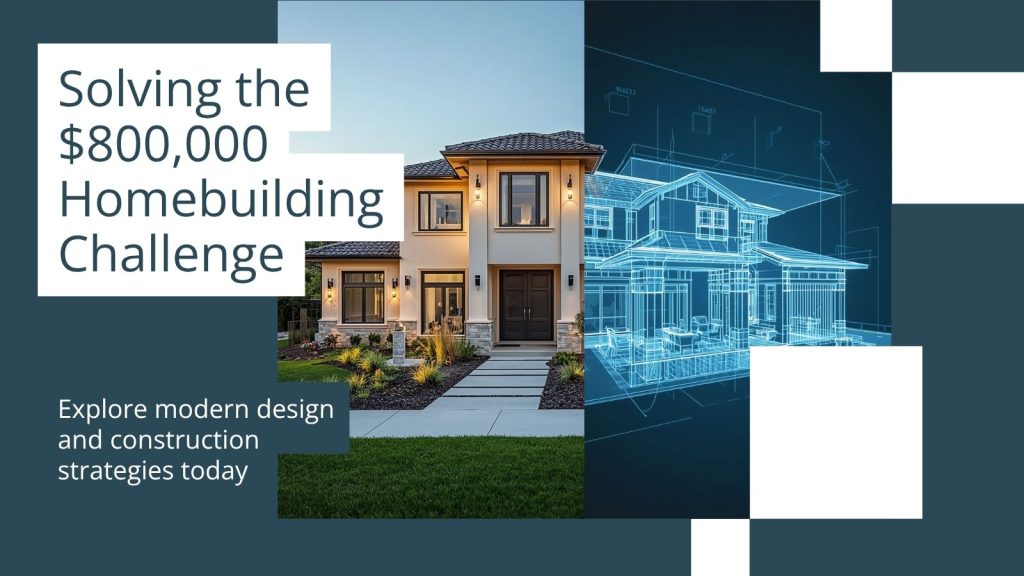
Building a model home and building a virtual walkthrough are doing the exact same thing: helping a buyer feel certain about a home that doesn’t fully exist yet.
One costs $800,000. The other costs a fraction of that, and reaches every buyer who’s looking, not just the ones who drove to your community on a Saturday.
That’s the realization that changed how I think about marketing in homebuilding. Not as a technology argument. As a math problem.
I wrote last year about how the brain makes a brand judgment in 2.5 seconds, and what that means for the quality of your visuals. This post is about what it costs when those visuals aren’t ready for that moment.
The Real Weight of $800,000
I’ve sat across the table from builders who could quote me this number down to the last landscaping invoice. They know it because they have to account for every dollar of it.
A model home isn’t just a house. It’s a premium version of your best floor plan, loaded with every upgrade you hope buyers will select, then professionally staged, landscaped, staffed, and maintained as a non-revenue-generating asset for the life of the community. Construction with premium finishes typically runs $75,000 to $150,000 above a standard build (model homes carry 20–25% in upgrades by design). Ongoing staging and furnishing rental over a 2–3 year community lifecycle adds another $50,000 to $120,000. Then come the carrying costs: maintenance, utilities, staffing, insurance, accumulating month after month.
When it’s all accounted for, you’re looking at $600,000 to $800,000 in total investment.
For that investment, a well-trafficked model home reaches a few hundred to a couple thousand visitors over its lifetime. Qualified visitors, yes. Motivated visitors, often. But a finite number, in one location, on your schedule.
A couple thousand people. That’s what $800,000 buys you.
The Math That Changed My Thinking
A photorealistic 3D rendering package (the kind that lets buyers walk through their future home before the foundation is poured, swap finishes in real time, and see the elevation in both morning and afternoon light) runs $10,000 to $50,000 for a comprehensive package. At the accessible end, a $5,000 to $10,000 investment gets you interactive floor plans, photorealistic exterior elevations, and a full interior virtual tour.
Those assets don’t close at 5 PM. They don’t take weekends off. They reach buyers in Phoenix at 10 AM and buyers relocating from Chicago at midnight.
And here’s the thing: the performance data on what happens when they do is remarkable. According to Matterport’s Real Estate Impact Report, listings with 3D virtual tours sell up to 31% faster and command prices up to 9% higher. Outhouse platform data tracked by Kevin Weitzel shows properties offering a seamless digital experience generate 40% more buyer engagement. And according to the National Association of Realtors’ 2025 Home Buyers and Sellers Generational Trends report, buyers who take a virtual tour are 95% more likely to contact a sales agent.
That last number changes the conversation in the sales office. A model home visitor showed up because they were already interested. A virtual tour converts people who were still on the fence and sends them to you ready to move.
What 65% Pre-Construction Sales Actually Looks Like
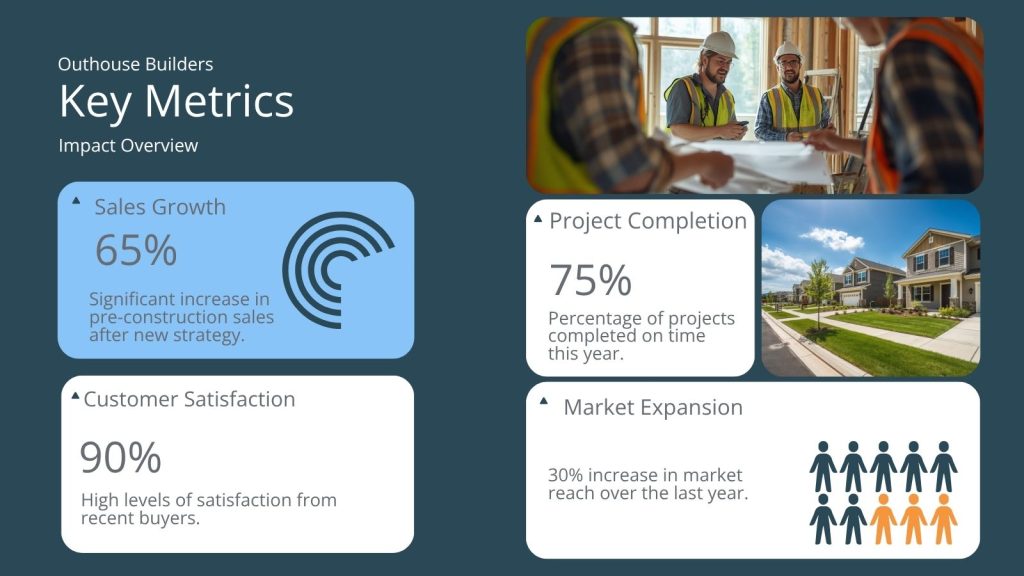
One of our Phoenix-area builder clients came to us running about 12% pre-construction sales. Their model home was performing exactly as expected, drawing qualified traffic and generating strong feedback, but pre-sales were stalled.
We rebuilt their digital visualization package: interactive 3D walkthroughs of their three flagship plans, photorealistic renderings with the full upgrade path, a finish visualizer that lets buyers see real-time countertop and flooring options. Within three months, pre-construction sales climbed to 65%.
The model home didn’t change. Physical traffic held steady. What changed was the buyer who had never driven to the site (the one comparing communities from her kitchen table at 9 PM) built confidence before the first appointment. When she arrived at the sales office, the decision was already made. The visit just confirmed it.
We’ve watched this dynamic play out with builders across every market we work in. The decision window has moved, and most model homes aren’t there when it opens.
Before You Break Ground
The most underutilized advantage of going visualization first is what happens before construction starts.
Builders who let buyers A/B test finishes through pre-construction renderings (swapping countertop colors, exterior elevations, flooring packages) are collecting something more valuable than preferences. They’re collecting decisions. A buyer who has already seen her kitchen in warm white cabinetry with waterfall-edge quartz, rendered in photorealistic detail, doesn’t change her mind at the design center. Change orders drop. Timelines hold. Buyers arrive at closing having already lived in the home, mentally, emotionally, completely.
I’ve watched this play out enough times that the first time still surprises me. The visualization doesn’t just convert leads. It completes the design process earlier and removes the friction that quietly eats margins on the back end.
The Question Builders Are Actually Asking
The model home isn’t going away. There will always be buyers who need to stand in a space before they believe it, and that experience is real and irreplaceable. I understand it; I’ve sat on Zillow at 11 PM comparing communities I had no intention of driving to that weekend.
But for every buyer who needs to stand in the room, there are two more making their decision from a screen, comparing your community to a competitor’s, late at night, with no one to answer their questions.
The $800,000 model home reaches the people who come to you. The right visualization package reaches everyone else.
That’s not a technology story. That’s a math problem with a clear answer.
At Outhouse, we’ve spent thirty years helping builders close the gap between what a home can do and what a buyer can understand. The visualization package that moved a Phoenix-area builder from 12% to 65% pre-construction sales in three months isn’t a secret. It’s a proven approach to a math problem that too many builders are still solving with a single physical asset.
Ready to see what this math looks like for your community?
The cost gap is the whole argument. Buyers want to feel the rooms before the model exists, and a still from a sketch or a site photo gets them there faster than a full CGI package. We have been using Home AI Studio for those early client stills, about ten seconds from a sketch, then only spending on a walkthrough once the plan is locked. Did the virtual version change which options buyers actually picked, or mostly how fast they decided?