

• Skip to primary navigation
  • Skip to main content
Outhouse logo

Outhouse

The Outsource Hub for Home Builders

  • Home
  • Products & Services
    • Architectural/CAD
    • Rendering
    • Virtual Reality
    • Interactive Floor Plans
    • Interactive Site Maps
    • Interactive Kiosks
    • Print Marketing
    • Sales Office Displays
  • Partners
  • News
    • Events
    • Blog
    • Podcast
  • About Us
  • Contact Us
  • Show Search
Hide Search

homebuilders

Not Every Great Digital Marketing Idea at IBS Is Brand New

Jim Sorgatz · 03/16/2026 ·

2026 International Builders Show room floor.

© Oscar Einzig Photography
https://www.buildersshow.com/logos-and-photos
© Oscar Einzig Photography
https://www.buildersshow.com/logos-and-photos

Reflections from the 2026 International Builders’ Show

Every year at the International Builders’ Show, thousands of builders walk the exhibit floor looking for the next big thing: the technology that promises to sell homes faster, improve operations, or revolutionize the sales process.

If you’ve attended IBS before, you know the feeling: massive booths, flashing screens, product demos everywhere, and plenty of bold predictions about the future of homebuilding.

It’s exciting, but it can also be a little overwhelming. By the end of the week, many builders head home with a notebook full of ideas and a lingering question: Which of these technologies will actually help us sell more homes today?

I’ve always considered myself a fairly early adopter of new technology. But experience has also taught me to proceed with just a little caution. After choosing the disastrous Ford EXP (EXperimental Prototype should have been the red flag)as my first car, I developed a habit of waiting until the second or third generation before jumping in.

New technologies are exciting, but early versions often bring unexpected challenges and sometimes hefty price tags.

I remember being captivated by the first plasma flat-screen TVs. The picture was incredible, but at $15K+, they weren’t exactly flying into many living rooms. I also waited until the third generation of the iPhone before adopting. I wanted to be sure it offered more than just a cool pinchable screen.

Sometimes patience pays off.

A Surprising Placement at IBS
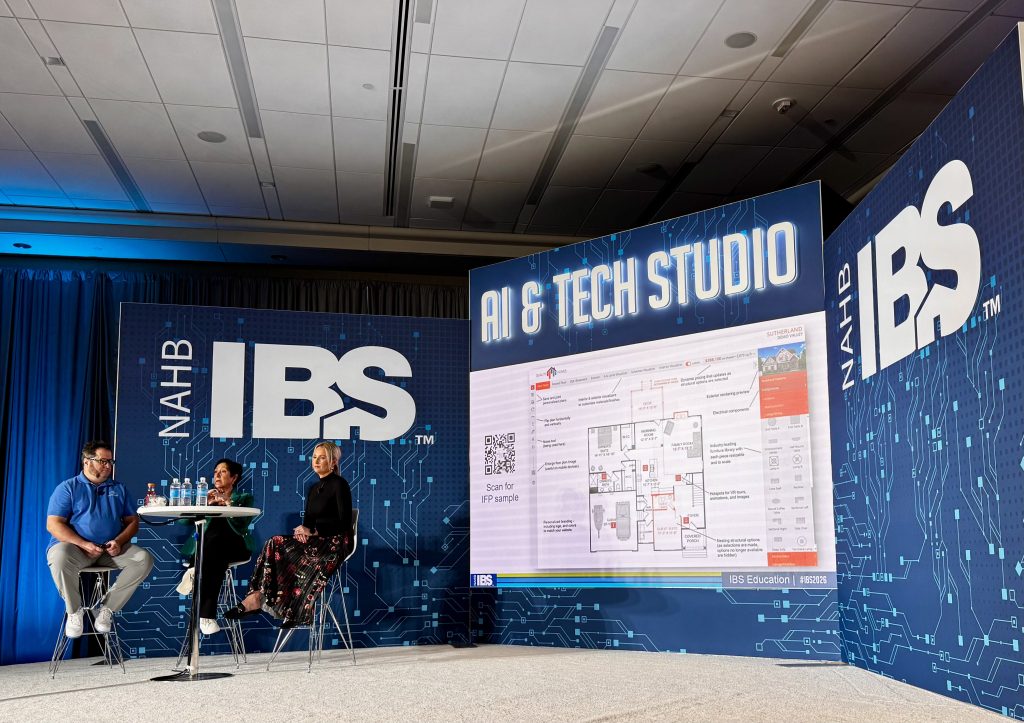
Kevin Weitzel, Outhouse, LLC. Michelle Smallwood, Holiday Builders. Laura Hanson, Builder Designs.

In preparation for IBS 2026, Outhouse submitted a proposal for one of the show’s Knowledge Sessions. Our topic focused on digital tools like interactive floor plans and virtual tours: technologies that have been helping builders engage buyers online for years.

The proposal wasn’t selected for the main education track. Instead, we were invited to present at the Tech Studio.

At first, we were surprised. Interactive floor plans and virtual tours don’t feel cutting-edge. But maybe that’s the point: What’s established can still make a huge difference where it counts.

But the IBS education team explained something important: they’re intentionally expanding programming that speaks directly to the needs of small and mid-size builders.

Outside of the large public builders and some high-end custom firms, many builders simply don’t have the budget or technical resources to adopt every new experimental platform that appears on the market.

And the truth is, they don’t necessarily need to.

What’s “Old Tech” to Us Is Still Amazing to Buyers

A recent episode of the Netflix series Owning Manhattan drove this point home for me.

At the grand opening of a luxury condominium project designed in partnership with Mercedes-Benz, prospects and real estate agents were blown away by VR headset tours of the building.

The interesting part?

Virtual reality tours have been around for more than a decade.

But for many buyers attending the event, it was their first time experiencing one.

We sometimes forget that most families buy only three or four homes in their lifetimes. What might feel like “old tech” to those of us in the industry, VR tours, Matterport scans, visualizers, or interactive floor plans, can feel entirely new and incredibly impressive to them.

After working with builders for more than two decades, we’ve seen plenty of technology trends come and go. But one thing hasn’t changed: buyers want tools that help them visualize their future home.

Start with the Tools That Actually Move the Needle
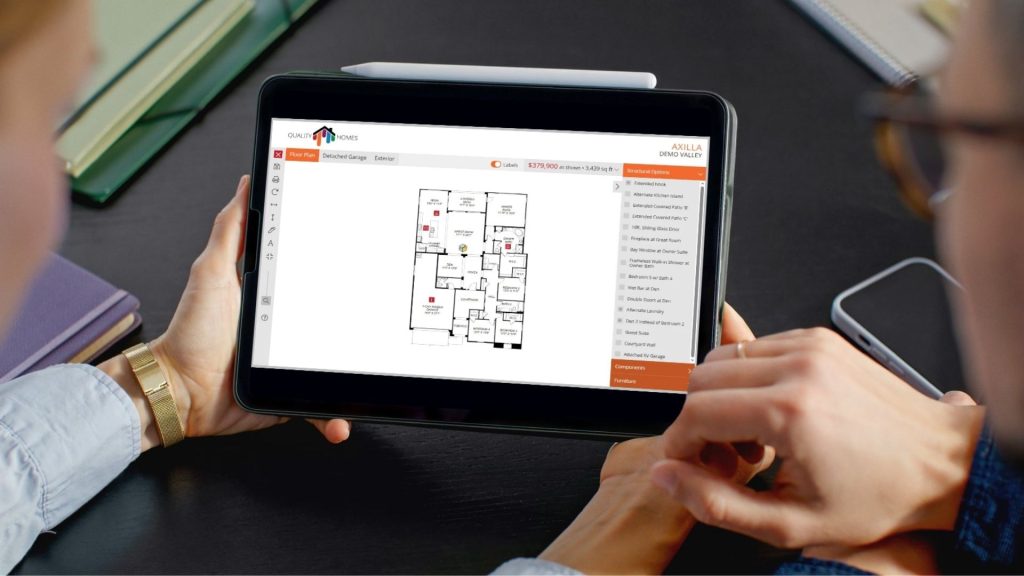
A closeup of users hand interacting with an interactive floor plan on a tablet.

If you’re a small- or mid-size builder using static floor plans and galleries, start with just one interactive upgrade.

A great place to begin is with interactive floor plans.

These tools allow buyers to explore layouts, select options, and even place furniture within the plan. The experience helps them visualize the home more personally, which increases engagement and confidence in the purchase.

They also provide valuable marketing insight. When a prospect saves a plan or configuration, builders gain a high-quality lead along with a better understanding of what that buyer is looking for.

Once interactive floor plans are in place, the next logical step is adding virtual tours to your website. These allow buyers to walk through model homes or completed inventory properties anytime, from anywhere.

For buyers relocating from another city or even another state, that accessibility can be a powerful selling tool.

A Welcome Focus on the Builders Who Make Up the Industry

One of the encouraging takeaways from IBS this year was the show’s renewed focus on small and mid-size builders.

After all, these companies represent roughly 99% of the homebuilding industry.

While the industry will always continue pushing toward the newest technologies, and that’s exciting, many builders will see the greatest immediate impact by adopting tools that are already proven to engage buyers and support the sales process.

Sometimes the smartest move isn’t chasing the newest technology on the exhibit floor.

It’s finally implementing the tools buyers already love.

A Final Thought

If your website is still relying primarily on static floor plans and images, you may not need the newest experimental platform introduced at IBS.

You may simply need to take the next step toward creating a more interactive experience for today’s homebuyers.

Interactive floor plans and virtual tours aren’t futuristic; they’re proven solutions helping builders engage buyers and sell more homes online right now. Embracing these tools is often the innovation that matters most.

And sometimes, that’s exactly where innovation should start.

Take the first step toward a more interactive experience for today’s homebuyers.

contact us

Year-End Takeaways for the Home Building Industry

Tabitha Warren · 12/04/2023 · Leave a Comment

As we approach the end of another eventful year in the home building industry, it’s the perfect time to reflect on the key lessons and takeaways that can guide us into a promising future. Despite the challenges and uncertainties, there’s much to learn from the experiences of the past 12 months. Here are some crucial year-end takeaways for the home building industry:

  1. Adaptability Is Key: The year 2023 highlighted the importance of adaptability. Home builders who quickly adjusted their strategies in response to changing market conditions were better positioned for success. Flexibility and the ability to pivot in the face of challenges have become valuable assets.
  2. Digital Dominance Continues: The digital transformation in the home building industry is no longer a trend; it’s a necessity. With homebuyers relying on online research and interactive tools like never before, having a robust online presence, including virtual tours and interactive floor plans, is essential. There is some good news here: the costs of these digital technologies are dropping. This is an excellent opportunity for smaller homebuilders seeking a competitive advantage. Builders who want to stay ahead of the curve in 2024 should consider implementing digital assets they may have believed to be out of reach. Pricing has become much more competitive in recent years. Putting some digital tools in place could mean the difference between staying in the game and being unable to remain competitive.
  3. Supply Chain Management: The global supply chain disruptions served as a reminder of the significance of efficient supply chain management. Home builders should build resilient supply chains to prevent delays and maintain construction timelines. Resilience is essential in every part of the supply chain, from labor to subcontractors to materials and technology. 1
  4. Sustainability Matters: The demand for sustainable and energy-efficient homes is rising. Incorporating green building practices appeals to eco-conscious buyers and helps reduce long-term operating costs. The home building industry is waking up to the importance of green building. Even NAHB and IBS are getting involved by funding a Green Building Scholarship. Please find out more by visiting their website: https://www.nahb.org/advocacy/industry-issues/sustainability-and-green-building/sgb-scholarship-for-ibs
  5. Quality Over Quantity: Prioritizing quality over quantity is becoming the mantra of successful homebuilders. Delivering superior craftsmanship and focusing on customer satisfaction can lead to lasting success in the industry. For an interesting read about improving housing in America, check out what the Joint Center for Housing Studies of Harvard University found about the impact of COVID-19 on our current market. They have some interesting statistics on home repair ($420 billion spent in 2020), DIY vs professional, and the demand for quality housing. https://www.jchs.harvard.edu/improving-americas-housing-2021
  6. Teamwork and Talent: The importance of a skilled and motivated workforce cannot be overstated. Investing in employee training and well-being can improve productivity, retention, and overall company success. Continuing education for your Online Sales Counselors and Marketing team is imperative. The digital landscape is ever changing. Marketers need help to stay current. Summits and conferences can pay 100-fold. Online Sales Counselors are only as good as their sales experience and education. Help them by ensuring they have all the tools in their toolbox.
  7. Customer-Centric Approach: Home builders who put the customer at the center of their operations tend to thrive. Excellent customer service and transparent communication go a long way in building trust and loyalty. More and more builders are discussing that a customer-centric approach might involve having transparent online pricing. Just listen to what Reilly LePage of Logel Homes had to say on The Home Builder Digital Marketing Podcast: https://www.buildermarketingpodcast.com/episodes/190-elevating-the-online-home-buying-process-reilly-lepage Builder Online thought this was such an important topic that they featured the podcast this month on their Builder 100.
  8. Risk Management: With uncertainties in the market, effective risk management strategies are crucial. Planning for potential disruptions and having backup plans can mitigate unexpected challenges. Conducting market analysis before starting a project, having a robust financial reserve, and securing contracts with backup suppliers are just a few ways to mitigate risk.
  9. Local Market Insight: Understanding the unique dynamics of local markets is essential. Tailoring strategies to meet each community’s specific needs and preferences can make a significant difference. Home builders can always hire an independent market research team. If that is outside the budget, local home builders associations, real estate associations, and chambers of commerce often publish market reports, housing data, and economic indicators for specific regions. Additionally, the U.S. Census Bureau, local planning departments, and housing authorities publish data providing demographic information, building permits, and economic data. If all else fails, there are the good old real estate platforms Zillow, Realtor.com, and Redfin to peruse for statistics, pricing trends, and property listings.
  10. Continual Learning: The home building industry is constantly evolving. Those who commit to ongoing learning and staying updated on industry trends and regulations will remain ahead of the competition. Educational events like the National Association of Home Builders International Builders Show (IBS) and The Home Builder Digital Marketing Summit are key. Summits and Conferences help builders keep up with the ever-evolving industry. Monthly learning like that provided in Builder Town Hall by Meredith Communications is also a great way to keep your ear out.

As we bid farewell to this year, let’s carry these valuable takeaways into the future. The home building industry’s resilience and adaptability have been on full display. With the right strategies in place, the opportunities for growth and success in the coming year are boundless. Cheers to a promising and prosperous future in the world of home building!

Tabitha Warren was an Income Tax Accountant for 15+ years.  In the first months of the pandemic, she took a chance and re-careered to freelance in Marketing.  She currently, and very happily, works with video and photo editing, social media marketing, and now blog writing.

  1. https://buildertrend.com/blog/construction-supply-chain/

Growing Sales With OpenHouse.ai – a Case Study with Trico Homes

Bill Gelbaugh · 10/26/2020 · Leave a Comment

What Does OpenHouse.ai Offer?

At OpenHouse.ai, we believe that it is essential for growth and success within the homebuilding industry to understand a homebuyer’s stage of life, motivation, and needs. Therefore, we offer homebuilders a data-driven marketing solution to connect with homebuyers and maximize the opportunity for sales.

Graph showing OpenHouse.ai rate for online visitors to lead conversion across all clients growing from 0.85% to 1.24% from February 2020 to August 2020.

Our platform uses data science and artificial intelligence to offer both an insights dashboard and an engagement platform. The engagement platform tracks a customer’s real-time behavioral patterns to predict the likelihood of purchase, and amenity, location, and price preferences. With this understanding, our system updates inventory search results and creates recommendations for each unique website visitor in real time. This allows homebuilders to put their best foot—or maybe we should say floorplan—forward, for each customer. Our platform also offers a comprehensive analytic insight dashboard, which provides a birds-eye view of homebuilder’s customers and operations. We pair the real-time behavioral data gathered from the engagement platform with changing market trends, to provide the most up to date and relevant insights into a homebuilder’s customers and communities. Builders can leverage our platform to optimize marketing spend, increase lead conversion, improve operational planning and promote data-driven sales and marketing procedures.

Trico Homes – A Lead Nurturing Case Study

Beautiful white kitchen with island n Trico Home.

BACKGROUND

In 1992, Wayne Chiu founded Trico Homes in Calgary, Alberta with the commitment of being a different kind of homebuilding company; one with an extra degree of care to create the best place to live for every individual at every life stage. Trico’s communities have now expanded into Cochrane, Airdrie, Chestermere and Okotoks bringing their quality designs, craftsmanship and customer care to each and every project. Trico Homes continues to show the utmost commitment to improving the homebuilding industry, the city of Calgary, and the homebuying experience. 

CHALLENGE

Trico Homes was in search of a solution to further improve the homebuyer’s web experience, while simultaneously bringing in more potential customers to Trico’s show homes. As 51% of people buy homes they found online, it is essential for Trico, and other homebuilders, to optimize the online experience. Trico in particular needed a new tactic to educate and nurture customers earlier in the homebuying process. 

Homebuilders alike also face the challenge of making high impact decisions on a daily basis, from floor plan selection to land development, solely based on intuition. Trico wanted to ensure confident decision making through the use of data and needed a technological platform that empowers data-driven decisions within homebuilding.

SOLUTION

Trico Homes embraced OpenHouse.ai’s data-driven approach of using adaptable experiences, nudges and a host of other tools to help homebuyers find what they want, faster. OpenHouse.ai’s platform provides the capability of directing prospective buyers to the most relevant products in real time. The user-friendly dashboard uses descriptive, diagnostic, predictive and prescriptive analytics, ultimately helping Trico better understand their homebuyers and provide a scalable customer experience.  

  • Accurately target buyers through improved segmentation using advanced analytics
  • Produce community specific campaigns to increase conversions 
  • Select the optimal product and floor plan designs for each segment based on geographic, demographic and community data
  • Focus on nurturing leads and, overtime converting these prospects to leads
  • Utilize OpenHouse.ai’s dashboards as the hub for all data analytics to provide powerful insights to understand customers needs and the changing market
  • Create an optimized and personalized website experience for online shoppers

RESULTS

  • 45% increase in organic search traffic
  • 41% increase in direct search
  • Increase of over 4 additional homes sold
  • 41% reduction in marketing spend 
  • Contact to conversion rate increased by 29% with no additional training to sales staff
  • 18% reduction in cost/lead
  • 18% increase in foot traffic 

CLOSING THOUGHTS

OpenHouse.ai’s marketing platform ultimately empowered Trico Homes to utilize data and technology to drive high impact decision-making within homebuilding. OpenHouse.ai’s technology enabled Trico to provide a personalized experience from website to sales center; as Trico’s website now learns and grows with every interaction, ultimately narrowing down homebuyers search to homes in the price range, style and community they want. Through utilizing AI-technology, Trico is able to better nurture and educate their leads and offer them a superior home shopping experience in the digital space.

Trico’s improved lead nurturing is also recognized in the acceleration of their sales process. As the integration of OpenHouse.ai’s technology drives more qualified buyers and a higher volume of foot-traffic to their show homes, Trico has seen an additional 4 homes sold per month compared to their previous monthly forecasts.

The adoption of OpenHouse.ai’s technology has ultimately improved the homebuying experience, shortened the sale cycle and enabled data-driven decision-making. OpenHouse.ai’s platform provides robust dashboards that serve as the hub for all of Trico’s data, providing powerful and meaningful insights to drive these informed business decisions. OpenHouse.ai’s technology delivers dynamic analytics and detailed demographics to ensure Trico and their marketing team are effectively and accurately understanding their customer segment and market. The integration of OpenHouse.ai’s technology has created lasting value for Trico Homes, ultimately advancing their marketing function and driving sales while simultaneously improving the homebuying experience for each of their valued clients.

Ready to get started, want more info?

Contact Us
  • Facebook
  • Instagram
  • LinkedIn
  • YouTube

Outhouse

11048 N 23rd Ave #103
Phoenix, AZ 85029

602-371-4394

© 2026 All rights reserved