• Skip to primary navigation
  • Skip to main content
Outhouse logo

Outhouse

The Outsource Hub for Home Builders

  • Home
  • Products & Services
    • Architectural/CAD
    • Rendering
    • Virtual Reality
    • Interactive Floor Plans
    • Interactive Site Maps
    • Interactive Kiosks
    • Print Marketing
    • Sales Office Displays
  • Partners
  • News
    • Events
    • Blog
    • Podcast
  • About Us
  • Contact Us
  • Show Search
Hide Search

Virtual Reality

VR Tours for New Home Sales: How They Work, What They Cost, and When They’re Worth It

Tabitha Warren · 08/31/2026 · Leave a Comment

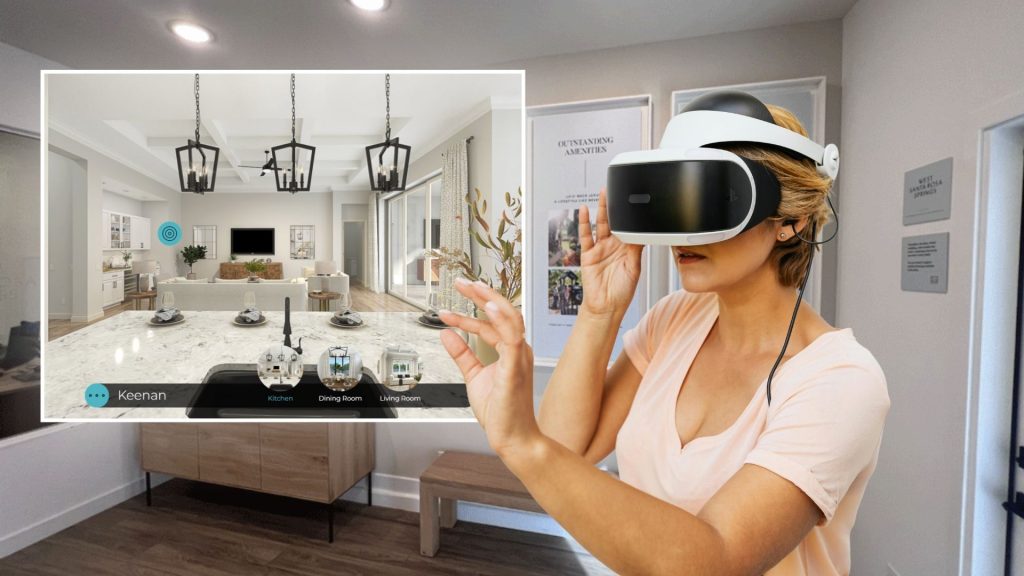
Person wearing a white VR headset and hand controllers, with arms raised as they interact with a virtual Tour.

A model home and a VR walkthrough are trying to solve the exact same problem: convince someone to trust a house they haven’t stood inside yet. One does it with lumber, drywall, and a decorator’s budget. The other does it with a headset, a browser tab, or a phone screen. Both cost real money. Only one of them can be finished before the foundation is poured.

We wrote earlier this year about where VR is headed by 2045 (see the post): headsets, avatars, weekend “test drives” of a life not yet built. This post is about where it already is, right now, for a builder deciding whether to spend the money this quarter.

The question that actually matters isn’t “should we do VR.” It’s which format, built from what, delivered to whom, and whether the number on the invoice makes sense for the buyer standing in front of you. Those four questions have real answers. Here they are.

Here’s the short version before we get into the mechanics: the investment pays for itself before you’ve broken ground, across long distances, and at scale; it doesn’t pay for itself everywhere, and we’ll get to exactly where that line falls.

“VR Tour” Means Three Different Things

“VR tour” gets used as a catch-all for at least three distinct technologies, and builders get burned when they buy one thinking they ordered another.

A 360° tour is a set of panoramic photos stitched together at fixed camera positions. A buyer can look around from where the camera stood, but can’t walk anywhere the camera didn’t go; the format carries no real spatial data. It runs on any phone, costs almost nothing, and it’s the right tool for a completed model that just needs to go online.

A Matterport-style 3D scan is a different animal entirely. A LiDAR or depth sensor captures the actual dimensions of a built space and turns it into a navigable digital twin, complete with a measured floor plan and a dollhouse view a buyer can spin around. This is the standard for a finished model home. It needs a real, physical room to scan, which is exactly its limitation.

A true VR walkthrough is the one that matters most for pre-construction sales, because it doesn’t need a finished room at all. It’s built in a real-time engine (Unity or Unreal, most often) directly from the CAD or Revit file your design team already produced. That’s worth sitting with for a second: the drawings you already have are the raw material. A buyer can tour a floor plan that exists only on paper, choose finishes, and walk the layout with a headset or a browser before a single stud goes up.

None of this requires a headset anymore, and that’s the biggest shift since last year. Every major browser now supports WebXR, so a buyer taps a link in a text message and walks through the home right on their phone. Requiring an app download instead of a browser tour cuts engagement by half to two-thirds.1 The headset used to be the entry fee. Now it’s the premium option, reserved for a developer-owned sales gallery rather than something you hand a buyer at home.

What Each Tier Actually Costs

Here’s where the range runs, as of this year. A 360° photo tour costs free to $500 and needs no headset. A Matterport-style scan runs $100 to $1,200 per property, plus a monthly software fee if you’re not outsourcing the capture. A custom VR walkthrough built from your own CAD files runs $20,000 to $50,000 for a single home, more for a full community reused across multiple lots. A custom Apple Vision Pro sales gallery app runs $5,400 to $90,000, depending on how many floor plans and finish options it needs to carry.2

Those aren’t hypothetical numbers. Dennis Ciani at Pacesetter Homes in Austin spent about $14,000 on a VR tour of a brand-new home design when the physical model wouldn’t be framed in time for a grand opening; five competing builders already had furnished models open down the street.3 Santiago Arana at The Agency in Los Angeles worked with an architect who spent $15,000 on a VR tour for a 10,000-square-foot custom oceanfront home. Buyers walked the pool, the landscaping, the ocean view; none of it existed yet.3 Set either number against what a single physical model home costs to build, furnish, and staff for a year, and the math starts to look different.

Does It Actually Work?

The most rigorous answer we’ve seen comes from a 2025 University of Texas at Dallas study of nearly 43,000 properties, published in Information Systems Research. Homes with a VR tour sold in 19 days on average instead of 34, a 44% reduction, after controlling for size, age, and neighborhood. The same study found no bump in final sale price.4 As UT Dallas researcher Dr. Zixuan “Maggie” Meng put it, the tool doesn’t make a house worth more; it makes buyers decide faster.

Sell faster, not higher. That’s the honest claim the data supports, and it’s still a good one. Listings with a 3D tour get 87% more views, per LCP Media’s 2026 figures, and 74% of buyers now say they won’t visit a property at all without seeing a tour first.1 A tour isn’t decorating your listing. It’s the thing deciding whether a buyer shows up in person at all.
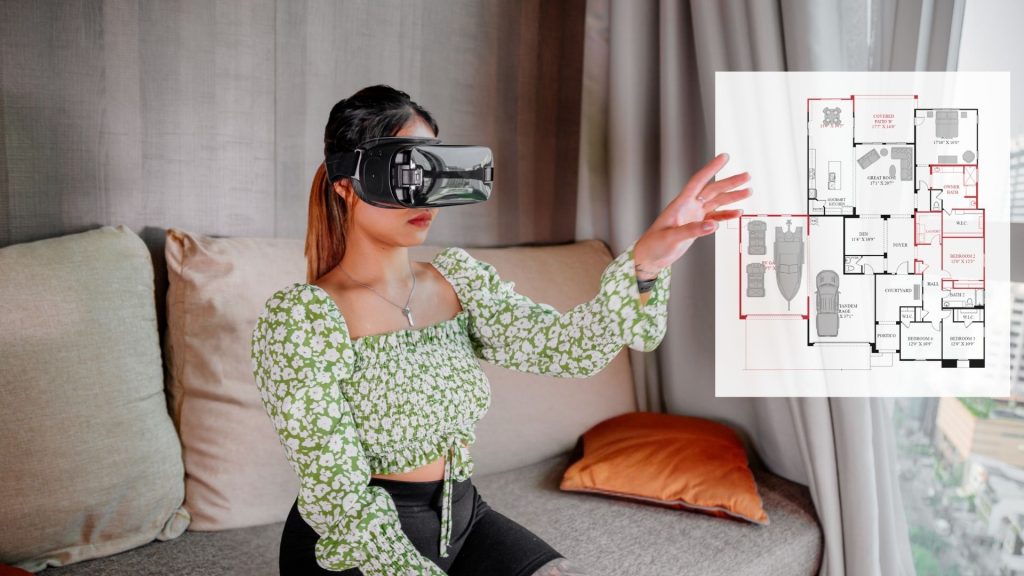
Virtual user manipulating an interactive floor plan.

When the Investment Earns Itself Back

It earns itself back before you’ve broken ground: a pre-sale community, a custom or luxury home, anything where the alternative is asking a buyer to sign based on a floor plan and their own imagination. It earns itself back across distance: an out-of-state buyer, or a family making the decision together from three different cities (we’ve written before about the distributed, multi-generational buyer who needs exactly this kind of tool to close that gap). And it earns itself back at scale: one $30,000 VR build reused across forty lots in a community is a very different number than the same build for a single custom home.

It doesn’t earn itself back everywhere, and it’s worth saying plainly. A production builder running one community, selling mostly to local buyers who can drive to a finished model this weekend, doesn’t need a real-time VR engine. A Matterport scan of the model home, or even a clean 360° tour, does the job for a fraction of the cost. The right tool matches the buyer you actually have, not the buyer a vendor is hoping to sell you.

Three Questions Before You Sign

Ask any vendor three things before you commit budget. Can they build from the CAD or Revit files you already have, or will they charge you to model the house a second time? Does the tour run in a browser without an app or a headset, since that’s where most of your buyers will actually open it? And who updates it when the finish package changes next quarter, because a VR tour showing last year’s cabinets does more harm than no tour at all.

This is the corner of the business we’ve spent thirty years standing in: the space between a set of drawings and a buyer who believes what they’re looking at. We build tours, scans, and animations from the same CAD files your team already has, so the question was never really whether VR works. It’s whether the tour you’d be buying matches the buyer walking through your door today, or the one from five years ago.

See what that looks like:

LEARN MORE

Quick Answers

A 360° tour is a set of panoramic photos taken at fixed camera positions; a buyer can look around but can’t walk anywhere the camera didn’t go, and it requires a finished, built space to photograph. A true VR walkthrough is built in a real-time engine directly from a CAD or Revit file, so it can show a home that hasn’t been framed yet, and a buyer can walk the full layout rather than view it from fixed points.

Costs range from free for a basic 360° photo tour to $500, $100 to $1,200 for a Matterport-style 3D scan, $20,000 to $50,000 for a custom VR walkthrough built from CAD files, and $5,400 to $90,000 for a custom Apple Vision Pro sales gallery app, depending on scope.

Yes. A 2025 University of Texas at Dallas study of nearly 43,000 properties found homes with a VR tour sold in 19 days on average instead of 34, a 44% reduction, after controlling for size, age, and neighborhood. The same study found no measurable increase in final sale price: the tool speeds up the decision, it doesn’t raise the number.

No. As of late 2025, every major browser supports WebXR, so a buyer can open a VR tour from a link on their phone with no headset and no app download required. Headsets like the Meta Quest 3 and Apple Vision Pro are now used mainly for developer-owned sales galleries, not for tours sent directly to buyers.

Footnotes

1  MadXR, “WebXR and Browser-Based Immersive Experiences,” February 2026; LCP Media, 2026 real estate media engagement data.

2  Frame Sixty, “Virtual Reality Property Walkthroughs: Cost, Technology, and How to Get One Built,” July 2026.

3  Michele Lerner, “Virtual Reality: Visualize Your Way into a Custom Home,” NewHomeSource, April 2026.

4  University of Texas at Dallas and University of Washington, study of 43,000 properties, published in Information Systems Research, September 2025.

Building the Future: Why the Labor Gap is the Greatest Opportunity for the Next Generation

Tabitha Warren · 02/16/2026 ·

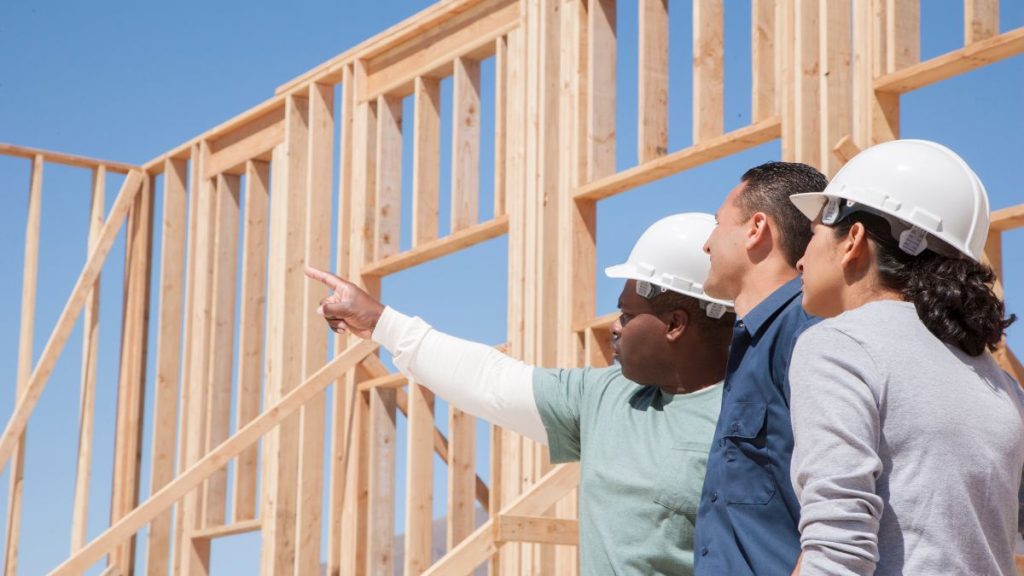
3Construction workers on job site

For years, headlines about the homebuilding industry have focused on a singular, daunting challenge: the labor shortage. At Outhouse, LLC, we spend our days looking at the industry through a digital lens, creating the visualizations and tools that help builders sell homes. But lately, when we look at the data, we aren’t seeing a “crisis.” We’re seeing a massive, wide-open door for the next generation of builders, creators, and innovators.

If you’ve been following the news, the narrative is shifting. Here is why we believe the future of home building has never looked brighter, and how the industry is evolving to welcome Gen Z and beyond.

The Numbers: A Gap That’s Beginning to Bridge

It is no secret that we need more hands on deck. According to the National Association of Home Builders (NAHB), the U.S. is currently facing a shortage of roughly 1.5 million homes. This is driven by what they call the “5 L’s”: Labor, Lots, Laws, Lumber, and Lending. Labor remains one of the most significant hurdles to providing the housing the country desperately needs.

However, recent data from Construction Dive and the Associated Builders and Contractors (ABC) suggest we are making progress. While the industry needs to hire an estimated 416,000 additional workers beyond normal hiring to meet demand in 2026, that number is down from the 501,000 projected the year prior.

The “labor demand gap” is shrinking. This means the message is getting out, and more people are realizing that construction isn’t just a “job”; it’s a high-demand, high-stability career path.

Redefining the “Builder” for Gen Z

To attract Gen Z and the generations that follow, the industry is moving away from “boots and mud” stereotypes toward a focus on purpose, technology, and inclusivity. Today’s young professionals want careers that offer tangible results and a sense of community.

There are two incredible programs leading this charge that we are particularly inspired by:

  • The Home Building Academy: This initiative is revolutionizing how we train the workforce. By offering accessible, hands-on training, The Home Building Academy is removing the barriers to entry. They aren’t just teaching people how to swing a hammer; they are preparing them for a modern workforce where precision and efficiency are paramount.
  • The House That She Built: Diversity is the key to solving the labor shortage. The House That She Built is a movement (and a wonderful book!) inspired by a real-life home built entirely by women. By reaching out to young girls and underrepresented groups, they are showing the next generation that there is a place for everyone on the job site, from architects and engineers to electricians and site supervisors.

A Tech-Forward Industry

At Outhouse, we see firsthand how technology is changing the face of construction. Gen Z is the first truly digital-native generation, and the modern building industry is speaking their language. From 3D renderings and virtual reality walkthroughs to BIM (Building Information Modeling) and AI-driven logistics, the “construction site” of the future involves as much software as it does steel.

We like to think that by providing digital tools that make home building more visual and accessible, we’re helping modernize the industry’s image. When a young person sees a stunning 3D model of a home before it’s even built, they start to see the industry for what it really is: a blend of high-tech innovation and timeless craftsmanship.

Modern construction worker at desk drawing blueprints on tablet.

The Bottom Line

The “shortage” is really an invitation. It is a call for a new generation to step up and solve one of the most fundamental human needs: shelter. With stable wages, the opportunity to work with cutting-edge technology, and the satisfaction of building something that will last for decades, the home building industry is ready for its next chapter.

The gap is shrinking, the tools are evolving, and the door is open. Let’s get to work.

If you need help with your digital work flows, Outhouse is here.

Contact us

Welcome to the Future: How VR Will Revolutionize Homebuilding Marketing by 2045

Stuart Platt · 07/14/2025 ·

Woman wearing Virtual Reality headset doing a VR Home Tour.
VR Home Tours via headset! The future of home buying.

Imagine this. It’s the year 2045. A prospective buyer slips on a lightweight headset and steps into their future home. They cook breakfast in the virtual kitchen, rearrange furniture with hand gestures, and host a digital housewarming party where avatars of friends, family and even future neighbors drop by to say hello. By the time the weekend is over, they know the floor plan, finishes, neighborhood vibe, and even the sunlight pattern in the backyard. They haven’t stepped foot on the property yet and they’re ready to buy.

Sound far-fetched? Not for long. This is the trajectory we’re on, and for marketing executives and managers in the homebuilding industry, the time to prepare is now.

Why Virtual Reality Is Reshaping Builder Marketing

Virtual Reality (VR) is no longer a buzzword. It is quickly becoming a practical, scalable, and strategic tool for production home builders looking to enhance the homebuyer experience, generate more qualified leads, and shorten the sales cycle.

From immersive floor plan tours to virtual design centers, VR gives marketing teams a new way to deliver what buyers want most: clarity, personalization, and confidence.

How Builders Are Using VR Today

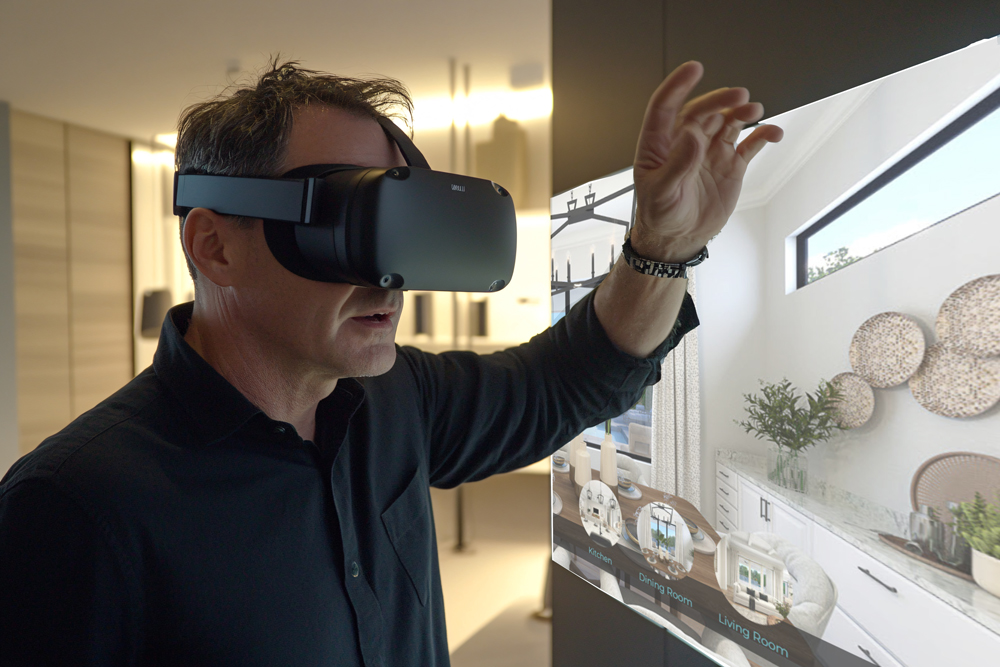
Buyer using VR headset in sales office to take home tour.

Large National Builders

Companies like Lennar, Toll Brothers, and PulteGroup are leading the charge. These firms are integrating VR into their marketing ecosystems using custom-built virtual models, interactive selection tools, and CRM-integrated design platforms.

Buyers can explore entire collections of homes online. Some builders even provide VR headsets in sales offices, allowing buyers to walk through multiple layouts without leaving the room.

Smaller Production Builders

Regional builders are making smart moves with scaled-down solutions. Many are working with third-party platforms like Outhouse, LLC to create cost-effective, web-based virtual tours of their most popular plans.

Others use VR to showcase floor plans that don’t yet have physical models, or to streamline remote sales in markets where on-site staff is limited.

Pros and Cons from a Marketing Perspective

Pros

  • Reduces dependency on expensive model homes
  • Engages out-of-state and remote buyers early in the funnel
  • Increases buyer confidence and reduces drop-off during the sales process
  • Enables faster upgrade decisions and higher customization spend
  • Creates memorable experiences that differentiate your brand

Cons

  • Initial production costs for custom VR environments can be significant
  • Requires training for both sales and marketing teams
  • Ongoing updates are needed to reflect plan and product changes
  • Not every buyer is comfortable using VR, especially without guided assistance

What Buyers Really Think

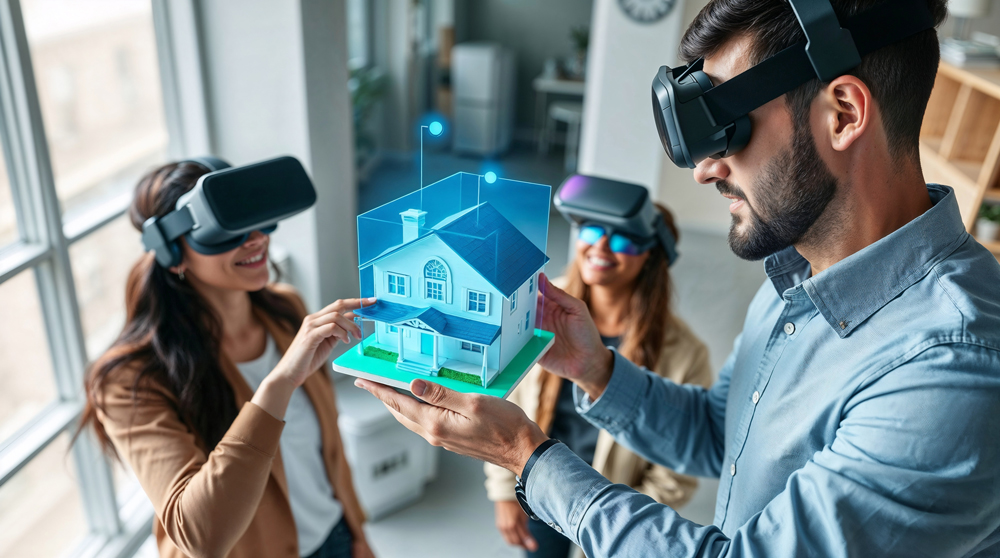
Buyers smiling as they interact with a virtual control panel.

Buyers, especially Millennials and Gen Z, expect immersive digital experiences. Surveys show that most buyers prefer to preview homes online before visiting in person. VR lets them do this in a way that photos and floor plans simply cannot match.

These experiences build emotional engagement and make it easier for buyers to envision their future lifestyle. In some cases, buyers decide on upgrades, layouts, and even specific lots before their first visit to the sales office.

Cost Versus Value

Marketing executives are always weighing investment versus impact. While building a single physical model home can cost over $500,000, a high-quality VR model may cost between $5,000 and $40,000. When scaled across multiple communities or plans, the savings are substantial.

There are also indirect returns. VR tools can increase online engagement, lower marketing costs per sale, and accelerate buyer decision-making. When paired with analytics platforms, VR usage can also offer insight into buyer behavior and preferences that guide future campaigns.

How VR Fits into the Marketing Stack

Think of VR not as a standalone tool but as an extension of your digital marketing funnel.

  • Use VR tours on listing pages to increase dwell time
  • Integrate virtual design centers with your CRM to track buyer preferences
  • Provide virtual walkthroughs in email follow-ups and sales presentations
  • Embed VR in mobile sales apps for on-site agents and remote consultations

The best implementations also include analytics, allowing marketing teams to see exactly where buyers spend their time and which plans generate the most engagement.

What’s Next for VR in Homebuilding?

A 3d home coming out of a smart phone.
Expect to see an ever expanding personalized virtual experience!

Over the next 5 years, expect to see:

  • Personalized virtual experiences based on a buyer’s budget, lifestyle, and design taste
  • Interactive community maps and lot views within virtual environments
  • VR-enabled sales centers where buyers explore full portfolios through wall projections and headsets
  • AI-guided tours that recommend plans based on user behavior

A Fun Glimpse 20 Years Ahead

By 2045, home shopping will feel more like test driving a life than walking through a property. Prospects will:

  • Spend a weekend “living” in a home digitally before committing to build
  • Meet future neighbors in virtual community mixers
  • Experience seasonal changes, ambient sound, and natural light inside their future home
  • Host virtual design consultations with contractors and decorators in a 3D model of their homev

For marketing leaders, this means thinking beyond floor plans and finishes. Future campaigns may include interactive lifestyle previews, neighborhood social simulations, and branded VR events where buyers immerse themselves in your brand story.

Final Thoughts

For homebuilder marketing executives, the opportunity is clear. VR is not just a gimmick. It is a powerful tool for driving engagement, shortening the path to purchase, and delivering a competitive advantage in a crowded market.

Whether you’re running national campaigns or managing a regional portfolio, adopting VR now means building for the future. And that future is immersive, personalized, and closer than you think.

To step into the future and commence your VR journey, contact [email protected].

Email Kevin!

Ready to get started, want more info?

Contact Us
  • Facebook
  • Instagram
  • LinkedIn
  • YouTube

Outhouse

11048 N 23rd Ave #103
Phoenix, AZ 85029

602-371-4394

© 2026 All rights reserved