

I’ve watched my 26-year-old daughter work, raise two children, do everything right, and struggle to find any realistic path toward owning her own home. And as I prepare for my own retirement on a fixed income, I’m facing a similar equation from the other end: downsizing options that either don’t exist or cost more than staying put.
That’s when it hit me; we’re not dealing with a fringe problem.
Across Phoenix, young families and retirees are running into the same wall: prices that feel out of reach, interest rates that sting, and monthly payments that simply don’t leave room to breathe.
The usual response is to cite market forces. All true. Much of it is outside any single builder’s control. But here’s the question that won’t let go:
What if we’re asking the wrong question?
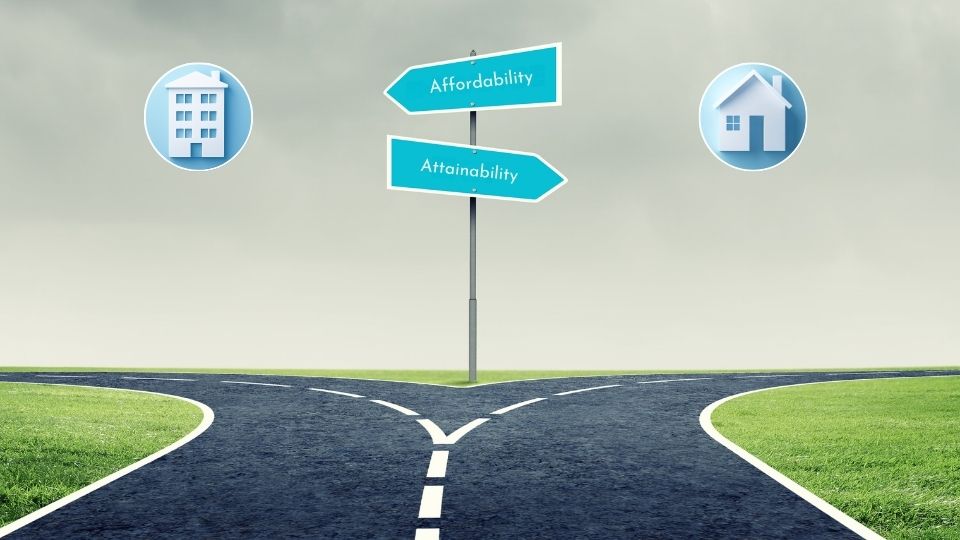
We keep asking how to make housing affordable, a math problem with unforgiving precision. But maybe the better question is how to make housing attainable.
Affordability measures price against income. Attainability asks something more human: What paths actually exist between where people are and where they’re trying to go?
The market, by the way, is already answering us.
Inventory across Phoenix has risen. Homes are sitting longer. Buyers finally have leverage after years of bidding wars. The housing market isn’t a crisis; it’s a clarification.
And yet, much of what we continue to build assumes yesterday’s household, yesterday’s income curve, and yesterday’s dream. Larger homes, higher price points, fewer entry paths, even as demand quietly shifts toward smaller, simpler, more flexible living.
Here’s the uncomfortable truth: innovation isn’t the problem.
Builders are already delivering homes well below the metro median. Modular construction is shortening timelines while maintaining quality. ADUs are proving that smaller footprints can still feel complete and dignified. These aren’t experiments. They’re working right now.
What’s often missing isn’t capability. It’s commitment.
I understand margins matter. I’ve spent decades in this business. But I’ve also learned this: the companies that endure are the ones willing to see opportunity where others see constraint.
Yes, land is expensive. Yes, construction costs are real. Yes, regulation is complex. But those are trade-offs–and trade-offs are choices.
Three Paths Forward
Steve Jobs once laid out three options to a hesitant executive:
1. Join us in trying something new at a price point we believe can work
2. Keep doing what you’re doing, but understand where that leads
3. Hold back entirely, and watch the market move on
He ended with: “Maybe I’m missing something, but I don’t see any other alternatives. Do you?”
For homebuilders heading into 2026, the same choices apply.
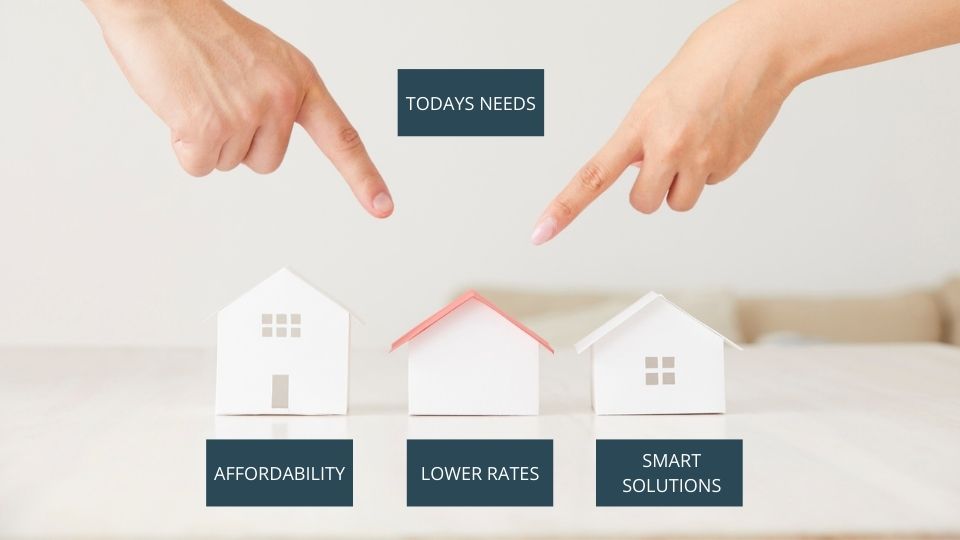
Path One: Make attainable housing a core strategy. Smaller, smarter homes. Real attention to first-time buyers and downsizing retirees. Different margins, yes, but relevance, volume, and resilience in return.
Path Two: Continue focusing primarily on higher-end buyers while inventory grows and entire market segments are priced out of participation.
Path Three: Wait and let someone else claim the ground you chose not to.
This issue is personal for me. My daughter isn’t a statistic. And as I look toward my own retirement, I see clearly that this challenge spans generations.
Hope, in this moment, is a decision.
Not whether housing can be affordable, but whether we will make it attainable.
2026 can be the year we choose to build for the market that actually exists.
The solutions are already here.
The question is whether we’ll choose to use them.
The solutions are already here. Let’s help you sell them. Contact Outhouse to start building the future of housing today. (contact button)
Link to one of these articles for suggest further reading:
Recommended Internal Links (from outhouse.net/)
You should link to Outhouse posts that provide the tactical solution to the strategic problems you raised in the article.
1. A post about Interactive Floor Plans (IFPs)
- The Connection: Your article mentions “smaller, smarter homes” and “downsizing options.” The biggest barrier for buyers considering a smaller footprint (e.g., 1,200 sq. ft vs 2,000 sq. ft) is the fear that their furniture won’t fit.
- Suggested Link: Look for a post on your blog titled something like “Why Interactive Floor Plans are Essential for Modern Builders” or “How IFPs Help Buyers Visualize Space.”
- Why: It reinforces that “attainability” is possible if you give buyers the tools to verify the space works for them.
2. A post about Photorealistic Renderings/Animations
- The Connection: You discuss “innovation” and “Path One” (trying something new). When builders launch new product lines (like ADUs or modular homes), buyers are often skeptical because they haven’t seen them before.
- Suggested Link: Link to a post such as “The Power of Architectural Renderings” or “Bringing Blueprints to Life.”
- Why: It supports your argument that “Hope is a decision”—showing the finished product before it’s built is how you generate that hope.
3. A post about Generational Marketing (Millennials/Gen Z)
- The Connection: You explicitly mention your “26-year-old daughter” and “young families.”
- Suggested Link: Link to a post regarding “Marketing to Millennials” or “Digital Trends for the Next Generation of Homebuyers.”
- Why: It proves Outhouse understands the specific demographic “crush” you described in the opening paragraphs.
The market is changing. Is your marketing keeping up? To start building the future of housing today.
If you want to learn more on attainability, read this article on “Why Interactive Floor Plans are Essential for Modern Builders.”