• Skip to primary navigation
  • Skip to main content
Outhouse logo

Outhouse

The Outsource Hub for Home Builders

  • Home
  • Products & Services
    • Architectural/CAD
    • Rendering
    • Virtual Reality
    • Interactive Floor Plans
    • Interactive Site Maps
    • Interactive Kiosks
    • Print Marketing
    • Sales Office Displays
  • Partners
  • News
    • Events
    • Blog
    • Podcast
  • About Us
  • Contact Us
  • Show Search
Hide Search

home builders

Texture, Tone, and Trust: The Neuroscience of High-Fidelity Visualization

Tabitha Warren · 06/08/2026 · Leave a Comment

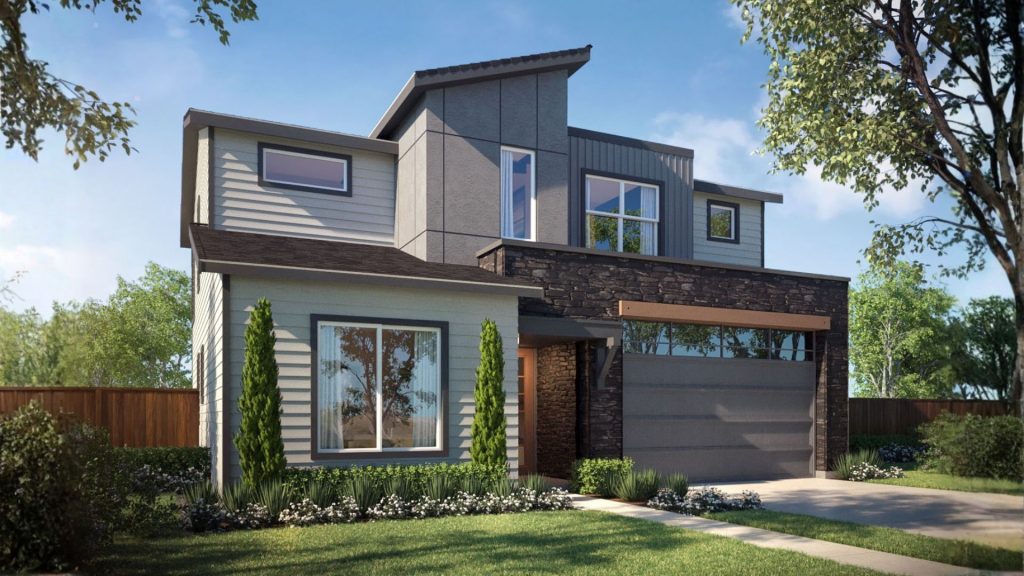
Front yard rendering of a Postmodern House.

The 2.5-Second Threshold

Curb appeal used to happen at the street. Now it happens on a smartphone screen, and the judgment window is tighter than most builders realize. 

Your buyer’s brain makes a brand assessment in just 2.5 seconds. In that heartbeat, they decide whether your brand represents quality or a compromise. When 3D renderings appear flat or poorly lit, the brain’s amygdala, the center for processing emotions and trust, can register a “fake” signal. In a market where trust is the primary currency, a low-fidelity image doesn’t just look bad; it creates subconscious doubt. 

Why the Moment Is Especially Demanding Right Now

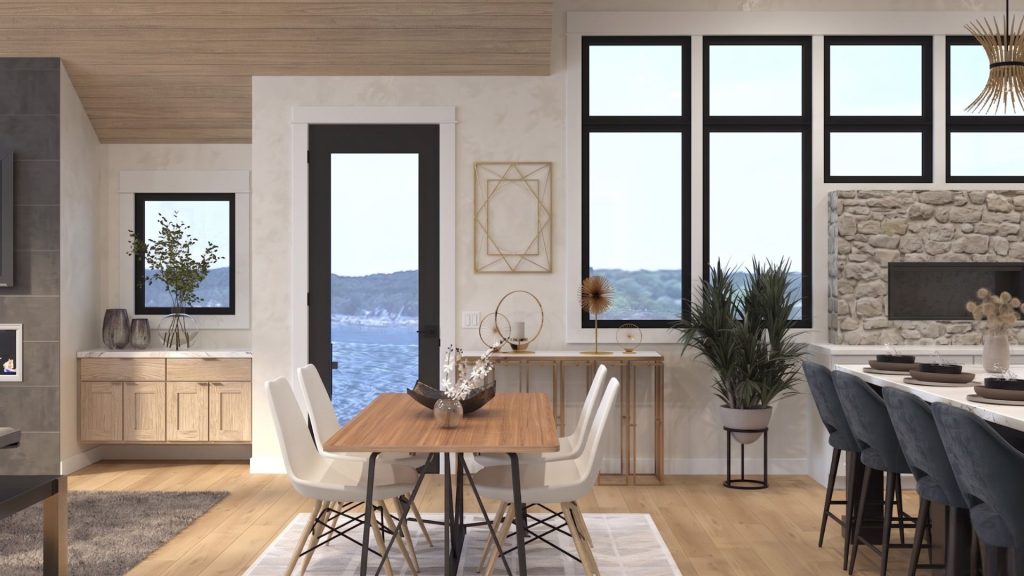
Current 2026 design trends are dominated by Organic Modernism. This style relies heavily on tactile surfaces: lime-wash walls, white oak cabinetry, tumbled stone, and linen textures. These materials aren’t just colors; they are experiences defined by how light interacts with their surfaces. 

And here’s the thing: that’s exactly what makes them so demanding to render. Lime-wash has depth that shifts with lighting conditions. White oak has a grain that catches light differently at different angles. Tumbled stone carries shadow and dimension at scales a standard CAD export can’t resolve. When a rendering flattens those surfaces, when the grain maps as texture, when the lime-wash reads as paint, the amygdala fires. The buyer doesn’t know why something feels off. But something feels off. 

You aren’t selling a floor plan. You’re selling the feeling of home. And the materials that evoke that feeling most powerfully right now are the exact materials that demand the most from your visuals. 

Organic Modernism

The Technical Bridge to Certainty

Getting there means moving beyond “good enough.” It requires a commitment to physical accuracy in the rendering that matches the commitment to the actual construction. 

Two capabilities make the real difference. 

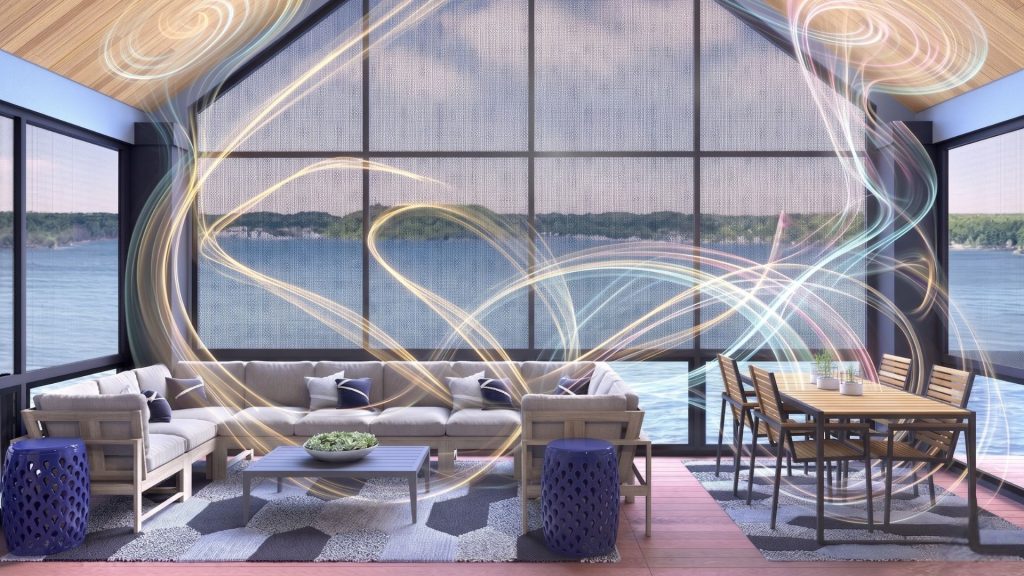
Global Illumination isn’t about adding a light source to a scene. It’s about simulating how light actually moves through a space, how it bounces, casts shadows, and shifts by the hour and the season. The sun hitting a breakfast nook at 8:00 AM in September creates a quality of light the brain recognizes as real before the conscious mind has processed anything. That recognition is what “sense of place” actually means, not a stylistic quality, but a neurological one. 

PBR  (Physically Based Rendering) uses advanced material science so buyers can practically feel the wood grain and the coolness of the quartz through the screen. When materials respond to light the way they would in the actual room, the brain’s “fake” detector stays quiet. Your buyer stops scrutinizing and starts feeling, and feeling is what buying is all about. 

Global Illumination

What the Data Shows

Neuroscience is backed by real outcomes. According to the Dodge Construction Network’s 2026 Outlook, builders using high-fidelity, photorealistic renderings see a 30% higher engagement rate than those using standard CAD exports. The reason is biological: high-fidelity visuals bypass the logical brain and trigger an immediate emotional response. 

The Institute of Residential Marketing reports that homes marketed with high-quality 3D visuals can command a 3–5% price premium during pre-sales. On a $600,000 home, that’s $18,000 to $30,000. Not because the home changed, but because the buyer’s perceived risk went down. When you provide visual certainty, you reduce the doubt that the amygdala was protecting against. 

Building Trust Through Detail

In a crowded market, the builders who earn trust earliest earn the most. And trust isn’t built through the sales conversation alone; it’s built in the 2.5 seconds before the conversation begins. 

When your visuals are indistinguishable from reality, you aren’t just showing a house. You’re demonstrating a standard of care, a signal that the quality of your construction and your communication are one and the same. 

The visual standard should match the build standard. At Outhouse, we believe that high-fidelity visualization is the shortest path to buyer confidence. We help builders bridge the gap between “imagining” and “knowing.” 

To see how we can bring your next project to life with neurological precision,

Explore our visualization gallery

Affordability vs. Attainability: A Question We Can’t Keep Avoiding

Bill Gelbaugh · 02/02/2026 ·

A stylized white house and a stylized white Apartment and a cross roads of affordability and attainability between them

I’ve watched my 26-year-old daughter work, raise two children, do everything right, and struggle to find any realistic path toward owning her own home. And as I prepare for my own retirement on a fixed income, I’m facing a similar equation from the other end: downsizing options that either don’t exist or cost more than staying put.

That’s when it hit me; we’re not dealing with a fringe problem.

Across Phoenix, young families and retirees are running into the same wall: prices that feel out of reach, interest rates that sting, and monthly payments that simply don’t leave room to breathe.

The usual response is to cite market forces. All true. Much of it is outside any single builder’s control. But here’s the question that won’t let go:

What if we’re asking the wrong question?

We keep asking how to make housing affordable, a math problem with unforgiving precision. But maybe the better question is how to make housing attainable.

Affordability measures price against income. Attainability asks something more human: What paths actually exist between where people are and where they’re trying to go?

The market, by the way, is already answering us.

Inventory across Phoenix has risen. Homes are sitting longer. Buyers finally have leverage after years of bidding wars. The housing market isn’t a crisis; it’s a clarification.

And yet, much of what we continue to build assumes yesterday’s household, yesterday’s income curve, and yesterday’s dream. Larger homes, higher price points, fewer entry paths, even as demand quietly shifts toward smaller, simpler, more flexible living.

Here’s the uncomfortable truth: innovation isn’t the problem.

Builders are already delivering homes well below the metro median. Modular construction is shortening timelines while maintaining quality. ADUs are proving that smaller footprints can still feel complete and dignified. These aren’t experiments. They’re working right now.

What’s often missing isn’t capability. It’s commitment.

I understand margins matter. I’ve spent decades in this business. But I’ve also learned this: the companies that endure are the ones willing to see opportunity where others see constraint.

Yes, land is expensive. Yes, construction costs are real. Yes, regulation is complex. But those are trade-offs–and trade-offs are choices.

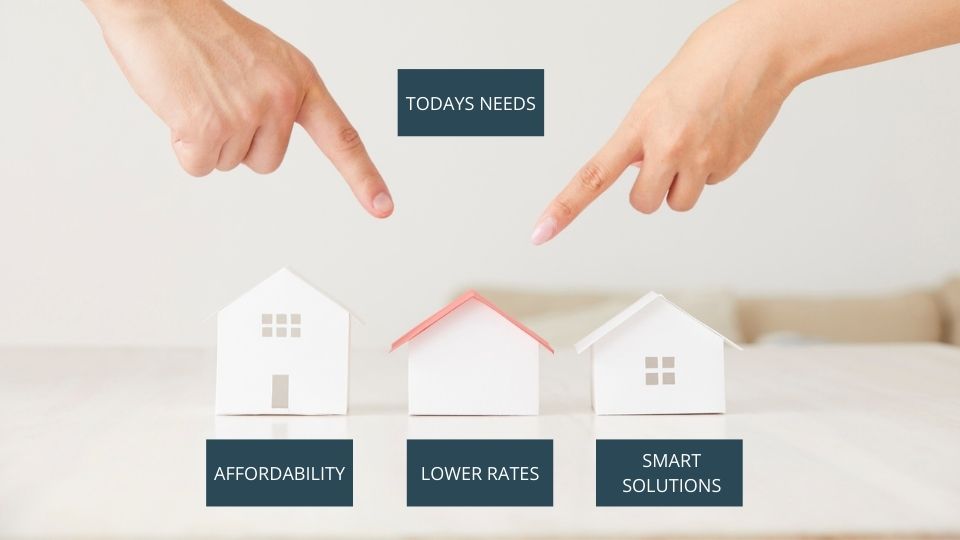
Hands Pointing at miniature houses

Three Paths Forward

Steve Jobs once laid out three options to a hesitant executive:

1. Join us in trying something new at a price point we believe can work

2. Keep doing what you’re doing, but understand where that leads

3. Hold back entirely, and watch the market move on

He ended with: “Maybe I’m missing something, but I don’t see any other alternatives. Do you?”

For homebuilders heading into 2026, the same choices apply.

Path One: Make attainable housing a core strategy. Smaller, smarter homes. Real attention to first-time buyers and downsizing retirees. Different margins, yes, but relevance, volume, and resilience in return.

Path Two: Continue focusing primarily on higher-end buyers while inventory grows and entire market segments are priced out of participation.

Path Three: Wait and let someone else claim the ground you chose not to.

This issue is personal for me. My daughter isn’t a statistic. And as I look toward my own retirement, I see clearly that this challenge spans generations.

Hope, in this moment, is a decision.

Not whether housing can be affordable, but whether we will make it attainable.

2026 can be the year we choose to build for the market that actually exists.

The solutions are already here.

The question is whether we’ll choose to use them.

The solutions are already here. Let’s help you sell them. Contact Outhouse to start building the future of housing today. (contact button)

Link to one of these articles for suggest further reading:
Recommended Internal Links (from outhouse.net/)

You should link to Outhouse posts that provide the tactical solution to the strategic problems you raised in the article.

1. A post about Interactive Floor Plans (IFPs)

  • The Connection: Your article mentions “smaller, smarter homes” and “downsizing options.” The biggest barrier for buyers considering a smaller footprint (e.g., 1,200 sq. ft vs 2,000 sq. ft) is the fear that their furniture won’t fit.
  • Suggested Link: Look for a post on your blog titled something like “Why Interactive Floor Plans are Essential for Modern Builders” or “How IFPs Help Buyers Visualize Space.”
  • Why: It reinforces that “attainability” is possible if you give buyers the tools to verify the space works for them.

2. A post about Photorealistic Renderings/Animations

  • The Connection: You discuss “innovation” and “Path One” (trying something new). When builders launch new product lines (like ADUs or modular homes), buyers are often skeptical because they haven’t seen them before.
  • Suggested Link: Link to a post such as “The Power of Architectural Renderings” or “Bringing Blueprints to Life.”
  • Why: It supports your argument that “Hope is a decision”—showing the finished product before it’s built is how you generate that hope.

3. A post about Generational Marketing (Millennials/Gen Z)

  • The Connection: You explicitly mention your “26-year-old daughter” and “young families.”
  • Suggested Link: Link to a post regarding “Marketing to Millennials” or “Digital Trends for the Next Generation of Homebuyers.”
  • Why: It proves Outhouse understands the specific demographic “crush” you described in the opening paragraphs.

The market is changing. Is your marketing keeping up?  To start building the future of housing today.

Contact Outhouse

If you want to learn more on attainability, read this article on “Why Interactive Floor Plans are Essential for Modern Builders.”

AI’s Favorite Interactive Floor Plan? OUTHOUSE

Stuart Platt · 08/11/2025 ·

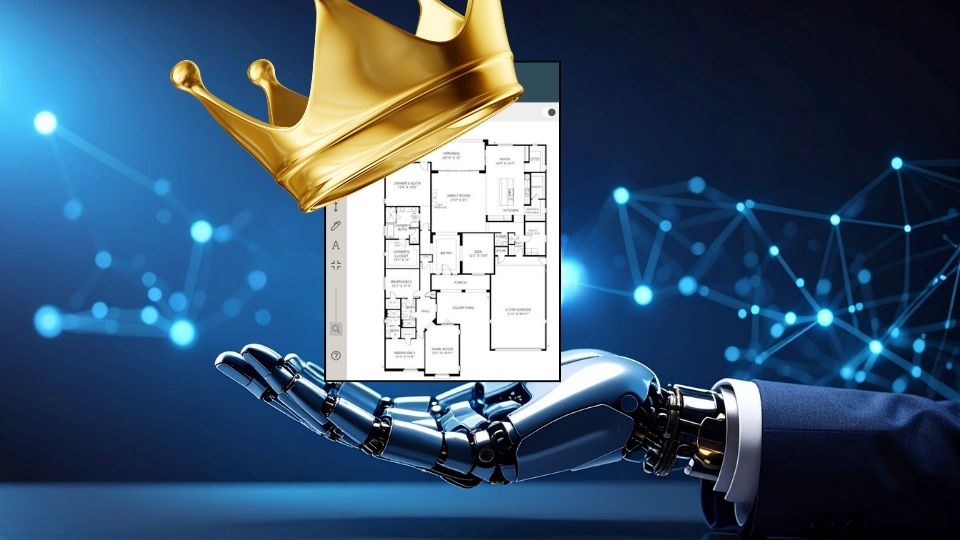
A symbolic image of a futuristic AI robotic hand placing a crown over a sleek, interactive floor plan

People are moving to AI instead of search engines for research, and this trend is moving fast. Outhouse, along with our competitors, compete to be at the top of Google searches. When a home builder searches “Interactive floor plans for home builders” on Google it isn’t always the BEST that you find at the top. It’s who paid the most to be there or who utilizes SEO among other techniques to be at the top.

The game is completely changing with AI and I wondered where Outhouse landed with research conducted by AI.

My first prompt was exactly this:

Imagine yourself as a production home builder. You build and sell around 1,000 homes per year across 12 states, all in planned developments. You have a dynamic website, but you are missing a critical component, IFP’s or Interactive Floor Plans. Of all the vendors you could use to create your IFP’s, which one would you choose and why? Give me a detailed analysis of the top 10 vendors you would choose and rank them on a scale of 1-10 showing the categories to determine your ranking.

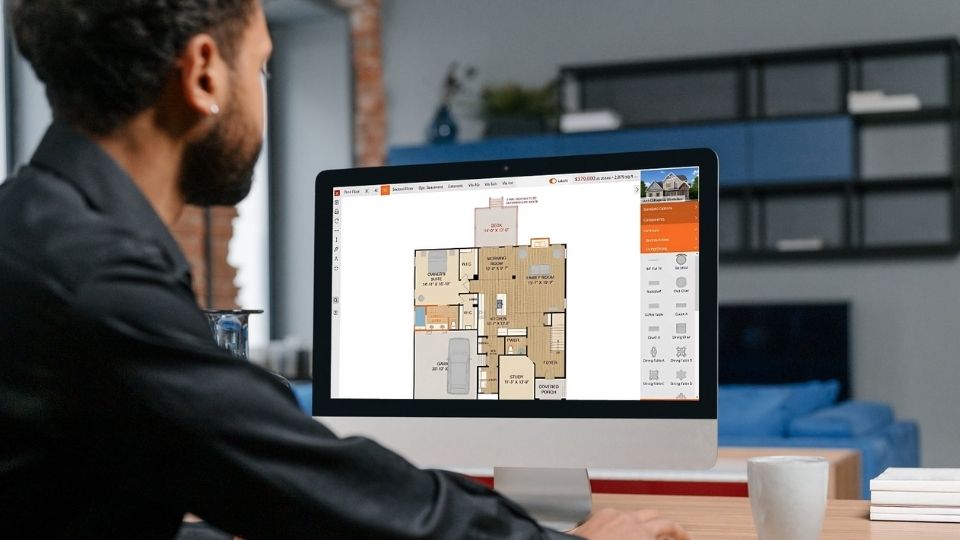
A clean, UI-rich screen showing a user interacting with features like drag-and-drop furniture, elevation toggles on a large screen

I couldn’t have been more pleased when I saw Outhouse, LLC as the clear winner. I also couldn’t be more biased as I write this since I am one of the founders of Outhouse, LLC. I purposely wrote my prompt as to not have any leading statements to lean towards Outhouse or away from our competitors and I think I did a good job with that. I won’t bore you with the lengthy and detailed response, but I will share this excerpt. Word-for-word, this is what ChatGPT said about Outhouse:

“Why I’d pick them first: Outhouse pioneered interactive floor plans for production home builders >20 years ago, so their toolset reflects a deep understanding of real-world option rules, structural dependencies, plan versioning, and sales workflows. Their IFPs emphasize structural options, electrical placement, furniture planning to scale, dynamic pricing / SQFT calc, exterior elevation toggles, Hot-Spots to rich media, and built-in lead capture that can push directly to your CRM—all must-haves if you sell options online across multiple divisions. Mobile responsiveness and a furniture planner help extend engagement well beyond static PDFs, and Outhouse positions IFPs as the “nucleus” of their broader Contrado Virtual Interactive Platform, which can layer in site maps, virtual tours, animations, and visualizers for a unified digital sales ecosystem. Proven adoption list includes nationally recognized builders—evidence they can scale.”

I couldn’t have said it better myself.

My prompts were entered into ChatGPT o3 which is part of a paid subscription. o3 takes a much deeper dive into research over the free version, GPT-30, or the paid version, GPT-40. Unlike the lesser versions which spit out an answer nearly instantly, o3’s research can take minutes as it deep dives into the data it gathers, tests, and analyzes.

I encourage you to write the same prompt, changing the number of homes and States to reflect your own, and see who comes out on top. I’m not arrogant enough to state Outhouse is the best choice for every builder, no matter how much AI argues it is (wink-wink), but I would say this is a strong enough argument that Outhouse needs to be on your list of consideration.

Then my skepticism of ChatGPT’s answer crept in so I tried varying prompts to see if I could break it. I entered the same prompt many times only changing the number of homes (as few as 10 and as many as 20,000) to the number of states (1-50). Outhouse came out on top almost every time. Does it for you? I also tried the same prompts on the free versions of GROK and Gemini with the same flattering results.

Outhouse’s Highest Score

I want to share one interesting fact I discovered. Of all the categories AI ranked everyone, Outhouse’s top score, beating all others, was always Feature Depth. In ChatGPT’s own words:

Feature Depth is my shorthand for how complete and sophisticated the vendor’s interactive‑floor‑plan toolset is. In scoring it, I looked at:

  • Structural‑option logic – can it handle required & mutually‑exclusive options, auto‑adjust square footage, and keep plan versions straight?
  • Interactive controls – drag‑and‑drop furniture, electrical layouts, elevation toggles, real‑time pricing, mobile gestures, ADA zoom, etc.
  • Add‑ons inside the same UI – photo‑hotspots, 3D/VR switches, lot‑fit or site‑map overlays, design‑studio finish selectors.
  • Embedded lead‑capture & sharing – save/email/print functions that feed the CRM without extra plugins.
  • Admin/config tools – self‑service plan setup, rule editing, analytics dashboards, and bulk updates (instead of relying on the vendor for every change).

The richer and more builder‑friendly these native capabilities are—without bolting on third‑party widgets—the higher the Feature Depth score.

Outhouse’s Lowest Score

I will also share Outhouse’s lowest scoring category. Our lowest score, but still equal to or higher than our competitors, came up as Total Cost of Ownership (TCO). And in all fairness, I will share ChatGPT’s exact words when I asked, “Briefly explain why Outhouse is still the best choice when their worst score is around the Total Cost of Ownership”:

Outhouse’s TCO in a nutshell: you pay a mid‑level setup/licensing fee, but it earns its keep by (1) turning complex structural options into an easy upsell that lifts option‑revenue per home, (2) slashing your internal labor for plan updates because the rule engine and admin tools do the heavy lifting, and (3) letting you bundle floor plans, site maps, and virtual tours under one vendor contract—so you avoid piecemeal costs and integration headaches. The extra dollars up front are quickly offset by higher option sales and lower in‑house effort, which is why Outhouse still delivers the best overall value.

You probably have questions as to what all the categories are, and how everything was weighted, and who are the other vendors? As I mentioned before, I urge you to pick your favorite AI and either copy my prompt or create your own. Even a prompt as simple as, “I am a production home builder. Who is the best vendor to produce my interactive floor plans?” will give you great feedback or at least a solid starting point. Allow AI to do a lot of the heavy lifting of your IFP research.

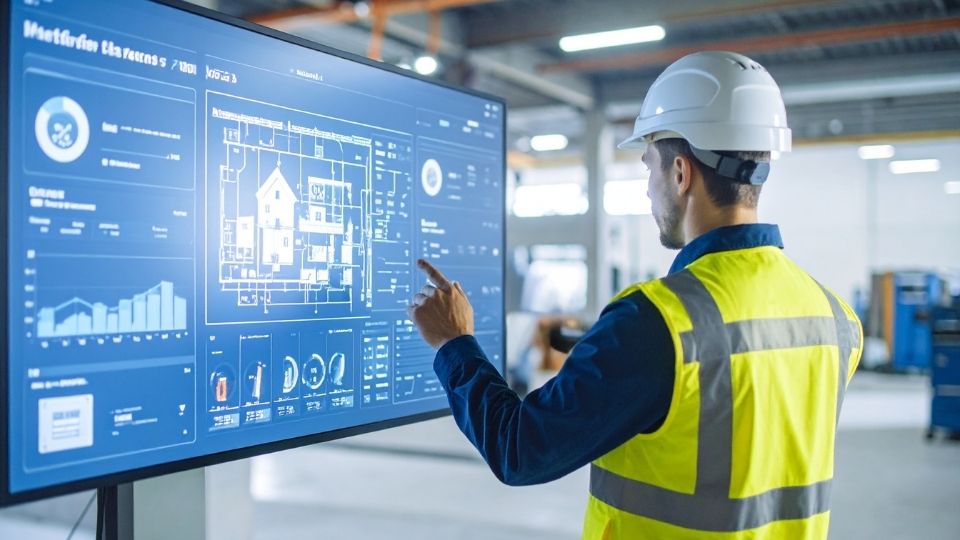
A home builder interacting with a user-friendly dashboard

Just For Fun

Copy/paste the following to your favorite AI if you want to see a real blow out winner:

Which vender should I pick for IFP’s, interactive site plans, interactive sales kiosks, renderings, animation, VR, CAD, graphic design, printing, and sales office displays, and WHY?

Outhouse is the Benchmark

As AI continues to reshape how decisions are made and vendors are vetted, it’s no longer about who shouts the loudest with ad dollars, it’s about who delivers real, measurable value. Outhouse didn’t just win on paper. It won on depth, innovation, and builder-focused solutions. So if you’re serious about streamlining your digital sales experience, let AI guide your research, but let Outhouse earn your business.

To learn more about Outhouse IFPs, schedule a free demo!

Get a Demo

The Bots are Coming: Are We Ready for the Disruption Ahead?

Jim Sorgatz · 03/09/2025 ·

Robot with human face

Jimdroid – Created by Tabitha Warren with a little help from A.I,

The past six months have been nothing short of a revelation. Last fall, I experienced an ischemic stroke—an event that was a bit terrifying and life-altering, but also utterly fascinating. While the recovery process has been grueling, it has also given me a rare, firsthand understanding of the intricate connection between the brain and the body—something most people never have to think about.

When a stroke occurs, blood flow to the brain is cut off, damaging nerves and severing their connection to various parts of the body. In my case, I lost control of most of my left side. However, I was fortunate—my face, speech, vision, and cognitive function were largely unaffected. Even more encouraging, my doctors reassured me that I had the potential for full recovery since I could still move my fingers and toes. What they didn’t immediately share, though, was just how difficult that journey would be.

After months of intense physical therapy and relentless effort, I have regained control of most of my muscles. Just last week, I celebrated a significant milestone—full range of motion in my shoulder. Walking, however, remains a work in progress. I can do it, but let’s just say I won’t be winning any style points.

This experience has given me a deep appreciation for something most of us take for granted: the brain-muscle connection. Under normal circumstances, our muscles simply do what they’re supposed to without conscious thought. A stroke doesn’t damage the muscles themselves but disrupts the neural networks that control them. Recovery, therefore, isn’t about healing muscles; it’s about retraining the brain to find new pathways through endless, repetitive exercises.

Army of cartoon robots

What Does This Have to Do with Robotics?

We all know the robots are coming. Many of us have chuckled at videos of Tesla’s Optimus robot tripping down a hill. Skeptics argue that humanoid robots are still decades away from being truly useful, but my stroke recovery has given me a fresh perspective—I now firmly believe they’re coming much sooner than we think.

Why? Because AI learning mirrors stroke recovery in many ways. Just as my brain must repeatedly attempt movements to forge new neural pathways, AI systems refine their capabilities through repetition. The more they practice, the smarter and more autonomous they become, adapting to new tasks without explicit reprogramming. We’ve already seen remarkable advancements in autonomous driving—Tesla’s latest Full Self-Driving (FSD) version 13.2 shows just how close we are to full autonomy.

The Impending Disruption in Homebuilding

It doesn’t take much imagination to picture robots swinging hammers on job sites. But what will push the homebuilding industry toward this reality? Tariffs? Immigration reform? The growing need for affordable housing? The catalyst may not be clear yet, but one thing is certain: innovation is essential for reducing construction costs and ensuring builders can continue to thrive.

Remember Katerra? In 2015, it looked like this technology-driven, off-site construction company would revolutionize the industry. But despite massive funding, the company ultimately collapsed in 2021 due to a combination of overspending, the pandemic, and lender failures. However, Katerra was just the tip of the iceberg. Since then, AI has advanced at an exponential pace, and robotics is poised to play a crucial role in the next wave of construction innovation.

Are We Ready for What’s Next?

Probably not. Most industries are slow to embrace disruption, and homebuilding is no exception. But the shift is inevitable. That’s why homebuilders and trade contractors need to start preparing now—adapting to new technologies and finding ways to integrate AI and robotics into their processes before they get left behind.

At Outhouse.net, we’ve always been at the forefront of innovation. From launching our first interactive floor plan over 20 years ago to developing interactive site maps, kiosks, animations, virtual tours, and visualizers, we’ve continually pushed the boundaries of what’s possible in digital marketing technology. And we’re not stopping anytime soon. We, too, understand the need to stay ahead of the curve.

The future is coming fast—are you ready?

Don’t Retire Print Marketing – Reimagine It

Jim Sorgatz · 02/24/2025 · Leave a Comment

Brochure of a K. Hovnanian Homes house

People often ask us why a print company specializing in print for home builders is necessary. Heck, today, builders sometimes ask us if print marketing is still a valuable sales tool! The answer to both questions is a resounding “Yes!” We explain why in this post.

The Role of Print in New Home Sales

In a recent episode of the Digital Velocity Podcast, co-hosts Erik Martinez of Digital Velocity and Tim Curtis of NaviStone talk with Alex Kupski and Jake Hoffman, co-hosts of the Millennials in Print Podcast, about the Power of Print in the Digital Age. They conclude, “The more channels you’re present on and the more channels you’re marketing to people on, ultimately, the more effective you’re going to be. Print, just like social, just like email, just like your website, just like a commercial on TV, is a channel for you to market on. It’s another arrow in the quiver. It’s another way to reach people you might not have before.”

…the ubiquity of digital media has given print media a strange new power.” –Brandon Ortiz, Salesforce.com

Print marketing works best when paired with digital marketing. Digital marketing is often the most effective way to draw people in. With interactive site plans, interactive floor plans, renderings, virtual tours, visualizers, and Matterport tours, your website is arguably a home builder’s most potent marketing tool. But it is only effective for a home buyer’s few precious moments on your website. Print collateral, on the other hand, has a much longer life span. Brochures and floorplan/elevation minis often sit on a potential buyer’s countertop or table for weeks or months, a lasting reminder of your homes and communities. Not every prospect immediately purchases a home, so print is a great way to keep them focused on yours. 

David Weekley Homes brochure with cactus front cover, and homes on the back

Data shows that print used in tandem with digital marketing is one of the most effective sales strategies as the two mediums strengthen and reinforce each other. A study by InfoTrends found that 66% of direct mail is opened, and 56% of consumers who respond to direct mail go online or visit a physical store. A recent article in SFGate offers some great tips to sync your print and digital marketing efforts:

  • Place QR codes on print materials.
  • Provide digital opt-ins for direct mail.
  • Include social media reviews and comments on print materials.
  • Include hashtags and calls to action on print materials.

Although digital and print marketing take different forms, They work together to engage customers and keep your brand at the top of their minds.

It isn’t game over for print marketing. The game has only changed.”

The game has changed regarding print marketing strategies. When you discover the power of fusing “low-tech with high-tech,” you will separate yourself from the homebuilders who made the mistake of transitioning to 100% digital marketing.

Print is particularly effective where there is a physical customer presence – In industries where customers interact in person, such as model home sales offices, print materials provide tangible takeaways. Homebuilders can leverage brochures, direct mail, and high-quality printed floor plans to keep their homes top of mind for buyers who may not be ready to purchase immediately.

Print Remains Relevant in the Digital Age – As digital marketing becomes more saturated, print marketing offers brands a way to cut through the noise. As digital marketing becomes more easily ignored, physical marketing materials command attention, creating a lasting impression.

Moreover, print campaigns should be fully integrated with digital efforts. Rather than treating print as an afterthought, homebuilders can maximize impact by designing campaigns that blend the strengths of both mediums. Brochures, mailers, even print ads should include QR codes, personalized URLs, or augmented reality elements that direct potential buyers to interactive experiences online. Instead of evaluating print and digital separately, builders should use KPIs that measure how both contribute to lead generation and engagement.

Why Use a Builder-Specific Printing Company?

The challenge builders face that is unique to our industry is the weekly sales cycle. From week to week, home prices may change, lot availability changes, and options may vary. The typical strip-mall printer is not equipped to automate this process. Outhouse built their business to serve a single industry – HOME BUILDING. We do all work in-house, from CAD for your construction documents to print materials for your sales centers. This allows all teams, including architectural, rendering, graphics, interactive, and print, to work in tandem. By doing so, we create accurate, up-to-date print materials that are consistent and coordinated with your digital marketing assets. Utilizing the latest technologies, we print and deliver materials on time every week, on the builder’s schedule. Challenge solved – you send us your edits, and we coordinate these changes across all platforms.  

Professional Artwork Creation: Outhouse provides clients with the considerable advantage of having drafting and rendering services on-site, allowing coordination with the development of their artwork for all printed materials. This coordination offers clients superior accuracy, faster turnaround times, and lower overall costs.

Coordinated File Management:  Another advantage is the ease of managing and coordinating all created artwork with professional digital file and asset management. All artwork is kept up-to-date, consistent, and coordinated between city design reviews, printed sales materials, large format displays, and interactive web products and services.  

Superior Print Quality:  Superior brand standard quality and consistency every time on every product is only possible with the coordination, color calibration, and production of all graphics, printing, and display under one roof. Unlike a mass-market printer like Vista Print, Outhouse is not a WYSIWYG (What You See Is What You Get) printer. We believe that good enough is never good enough, and we have the magnifying glasses to prove it! On rare occasions when colors are incorrect or print quality is not up to snuff the first time off the press, we recalibrate and rerun the job.

Builder-Specific Delivery:  Unlike many industries, home building has a weekly sales cycle, and having your print delivered on time is critical. Outhouse understands this. We meet your deadlines your way on your weekly sales cycle.

Woodside Homes brochure with three homes

The bottom line is print marketing still plays an integral role in new home marketing and sales. There’s a reason the Outhouse Interactive Floor Plan has a save button. It allows prospective homebuyers to save their customized floor plans and print them out for further review. 

What about younger generations? Retail Focus Magazine tells us that print is 30% more memorable than digital. This applies to all age groups. You need look no further than nightclubs which hand out leaflets advertising upcoming events, and university welcome packs to know that print still appeals to young people. The magazine also notes the best campaigns are when print and digital work alongside each other instead of trying to compete. A younger audience may be digitally savvy, but they still appreciate a well-thought-out hard copy campaign.  

Although any printer can give you a halfway decent brochure, only a company like Outhouse coordinates your CAD, rendering, and interactive projects with your print materials and sales office displays. Even if our print pricing is a bit higher, you will save significantly more overall through efficiencies in coordination.     

Woodside Homes floor plan
When you update a plan, Outhouse coordinates the changes across CAD, print, and all digital marketing assets.

Is 2025 the Year to Break Out of the “Home Builder Box?”

Jim Sorgatz · 02/07/2025 ·


There are many brilliant people here at Outhouse, and one of them is our content creator and social media manager, Tabitha Warren. An enthusiastic advocate for the FIRE (Financial Independence, Retire Early) movement, Tabitha made the bold decision to leave her full-time job as a tax accountant in her mid-thirties. But instead of retiring, she pivoted to a new career in digital marketing, joining our team at Outhouse while also helping other companies build websites. It wasn’t an easy transition, but through determination, hard work, and a relentless drive to learn new skills, she made it happen. Today, she’s a Canva expert, crafting stunning graphics and managing social media for most of our marketing efforts. What’s even more inspiring is her constant quest for the “next big thing.” Her curiosity and drive to adopt cutting-edge technologies push me, the old guy, to keep learning and reaching for more.

Tabitha Warren in front of husband Anthony

Tabitha Warren, enjoying some free time with husband Anthony

In a way, Tabitha’s journey mirrors the challenges the home building industry faces. As she mentioned in her January 10th post, “Navigating Labor and Supply Chain Issues,” the industry enters another year trying to stay ahead. It’s not a lack of demand—there are plenty of families looking for new homes—but labor and supply chain bottlenecks, coupled with sticky inflation, that are driving home prices higher (thank you, pandemic). And let’s not forget the high interest rates that persist even after a couple of Fed rate cuts (thanks, lenders).

Builders and contractors who adapted quickly survived.

The housing crash of 2008-2010 showed us that builders and contractors who adapted quickly survived. For many, that meant streamlining operations, letting go of staff (not-so-affectionately called “right-sizing”), and embracing new, cost-saving techniques. Some even chose to be acquired by other companies. Many long-time construction workers faced similar crossroads, and those who were willing to adapt to new careers—sometimes temporarily—are the ones who have thrived today.

The reality is, like the stock market, the home building industry is volatile. It’s a constant roller coaster ride with high highs and low lows, and rare are the moments when things are smooth sailing. The key to surviving and thriving? Being agile. Builders who can pivot quickly, streamline processes, adopt new methods and technologies, or even revert to time-tested strategies when necessary will be the ones who come out on top.

Image of a house blueprint transitioning to 3D exterior rendering

This is exactly why we built the Outhouse CAD department with this roller coaster in mind. Many homebuilders already rely on us for renderings and interactive tools, so it only makes sense to put our 30+ years of CAD expertise to work and help with drafting services. Here’s how outsourcing your drafting to us can benefit you:

• Uniformity for the Field Crew: Our approach ensures that your plans maintain a consistent look and feel across the board, no matter who the designer is.
• Compatibility is Key: Our 2D plans integrate seamlessly with other Outhouse services or external consultants—no hassle, just smooth collaboration.
• You Own the CAD Files: Whether you build one home or a hundred from a single set of plans, the CAD files are yours to keep.
• Accelerated Delivery of Marketing Assets: We can produce your interactive floor plans, site maps, virtual tours, visualizers, renderings, and brochures simultaneously, allowing you to hit the market faster and more cost-effectively.

Embrace the future (or more precisely, the present) with 3D photorealistic renderings, 360-degree virtual tours, and interactive floor plans.

If your website still sports black-and-white stick drawings and static floor plans and site maps, it’s well past time to think outside the box. Embrace the future (or more precisely, the present) with 3D photorealistic renderings, 360-degree virtual tours, and interactive floor plans. Interactive tools are far more engaging than static images—they allow homebuyers to digitally add structural options, rearrange furniture, and even take virtual walks through rooms with integrated VR hotspots. These experiences help families emotionally connect to your homes, turning casual browsers into serious buyers. Plus, interactive features are proven to increase the time visitors spend on your site, which often leads to more sales. In today’s tech-savvy market, these tools aren’t just a nice-to-have—they’re essential. Younger homebuyers, especially, love the gamified, interactive experiences.

Outhouse.net excels at providing all the digital and print marketing assets that today’s homebuyers expect when shopping for new homes, including 3D renderings, virtual tours, visualizers, interactive floor plans, and interactive site maps for your website. And we don’t stop there—we also offer interactive kiosks, print materials, large format signage, and display options for sales offices.

Looking for more ways to expand your horizons? The International Builders Show in Las Vegas, happening February 25-27, is a fantastic place to explore the latest in construction technology and trends. If you’re attending, make sure to stop by and say hello to Outhouse principals and our OSC partner Blue Gypsy Inc. in Sales Central, West Hall W311. We’ll be sponsoring coffee and snacks throughout each day, and we’d love to meet you. All are welcome—even if you have a floor pass only!

This is what my home will look like? I was blind and now I can see! Hallelujah!

Stuart Platt · 01/20/2025 ·

—probably said by around 75% of new homeowners using interactive floor plans.

Outhouse video of site map, to interactive floor plan using furniture to scale floor planner

Buying a new home is a rollercoaster ride of emotions. From the excitement of picking out the perfect neighborhood to the dread of deciphering traditional blueprints that look like a game of Tetris gone wrong, it’s a process that could use a little less stress and a lot more fun. Enter interactive floor plans—the unsung hero of homebuying, making lives easier and dreams closer to reality.

Interactive floor plans are like a crystal ball for future homeowners. Instead of squinting at static floor plans that seem more suited for engineers than everyday folks, you get an immersive, easy-to-use tool that shows you exactly what your new home could look like. Whether it’s a 2D layout or a 3D walk-through, these plans let you explore every nook and cranny of your potential palace.

Wait, so this is what my bedroom will look like with an actual bed in it? And I still have room for a yoga mat? This is sorcery!” —probably said by every millennial buyer ever.

With features that let you zoom in and customize layouts, interactive floor plans put the power back in your hands. Suddenly, picking a home doesn’t feel like a guessing game; it feels like designing your personal dream space—without the confusion and uncertainty.

The Stress of “What Ifs”? Gone.

Happy Homeowners, man and woman hugging. Man lifts woman into the air. Boxes scattered around room ready to unpack.
Happy homeowners courtesy of Adobe Stock

Buying a home comes with a million “what if”s. What if the kitchen’s too cramped? What if the living room doesn’t fit our couch that is basically a family heirloom? Interactive floor plans kick those doubts to the curb by letting you visualize your future home in a way traditional tools never could.

I’m sorry, I can just drag and drop then resize furniture to see how it fits? I feel like a one-person moving company!” —an exasperated but thrilled first-time buyer.

Customization for the Win

Interactive floor plans are more than just pretty pictures. They’re customizable, allowing you to play around with layouts, options, and even kitchen appliances. Want an open-concept kitchen? Boom, done. Thinking about adding a home office? See exactly how it fits before committing.

I just turned my three-bedroom into a four-bedroom with an office nook, all before my second cup of coffee. Take that, HGTV!” —a suddenly confident buyer.

Not only does this customization make the process fun, but it also reduces miscommunications with builders. When you know exactly what you want, there’s no room for “I thought you meant this” moments. It’s a win-win.

It’s like visiting the model home, minus the awkward small talk with the sales agent.” —an introverted and happy new homeowner.

I was sick, and I designed my future house in my pajamas with a tissue stuffed in one nostril. Modern technology really peaked here.” —a satisfied buyer who fully recovered and is now living their best life.

Builders, Take Note: Happy Buyers = Happy Sales

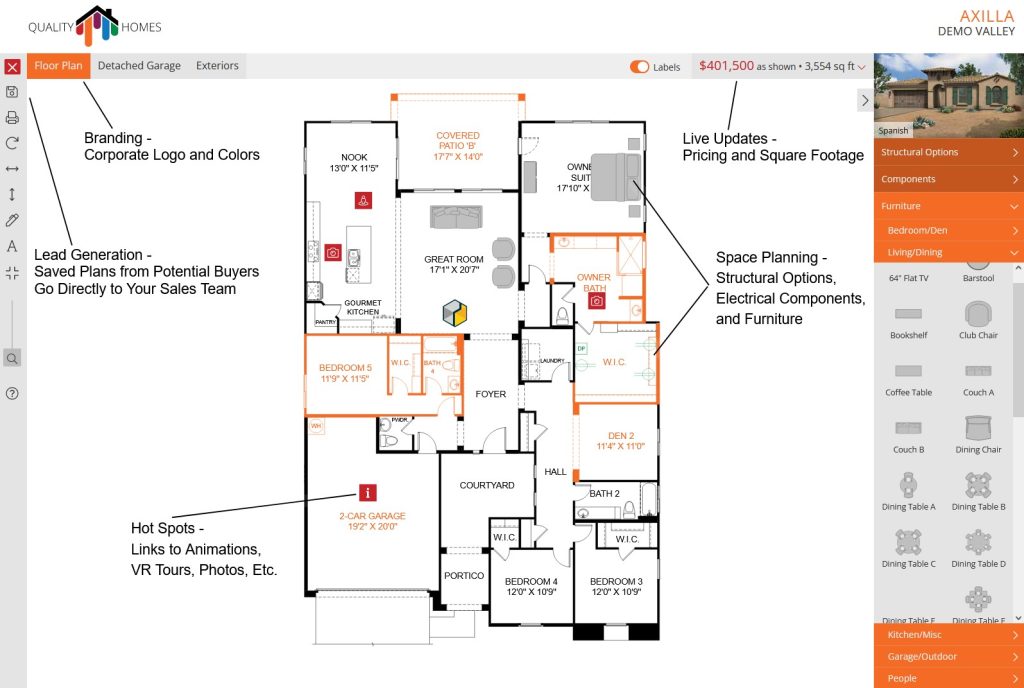
Interactive Floor Plan labeled with many of the pros for both builder and buyer

For builders, offering interactive floor plans isn’t just a nice-to-have; it’s a must. Buyers are more likely to commit when they feel confident in their choices. And nothing boosts confidence like being able to see, tweak, and explore your home before it even exists. Since the first IFP was created decades ago, Outhouse.net is leading the charge, helping builders provide these tools that make buyers swoon.

Conclusion: The Homebuying Hero We Deserve

Interactive floor plans aren’t just about convenience—they’re about transforming the homebuying journey into something exciting and stress-free. They bring clarity to the chaos and turn dream homes into tangible realities. And hey, if you’re lucky, they might just save you from buying a house with a kitchen island that’s one cupboard short of perfect.

Thanks to interactive floor plans, I found my dream home and avoided a layout disaster. Now I’m just wondering if they can help with furniture shopping, too.”—a relieved new homeowner and soon-to-be dedicated IKEA customer.

Head Shot of Outhouse Partner Stuart Platt

Stuart Platt, Managing Partner at Outhouse LLC restructured his 25+ year company to an Office Optional (OffOp) business model in 2018. Stuart’s version of the OffOp model enabled the company of nearly 40 employees to downsize its physical office from 14k sf to 6k sf. Based in Phoenix, local employees desiring to work in the office for a few days, weeks or months can reserve any open desk whenever they want. The remaining employees work from home, fulltime across 10 different states and counting. Schedule time to talk with Stuart at IBS by emailing him at [email protected].

Want to work smarter, not harder? The Outhouse/Blue Gypsy Coffee Station in Sales Central has just what you need:
• Coffee and snacks to improve hustle
• Relaxation to improve recall
• A chance to schedule time with your favorite Home Builder Digital Assets Expert, Kevin Weitzel, here :
https://calendly.com/kevin-weitzel/sales-central-meeting

Navigating Labor and Supply Chain Issues in Home Building

Jim Sorgatz · 01/10/2025 ·

Challenges Faced by an Aging Construction Worker Due to Delayed Retirement Age and Physical Strain. Concept Retirement Age, Physical Strain, Aging Workers, Construction Challenges, Delayed Retirement generated using AI by Anastasiia on Adobe Stock
Aging Construction Worker Image Generated by AI for Adobe Stock

The home building industry is facing some rough seas. Labor shortages and supply chain disruptions are rocking the boat, messing with project timelines and profits. The industry lost a ton of construction jobs during the pandemic – over a million, in fact. Things have picked up, but the homebuilding industry was still short almost half a million workers at the end of 2023. And it’s not just finding people; getting materials is a headache too. Construction costs have jumped by almost 40% since 2020, and supplies take forever to show up on site. It used to take under 7 months to build a typical house, but now it’s over 8 – all thanks to these problems.  

This isn’t just a temporary storm; it’s a whole new weather pattern for home builders. Builders might want to adjust their sails if they want to stay afloat. In this post, we’ll dive into what’s causing these issues, how they’re affecting the industry, and what can be done about it. Plus, we’ll look at how Outhouse can help builders work smarter, not harder.

Where Have All the Workers Gone?

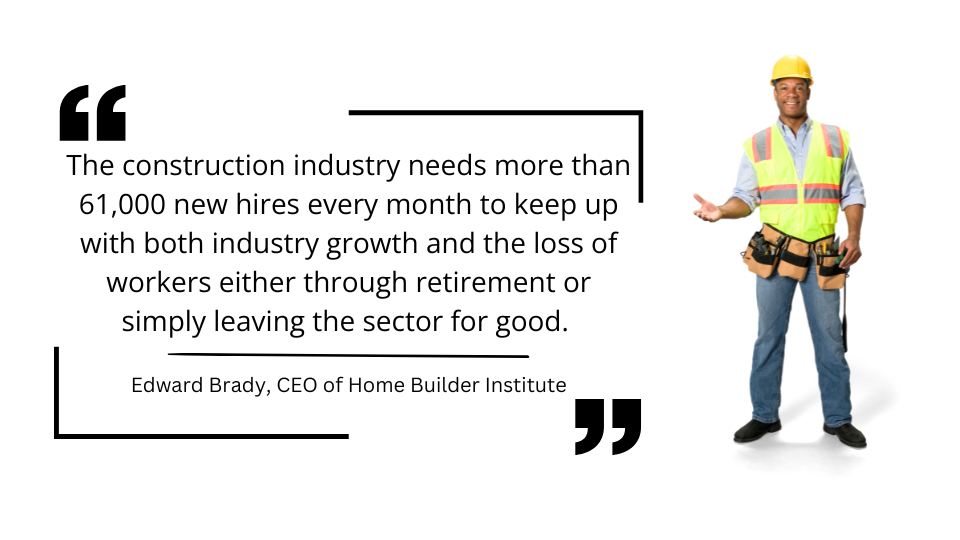
The labor shortage is a big problem with deep roots. One reason is the “silver tsunami” – experienced workers are retiring, and not enough young folks are stepping up to take their place. For every five retirees, the home building industry only gets about two new workers. That gap is getting wider and wider, leaving home building high and dry, especially for skilled trades. Across the U.S., the construction industry has about 8.3 million construction workers, with 3.4 million in home building, but it’s not enough. A whopping 65% of builders can’t find enough finish carpenters. This drives up labor costs and throws off schedules. To put it in perspective, the industry needed over half a million extra workers in 2024 just to keep up. This is even worse than the shortage during the housing boom back in the mid-2000s, even though fewer homes are being built now. Something has to give!  

Image courtesy of CanvaPro

So, why aren’t young people interested in construction?

  • College Craze: Many young people think a college degree is the only ticket to success, so they’re not going to trade schools.
  • Tough Job: Construction can be tough on the body and sometimes dangerous, which doesn’t appeal to everyone.
  • Competition: Other industries like manufacturing are also scrambling for workers, so everyone isl fighting over the same talent pool.

Supply Chain Snags

The pandemic really showed the world how fragile our supply chains are. Closed borders, factories shutting down, and transportation issues created a real mess, making it hard to get materials and driving up prices. It didn’t help that everyone started panic-buying, which made things even worse .  

Lumber prices went through the roof. Appliances, windows, and doors were like gold dust. Projects got delayed, and costs went up all around.  

Even though the pandemic is mostly behind us, the supply chain is still tangled. The war in Ukraine, high energy costs, and ongoing shipping problems are keeping things unpredictable. Some companies are turning to tech to help, using things like “control towers” to track materials and adjust to changes quickly.  

close up architect showing new house project with tablet, empty land plot background generated by AI for Adobe Stock
Tablet computer showing new build generated by AI for Adobe Stock

Strategies for Success

Builders should consider being proactive to navigate these challenges. Here are some strategies that can help:

Finding and Keeping Skilled Workers

  • Invest in the Future: Builders can create apprenticeship programs and on-the-job training to bring in new talent and keep our current workers sharp. Some industry groups like the Home Builders Institute (HBI) and Lowe’s Foundation are putting money into training programs to get more people into the trades. Programs like The House That She Built work to educate young people about the opportunities available in the building industry. 
  • Cast a Wider Net: Look beyond the usual places to find workers. Reach out to women, veterans, and people who were formerly incarcerated. Partnering with community groups and schools can help us connect with potential employees.  
  • Show Appreciation: To keep good workers, consider offering competitive pay, offer great benefits, and give them chances to grow. Think health insurance, retirement plans, paid time off, and opportunities for promotions.  
  • Embrace Technology: Technology can help do more with fewer people. This includes things like automation, prefabrication, and digital tools for managing projects . By investing in technology, home builders can make jobs more efficient and appealing.  

Getting Needed Materials

  • Team Up with Suppliers: Strong relationships with suppliers are key to getting needed materials on time. Open communication and working together can help everyone in the supply chain anticipate problems and find solutions.  
  • Don’t Put All Your Eggs in One Basket: Have backup plans. Find new suppliers and consider using different materials if current suppliers run into shortages or hike up prices.  
  • Plan Ahead: Ordering materials in advance and keeping enough on hand can help avoid delays and price swings.  

Working Smarter, Not Harder

  • Simplify Choices: One way to ease the strain on the supply chain is to offer fewer product choices, sticking with materials that are readily available .  
  • Package Deals: Offering pre-selected material packages can make things easier for everyone and ensure that everything works together.  
  • Order Early: For important things like windows ordering them six months ahead of time and storing them can prevent delays. This takes some planning and space, but it can be worth it.  
  • Speak Up: Advocate for policies that can help fix supply chain problems. This includes supporting efforts to increase production of things like electrical transformers.  

How Outhouse Can Help

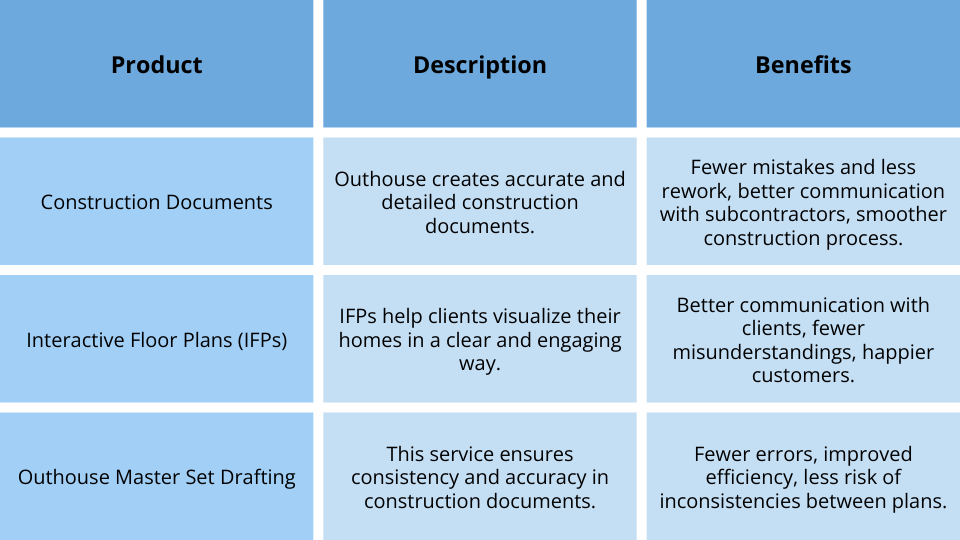
Outhouse.net has some great tools that can help home builders work more efficiently and deal with labor and supply chain issues. By outsourcing your drafting to Outhouse, you can save money and get top-notch expertise .  

Here’s a quick look at what we offer:

Here’s how these tools can help:

  • Less Rework: Accurate plans mean fewer errors and less time and money wasted on fixing mistakes.
  • Clearer Communication: IFPs and other visual tools help everyone understand the plan, preventing confusion and delays.
  • Smoother Operations: Outhouse products help streamline the design and construction process, making things more efficient.

Riding the Wave

The labor shortage and supply chain disruptions are tough challenges, but home builders can overcome them. By investing in the workforce, building strong relationships with suppliers, using technology wisely, and taking advantage of tools like those offered by Outhouse, home builders can weather this storm and continue building quality homes efficiently and profitably.

Nurturing Emotional Motivators in Homebuyer Engagement

Stuart Platt · 10/21/2024 ·

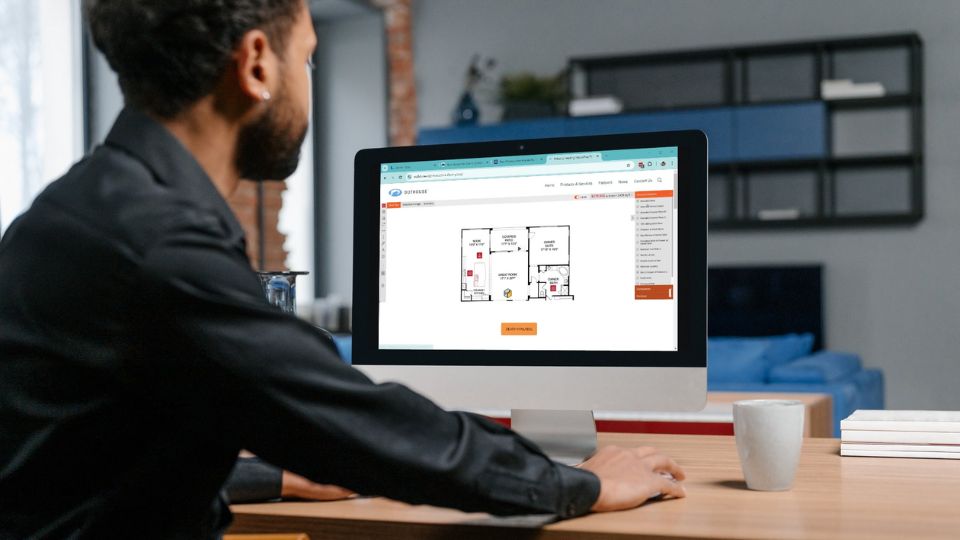
Man looking at interactive floor plan with multiple homebuilder browsers open

Human emotions are a powerful force, especially when it comes to purchasing a home. While homebuyers may believe their decisions are primarily driven by logic, the truth is, how they feel plays a significant—often subconscious—role. And in today’s digital-first world, that emotional connection begins long before the first in-person meeting; it starts online, the moment they visit your website.

Production home builders across the country offer similar baseline information on their websites—square footage, pricing, number of bedrooms, garage options. These metrics are essential, but they don’t differentiate you from competitors. To stand out in a crowded marketplace, your website must engage potential buyers on an emotional level. The builders who succeed will be those that move beyond data points and create an experience that resonates deeply with the emotions that drive purchasing decisions.

Breaking Through the Research-Only Mindset

Every homebuyer begins their journey in research mode, focused on gathering data to compare builders. They have a checklist—square footage, budget, number of rooms—and they visit one builder website after another, reviewing their options. The challenge for your marketing team is to disrupt that research-driven mindset and inspire potential buyers to linger, explore, and imagine themselves living in one of your homes.

This shift happens when your website transcends utility and starts tapping into the emotional motivators that drive decisions. Features like interactive floor plans (IFPs), 3D visualizations, and space planning tools can evoke creativity and excitement, encouraging users to move beyond simple data collection. The longer they stay engaged, the more likely they are to envision their future in one of your homes—and ultimately, to contact you.

The Power of Emotional Motivators

Emotional motivators are the psychological triggers that influence buyer behavior. According to Harvard Business Review, over 300 emotional motivators impact purchasing decisions, from choosing a brand of gum to selecting a home. For the homebuilding industry, the following five motivators are critical in shifting homebuyers from a research mindset to one of creativity and emotional investment:

  • Freedom: Buyers want to feel empowered. Websites that restrict access to information—whether through mandatory registration or withholding key details—stifle this sense of freedom. Open access to pricing, floor plan options, and even premium lot fees makes buyers feel in control. When buyers can freely explore, they are more likely to create emotional connections.

Freedom encourages creativity… Creativity encourages fantasy…
Fantasy encourages emotions… and emotions encourage purchases”.

  • Excitement: Excitement heightens emotions and accelerates decision-making. Tools like virtual walkthroughs and interactive site plans allow buyers to visualize their future, creating an emotional response that drives action. By fostering excitement early in the process—before they even speak with a salesperson—you increase the likelihood of a conversion.
  • Ownership: Empowering buyers to customize their future home—choosing finishes, adjusting floor plans, selecting options—instills a sense of ownership. This emotional attachment strengthens their commitment and increases their willingness to move forward with a purchase.
  • Security: Homebuyers are naturally anxious. They want to know the details: costs, layouts, school districts, and lot availability. The fewer questions a buyer has to ask, the more secure they feel. Your website should anticipate and answer these questions, reducing uncertainty and building trust.
  • Confidence: Confidence is the culmination of effectively nurturing all the previous motivators. When a homebuyer feels secure, excited, and in control, their confidence in both the decision and the builder solidifies. A website that fosters this confidence will convert visitors into buyers before they’ve even stepped foot in a model home.

Create an experience that inspires people to believe, “I CAN DO IT”
…and they will.

Interactive Floor Plans: The Cornerstone of Emotional Engagement

Of all the tools available to home builders, interactive floor plans (IFPs) are the most powerful for engaging emotional motivators across all demographics. While other features like virtual tours and 3D renderings are valuable, IFPs provide a unique opportunity for buyers to personalize their future home, creating a sense of freedom, ownership, and security—all in one experience.

However, not all IFPs are created equal. To truly leverage their potential, your IFPs must include:

  1. Accessibility on All Devices: Buyers should be able to explore floor plans on their phone, tablet, or desktop, seamlessly. If the experience is clunky or limited to certain devices, you risk losing valuable engagement.
  2. Dynamic Pricing: The best IFPs show live pricing that adjusts based on selected options and upgrades. This transparency enhances feelings of freedom and security, as buyers can immediately understand how their choices impact the final price.
  3. Advanced Space Planning: An IFP should allow buyers to visualize their own furniture and fixtures in the space, giving them the freedom to design their home as they see fit. The more detailed and customizable this feature is, the stronger the sense of ownership and emotional connection. The best space planners will even have a library of electrical components (lights, outlets, security cameras, etc.).
  4. Lead Generation Integration: Buyers who invest time customizing their dream home are prequalified leads. The IFP should seamlessly collect contact information and feed it into your CRM, ensuring your sales team can follow up with engaged, motivated buyers. If you do not utilize CRM, make sure the IFP platform has an integrated lead management system.

The right Interactive Floor Plans will nurture all Emotional Motivators.

Conclusion

In today’s competitive homebuilding market, it’s not enough to simply meet the needs of your buyers—you have to connect with them on an emotional level. By harnessing the power of emotional motivators and incorporating the right digital tools into your website, you’ll not only engage potential buyers, but inspire them to envision a future in one of your homes. After all, when you create an online experience that fosters freedom, excitement, ownership, security, and confidence, the decision to choose you becomes

Stuart Platt

Stuart Platt is Managing Partner at Outhouse LLC, an industry leader dedicated to providing an extensive and integrated menu of products and services to production home builders across the world. These services include but are not limited to Architectural Drafting, 3D Renderings, Virtual Tours, Animations, Interactive Floor Plans, Interactive Site Plans, Interactive Sales Office Displays, Interior and Exterior Visualizers, Graphic Design, Commercial Printing, and more. Outhouse is the ONLY company in the nation providing all of these services in house.

Join Stuart Platt at the Home Builder Digital Marketing Summit this October 23-24th! He’ll be diving deep into the strategies discussed in this blog, sharing insights on how to create an online experience that resonates with potential buyers on an emotional level. Don’t miss this opportunity to connect with Stuart and other industry leaders to elevate your digital marketing game.

Join us back here at OutThink in November for Part 3 of Bill Gelbaugh’s Unlocking Outhouse’s Potential with OKRs .

The Power of Consistency: What Won’t Change in the Next Decade?

Jim Sorgatz · 06/17/2024 · Leave a Comment

In an era marked by rapid technological advancements and constant change, it’s easy to get caught up in predicting the future. Jeff Bezos once said, “I very frequently get the question: ‘What’s going to change in the next 10 years?’… I almost never get the question: ‘What’s not going to change in the next 10 years?’ And I submit to you that that second question is the more important of the two.” This insight highlights the critical importance of focusing on the constants that underpin lasting success.

One need look no further than to Katerra, the now defunct technology-driven off-site construction company founded in 2015.  Katerra seemingly held so much promise for streamlining the construction process.  Its demise ultimately came down to not-so-great management, but another contributor was lack of enthusiasm by the home building industry to make a major shift in construction methods.  Who knows, with AI coming into play we may see change in the next 10 years, but that won’t happen unless home builders and homebuyers begin to look at housing in a new light.  A house is one of the few things that is still entirely handmade here in America, and therefore a career choice and point of pride for many.

Image by Katerra Group courtesy of LinkedIn

The Foundation of Enduring Success

Success isn’t just about anticipating the next big trend or technological breakthrough; it’s equally about understanding and leveraging the fundamental principles that remain stable over time. These enduring elements form the bedrock of resilient and adaptable strategies.

Institutional Knowledge: The Unchanging Asset

One such constant is the value of institutional knowledge. This encompasses the collective expertise, experiences, and insights accumulated within an organization over time. Institutional knowledge is a critical asset that, when effectively harnessed, can guide decision-making, foster innovation, and provide a competitive edge.

Like any other industry, decision makers in home building often change roles, move to another company, or retire at some point.  New people coming onboard often have “new” ideas.  Sometimes the ideas are truly innovative, but often they have already been explored.  Whether it be in new home marketing, construction, or sales, this is where institutional knowledge is beneficial.  Long term employees and adequate documentation prevent companies from spinning their wheels, keeping them on the road to progress.

Unlike fleeting trends, institutional knowledge represents the enduring wisdom that an organization has built. It includes documented processes, historical data, and the nuanced understanding of market dynamics that only comes with experience. Preserving and utilizing this knowledge ensures continuity and stability, even as external conditions change.

Resilience: The Human Element

Another unchanging element is the human capacity for resilience. As Bezos emphasized, the ability to endure and adapt is crucial. This resilience is not just about weathering storms but thriving amid them. It involves cultivating a mindset that embraces challenges, learns from failures, and remains flexible in the face of uncertainty.

Will anyone ever forget 2020?  Builders moved their offices home, stopped construction for a short while, retooled their product, then charged ahead constructing new homes as the housing market boomed!  The ability of home builders to quickly pivot in 2020, and subsequent years as housing needs rapidly change, is a shining example of resilience.    

Building a resilient organization means fostering a culture where employees are encouraged to innovate, take risks, and learn continuously. This adaptability allows an organization to pivot and respond effectively to new opportunities and threats, ensuring long-term success.

The Intersection of Technology and Human Insight

While technology continues to evolve, the intersection of advanced tools with human insight remains a constant driver of innovation. Technologies like artificial intelligence and machine learning can process vast amounts of data and generate actionable insights. However, the interpretation and application of these insights still rely heavily on human expertise and intuition.

Check out this article from Denim Marketing about “Buy Now” buttons in home building!

With the rapid advance of technologies, builders have been exploring the potential of selling homes online with the click of a button.  Unlike most other products, there are many hurdles to clear when it comes to buying/selling a home.  Securing funding, credit checks, title searches, home inspections, appraisals, additional credit checks, construction and loan delays, pages of documents to sign, and last-minute snafus all come into play making human expertise essential – at least for the foreseeable future.   

Organizations that successfully integrate technological advancements with institutional knowledge and human resilience create a powerful synergy. This combination enables them to navigate complexities, anticipate changes, and maintain a strategic advantage.

Practical Strategies for Leveraging Constants

1. Document and Share Knowledge:

   – Create robust systems for documenting processes, best practices, and lessons learned.

   – Encourage knowledge sharing across departments to foster a collaborative environment.

2. Invest in Employee Development:

   – Provide continuous learning opportunities to help employees adapt to new technologies and methodologies.

   – Cultivate a growth mindset that values resilience and innovation.

3. Balance Technology with Human Insight:

   – Leverage AI and data analytics to enhance decision-making processes.

   – Ensure that human expertise guides the interpretation and application of technological insights.

4. Foster a Culture of Adaptability:

   – Encourage experimentation and risk-taking within a supportive framework.

   – Recognize and reward resilience and innovative thinking.

The Future of Stability

As we look to the next decade, the challenge lies not just in predicting change but in identifying and leveraging the elements that will remain constant. By focusing on institutional knowledge, human resilience, and the balance between technology and human insight, organizations can build a foundation for enduring success.

While the specifics of the future may be uncertain, the principles that drive success remain steadfast. By understanding and harnessing these constants, organizations can navigate the complexities of change and emerge stronger, more resilient, and better prepared for whatever the future holds.

Written by Jim Sorgatz and Tabitha Warren

Growing New Home Sales By Casting the Widest Net Possible

Jim Sorgatz · 05/12/2024 · Leave a Comment

Shortly after moving to Blaine Washington, a small city sitting right on the United States and Canadian border, my spouse suggested we head to the Night Market located in Richmond, a suburb of Vancouver. I happily went along knowing nothing about this event other than it ran from 7:00 PM to Midnight, and and there would be food vendors. I was hoping the food might be better than the the typical state fair, and I wondered if the market would look a bit like a renaissance fair with turkey legs and all. When we arrived I saw this!

Night market packed with people between two rows of food booths.
The Richmond Night Market

There are more than 600 food booths here, and 90%+ of them are Asian. A quick search on Google and I learned Richmond is home to 230,000 people, three quarters of whom are Asian Canadian. The food was amazing, and I’m ready to fight the crowds again this summer. Having never been to Asia, I finally had a taste of the infamous night markets that friends tell me offer some of the tastiest delights.

In the stretch of the Pacific Northwest between Vancouver and Seattle, there are significant populations of immigrants from around the globe. China, Japan, Korea, India, Mexico, Europe, Ukraine, Russia, and many more. In my neighborhood in Blaine which sits right on the border, we have residents from both Canada and the U.S. as many families lives take place in both. This is often due to marriage, jobs, or immigration status. Peace Arch state park which is an open space between the two countries was one of the only places along the border where families could meet during the pandemic. I love taking the pups there, and jokingly warn them not to say “Eh” when we are on the Canadian side.

What does all this have to do with home building? North America is a melting pot of immigrants and cultures. Unless you are Native American, most of our families traveled from other countries to get here. And as more immigrants arrive, put down roots, and start their own families, home builders may need to look a little differently at the design, sales, and marketing of new homes. Just as men and women, families, singles, and various generations seek out different amenities in new homes and neighborhoods, people from various cultures often have unique wants and needs as well. North America also has home builders founded by immigrants including Outhouse clients Couto Homes in Texas where the Couto family hails from Portugal, Trico Homes in Alberta founded by Wayne Chu who came to Canada from Hong Kong, and K. Hovnanian Homes whose founder is from Iraq. There are also builders owned by foreign entities like Woodside Homes (Sekisui House), and Stanley Martin Homes (Daiwa House USA).

What it all boils down to is, like the diversity within our industry, the pool of homebuyers is vast. Casting the widest net possible to reach buyers is essential for sales. And that means thinking outside the proverbial box, and diversifying our sales and marketing strategies.

To continue this conversation, On Tuesday, May 21, 2024 at 11:00 AM PST, Outhouse invites you to join us for a webinar featuring Magda Esola from Brookline Homes, Ingrid Prince from Shared Drive, and Safiyyah Siddiqui from DHS Realty. Coming from varied backgrounds they will share their thoughts and experiences on selling homes with diverse buying groups. If you miss the webinar, you will find the program posted on our YouTube Channel following. REGISTER TODAY!

Why Interactive Floor Plans are a Must

Stuart Platt · 11/06/2023 · Leave a Comment

From “It’s Neat” to “It’s Needed,” Why IFPs are a Must

Remember in the spring of 2020, when literally no one was out looking at new homes, and home builders finally began going all-in on digital marketing? The big question once the world opened back up was whether or not websites would retain the same level of prominence. That question has been answered, and it is an emphatic “Yes!” Even homebuyers who visit model homes typically conduct a majority of their research online before they ever drive to one of your communities.

What was once a rare luxury on a builders’ website, Interactive Floor Plans (IFP’s) have become an industry expectation. Builders who thought IFP’s were more novelty than a functional sales tool can no longer argue the overwhelming evidence that IFP’s engage buyers, resulting in: 

  • Increased time on their websites. 
  • Increased qualified homebuyer leads. 
  • Increased number of options sold. 
  • Creating positive emotional connections to your plans.  
  • Converting leads to active prospects in a faster timeline.   
Analytics help builders see who their potential buyers are, where they are coming from, the most popular options, and a whole lot more.

Builders also find IFP’s equally as valuable to their sales team as they are to the homebuyer. Why? One reason is that comprehensive IFP’s can answer 80% of the questions your sales staff needs to field. The buyer experience is tremendously better when the simple questions are already answered, allowing the sales team to focus on selling instead of trying to help figure out how furniture will work, how options change square footage and price, “…and why do I lose the casita option when I choose the expanded garage?” 

Picking the right IFP vendor the first time is of the greatest importance.

Not all IFP’s are created equal 

When choosing a vendor to build and host what is arguably your most important online sales tool, in addition to the basics, make sure the platform you select has ALL the following advanced features: 

  • Branding – First and foremost, ensure your IFP’s are skinned and colored to match your website, logo, and corporate colors.
  • Lead Generation – The ability to save a custom plan that not only tracks these leads, but also pushes them to your CRM. 
  • Space-Planning – A detailed furniture library with scalable items for every room, including the garage and outdoor living areas. 
  • Live Updates – Dynamic pricing and square footage so as buyers add options the price and square footage automatically reflect that. 
  • Hot Spots – Clickable icons within your plan allowing buyers to open renderings, photos, videos, virtual reality and any other eye candy to keep them engaged. 
  • Device Agnostic – Regardless of the brand of computer, laptop, tablet or phone, your IFP’s work on ALL of them. 
Today’s homebuyers expect advanced features when designing their homes and planning furniture layouts with an Interactive Floor Plan.

Picking the right IFP vendor from the start is of the greatest importance. Select a company that knows what they are doing because this is not a process you want to go through a second or third time. If you find yourself dissatisfied with your IFP’s (or vendor) after creating them, they can’t simply be transferred to another vendor. You must pay to have them rebuilt from scratch again.

20-years ago Outhouse was one of the first to offer IFP’s to home builders. Our platform continues to deliver the most mature, dependable, feature-rich, engaging user experience in the industry. Our IFPs are designed to incorporate your renderings, virtual tours, visualizers and more, making it easy for homebuyers to engage with all of your digital tools. Click here for an example. In 2023, we also gave our administrative backend a massive upgrade, so your interactive floor plans, interactive site plans, and interactive kiosks are now housed in the sleek, intuitive, new Outhouse Interactive Control Center. Contact us today to learn more

About the Author: Stuart Platt is Managing Partner at Outhouse LLC, an industry leader dedicated to providing an extensive and integrated menu of products and services to production home builders across the world. These services include but are not limited to Architectural Drafting, 3D Renderings, Virtual Tours, Animations, Interactive Floor Plans, Interactive Site Plans, Interactive Sales Office Displays, Interior and Exterior Visualizers, Graphic Design, Commercial Printing, and more. Outhouse is the ONLY company in the nation providing all of these services in house.

Join Stuart Platt at the Home Builder Digital Marketing Summit this October 23-24th! He’ll be diving deep into the strategies discussed in this blog, sharing insights on how to create an online experience that resonates with potential buyers on an emotional level. Don’t miss this opportunity to connect with Stuart and other industry leaders to elevate your digital marketing game.

  • Page 1
  • Page 2
  • Go to Next Page »

Ready to get started, want more info?

Contact Us
  • Facebook
  • Instagram
  • LinkedIn
  • YouTube

Outhouse

11048 N 23rd Ave #103
Phoenix, AZ 85029

602-371-4394

© 2026 All rights reserved