• Skip to primary navigation
  • Skip to main content
Outhouse logo

Outhouse

The Outsource Hub for Home Builders

  • Home
  • Products & Services
    • Architectural/CAD
    • Rendering
    • Virtual Reality
    • Interactive Floor Plans
    • Interactive Site Maps
    • Interactive Kiosks
    • Print Marketing
    • Sales Office Displays
  • Partners
  • News
    • Events
    • Blog
    • Podcast
  • About Us
  • Contact Us
  • Show Search
Hide Search

DNI

Let’s Get Moving! Election Results, the Dow is up, and What’s Next for Production Homebuilding?

Bill Gelbaugh · 11/10/2024 ·

Introduction

Hello! I’m Bill Gelbaugh, one of the Partners here at Outhouse, LLC. This morning, as I wrapped up our Sales and Finance meetings, one message came through loud and clear: It’s time to move forward! The election is behind us, the Dow is up, and there’s a sense of renewed energy in the air. Now that we have more political clarity, the focus is shifting toward what’s next—and that’s especially important for us in the production homebuilding market.

With the recent boost in market optimism, now is a great time to look at how the industry can leverage this momentum. In this post, I’ll dive into what we can expect for the production homebuilding sector in the coming months, how post-election shifts might impact our industry, and why we believe now is the time to act decisively. So, let’s dig in and see where the opportunities lie.

A symbolic growth graph against a breathtaking sunset, representing economic success and growth in a beautiful natural setting.
Image Courtesy of Adobe Stock

Post-Election Economic Climate and Market Optimism

Historically, election outcomes tend to influence market sentiment—and the initial post-election reactions often set the tone for the months ahead. With the recent election behind us, we’re already seeing an upward tick in the Dow and other major indices. This surge reflects a sense of renewed investor confidence, as markets generally react favorably to political stability and clarity. For those of us in homebuilding, this optimism in the financial markets is a promising indicator that demand and capital may flow more steadily in our direction.

Beyond market indices, the now decided political environment can bring some welcomed consistency to economic policies impacting homebuilding, from mortgage rates to tax incentives for residential construction. With clear policy paths, businesses are more likely to invest and make bold moves, something that could directly benefit production homebuilders and our clients. This is a window of opportunity to embrace a proactive approach and align ourselves with the positive momentum shaping the market.
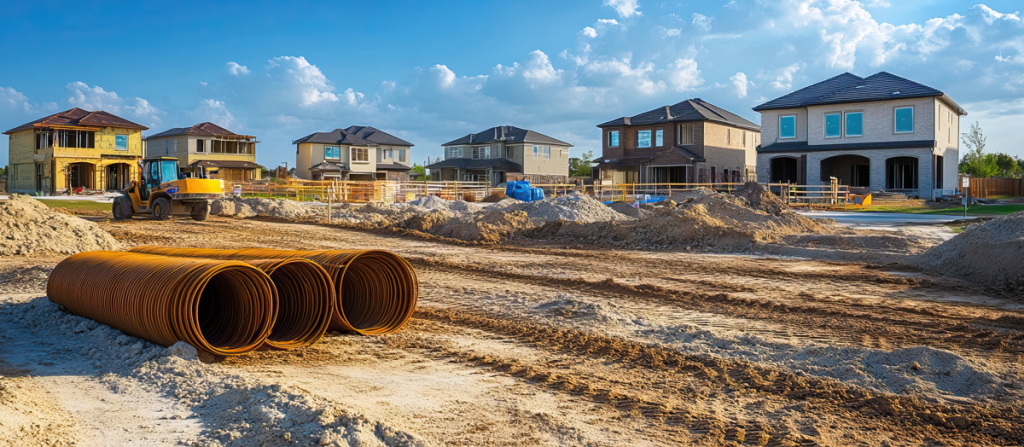
New Homes Under Construction
Image Courtesy of Adobe Stock

Implications for the Production Homebuilding Market

With the election wrapped up and market signals leaning positive, the production homebuilding market has an opportunity to gain ground. Here are a few key areas where the recent changes and optimism may impact our sector directly:

  1. Interest Rates and Financing
    A critical factor for both builders and buyers is access to financing, and with the market’s optimism, there may be greater stability in interest rates moving forward. If the Federal Reserve maintains a balanced approach, mortgage rates could stay at manageable levels, encouraging prospective buyers to make their move. For builders, favorable interest rates can mean better loan conditions and a greater willingness among lenders to fund new projects—particularly in areas experiencing housing shortages.
  2. Housing Demand and Policy Initiatives
    The election outcome could influence policies that either directly or indirectly affect the homebuilding industry. For instance, any new measures to support affordable housing initiatives or incentives for new construction could stimulate demand and support the overall growth of the sector. With policy stability, builders can better anticipate regulatory requirements and plan their projects accordingly, which is key to keeping up with buyer demand.
  3. Investor Confidence and Capital Availability
    As the Dow rallies, investors tend to gain confidence in placing their funds in high-demand sectors, and housing continues to be one of them. Real estate often sees capital flow when the market trends upward, meaning developers might find more opportunities to attract investors or partners. With growing interest from both individual and institutional investors, the production homebuilding sector is positioned to secure the capital needed to meet demand and scale up production.
  4. Consumer Confidence Through Enhanced Buyer Experiences
    In today’s market, homebuyers seek a visually immersive, engaging buying experience. Outhouse, LLC meets this need by offering Brilliance Award-winning, cutting-edge interactive floor plans and advanced product visualization tools that allow buyers to envision their future homes in vivid detail. With customizable interactive floor plans, buyers can explore design options, experiment with layouts, and personalize features, fostering a hands-on, immersive experience that builds excitement and confidence in their investment.
    Beyond digital solutions, professional printing and display services ensure impactful, high-quality visual materials for model homes, sales centers, and signage, enhancing every stage of the buying journey. By integrating Outhouse’s innovative visualization and display solutions, builders can elevate brand presence, attract discerning buyers, and deliver a seamless, tech-forward experience from first look to final sale.
  5. Integrating Technology in Construction for Faster, Cost-Effective Builds
    As the housing market gains momentum, now is an ideal time for builders to invest in innovative construction technologies. Advanced methods like modular construction and 3D-printed components can help address labor shortages, accelerate project timelines, and manage costs—all key factors for meeting today’s growing housing demand. To scale efficiently, builders need to integrate cutting-edge technology into their processes, making tech-driven project marketing and sales essential.
    Outhouse, LLC supports builders with high-quality drafting, rendering, and visualization services that offer precise, visually compelling representations of projects. These detailed renderings enable builders to present homes in the best light, capturing buyer interest and building trust.
    Overall, the production homebuilding industry is positioned to thrive in this period of optimism and opportunity. With clearer policy direction and market momentum post-election, builders can confidently move forward to meet strong housing demands nationwide.

Close-up of a clock face with 'NOW OR NEVER' slogan emphasizing urgency and the importance of timely action in a high-stakes moment
Image Courtesy of Adobe Stock

Conclusion: Let’s Get Moving—The Time is Now!

With the election behind us and positive market signals on the rise, there’s no better time for production homebuilders to take decisive steps forward. The stability we’re seeing now creates a window of opportunity to expand, innovate, and meet the growing demand in residential construction. By capitalizing on market optimism and embracing the right tools, builders can stay competitive and create lasting value for clients.

At Outhouse, LLC, we’re here to support this vision. Our industry-leading drafting and rendering services, award-winning interactive floor plans, product visualizations, and top-notch printing and displays make it easy for builders to deliver a polished, immersive buyer experience. With our solutions, you can showcase projects in their best light, connect with clients effectively, and set a high standard for quality and professionalism.

So, let’s get moving! The time is ripe to elevate your home building projects, and we’re ready to partner with you every step of the way. Reach out to us today to see how our technology and services can help you maximize this moment—and build a brighter future for your business.

Bill Gelbaugh

Bill Gelbaugh is one of our Senior Partners here at Outhouse and champions our OKR efforts.

Optimizing the Design-Market-Sell Continuum: Tips for Home Builders – Part 2

Jim Sorgatz · 03/16/2024 · Leave a Comment

In the dynamic world of homebuilding, a term that often echoes through the corridors of innovation is “value engineering.” Investopedia defines it as a strategic method aimed at delivering essential project functions at the minimum possible cost. This approach champions swapping out materials and methods for more cost-effective alternatives while maintaining the integrity of functionality—and, we’d argue, quality, too.

At Outhouse, this principle is at the heart of our Design-Market-Sell methodology. Our suite of services—from drafting to visual aids and digital innovations to print solutions—caters to builders across the spectrum. Yet production home builders crafting anywhere from 30 to 3,000 homes annually, stand to gain the most from our holistic approach. By integrating our seasoned Computer-Aided Design (CAD) expertise, builders can forego the hefty expense of maintaining an in-house drafting team. As our CAD wizards work their magic, our graphics and rendering teams get cracking on interactive floor plans, site maps, virtual tours, and much more, paving the way for a seamless transition to print media and sales office displays. This cohesive strategy not only accelerates your market entry but does so with significant cost efficiency. And therein lies the secret to mastering the Design-Market-Sell continuum.

In the first chapter of this series, we unpacked the foundational tools every builder needs to design, market, and sell new homes. Now, let’s dive into the digital realm that captivates homebuyers and enriches their purchasing journey.

Crafting Emotional Connections: The Power of Interactive Floor Plans and Site Maps

Outhouse has been at the forefront of Interactive Floor Plans (IFPs) and Interactive Site Maps (ISMs) for over two decades, boasting a portfolio that’s as robust as it is innovative. Optimized for mobile use, these tools work like a dream on any device, aligning perfectly with the preferences of over 70% of today’s homebuyers.

Headshot of Outhouse VP of National Accounts Erin Kearney against a wood plank backdrop with the words, "Helpful Tips - Visualizers"
Erin Kearney, VP of National Accounts

Erin Kearney, our VP of National Accounts, emphasizes the importance of understanding buyer needs and adopting a personalized sales narrative. The ability to swiftly capture and analyze consumer preferences sets a builder apart in a market brimming with competition. IFPs and ISMs are more than mere marketing gimmicks; they are bridges to potential buyers’ hearts and minds, allowing them to visualize and tailor their future homes. This emotional engagement is akin to the bond formed during a car’s test drive, transforming a potential purchase of “your house” into “my home.”

Moreover, ISMs offer a comprehensive view of available lots, linking directly to elevations, IFPs, virtual tours, and more, thus streamlining the journey from lot selection to home customization.

Marrying market insights with interactive tools is critical to truly excel in sales. These technologies elevate customer interaction and deepen the emotional bond with their future homes, positioning builders as pioneers in their field.

Sketch of Marilyn Monroe against a wood plank backdrop with the words, "Helpful Tips - Interactive"

Maximizing Engagement with IFPs and ISMs

Success with IFPs and ISMs hinges on precise construction documents and strategic website placement. Marcy Smith, our incredibly talented but media-averse Graphic Department Production Manager, shares invaluable tips for optimizing these tools:

  • Ensure clarity and accuracy in your CAD files before engaging with a digital tools provider. Autodesk offers a free ‘DWG TrueView’ for this purpose.
  • Incorporate a PDF version of your CAD files for ease of reference.
  • For IFP projects, detailed CAD files minimize back-and-forth, saving time and resources.
  • Clearly delineate desired lots for ISMs, especially in master-planned communities, to avoid unnecessary costs.
  • The placement of these tools on the website is crucial; they should be prominently displayed for easy access by potential buyers, enhancing engagement and site retention.
Headshot of Outhouse partner Stuart Platt against a wood plank backdrop with the words, "Helpful Tips - Visualizers"
Outhouse partner Stuart Platt

Virtual Reality: The Frontier of Digital Engagement

Virtual Reality (VR) stands as the latest marvel in digital homebuilding tools, offering virtual tours, animations, and visualizers that transport the model home experience to buyers worldwide. Stuart Platt, an Outhouse partner, advises:

  • For interior VR projects, consider selecting from Outhouse’s extensive library of interior designs to save on costs, unless custom designs are necessary.
  • Utilize color and material visualizers to give buyers a comprehensive view of their customization options, though it’s wise to limit exterior color schemes to maintain community aesthetics.

As a quick VR refresher: Virtual Tours are user-controlled tours – buyers click from room to room. Animations are essentially a video tour. And, Visualizers are customization tools that allow buyers to select options, colors, and finishes whether it be interior cabinets and countertops, or exterior roofing, stone, and siding.

In Summary

The key to optimizing the design-market-sell continuum is to work with a sole provider like Outhouse – the outsource hub for home builders. Whether launching a new community or seeking innovative cost-saving strategies, Outhouse is here to guide you through optimizing your design, market, and sell process. Reach out today to explore how we can transform your homebuilding journey.

Optimizing the Design-Market-Sell Continuum – Tips for Home Builders – Part 1

Jim Sorgatz · 02/25/2024 · Leave a Comment

As the 2024 NAHB International Builders Show gears up to roll out the red carpet this week, it’s the perfect backdrop for a little fireside chat on elevating your home building game. With the industry’s brightest minds converging in one spot, buzzing with the latest trends and innovations, we at Outhouse are seizing the moment to sprinkle some of our own seasoned advice into the mix. Let’s dive into the art of perfecting the design-market-sell trifecta, shall we? 

With so much information, this post is being broken into two parts. In Part 1 we cover CAD, Rendering, and Print Marketing – the essentials every builder must have. These are what we would call the more physical items, the ones used for design review, neighborhood presentations, in your design centers, and for the construction of your homes. In Part 2 we will discuss website tools. Although renderings fall into both categories, our second post focuses on digital tools that are more interactive. 

Part 1: The Essentials – CAD, Rendering, and Print Marketing 

In the realm of home building, there are a few non-negotiables: CAD, rendering, and print marketing. These are the bread and butter, the tools that transform a blueprint dream into a sticks-and-bricks reality.

VP of Operations Darin Keezer with CAD tips
Darin Keezer, VP of Operations

CAD (COMPUTER AIDED DESIGN) 

Imagine having a magic wand that ensures your construction documents are flawless, a foundation as solid as the homes you build. That’s what good construction documents do for you. Here at Outhouse, under the guidance of our VP of Operations, Darin Keezer and his cadre of seasoned pros with over 30 years of experience working exclusively with production home builders, we offer CAD services that are a cut above. Here’s why: 

  • Uniformity for the Field Crew: Our approach ensures that regardless of the designer, the plans maintain a consistent look and feel, making life easier (and error-free) for those on the ground. 
  • You’re the Boss: The files? They’re yours. Whenever you want them, wherever you need them sent, consider it done. 
  • No Nickel-and-Diming: We’re all about transparency. No per-lot-use or other hidden fees, just straightforward billing for the time spent on your plans. 
  • Compatibility is Key: Our 2D plans play well with others, making them a breeze to integrate with additional Outhouse services or other consultants. 

While the CAD magic happens, why not simultaneously kickstart your marketing with some stunning renderings, virtual tours, visualizers, interactive floor plans, interactive site plans, and print collateral? It’s all about multitasking. 

Outhouse partner Stuart Platt

RENDERINGS – A WEBSITE STAPLE

A well-crafted rendering can speak volumes, turning the intangible into something almost touchable. In today’s market, where digital home tours are gaining ground, the allure of a beautifully rendered image remains undiminished. While virtual tours and visualizers are becoming more mainstream, renderings are still the essential source of product visualization. Colored renderings should be a staple for every home builder website. Black/white stick drawings are a huge turnoff. For as little as $195, Outhouse can create a very nice 2D rendering. For a bit more, most builders opt for 3D photorealistic renderings, as they provide a far superior picture of a home. With realistic landscaping and the ability to include special lighting like dusk shots, the renderings are often more appealing than a photo of a newly constructed home, which is frequently on a dirt lot with a couple of “twigs” for trees. Today’s home buyers expect the essential marketing tools, and renderings fall into this category.  Here’s how we make your projects pop: 

  • From Meh to Marvelous: Ditch the bland for the grand with colored renderings that capture the imagination of your buyers. 
  • The Devil’s in the Details: Outhouse partner, Stuart Platt, swears by the golden rule: the more accurate your CAD, the more stunning the rendering. It’s that simple. 
Outhouse Partner Bill Gelbaugh with print media tips
Outhouse partner Bill Gelbaugh

PRINT MARKETING – YOUR PROJECT IN THE SPOTLIGHT 

In an era where digital is king, print marketing retains its crown for creating tangible connections. With an onsite print department dedicated to print media for production home builders, here at Outhouse, LLC, we understand the importance of every stage of production home building printing and the vital steps to making your project a success. This includes on-time delivery to your sales centers. Bill Gelbaugh, our print guru, knows the ins and outs of making your projects shine on paper. Here’s his blueprint for success: 

  • Plan with Precision: Like laying a foundation, choosing the right quantity, size, and type of print material sets the stage for everything that follows. 
  • Choose Wisely: Not all printers are created equal. Opt for one that knows the ins and outs of the home building industry. 
  • Attention to Detail: A single typo can throw a wrench in the works. Proofread like your project depends on it (because it does). 
  • Clear as Day: When it comes to special requests or concerns, communication is key. The right printer will make your vision a reality. 

That is our humble advice to ensure your print media materials turn out just as you envisioned and on budget. Remember, at Outhouse, LLC, we have more than 25 years of experience in specialized homebuilder printing. 

MEET US AT IBS! 

And there you have it, folks. A sneak peek into the alchemy of blending design, marketing, and sales into a seamless continuum. But wait, there’s more! Swing by IBS this week for a cup of joe on us at Sales Central in the West Hall, Room 311. Outhouse and our friends at Blue Gypsy Inc. can’t wait to meet you. 

Stay tuned for Part 2, where we’ll dive into the digital deep end with website tools that make your projects not just seen, but experienced. Until then, happy building! 

Year-End Takeaways for the Home Building Industry

Tabitha Warren · 12/04/2023 · Leave a Comment

As we approach the end of another eventful year in the home building industry, it’s the perfect time to reflect on the key lessons and takeaways that can guide us into a promising future. Despite the challenges and uncertainties, there’s much to learn from the experiences of the past 12 months. Here are some crucial year-end takeaways for the home building industry:

  1. Adaptability Is Key: The year 2023 highlighted the importance of adaptability. Home builders who quickly adjusted their strategies in response to changing market conditions were better positioned for success. Flexibility and the ability to pivot in the face of challenges have become valuable assets.
  2. Digital Dominance Continues: The digital transformation in the home building industry is no longer a trend; it’s a necessity. With homebuyers relying on online research and interactive tools like never before, having a robust online presence, including virtual tours and interactive floor plans, is essential. There is some good news here: the costs of these digital technologies are dropping. This is an excellent opportunity for smaller homebuilders seeking a competitive advantage. Builders who want to stay ahead of the curve in 2024 should consider implementing digital assets they may have believed to be out of reach. Pricing has become much more competitive in recent years. Putting some digital tools in place could mean the difference between staying in the game and being unable to remain competitive.
  3. Supply Chain Management: The global supply chain disruptions served as a reminder of the significance of efficient supply chain management. Home builders should build resilient supply chains to prevent delays and maintain construction timelines. Resilience is essential in every part of the supply chain, from labor to subcontractors to materials and technology. 1
  4. Sustainability Matters: The demand for sustainable and energy-efficient homes is rising. Incorporating green building practices appeals to eco-conscious buyers and helps reduce long-term operating costs. The home building industry is waking up to the importance of green building. Even NAHB and IBS are getting involved by funding a Green Building Scholarship. Please find out more by visiting their website: https://www.nahb.org/advocacy/industry-issues/sustainability-and-green-building/sgb-scholarship-for-ibs
  5. Quality Over Quantity: Prioritizing quality over quantity is becoming the mantra of successful homebuilders. Delivering superior craftsmanship and focusing on customer satisfaction can lead to lasting success in the industry. For an interesting read about improving housing in America, check out what the Joint Center for Housing Studies of Harvard University found about the impact of COVID-19 on our current market. They have some interesting statistics on home repair ($420 billion spent in 2020), DIY vs professional, and the demand for quality housing. https://www.jchs.harvard.edu/improving-americas-housing-2021
  6. Teamwork and Talent: The importance of a skilled and motivated workforce cannot be overstated. Investing in employee training and well-being can improve productivity, retention, and overall company success. Continuing education for your Online Sales Counselors and Marketing team is imperative. The digital landscape is ever changing. Marketers need help to stay current. Summits and conferences can pay 100-fold. Online Sales Counselors are only as good as their sales experience and education. Help them by ensuring they have all the tools in their toolbox.
  7. Customer-Centric Approach: Home builders who put the customer at the center of their operations tend to thrive. Excellent customer service and transparent communication go a long way in building trust and loyalty. More and more builders are discussing that a customer-centric approach might involve having transparent online pricing. Just listen to what Reilly LePage of Logel Homes had to say on The Home Builder Digital Marketing Podcast: https://www.buildermarketingpodcast.com/episodes/190-elevating-the-online-home-buying-process-reilly-lepage Builder Online thought this was such an important topic that they featured the podcast this month on their Builder 100.
  8. Risk Management: With uncertainties in the market, effective risk management strategies are crucial. Planning for potential disruptions and having backup plans can mitigate unexpected challenges. Conducting market analysis before starting a project, having a robust financial reserve, and securing contracts with backup suppliers are just a few ways to mitigate risk.
  9. Local Market Insight: Understanding the unique dynamics of local markets is essential. Tailoring strategies to meet each community’s specific needs and preferences can make a significant difference. Home builders can always hire an independent market research team. If that is outside the budget, local home builders associations, real estate associations, and chambers of commerce often publish market reports, housing data, and economic indicators for specific regions. Additionally, the U.S. Census Bureau, local planning departments, and housing authorities publish data providing demographic information, building permits, and economic data. If all else fails, there are the good old real estate platforms Zillow, Realtor.com, and Redfin to peruse for statistics, pricing trends, and property listings.
  10. Continual Learning: The home building industry is constantly evolving. Those who commit to ongoing learning and staying updated on industry trends and regulations will remain ahead of the competition. Educational events like the National Association of Home Builders International Builders Show (IBS) and The Home Builder Digital Marketing Summit are key. Summits and Conferences help builders keep up with the ever-evolving industry. Monthly learning like that provided in Builder Town Hall by Meredith Communications is also a great way to keep your ear out.

As we bid farewell to this year, let’s carry these valuable takeaways into the future. The home building industry’s resilience and adaptability have been on full display. With the right strategies in place, the opportunities for growth and success in the coming year are boundless. Cheers to a promising and prosperous future in the world of home building!

Tabitha Warren was an Income Tax Accountant for 15+ years.  In the first months of the pandemic, she took a chance and re-careered to freelance in Marketing.  She currently, and very happily, works with video and photo editing, social media marketing, and now blog writing.

  1. https://buildertrend.com/blog/construction-supply-chain/

The Importance of a Digital Marketing Ecosystem: A Lesson from Tesla

Jim Sorgatz · 09/18/2023 · Leave a Comment

 Blue Electric Vehicle charging at Tesla Station.
Tesla Image Adobe Stock

When you think of leaders in the electrical vehicle movement, I believe even the Elon haters would have to give props to Tesla. They have moved into a position of power that is rare. One of the chief reasons for this is their self-contained ecosystem. From batteries to auto parts to charging stations and software, Tesla is in control. There is little that is outsourced. 

This streamlined approach makes them significantly more profitable than other auto manufacturers. They also have one of the most powerful computer systems in the world, enabling drivers to control everything from a sleek touchscreen. Tesla also gathers data from their vehicles. Paired with AI, the data from every mile driven gives them the lead in autonomous driving. No one knows when robo taxis will make their grand entrance, but the probability of it happening in my lifetime is exciting!

Tesla Touchscreen Controls
Tesla Touchscreen Controls Adobe Stock

The Ecosystem

What does all this have to do with homebuilder sales and marketing, you ask? It all comes down to the ecosystem. While some builders use individual vendors for renderings, interactive floor plans, print materials, etc., savvy builders understand the benefits of working with a full-service provider like Outhouse. In addition to digital marketing assets like interactive floor plans (IFPs), interactive site plans (ISPs), renderings, virtual tours, visualizers, animations, and digital kiosks, we also have an in-house print and signage shop and a full-service computer-aided design (CAD) department. Clients who use all our services benefit from significant time and cost savings. When you make changes in CAD, those edits carry across our entire ecosystem.  

Our “Touchscreen” – the Interactive Control Center

Like Tesla, Outhouse now has a slick “touchscreen,” our new Interactive Control Center. With the launch of this intuitive administrative back end for our interactive platform, we are setting the stage for a new future in interactive control. A few of the features include:

  • A new look with upgraded graphics for ease of use and improved navigation
  • A clean template with easy-to-see project permissions
  • Choice between light and dark themes, similar to our IFPs
  • The ability to personalize by setting your home page – perhaps a specific community or your interactive floor plan list
  • No more pagination. The plan list is fluid. While not a huge issue for builders with only a few IFPs, builders with dozens will appreciate this time-saver
  • Seamless movement between IFPs and ISPs in the same community. No more toggling between lists of IFPs and ISPs
  • Simplified self-serve reports and the ability to export data in Excel, CSV, JSON, and XML
  • A search box and filters to make it easy to find what you are looking for.

Also coming soon to the Control Center are a dashboard, and everyone’s favorite – widgets. Everything is designed to simplify the management of your interactive tools and data collection from potential clients. 

Tesla’s Super Chargers in a line Adobe Stock

Integration

Integration makes life easier. Ask the owners of EVs manufactured by companies other than Tesla. There’s a reason the most prominent auto manufacturers are signing contracts to access Tesla’s Supercharger network. Constructed in secret, Tesla unveiled their first six Supercharger stations in 2012. From there, they have continued building a Supercharger network nationwide. They understood the need for a strong network of Superchargers for EVs to compete with gas-fueled vehicles. Tesla also fixes and improves their cars simply by issuing a software update. Their ecosystem is fully integrated, from construction to batteries to software to charging stations.

In recent years, Outhouse has enhanced our interactive products to achieve full integration with each other. Starting with our interactive site plan, your home buyers can click on a lot to reveal renderings of the available homes. Click on a rendering, and it opens an interactive floor plan. While engaging with the IFP, home buyers can also view virtual tours and select colors and finishes with interior and exterior visualizers. All of our interactive tools can be neatly packaged into an interactive kiosk for potential homebuyers to peruse while at your sales center.

Outhouse Interactive Site Plan

Before you start your next community, consider how your company might benefit from implementing a complete interactive ecosystem rather than just a few pieces and parts. Today’s home buyers are shopping online; your website should make it easy for them to decide your homes and communities are the right fit for their families. As the EV market grows, you may also want to consider where to place a Supercharger!

10 Lessons Ted Lasso Would Have for the Home Building Industry in 2023

Tabitha Warren · 08/28/2023 · Leave a Comment

This image was taken from the official press kit for “Ted Lasso,” distributed by AppleTV+ 

The final season of Ted Lasso was loved by some and flopped for many. I was one of the people who was a tried-and-true fan in the same manner that I’m a fan of the home building industry.  Ted wants us to be better, happier, more hopeful people. The home building industry wants people to find a home for their family and build happy, hopeful lives there. They want us to continue to “believe” in the American dream and a place to call our own. On that note, I believe that Ted Lasso has a few more lessons for home builders. But this time around we’ll take a few quotes from the entire cast. 

The series finale of Ted Lasso shows the team comes together; each has a piece of the iconic “BELIEVE” sign.  They put it together. It’s ripped, it’s tattered, but it’s all there. It’s beautiful. It stands for something.   

When I saw it, I saw the home building industry. It has had a several-year struggle from materials shortages to housing shortages and long waits to labor shortages to skyrocketing interest rates. Like A.F.C. Richmond, it often feels like the housing industry can’t get a win.  

Many of us in the housing industry just need to take some of the Lasso lessons and above all remember to “Believe in Believe.” 

You guys are more distracted than a bunch of cats playing laser tag.”

Ted Lasso
  1. Focus on Relationships: The key point here is focus. One of the lessons from Ted Lasso is the importance of building strong relationships with clients, customers, and colleagues. In season 3, we see Ted continue to prioritize his connections with the team and work to build trust with new players like Dani Rojas. With these fictional characters as well as in home building, focus on relationships creates trust and confidence among all parties. New homes are significant investments, so home buyers need to believe builders and contractors will deliver quality work within agreed-upon terms.

Well, I don’t want comfort.”

Roy Kent
  1. Embrace Change: The willingness of homebuilders to adapt and embrace new technologies and building practices is critical to staying ahead of the curve. By adopting new technologies, trends, and practices, home builders can offer better homes, enhance customer satisfaction, and position themselves for success in an ever-evolving market. Ted Lasso is all about embracing change and adapting to new situations. In the final season, A.F.C. Richmond undergo some significant changes as they adjust to new coaching and playing styles. This inevitably leads them to advance to the Champions League. Embracing change can make many of us champions in our own rights.

Unless it’s Animal Crossing. That sh! t’s ‘clucking’ soothing.”

Isaac Macadoo
  1. Communication is Key: Effective communication is essential in any industry. Home builders should prioritize clear and open communication with clients and trade partners to ensure everyone is on the same page. Ted Lasso is a shining example of effective communication. Ted and the team continuously work to improve their communication on and off the field. Communication takes many different forms, and sometimes we all need to calm down and make sure we are playing from the same rule book.

Right now, y’all brains are basically in London in 1857. They’re blocked up by other people’s dookie.”

Ted Lasso
  1. Prioritize Customer Experience: Ted Lasso understands the importance of providing a great customer experience, and builders should too. Ted works to create a positive and supportive environment for the team. He often takes them on strange and winding journeys if it will result in them understanding the process better. Ultimately, this helps them perform better on the field. Similarly, home builders should prioritize their clients’ experience, from the initial consultation to the final walkthrough. That’s the idea of the home buyer journey.

I’m a work in prog-mess.”

Ted Lasso
  1. Emphasize Quality: In season 3, we see the team working to improve their skills and techniques to produce better results on the field. Ted Lasso is known for his attention to detail and emphasis on quality, which should also be a priority for home builders. Prioritizing quality materials and craftsmanship to ensure projects stand the test of time is a good business practice. Things don’t always have to be perfect, but we in the homebuilding industry should strive to improve every day.

Can I say a bad word? I think you’re being stupid.”

Phoebe (Kent)
  1. Be Authentic: Authenticity is a fundamental aspect of successful homebuilding. It establishes trust, strengthens relationships, and fosters customer and trade loyalty, all of which are vital for sustained success in our competitive market. Authenticity benefits the homebuilding business and ensures a positive and fulfilling experience for the buyer who entrusts home builders with their dreams of a new home. Ted Lasso is all about being true to yourself and your values, which often involves a lot of honesty.

“Time is a construct, like gender and many of the alphabets.”

Zava
  1. Embrace Diversity: Diversity and inclusion are essential themes in Ted Lasso, and these values also play an important role in new home construction and sales. This season, we see the team welcome new players from different backgrounds and work to create a more inclusive environment. Home builders also benefit by striving to gather diverse and inclusive teams to foster innovation and creativity. Like Ted Lasso, homebuilders will find that different viewpoints and experiences enable them to innovate, problem-solve, and attract a broader group of homebuyers.

We are now one. There is no we; there is no you; there is only we and us and the ‘wenus.'”

Zava
  1. Collaborate: Collaboration is vital in any industry, including home building. Prioritizing collaboration with contractors, designers, and other stakeholders helps builders ensure projects are completed on time and within budget. Partnerships also enable builders to manage complex projects, maintain quality control, creatively innovate, and manage costs. I think Zava said it all.

I’ve had more psychotic episodes than Twin Peaks.”

Ted Lasso
  1. Be Resilient: Ted Lasso is all about resilience and overcoming adversity. In the final season, the team faces some tough challenges, but they bounce back and come out stronger in the end. Home builders should also be resilient in the face of setbacks and challenges and work to solve problems as they arise. In the past year, we have faced economic uncertainties such as rising interest rates, inflation, and fluctuating housing demand. Being resilient allows home builders to adapt to these changing economic conditions.

I look like Ned Flanders is doing cosplay with Ned Flanders.”

Ted Lasso
  1. Have Fun: Last but not least, Ted Lasso reminds us to have fun and enjoy the journey. The boys at A.F.C Richmond work hard but also take time to enjoy each other’s company and have fun on and off the field. Home builders should also remember to enjoy the process and take pride in their work while finding ways to have fun along the way.
The Mayfair – by Hampstead Living with Believe sign added

The wonder of Ted Lasso comes from within the process of growth and connection. It doesn’t have anything to do with wins and losses. Just like the continued beauty of home building should be connections and community. Connections to quality business partners and connections to the families we come together to help. We are building a community on so many levels. Community of like-minded builders and vendors. But most of all, communities of new homeowners will be proud to have bought a home from us and will want to come back the next time they purchase. I think we all need to take notes from Ted Lasso and Believe in Believe.

Education Sessions We’re Digging at IBS 2022

Jim Sorgatz · 01/31/2022 · Leave a Comment


With the International Builders Show (IBS) in Orlando only a week away (Feb 7-10), we wanted to give a quick overview of some of the great educational sessions presented by Outhouse, industry partners, clients, and friends. The event may be smaller this year, but the programing is top-notch!  We also look forward to exploring the show floor, attending The Nationals, the VIP Builder Party, and meeting up with you all. Speaking of the Nationals, the Home Builder Digital Marketing Podcast featuring our own Kevin Weitzel is a Silver Award winner. We are excited to be in the running for the Gold!

Here are a few of the sessions we look forward to attending.

Strategies & Success Secrets for Creating the Online Home Shopping Experience Buyers Expect

Featuring Outhouse’s own Kevin Weitzel, and Greg Bray of Blue Tangerine
Thu, Feb 10 \ 1:45 pm – 2:45 pm EST \ W308-C
Homebuyers now have an online expectation that must be met and are more comfortable than ever purchasing a home without having to physically visit it. Join us for an engaging discussion with a group of top industry technologists who will show you the online experience your customers expect and expose how e-commerce technologies can drive new home sales.

The Power of Dynamic Thinking:  Embracing Change as the New Normal

Featuring Al Trellis of Home Builders Network and Kevin Oakley of Do You Convert
Mon, Feb 7 \ 9:00 AM – 12:00 PM EST \ W304-A
In this Master Workshop, a powerhouse panel of industry experts explore the concept of dynamic thinking and how you can create a culture of change across your organization that constantly allows for improved operations, competitiveness and profitability. From design through delivery, you’ll explore and rethink all aspects of your business.

Marketing Strategies for the Future: Level Out & Level Up

Mollie Elkman of Group Two, Kerry Mulcrone of Kerry & Co., Bryan Mecsey of Zillow, and Karen Schroeder of Mayberry Homes
Mon, Feb 7 \ 1:00 pm – 4:00 pm EST \ W304-C
As the clouds part and things begin to level out, now’s the time to reassess your marketing efforts and set a course that keeps you ahead of the competition. This Master Workshop has you covered! The Marketing Umbrella approach is about thinking broadly when it comes to research, strategy, branding, content, digital and experiential marketing. We’ll explore the five elements for building a marketing plan with low spend and big results, and dive deep into the most effective tools out there.

Managing Through Success Complacency: Keeping Your Team on Top of Their Game

Chris Hartley and Cory Charles of K. Hovnanian Homes, and Jennifer Cooper of Evolution Marketing
Tue, Feb 8 \ 3:45 pm – 4:45 pm EST \ W311-C
How do you keep your team on top of their game regardless of market conditions? By sharing a proven process, a panel of experts will take you through the steps that support sales, marketing and training to ensure your team does not fall victim to a great market. Learn how to build, develop and grow powerhouse teams that focus on customer experience, sales and marketing. Understand what roles are vital in today’s world, how to train your teams for success and how to get buy-in for roles that you need in the future.

Extreme Makeover Sales Edition: Empowering Your OSC to Guide Sales Conversion & Customer Experience

Featuring Ingrid Prince of Century Complete, Leah Fellows of Blue Gypsy, Cori Masters of Beacon Homes – Shared Drive, and Heidi Schroeder of ECI | Lasso
Wed, Feb 9 \ 9:15 am – 10:15 am EST \ W315
Are you letting your OSCs take the lead, and are your customers getting what they want? If not, it may be time for an Extreme Makeover of your lead handling process. In this fast-paced, game show style session, our five OSC experts will provide their unique and spirited views to this process. Receive unmatched advice as you learn today’s best practices for lead qualification and conversion while giving your customers the experience they desire.

From Prospects to Profits: A Systemized Process for Sales Success

Featuring Erik Cofield from Association of Professional Builders
Wed, Feb 9 \ 9:15 am – 10:15 am EST \ W311-C
Numbers tell a story, and learning to generate and read numbers within your sales process allows for tremendous insight and smart, accurate decision making. But no manual process can deliver the numbers, the story and benefit of an automation one. In this interactive session, learn how to systemize your sales and leverage your numbers into formulas, decisions and a process that will lead to a great level of success.

How K. Hovnanian Uses AI & Digital Engagement to Put Buyers in Control of Their Buying Journey

Bassam Salem of AtlasRTX and Dana Spencer of K. Hovnanian
Wed, Feb 9 \ 10:15 am – 10:45 am EST \ Tech Bytes – W230
K. Hovnanian Homes has been at the forefront of new digital technologies to reduce friction between builder and buyer throughout the entire customer journey. Explore how they use their website as an important salesperson, and learn about their wildly successful digital assistant, ‘Ana’, text messaging, and other automated technologies that have helped them revolutionize the digital homebuying process.

Does Your Website Have a “Buy Now” Button?

Greg Bray of Blue Tangerine, Carol Morgan of Denim Marketing, and Paul Gortzig of Bokka Group
Wed, Feb 9 \ 11:15 am – 12:15 pm EST \ W311-A
Car dealers have perfected selling cars online — even allowing for a variety of options and upgrades. Why haven’t home builders figured this out? This session focuses on what home builders need to add to their websites to make “Buy Now” possible. Integrating technology with marketing messaging and learning how the sales team supports the customer experience for early adopters is key.

The New Rules for New Home Sales: Reevaluating Your Sales Process & Tactics in a Digital World

Matt Riley of New Home Inc, Chad Sanschagrin of Cannonball Moments, and Myers Barnes of Myers Barnes Associates
Wed, Feb 9 \ 11:15 am – 12:15 pm EST \ W315
In 2020, builders hurried to adapt to a shift to complete online selling. From home tours to closings, every step evolved to a virtual system. In 2021, the unprecedented demand pushed builders and new home sales professionals to their limits. In the haste to keep up, did you institute the best practices? Have you maintained the fundamentals you need? This advanced session will help you look at what works and where you can improve your sales system.

Is Your Sales Team Ready to Keep “By Appointment” Going?

Kimberly Mackey of New Homes Solutions Consulting, Melanie Mickie of Engel & Volkers, and Linda Hebert of Diversified Marketing and Communications
Thu, Feb 10 \ 11:15 am – 12:15 pm EST \ W311-C
For years, sales trainers have preached the value of setting appointments versus simply relying on walk-in traffic. After everything we have experienced in the past two years, have our sales teams finally seen the wisdom in doing so? Data shows that scheduling appointments creates a far better customer experience and equates to approximately 50% better closing rate. Working by appointment also generates more quality time with buyers, fewer tire kickers, more qualified buyers and much more. Join us to learn the systematic approach to help your sales team recognize the continued value of working by appointment and build their sales flow.

Uncover Hidden Gems in Local SEO Optimization

Cabe Vinson of Blue Tangerine
Thu, Feb 10 \ 11:15 am – 11:45 am EST \ Tech Bytes – W230
You understand the importance of SEO. You’ve spent a lot of time and money to optimize your content, site, profiles, meta data and more. Yet you still find yourself asking the question: “Why isn’t my business showing up at or near the top of the search results?” In this Tech Bytes session, uncover some strategies you can implement now to build upon your SEO foundation and improve your local search result rankings.

60 Design Ideas in 60 Minutes

Featuring Dave Miles of Milesbrand, and more
Tue, Feb 8 \ 9:15 am – 10:15 am EST \ Tangerine Ballroom – West Hall F3
In this fast-paced session, industry-leading architects, interior designers, developers and builders will share the most current design ideas and strategies that you can use to update your elevations, renew floor plans, animate streetscapes, enhance amenities and develop dynamic neighborhoods. Using a wide array of drawings and photos, the panelists will show you how cutting-edge design can capture your buyer’s attention and make the sale.

Tools for Growth & Protection When the Market Ebbs & Flows

Mike Dildine and Jared Maybon of Highland Homes
Wed, Feb 9 \ 3:45 pm – 4:45 pm EST \ W304-C
Markets will always have their highs and lows, and for many small business owners, those variations can stunt or slow desired growth, or restrict holding the status quo. This session will highlight the tools used to help builders and remodelers not only accelerate growth beyond their goals, but also protect them from losing traction when conditions of uncertainty, even unprecedented ones, surface in the market.

Meredith Oliver and Kerry Mulcrone in a fun session at IBS 2020

Pants Optional – Episode Three: Policy Updates

Stuart Platt · 06/21/2021 · Leave a Comment

Pants Optional is a series focused on advice to company Owners, Managers and Employees on how to be successful in a Work-From-Home business model.

Picture of Warning sign that says "Policy Update" outside in extreme sunlight.

…Clients complained they could hear children in the background of a call. After 2020, that complaint no longer exists.

Some Outhouse, LLC employees have been working from home since 2018, long before a global pandemic made ‘WFH’ a common and recognized acronym. Since then, can you pick which of these Work From Home policies have been updated, made obsolete, or remained the same?

  1. Childcare must be provided in the same manner you would if you worked in the office.
  2. Present yourself in a well-framed, well-lit, organized, professional work environment for video calls.
  3. Dress as you would if you were coming to the office.

When a business model changes, so must policy. The bigger the change, the bigger the adjustments, and no doubt moving to a WFH business model is one of the biggest changes a business can make. If you are an in-office company and you have an employee handbook, read through it and you will quickly identify policies that will need to be added, updated, or eliminated. If you have already moved to a WFH model, you are likely finding the updates you made in the beginning are again requiring updates. Below are only a few of what I have discovered.

1. Childcare Policy

During the summer of 2019 I received a call from a client complaining they could hear children screaming and fighting in the background during a call with one of our managers. The client knew this manager worked from home and was fine with that but “…hearing children in the background was very unprofessional”. I have received similar complaints about dogs barking or cats randomly walking across someone’s desk. I wholeheartedly agreed with the complaints and I promptly called the manager and reminded them of policy #1 and was assured, by the employee, it would not happen again.

Then, well… 2020 right? Schools and daycares were shut down and the entire world changed. You know the story.

Since 2020, you may or may not be amazed how people’s attitudes have changed and relaxed around what would be considered unprofessional disruptions. The complaints I heard in 2019 have all seemed to fall away completely. “Walk a mile in another person’s shoes” as they say. What was once an irritation during a call or virtual meeting has become fodder for empathetic banter, often helping build a stronger rapport between the company and client. In a large Zoom meeting, what might once have caused embarrassment and apologies when a dog comes in and persistently nudges someone’s elbow for attention now elicits an explosion of laughter from the entire audience. Why? Because nearly everybody in that meeting is at home with a dog, cat, child, or adult that did something equally or more embarrassing to them last week.

For our company, the day schools and daycares shut down, the childcare policy temporarily became obsolete. Today, it is mid-2021 so the policy is still unenforced but will one day likely be back when it’s reasonable to do so.

2. Video Calls Policy

Let’s be real. When you are on a video call, we all can’t help but check out what is in the other person’s room or on their walls and JUDGE them for it; and believe me they are doing the same to you! When I am on a video call with anybody; employee, client, vendor or even watching a webinar, I would cringe when I see something that that doesn’t meet the standards I set for myself in a video call. It is different for everybody, but a small list of cringeworthy examples I have personally seen are:

  • Meetings in someone’s bedroom.
  • People are a dark silhouette because of a bright window behind them.
  • Their head is in the lower half of the frame making it look like they are sitting at the kiddie table.
  • Empty Amazon boxes piled behind them.
  • TV’s on in the background.
  • A kegerator! Yes, I’ve seen it and to be honest, I did not cringe; I was impressed!

For many companies, gone are the days of impressing clients or customers with a fancy, professional office. Even if you have an office, today’s technology makes it easy to simply stay at home or anywhere when it comes to meeting nearly anybody. Therefore, what a person sees behind you becomes representative of not only your company, but also you personally.

I was very strict regarding what was seen in the frame of video calls. I was hyper-aware of what was behind myself as well. That has all changed now. Since the addition of virtual backgrounds in the two platforms my company uses, Zoom and MS Teams, it no longer matters what room you are in or what is behind you. Our policy has been adjusted that if you do not have a professional physical background, that you use an appropriate virtual background. It is also important that you are still well lit and properly framed; but having a cat using the litterbox behind you is no longer against policy when using a virtual background.

We also have more leniency with virtual backgrounds allowing employees to express more of their personality if it is tasteful. For meetings with clients, they can use a company branded background or the command deck of the Starship Enterprise if they choose. When it comes to internal meetings, we are even more lenient, bordering NSFW.

Here are my favorite backgrounds for INTERNAL meetings. Email me at [email protected] and I will be happy to share them with you.

3. Dress Code Policy

This is the policy that has not changed. Granted, we never really know what people are wearing below the waist, but up top needs to be presentable. At Outhouse, our dress code is already business-casual, leaning more to the ‘casual’, but at home people can take that to a whole new level. Regardless, every employee is a representative of the company so what they wear matters, and the leadership needs to communicate that.

More importantly, the positive impact of dressing appropriately is becoming more and more apparent. Maintaining the same routine at home that you had going to the office gives you a sense of normalcy, helps keep you focused and productive, improves your self-image, and even helps separate work-life boundaries.

When you used to go to an office, if you showered every morning, continue doing so. If you changed your clothes after coming home from work, continue doing so. Maintaining separation from work and home, when they are one in the same, is critical… but that’s another blog.

The good news is most policies only require minimal updates moving to a WFH model. To add to that, there is an abundance of new online WFH resources that did not exist before 2020. Google search is your friend and many new professional services and apps have been developed specifically for WFH companies. This past year has seen an explosion of WFH advancements, and I predict it is not going to slow down any time soon.

About the Author: Stuart Platt, Managing Partner at Outhouse LLC restructured his 25+ year company to an Office Optional (OffOp) business model in 2018. Stuart’s version of the OffOp model enabled the company of nearly 40 employees to downsize its physical office from 14,000sf to 6,000sf. Based in Phoenix, local employees desiring to work in the office for a few days, weeks or months can reserve any open desk whenever they want. The remaining employees work from home, fulltime across 10 different states and counting.

Pants Optional – Episode Two: The Mindset Commute

Stuart Platt · 04/05/2021 · Leave a Comment

Pants Optional is a series focused on advice to company Owners, Managers, and Employees on how to be successful in a Work-From-Home business model.

Man with goggles sitting in front of computer taking a virtual commute to his home office

“…nobody complained about adding their commute time back in their lives, but after a while, many people discovered there was a downside.”

Before working from home my daily 16-mile commute in Phoenix, Arizona was 23-minutes each way. Half on the freeway and half on busy city streets during rush hour. I was fortunate to be driving a safe, comfortable, and reliable vehicle. I fell right in the average American commute time to and from work. Other employees ranged from a few minutes away to several driving over an hour each way. Regardless of the time, nobody complained about adding their commute time back in their lives, but after a while, many people discovered there was a downside. A potentially serious downside for some.

Even if they did not realize it at the time, their daily commute had become a critical step in transitioning from a homelife mindset to a work life mindset, and vice-versa. During their commute to work, they could think about and mentally prepare for their day. On their way home it might become a time of reflection, or a time to think about what is for dinner, or to simply zone out and crank the music.

Lady in her car singing to the radio

People discovered the 5-second work from home commute was a shock to their system, suddenly jarring their mental states from home to work and back home again. At the end of the day, people found themselves irritated by their family, or roommates, or pets, because they did not feel like they had any downtime after work. And they didn’t! Their family was acting the same as when they walked in from the garage before. The only difference is that you never realized you used that 15, 30, 45-minutes of commuting to transition from your work life mindset back to homelife. It was completely unconscious.

Enter the Mindset Commute. If you had a 20-minute commute before, then try taking 20-minutes to do something that is going to give you the time and environment you need to get that transition back. Get out of the house and take a walk or go for a run. Step out on the patio and enjoy a beverage by yourself.

Whatever you decide, most importantly, make sure you have an agreement with whomever you live with (except the dog) that the 20-minutes after you walk out of your home office, those minutes are still yours and you are not to be disturbed unless something literally catches on fire. Explain to your roommates or family how you need this personal time to purge your mind from work. If they have noticed you have seemed irritable after work, they will understand the importance of giving you this.

Bonsai tree

Spend some time on a hobby or start a new one! Admit it; you have always wanted to try Bonsai.

And the word commute can really mean just about anything. By one definition, your mindset commute can mean literally getting into your car and driving around the neighborhood for 20-minutes, return home, walk in the door and announce “Honey, I’m home!” Or take the money you are saving on gas and eating out and buy a VR headset. Take a virtual drive anywhere in the world! Here are some great ideas:

  • Hobbies – Spend some time on a hobby or start a new one! Admit it; you have always wanted to try Bonsai.
  • Exercise – Obvious, but how many times have you made excuses of not having enough time to be active? Look up the 7-Minute Workout.
  • Gaming – Jump off the work computer and onto the gaming console. Because not everybody gets excited about pushups, crunches and burpees.
  • Meditate – There are hundreds of ways to meditate. Do a little research and try one out.

Personally, my morning commute was a ritual of creating the perfect cup of coffee. It seems like such a pretentious thing to me now, but I would take about 15-minutes to meticulously brew a carafe of coffee. Get this, I would hand-grind fresh, expensive, gourmet coffee beans in a manual ceramic burr coffee grinder, place the grinds into a double-walled, stainless steel French press (with mirror finish of course), while boiling water in my gooseneck kettle on the stovetop. After blooming the grinds for 30-seconds with a splash of hot water then pouring the rest in, I would wait 2-minutes before slowly plunging the press with only the weight of my hand. Part of me hates to admit how much I enjoyed that process, but let me tell you, after that I was mentally ready to walk into my home office and get to work.

Man making coffee in a stainless steel French press

My meticulous coffee commute lasted all of 2 months. Since then, just like tonight, I will think to myself, “Gah, I need to get the coffee ready.” and as if it were the last chore before going to bed, scoop the generic pre-ground coffee into the 10-cup electric coffee maker and hope I remember to hit the timer button so it’s ready in the morning. Honestly, after the first year I no longer need a morning commute. I’m mentally ready to jump right in the home office with my mediocre coffee and get to it. After work, most days now I no longer need a commute either, but when I do I usually like to sit out on my patio for 10-15 minutes, with the dogs, and enjoy an adult beverage while shamelessly scrolling through social media on my phone.

However the mindset commute looks to you, the common denominator is personal time—that magic amount of personal time allowing you to shift from one mindset to another. Your routine before work may be completely different and take only a fraction of the time you require after work. Some of you may not require a morning or evening commute at all. The type and time of commute you need today may not be the same next month or next year. Try alternating between different commutes based on your mood. Before working from home, you could drive different routes to disrupt the monotony. Why not do the same thing at home? Give yourself permission to change your commute and try new things.

Outhouse partner Stuart Platt

About the Author: Stuart Platt, Managing Partner at Outhouse LLC restructured his 25+ year company to an Office Optional (OffOp) business model in 2018. Stuart’s version of the OffOp model enabled the company of nearly 40 employees to downsize its physical office from 14,000sf to 6,000sf. Based in Phoenix, local employees desiring to work in the office for a few days, weeks or months can reserve any open desk whenever they want. The remaining employees work from home, fulltime across 10 different states and counting.

Pants Optional – Episode One: Where Do I Start?

Stuart Platt · 02/03/2021 · Leave a Comment

Pants Optional is a series focused on advice to company Owners, Managers and Employees on how to be successful in a Work-From-Home business model.

Online work at home. A young man typing on a laptop sitting at a table at home.

Before 2020, deciding to become a Work From Home (WFH) company was exactly that; a decision. When the pandemic hit, many companies had this decision made for them – Become a WFH company or risk losing some staff or your company altogether. For those of you who survived the nightmare of shifting to a WFH business model, practically overnight, you sincerely have my undying respect and admiration. If you have already, or intend to, bring everybody back to the office to continue ‘business as usual’ the Pants Optional series may not be of much value to you. Those who will benefit most from this series are:

  • Business Owners forced into a WFH business model with a desire to continue doing so.
  • Business Owners considering moving to a permanent WFH business model from scratch.
  • Managers wanting to develop and improve WFH policies, procedures, and communication.
  • Workers looking for support and advice on how to navigate the surprisingly complex WFH transition.
  • Anybody already working in a WFH environment open to learning more tips and tricks as this work/lifestyle evolves.

So… Where do I start? Seeing as every business is different, the steps Outhouse went through may not apply to what you will need to follow, but the overall goals will likely be the same or very similar. The primary categories all companies will need to focus on are Technology, Operations, and Culture and that is what this episode will cover.

As an owner, I often found myself the cause of delays because I had stretched myself too thin… “

First, give yourself as much time as possible to plan and research. I started entertaining the idea of going remote 24 months before doing so with some light research 18-months before the move I got very serious putting mostly my own time into researching a transition; then at T-minus 12-months I formed a team of my smartest employees to help make it happen, with me still deeply involved in every aspect. My biggest recommendation is to form a team early, even if it means hiring consultants to do most of the heavy lifting. I sacrificed way more of my own hours towards research, planning and executing than I anticipated or frankly needed. As an owner, I often found myself the cause of delays because I had stretched myself too thin, neglecting other responsibilities. Do not do the same to yourself.

Symbols on blue background representing cloud technology
Like it or not, you are probably going to learn more about Cloud technology than you ever intended.

Technology

Hardware/software, file sharing, security, backups and redundancies, internal and external communications are going to be your biggest concerns with many unforeseen obstacles along the way.

File sharing was my company’s biggest challenge. We maintain roughly 1.5 million files (15 terabytes) in our active libraries and projects. With 40 people sharing files across 10 states, we still have frequent hiccups and have not figured it out 100%.

Another challenge was IT troubleshooting and hardware issues. To help solve this we moved to outsourcing 24-hour IT support and maintenance. Today, every employee has nearly instant online support for software issues. For hardware failures we utilize Amazon’s same-day/next-day deliveries or in emergencies send workers to pick up hardware at their local electronics stores. It’s rare anything takes longer than 24-hours to fix with most issues being resolved within 4-6 hours.

If you are technology heavy, do not be surprised if your expenses go up instead of down. Outsourcing IT support may be one of those areas. You may also spend more on upgraded cloud software, backup subscriptions, filesharing services, additional hardware for home-office systems, Zoom, etc.

Business people merging cog wheels

Operations

Standard operating procedures, office space, project management, team dynamics, vendor relations, meetings, working with customers and so much more. Operations is likely going to be the longest and most time-consuming list of challenges to solve, but you will also find opportunities for some surprising wins.

With the luxury of having over a year of planning, we were able to test a lot of systems and processes before the actual move. Internal employee communication is a good example. We moved to Microsoft Teams several months before the physical move and directed our in-office staff to communicate as if they were home.

Operations is likely going to be the longest and most time-consuming list of challenges to solve, but you will also find opportunities for some surprising wins. “

One of the surprising wins was in training new and existing employees. Being able to remotely watch the trainer while sharing each other’s screens was a big benefit over standing over someone’s shoulder taking notes. It was also easier for an employee to call in and share their screen with a trainer to ask questions.

We only had 1 or 2 employees who could not handle working from home. Sometimes you must accept it just isn’t in a person’s nature to work without physical supervision. This is the benefit of our Office Optional program. This at least gives local employees the choice to come back to the office.

Silhouette of group happy business team making high hands over head in beautiful sunset sky evening time for business success and teamwork concept in company

Culture

Many books about business will tell you something along the lines of “company culture is the shared values, attributes, and characteristics of an organization,” but the best company cultures also consider people’s emotions. In an office environment, it’s much easier to walk around, stop by someone’s desk or office and take the temperature of how individuals are feeling about things. People go to lunch or happy hour together. Face-to-face casual/intimate/honest conversations come more naturally in an office environment than over a video call. This dynamic is going to change when people work remotely, and leadership is going to need to adjust to make up for this.

A 2020 survey[1] shows Collaboration/Communication and Loneliness tied for first as the biggest struggles with working remotely. The longer a person works from home, the more likely they will start feeling disconnected from their coworkers, the company, and the leadership. When that happens, it is just a matter of time before they stop caring about the company or the individuals they work with.

The longer a person works from home, the more likely they will start feeling disconnected from their coworkers, the company, and the leadership. “

As a business owner, if you want to set your company up for the best chance of success working from home, be prepared to spend as much time designing new ways to stay connected to your people as you spend solving your technology and operational challenges. Because, well… feelings matter. Yes, culture is about values, attributes, and characteristics of the organization, but it is also about the interpersonal relationships your people share within the company. Developing, nurturing, and maintaining relationships inside a physical office space comes more naturally than in a work-from-home setting.

Many industries will never be able to offer WFH for some, most or any of their employees. The logistics just will not allow it. However, with technology that exists today, and in the future, many businesses are discovering WFH not only works, but may be an even better business model than before.

[1] Buffer.com/state-of-remote-2020

About the Author: Stuart Platt, Managing Partner at Outhouse LLC restructured his 25+ year company to an Office Optional (OffOp) business model in 2018. Stuart’s version of the OffOp model enabled the company of nearly 40 employees to downsize its physical office from 14,000sf to 6,000sf. Based in Phoenix, local employees desiring to work in the office for a few days, weeks or months can reserve any open desk whenever they want. The remaining employees work from home, fulltime across 10 different states and counting.

Growing Sales With OpenHouse.ai – a Case Study with Trico Homes

Bill Gelbaugh · 10/26/2020 · Leave a Comment

What Does OpenHouse.ai Offer?

At OpenHouse.ai, we believe that it is essential for growth and success within the homebuilding industry to understand a homebuyer’s stage of life, motivation, and needs. Therefore, we offer homebuilders a data-driven marketing solution to connect with homebuyers and maximize the opportunity for sales.

Graph showing OpenHouse.ai rate for online visitors to lead conversion across all clients growing from 0.85% to 1.24% from February 2020 to August 2020.

Our platform uses data science and artificial intelligence to offer both an insights dashboard and an engagement platform. The engagement platform tracks a customer’s real-time behavioral patterns to predict the likelihood of purchase, and amenity, location, and price preferences. With this understanding, our system updates inventory search results and creates recommendations for each unique website visitor in real time. This allows homebuilders to put their best foot—or maybe we should say floorplan—forward, for each customer. Our platform also offers a comprehensive analytic insight dashboard, which provides a birds-eye view of homebuilder’s customers and operations. We pair the real-time behavioral data gathered from the engagement platform with changing market trends, to provide the most up to date and relevant insights into a homebuilder’s customers and communities. Builders can leverage our platform to optimize marketing spend, increase lead conversion, improve operational planning and promote data-driven sales and marketing procedures.

Trico Homes – A Lead Nurturing Case Study

Beautiful white kitchen with island n Trico Home.

BACKGROUND

In 1992, Wayne Chiu founded Trico Homes in Calgary, Alberta with the commitment of being a different kind of homebuilding company; one with an extra degree of care to create the best place to live for every individual at every life stage. Trico’s communities have now expanded into Cochrane, Airdrie, Chestermere and Okotoks bringing their quality designs, craftsmanship and customer care to each and every project. Trico Homes continues to show the utmost commitment to improving the homebuilding industry, the city of Calgary, and the homebuying experience. 

CHALLENGE

Trico Homes was in search of a solution to further improve the homebuyer’s web experience, while simultaneously bringing in more potential customers to Trico’s show homes. As 51% of people buy homes they found online, it is essential for Trico, and other homebuilders, to optimize the online experience. Trico in particular needed a new tactic to educate and nurture customers earlier in the homebuying process. 

Homebuilders alike also face the challenge of making high impact decisions on a daily basis, from floor plan selection to land development, solely based on intuition. Trico wanted to ensure confident decision making through the use of data and needed a technological platform that empowers data-driven decisions within homebuilding.

SOLUTION

Trico Homes embraced OpenHouse.ai’s data-driven approach of using adaptable experiences, nudges and a host of other tools to help homebuyers find what they want, faster. OpenHouse.ai’s platform provides the capability of directing prospective buyers to the most relevant products in real time. The user-friendly dashboard uses descriptive, diagnostic, predictive and prescriptive analytics, ultimately helping Trico better understand their homebuyers and provide a scalable customer experience.  

  • Accurately target buyers through improved segmentation using advanced analytics
  • Produce community specific campaigns to increase conversions 
  • Select the optimal product and floor plan designs for each segment based on geographic, demographic and community data
  • Focus on nurturing leads and, overtime converting these prospects to leads
  • Utilize OpenHouse.ai’s dashboards as the hub for all data analytics to provide powerful insights to understand customers needs and the changing market
  • Create an optimized and personalized website experience for online shoppers

RESULTS

  • 45% increase in organic search traffic
  • 41% increase in direct search
  • Increase of over 4 additional homes sold
  • 41% reduction in marketing spend 
  • Contact to conversion rate increased by 29% with no additional training to sales staff
  • 18% reduction in cost/lead
  • 18% increase in foot traffic 

CLOSING THOUGHTS

OpenHouse.ai’s marketing platform ultimately empowered Trico Homes to utilize data and technology to drive high impact decision-making within homebuilding. OpenHouse.ai’s technology enabled Trico to provide a personalized experience from website to sales center; as Trico’s website now learns and grows with every interaction, ultimately narrowing down homebuyers search to homes in the price range, style and community they want. Through utilizing AI-technology, Trico is able to better nurture and educate their leads and offer them a superior home shopping experience in the digital space.

Trico’s improved lead nurturing is also recognized in the acceleration of their sales process. As the integration of OpenHouse.ai’s technology drives more qualified buyers and a higher volume of foot-traffic to their show homes, Trico has seen an additional 4 homes sold per month compared to their previous monthly forecasts.

The adoption of OpenHouse.ai’s technology has ultimately improved the homebuying experience, shortened the sale cycle and enabled data-driven decision-making. OpenHouse.ai’s platform provides robust dashboards that serve as the hub for all of Trico’s data, providing powerful and meaningful insights to drive these informed business decisions. OpenHouse.ai’s technology delivers dynamic analytics and detailed demographics to ensure Trico and their marketing team are effectively and accurately understanding their customer segment and market. The integration of OpenHouse.ai’s technology has created lasting value for Trico Homes, ultimately advancing their marketing function and driving sales while simultaneously improving the homebuying experience for each of their valued clients.

OutThink – The New Blog from Outhouse LLC

Jim Sorgatz · 09/28/2020 · Leave a Comment

Moving Home Building Forward – Together

One of my favorite activities at trade shows is learning from industry insiders – even our own competitors. Collectively, we share so much knowledge. Yes, we are all vying for our piece of the pie, but builders, trade contractors, and service providers are also working as a community to build and sell the best new homes, and bring our industry into the 21st century. The catalyst triggered by events in 2020 cannot be overstated. Builder marketing and sales strategies have changed forever, and the way new homes are constructed is rapidly evolving as well.

Blocks spelling New Normal.  Homebuyers now expect online engagement with Interactive Floor Plans, Site Maps and virtual tools.
The New Normal: Homebuyers shopping online expect an engaging, interactive experience, similar to when they visit your model homes. Interactive Floor Plans, Site Maps, and virtual tours all play an integral role in online sales.

With an emphasis on pushing boundaries, Outhouse is pleased to present OutThink – our new blog for home builder marketing, sales, architecture, and construction executives who are looking to up their game.  In addition to insights from Outhouse staff, the blog will feature posts from top website builders, online sales experts, marketing gurus, designers, architects, engineers, and developers of new products.  All will focus on ways builders can create the best homes and offer an optimal experience for buyers shopping online and onsite in your sales centers. 

In an industry slow to change, the onset of Covid-19 has catapulted home builders forward in their migration to virtual home sales.  A recent article in Builder affirms the importance of having a buyer-centric website with engaging sales and marketing tools.  Homebuilding is booming, and much of that is due to builders finding innovative ways to market and sell homes online, and/or with minimal contact onsite.  Today’s home buyers expect digital buying solutions.  Sophisticated online marketing tools like animations, virtual tours, Interactive Floor Plans, and Interactive Site Maps play a huge role in building emotional connections with your buyers. 

Interactive Site Map.  Click on lot to view available home plans, elevations and Interactive Floor Plans
Take our most sophisticated Interactive Site Map for a spin. Click on any lot to reveal available floorplans. Then click a rendering to link to the corresponding Interactive Floor Plan.

Traffic is also ramping up at model home sales centers, so it is important to have great displays, and quality print brochures for potential buyers to take away.  You might also consider unassisted model home tours to adhere to social distancing guidelines.  We are in a challenging period, but it is also an exciting time for progression to the next level for marketing and sales. 

To learn more about the latest online tools for builders, email us to schedule an online demo. Or, catch us in one of our upcoming “live” presentations.

Knowledge is Power – Join Us at Upcoming Educational Programs

Home Builder Digital Marketing Summit

You will not want to miss the Home Builder Digital Marketing Summit, which Outhouse presents with leading digital marketing agency Blue Tangerine. Taking place in October and November over four weeks, the once-a-week two-hour program features an engaging roster of new home sales and marketing experts:

Chris Hartley – K. Hovnanian Homes
Michelle Smallwood – Holiday Builders
Ashley DeYoung – DeYoung Properties
Jimmy Diffee – Bokka Group
Angela McKay – Lasso CRM
Dana Kovach – Kovach Marketing
Spencer Powell – Builder Funnel
Bassam Salem – AtlasRTX
Greg Bray & Erik Martinez – Blue Tangerine
Stuart Platt & Kevin Weitzel – Outhouse, LLC.

TecHome Builder Online Summit

We are also pleased to sponsor the TecHome Builder Online Summit where our VP of Business Development & Sales Kevin Weitzel will be sharing his knowledge on the implementation of virtual tools to grow your market share. His presentation takes place on September 30th.

Pulse - Online Sales and Marketing

Finally, the Do You Convert PULSE event hosted by Mike Lyon and Kevin Oakley comes online October 6th and 7th. Although not speaking, Outhouse is proud to sponsor this program where builders will learn to navigate and leverage the current sales and marketing landscape to boost appointments and conversions

Join us for one or all of these insightful programs designed to help your sales and marketing team grow sales.

Now, a Question for You

What is your preferred length of blog?  The “gold standard” for many years has been 500-800 words. Data is now showing articles with closer to 2,000 words are garnering the most reads, likes, and shares.  This is assuming the content is interesting and educational.  As a reference, this post has around 730 words.  Do you prefer 500, 1,000, 2,000 words? Or a mix?  Please let us know your preference in the comments section. 

Thank you for checking out the OutThink Blog!  

Ready to get started, want more info?

Contact Us
  • Facebook
  • Instagram
  • LinkedIn
  • YouTube

Outhouse

11048 N 23rd Ave #103
Phoenix, AZ 85029

602-371-4394

© 2026 All rights reserved