• Skip to primary navigation
  • Skip to main content
Outhouse logo

Outhouse

The Outsource Hub for Home Builders

  • Home
  • Products & Services
    • Architectural/CAD
    • Rendering
    • Virtual Reality
    • Interactive Floor Plans
    • Interactive Site Maps
    • Interactive Kiosks
    • Print Marketing
    • Sales Office Displays
  • Partners
  • News
    • Events
    • Blog
    • Podcast
  • About Us
  • Contact Us
  • Show Search
Hide Search

Interactive Floor Plans

The Multi-Generational Explosion: Marketing the “Zoned” Revolution

Tabitha Warren · 06/22/2026 · Leave a Comment

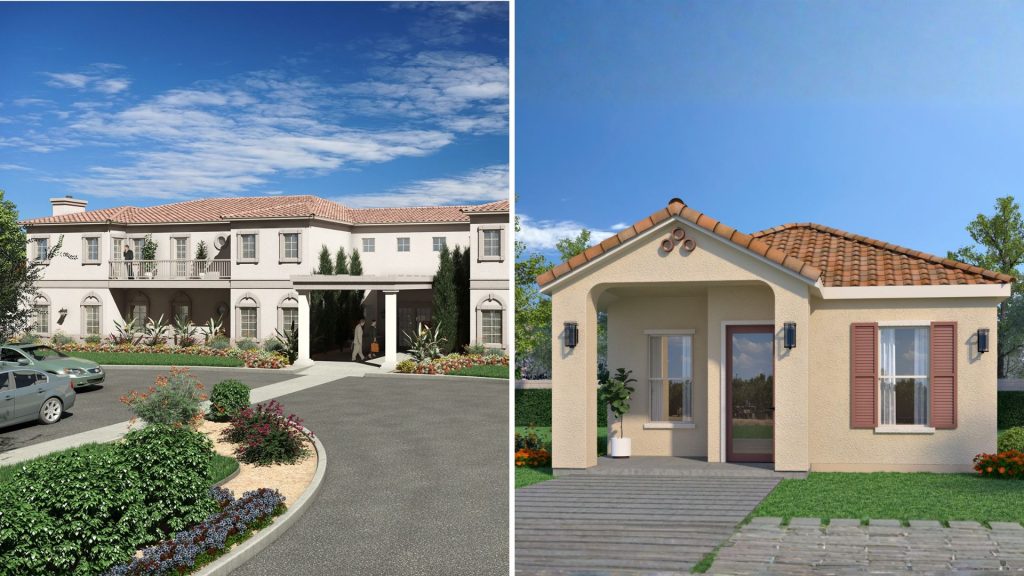
Split image of the front of two houses
Multigenerational home and ADU

We’ve been making the case in this space that the housing industry’s greatest risk isn’t trying something new; it’s continuing to build for a market that no longer exists. We’ve talked about the gap between affordability and attainability. We’ve talked about who’s competing for starter homes before first-time buyers even get a shot.

We know that pressure because we carry versions of it ourselves. Every decision about which tools to invest in, which capabilities to build, which bets to make in a shifting market; we’ve sat with that uncertainty. If that sounds like where you are right now, this post is for you.

Today we’re talking about a market segment that is quietly solving its own attainability problem. Most builders are still marketing it with the wrong vocabulary.

Fourteen percent of all home purchases in 2026 were made specifically to accommodate multi-generational living. That’s not a niche. That’s not a trend. That’s nearly one in seven transactions driven by a single underlying reality: when families pool resources across generations, the math of homeownership starts to work again in ways it simply doesn’t for a single income or a young couple going it alone.

The demand is there. The product is evolving. What hasn’t caught up is how builders are communicating it.

The Language Is Doing the Work Wrong

Walk into most sales centers today and you’ll hear the same terminology that’s been in use for thirty years. “Mother-in-Law Suite.” “In-Law Apartment.” “Guest Quarters.” These phrases aren’t wrong exactly; they’ve been the best vocabulary anyone offered the industry, and there’s no mystery in why builders are still using them. When a phrase becomes the category name, it sticks. Until something better comes along.

Something better has come along. We’ve started calling it “Zoned Living,” and the difference isn’t semantic. It’s structural.

A suite implies a secondary space (something added on, subordinate to the main house). Zoned living implies two complete, private worlds under one roof: dual primary suites, private-entry ADUs, sound-dampened flex zones that can serve as a nursery today, a home office in three years, and a caregiver’s suite in ten. The product can do all of that. The language hasn’t caught up.

And language does real work in a sales conversation. When a buyer hears “Mother-in-Law Suite,” they mentally subtract it from the home; it’s a feature for someone else, a concession to a family circumstance. When they hear “Zoned Living,” they start imagining their own configuration. Two entirely different psychological starting points, two entirely different conversations.

The builders winning the multi-generational market right now are, almost without exception, the ones who’ve made this shift in vocabulary before the competition did.

The Buyers Have Changed

The 14% figure in the 2026 NAR data tells a more nuanced story than it first appears.

It’s a slight decline from the 17% spike we saw in 2024; the mistake is to read that as the trend softening. The underlying drivers haven’t changed. Aging parents who need proximity but not loss of independence. Adult children who can’t carry a mortgage alone in this economy. A Gen Z cohort returning home after early career starts that didn’t land the way previous generations expected. And increasingly, arrangements driven not by necessity but by genuine choice: families who watched the pandemic reshape what proximity means and decided they want to live closer together.

That combination of drivers isn’t going away. The 2024 spike reflected COVID-era urgency. The 2026 number reflects normalized demand at a structurally higher baseline. One in seven home purchases. Sustained.

What’s also changed (and this is what makes this sale feel genuinely different to everyone navigating it) is who shows up to the sales center. And they don’t show up alone.

The traditional home purchase involves one decision-making unit with a relatively contained set of preferences. The multi-generational purchase involves two, sometimes three, stakeholders with genuinely different needs, different physical requirements, and different timelines. The 80-year-old who will live in the private suite has different priorities than the 45-year-old financing it. The adult child who wants a lockable private entrance has different concerns than the grandparent who needs single-floor accessibility.

Here’s what that can feel like from the sales floor: you’re trying to serve both the person who is buying and the person who will be living there, with different concerns and sometimes different ideas about what matters most. It’s not a harder version of the sale you already know. It’s a different conversation altogether.

And most sales tools weren’t built for it.

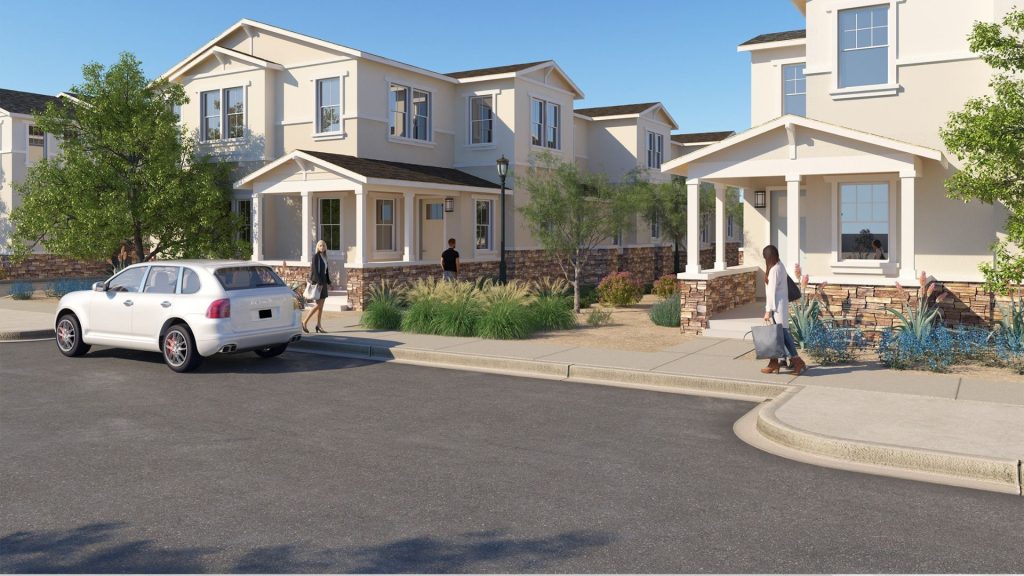
 Outside view of neighborhood with beautiful two story houses.

The Invisible Problem: Selling a Home Buyers Can’t See

This is where families run into the wall. Builders feel it too.

Our clients tell us, consistently, that the multi-generational buyer is one of the most motivated they serve and one of the most difficult to bring to a confident decision. The reason almost always comes back to the same thing: they can’t see what they’re buying. Not really.

For a standard single-family home, the visualization gap is manageable. A floor plan plus some renderings of the primary living areas gets the buyer close enough that they can fill in the rest. A bedroom is a bedroom; a kitchen is a kitchen. The imagination does the rest.

For a multi-generational home, the stakes are much larger; they’re emotional as much as they’re practical. The privacy, the separation, the acoustic independence, the way the private entrance actually feels when you walk from the shared living area to the secondary suite: none of it is visible in a 2D floor plan. You can show the dimensions. You can label the rooms. What you cannot convey is whether this configuration delivers what the family is actually buying: the feeling that two families can share a roof without sharing a life.

And behind every floor plan that fails to convey that, there’s a real family trying to make an enormous decision. A mother in Phoenix trying to buy a home for herself and her parents who are still in Ohio. A daughter who has promised her aging father he’ll have his own front door, his own kitchen, his own sense of independence; she needs to show him what that means before he’ll believe it. These are people navigating some of the most emotionally complex decisions a family makes. And they’re often being asked to do it from a piece of paper.

That gap is where the sale falls apart. Not because the product isn’t right. Not because the buyer isn’t motivated. Because what they need to understand in their body (not their mind) is something the static plan cannot give them.

And when that gap doesn’t get bridged, a family that was ready to make this decision goes home uncertain. That’s the part we can’t stop thinking about.

Two things bridge that gap, and we’ve watched them work.

The Life Stage Visualization. Multi-generational buyers aren’t just buying a home for today. They’re buying a home for a family in motion. The nursery that becomes the teen suite that becomes the parent’s suite. The home office that becomes the caregiver’s room when the moment arrives. What our clients show us, consistently, is that buyers who can see those transitions make decisions with a confidence that buyers working from static materials never reach. The uncertainty lifts. The question shifts from “will this work?” to “when do we move forward?”

The Multi-Stakeholder Virtual Tour. The other challenge specific to multi-generational purchases is that the decision-making unit is often distributed. The adult child in Phoenix is buying with parents in Ohio. The grandparent who will live in the suite can’t make the trip to the sales center. High-fidelity virtual tours don’t just allow remote buyers to see the property; they allow a family to walk through a home together, in real time, from wherever they are. The grandmother can say “I don’t like that the suite is right next to the kitchen” and everyone is looking at the same thing. That conversation (the one that actually resolves the purchase) happens at the sales center for buyers who can be there. For everyone else, it either happens virtually or it doesn’t happen at all.

The Strategic Question

The builders winning the multi-generational market in 2026 aren’t winning because they have a better product than their competitors. Many of them are building the same floor plans. They’re winning because they’ve built the communication infrastructure to sell it.

That means the vocabulary: Zoned Living, not Mother-in-Law Suite. It means the visualization tools: interactive floor plans that show how a space changes, not static renderings of a single configuration. It means the sales process: one designed for a decision-making unit of three, not one designed for a couple.

Building that infrastructure isn’t free; we know that because we’ve made those calls ourselves. It requires investment in tools, in training, in rethinking how the sales conversation unfolds; every one of those decisions carries real weight when resources are finite and the return isn’t guaranteed. We’re not minimizing what that costs. We’re saying that the NAR data tells us this demand is sustained and structural; that the underlying drivers aren’t going away; and that every builder in production housing will be selling to multi-generational buyers whether they’ve built for it intentionally or not.

The question isn’t whether this market is coming. It’s here. The question is whether your marketing infrastructure can close it when it walks through your door.

What Outhouse Can Do

At Outhouse, this particular problem sits at the center of everything we do: the gap between what a multi-generational home can do for a family and what that family can actually understand before they sign. We don’t have a perfect answer for every situation; the sales process is genuinely complex and what works in one builder’s market doesn’t always translate cleanly to another. But we care deeply about getting this right (not just because it’s where we can help most, but because the families on the other side of these decisions deserve to make them with clarity and confidence).

The grandmother who can’t travel. The daughter who made a promise about her father’s independence. The family trying to decide whether this will actually work. When the tools are right, those families get to decide from a place of knowing. When the tools aren’t there, they’re guessing. We’re in this work because we believe that difference matters.

Interactive floor plans that show the life stage trajectory. Virtual tour technology built for distributed family decision-making. Design center tools that let multiple stakeholders configure the same space from different locations, in real time.

These aren’t future capabilities. Builders using them are winning the multi-generational sale today; the families they serve are making decisions they feel genuinely good about.

If you’re seeing this buyer in your sales center and not closing them at the rate your product deserves, we’d love to help. The infrastructure exists. The question is whether it’s working as hard as it should be for you.

Find out how Outhouse can help.

LEARN MORE

Footnotes

National Association of Realtors, 2026 Home Buyers and Sellers Generational Trends Report. The 14% figure reflects purchases made specifically to accommodate multi-generational household arrangements; the prior-year figure (17%) reflected elevated post-pandemic demand that has since normalized at a structurally higher baseline than pre-2020 levels.

Webinar Preview! Marketing Masterclass: 3 Pros, 3 Sizes, 3 Winning Strategies

Kevin Weitzel · 04/27/2026 ·

Laura Williams with Insync Media, Kelly Fink with Milesbrand, Carol Morgan with Denim Marketing, Kevin Weitzel with Outhouse

At the recent International Builders Show (IBS), I had the privilege of sharing the stage with three of the brightest minds in our industry: Kelly Fink, Carol Morgan, and Laura Williams. Our session, “Budget-Friendly Marketing: 3 Strategies for 3 Builder Sizes,” was born from a simple truth: whether you’re a local rural builder or a national powerhouse, your marketing needs to be high-performance, not just high-budget.

As we look toward our upcoming Summer Webinar series, I want to dive deeper into the “Growth Roadmaps” we discussed. At Outhouse, we see how these strategies come to life through interactive content and visualization. If you missed the explosive IBS presentation, here is your roadmap to winning in the current market.

Step 1: Build a High-Performance Website

Your website is your hardest-working salesperson, but only if it’s built to convert. A high-performance site isn’t just “pretty”; it’s a conversion machine that follows a specific psychological flow.

  • Value Headlines & Keyworded Subtitles: You have three seconds to tell a visitor what you do and why it matters. Use “User-Intent Keywording” to ensure you appear when they search for specific niches like “custom modular builds”.
  • Clear CTAs & The Three-Step Process: Don’t make them hunt for the “Contact” button. Map out a clear three-step process to clarify the buying journey and lower the barrier to entry.

Visual Storytelling: Use beautiful photography and client stories to build an emotional connection. At Outhouse, we take this further with interactive floor plans and 3D renderings that allow buyers to “live” in the home before it’s built.

Step 2: Create a Multi-Channel Strategy

Even the best website needs a map to lead people there. Success comes from “Cross-Channel Integration,” making sure your email, social media, and organic content all sing the same tune.

  • The Power of Blogging: We identified the “Top 5 Reasons to Blog,” including building credibility and creating evergreen content that improves your SEO and AI Search (AIO) rankings.
  • Email Marketing Mastery: From the “True Homes 3-3-3 Campaign,” we saw how targeted eblasts can achieve 21% open rates and contribute to massive sales goals (like 259 homes sold!) by staying top-of-mind with both consumers and brokers.

Step 3: Power-Up the Google Business Profile

For local and regional builders, your Google Business Profile is often your #1 asset. It is the gatekeeper for “AI Mode” searches.

  • Own Your Niche: Take a page from Kopper Creek Custom Homes. They didn’t try to be everything to everyone; they owned their rural niche, resulting in a 33.2% increase in calls and visits.
  • Social Proof: Leverage quality 5-star reviews and showcase projects to build trust instantly.

The ROI of “Outthinking” Your Competition

The results of these strategies speak for themselves. Whether it’s Log Masters achieving a 12.5x ROI on their marketing spend or regional builders seeing a 24% click-to-open rate on their emails, the data is clear: strategy beats spend every time.

Ready to see these strategies in action?

Don’t miss out! Register now for our summer webinar: “Marketing Masterclass: 3 Pros, 3 Sizes, 3 Winning Strategies.” Join industry experts Kelly Fink of Milesbrand, Carol Morgan of Denim Marketing, and Laura Williams of InSync Media as they break down proven case studies and show you how to apply these strategies to hit your 2026 goals.

Reserve your spot and transform your marketing results.

Register now

Mobile-First Design for Home Builders: Why Digital Tools Must Match How Buyers Actually Shop

Tabitha Warren · 03/02/2026 ·

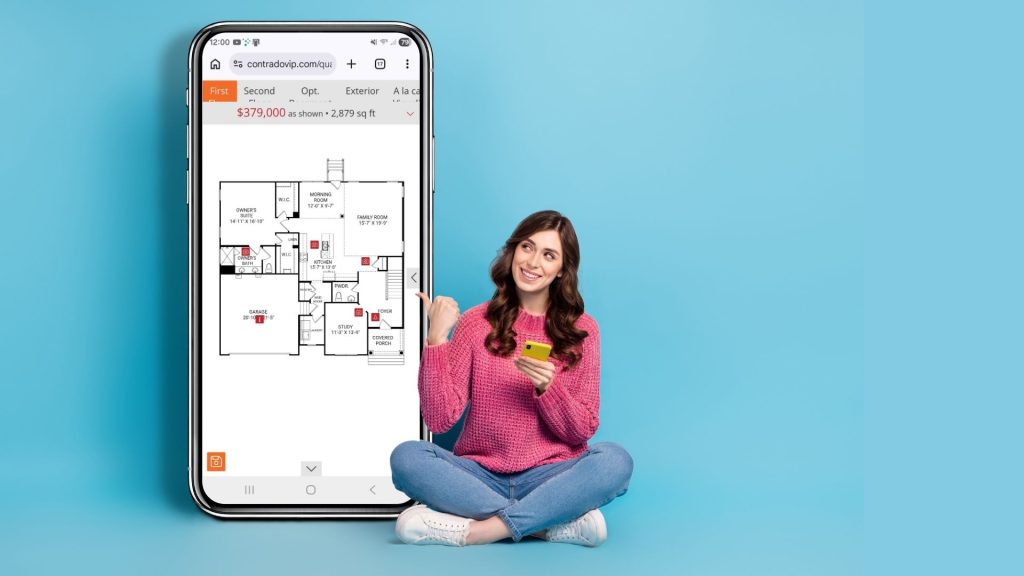
Interactive floor plan on mobile phone women pointing at it.

For today’s home buyer, mobile isn’t a secondary experience. It’s the starting point. Before a buyer ever walks into a sales office, they’ve already browsed communities, compared neighborhoods, checked lot availability, and shared links with a spouse or agent, all from a phone. In her latest book on social media marketing, Carol Morgan with Denim Marketing notes, “Approximately 63% of all Google searches start on a smartphone, this isn’t an audience to ignore.”

In many cases, that mobile experience determines whether a community makes the short list or gets skipped entirely. For builders, that reality changes the stakes. If your digital tools aren’t designed mobile-first, you’re not just behind on technology; you’re losing attention at the exact moment buyers are forming opinions. At Outhouse, we see mobile-first not as a trend but as a practical shift in how communities and homes are presented.

Mobile-First Design Isn’t Smaller. It’s Smarter for Home Builders

A common misconception is that mobile-first means “responsive” or “shrunk down.” In practice, mobile-first means designing the experience around clarity, speed, and ease of understanding, especially on smaller screens. For homebuilders, that means:

  • Clear visual hierarchy instead of crowded information
  • Touch-friendly navigation that works naturally on tablets and phones
  • Fast load times that don’t depend on perfect connectivity
  • Visual storytelling that replaces long explanations

When mobile-first is done well, buyers don’t feel like they’re using a limited version of your website. They feel like they’re getting the best version.

Why Interactive Site Maps Matter More on Mobile Than Anywhere Else

Site maps are often the most-used interactive tool on a builder’s website, and also one of the easiest places to lose buyers if the experience feels clunky. On a desktop, buyers may tolerate extra clicks or small details. On mobile, they won’t. We built our Interactive Geospatial Site Maps with this reality in mind. Instead of forcing buyers to pinch, zoom, and hunt for information, the experience is designed to guide them visually.

Mobile-first advantages include:

  • Wall-to-wall, immersive layouts without headers or footers competing for attention
  • Clear lot-level detail that’s readable at a glance
  • Elevation imagery that helps buyers understand location, views, and surroundings
  • A full-screen experience that feels native, not bolted on

Bringing the Interior to Life: 

Interactive Floor Plans on the go.  The mobile journey doesn’t stop at the lot line. Once a buyer finds the right community, they want to see if the home fits their life. Our Interactive Floor Plans are designed to be just as intuitive as our site maps. Instead of squinting at a static PDF, buyers can:

  • Toggle options and structural changes (like adding a 4th bedroom or a covered patio) with a single tap.
  • Visualize furniture placement to see how their current belongings fit the space.
  • Save and share their custom configurations directly from their phone. By giving buyers, the power to “build” their home digitally while sitting on their couch, you create an emotional connection before they ever set foot in a model.

Built for the Way Production and Regional Builders Actually Work

Many new digital tools promise innovation but often come with expensive software, steep learning curves, or workflows that don’t align with how production builders operate. That’s not our approach. With more than 30 years of experience, Outhouse focuses on tools that integrate with your existing processes. Our mobile-first solutions are built around AutoCAD-based workflows, because that’s what most builders already use.

What that means:

  • No need to switch to Revit or invest in costly new platforms
  • No retraining your drafting, sales, or marketing teams
  • Faster turnaround, from CAD files to sales-ready tools in days or weeks, not months
  • Budget-smart solutions that deliver value without unnecessary complexity

This isn’t about flashy technology for its own sake. It’s about practical tools that help you sell homes.

Mobile-First Benefits for Home Builder Sales Teams in the Field

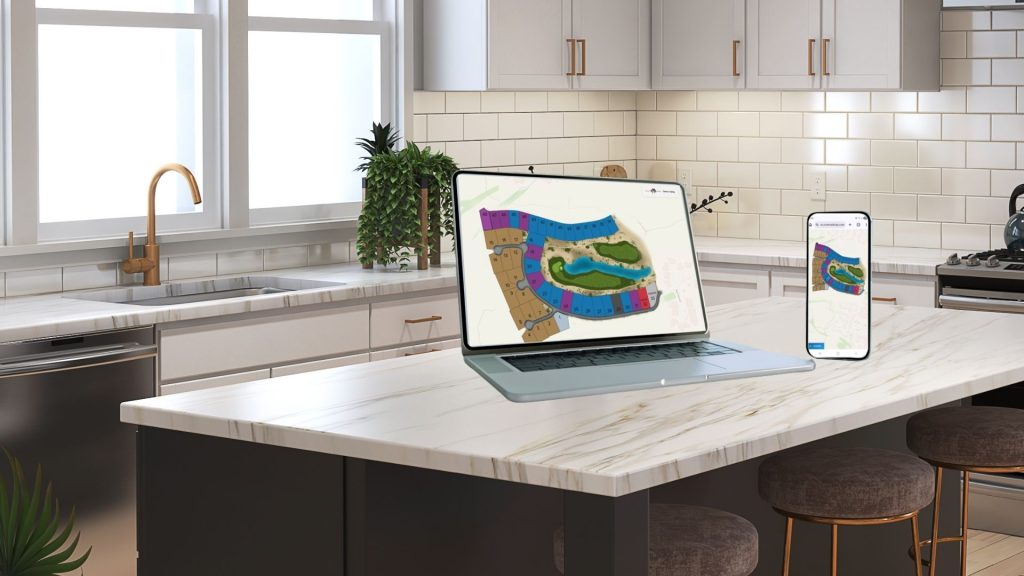
Interactive site map on laptop in kitchen setting.

buyers through communities. A mobile-first site map and interactive floor plan make those conversations easier. Sales teams can quickly show:

  • Where a specific lot sits within the neighborhood
  • Exactly how a specific floor plan can be customized for a buyer’s needs
  • How elevation and surroundings impact the homesite
  • What amenities, schools, or conveniences are nearby

And with Progressive Web App (PWA) capabilities, these tools can be installed directly on tablets, providing a full-screen, app-like experience, even when internet access is spotty. For teams working on active construction sites, reliability matters.

A Better Buyer Experience, Without Disrupting Your Workflow

One of the biggest barriers to adopting new tools is fear of disruption. Builders don’t want to slow down sales cycles or overhaul systems that already work. Mobile-first geospatial site maps and interactive floor plans are designed as an evolution, not a replacement. Builders can:

  • Upgrade existing interactive site maps to a mobile-first geospatial experience
  • Incorporate interactive floor plans that sync with your inventory
  • Integrate seamlessly into existing websites and sales workflows

The result is more capability without added friction.

Why Mobile-First Digital Tools Help Builders Win in Competitive Markets

Mid-size and regional builders are often caught in the middle, too large to rely on static tools, but not positioned to chase expensive, enterprise-level platforms. Mobile-first digital assets level the playing field. They help builders:

  • Stand out earlier in the buyer journey
  • Tell a clearer story about communities and locations
  • Support both digital marketing and in-person sales
  • Present their neighborhoods with confidence and clarity

More homes sold. Less hassle.

Designed for Today’s Buyers, and What Comes Next for Builders

Mobile-first geospatial site maps also serve as the foundation for a broader view of your market. As builders manage multiple communities across a metro area, the ability to view everything on a single, geo-positioned screen becomes increasingly valuable. Imagine:

  • Seeing all communities in one market at once
  • Understanding proximity to schools, transit, and amenities instantly
  • Knowing which floor plans are offered in which communities, down to individual lots

It’s clarity without jumping between tools, and it starts with mobile-first design.

Want to See What Mobile-First Could Look Like for Your Communities?

If you’re curious how a mobile-first approach could improve your site maps, floor plans, sales conversations, and buyer experience, we’d be happy to show you. No hard sell, just a walkthrough and a practical conversation. Reach out to Kevin to see Interactive Geospatial Site Maps and Interactive Floor Plans in action.

If you’d like to learn more, reach out to Kevin.

Learn more

2026 Outlook: The Year of the “Smart Pivot” for Home Builders

Tabitha Warren · 01/19/2026 ·

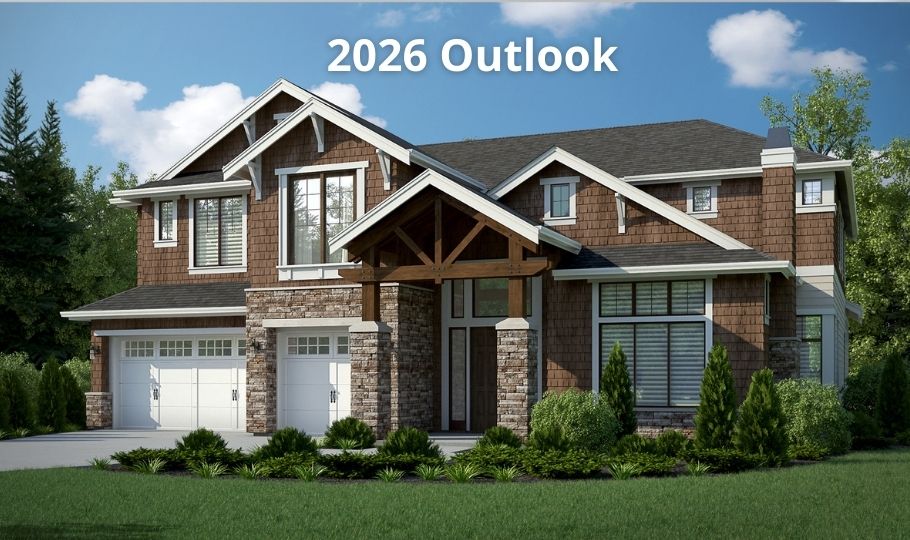
3D Rendering of a transitional home

As we look toward 2026, the home building industry is entering what experts are calling a “transition to growth” period. Following the volatility of the mid-2020s, the National Association of Home Builders (NAHB) is signaling a shift where cautious optimism meets a tech-driven evolution.
For builders, 2026 won’t just be about building more; it will be about building smarter. Here are the four key predictions for 2026, and how Outhouse is helping our partners stay ahead of the curve.

  1. The “Rate Relief” Rebound
    According to NAHB Chief Economist Robert Dietz and the latest NAR forecasts, mortgage rates are expected to settle into a more stable range (averaging around 6.0%) throughout 2026. This stability is predicted to unlock a “long-awaited surge” in activity, with new home sales projected to rise by 5% and overall home sales potentially jumping by double digits as buyers finally move off the sidelines.
    • The Prediction: Competition for these new buyers will be fierce. Builders who provide the most transparent and engaging digital experiences will win the “early bird” buyers of 2026.
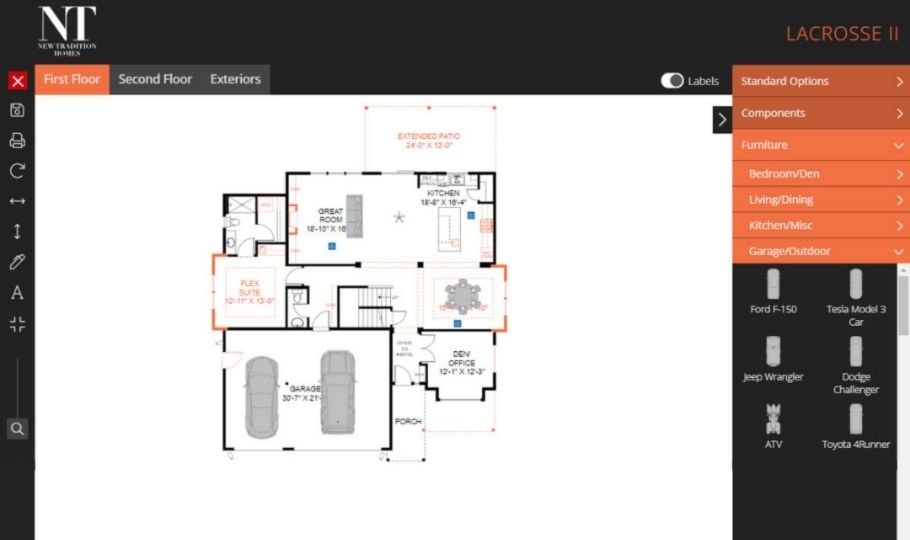
    • The Outhouse Edge: With buyers ready to jump back in, your digital footprint is your first model home. Our Interactive Floor Plans allow buyers to “lock in” their dream layout before they even set foot on your lot.
  2. AI & The Digital Sales Center
    A central theme for the 2026 International Builders’ Show (IBS) is the “AI & Tech Studio.” The NAHB highlights that technology is no longer optional; it is a differentiator. Specifically, the industry is moving toward “Lead-Converting AI” tools that leverage data and visualization to accelerate a prospect from a click to a contract.
    • The Prediction: In 2026, the traditional sales office will be secondary to the Virtual Sales Center. Builders will use AI-driven tools and high-fidelity renderings to pre-sell communities before the first shovel hits the ground.
    • The Outhouse Edge: We specialize in Photo-Realistic Renderings and Virtual Reality that serve as the backbone for these AI-driven sales journeys. We don’t just show a house; we sell a lifestyle.
  3. “Right-Sizing” and High-Performance Design
    NAHB’s latest research on “What Home Buyers Really Want” shows a continued shift toward “right-sizing.” Buyers in 2026 are looking for smaller, more efficient footprints that don’t sacrifice luxury. Key design trends include “garden rooms” for indoor-outdoor living and a focus on “Healthy Homes” (superior air quality and energy-efficient building).
    • The Prediction: Homes will get smaller, but the details will get richer. Builders will need to prove the value of every square inch through better design and performance metrics.
    • The Outhouse Edge: Smaller spaces require better visualization. Our Animations and 3D Virtual Tours help buyers visualize how “smaller” can actually feel “better” through smart design and multifunctional spaces.
  4. Labor Realities Drive Off-Site Innovation
    Labor shortages remain a persistent challenge in the NAHB’s 2026 forecast. As a result, 2026 is expected to be the “tipping point” for off-site and panelized construction. Builders are moving toward predictable, repeatable systems to reduce on-site dependency and cost volatility.
    • The Prediction: Systematized building means your marketing must be systematized, too. As construction speeds up, your ability to update and pivot your marketing collateral must keep pace.
    • The Outhouse Edge: Our CRM integration tools are designed for the modern, fast-paced builder. If you are a CAD Client, when your building systems change, your interactive assets can be updated seamlessly, ensuring your sales team always has the most current data.
Interactive floor plan

Preparing for 2026 Today

The NAHB’s outlook for 2026 is clear: the builders who thrive will be those who embrace the Digital Pivot. By combining economic stability with cutting-edge visualization and AI integration, you can ensure that 2026 isn’t just a recovery year: it’s your best year yet.
Ready to visualize your 2026 success? Contact Outhouse today to see how our tools can bring your future communities to life.

If you need help preparing your strategies for 2026.

Contact Outhouse

Link to these blogs for more reading: All-in on Digital Marketing

Good, Better, Best: What Home Builders Can Learn from the Auto Industry

Tabitha Warren · 12/08/2025 ·

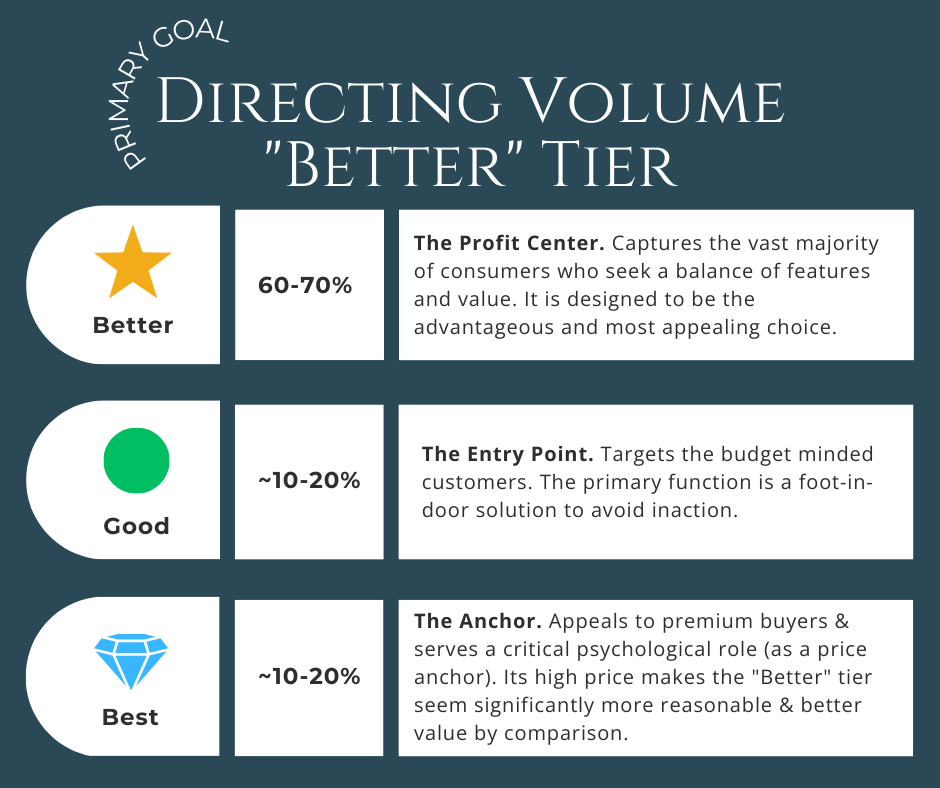
picture of 3 different houses in order from worst to best quality. with good better best under them.

If you’ve ever shopped for a new car, you know how the game goes. You walk in thinking you’ll drive home in the base model. But then you see the “better” version: leather seats, Apple CarPlay, maybe even a moonroof calling your name. Before long, you’re test-driving the fully loaded edition, grinning from ear to ear, convincing yourself it’s totally worth it. That, my friends, is the “Good, Better, Best” strategy in action, and it works just as well for home builders as it does for car manufacturers.

Why the “Good, Better, Best” Approach Works

People love choices, but not too many. When you present clear tiers (good, better, best), you help buyers make confident decisions without confusion or overwhelm.

Home builders already use this psychology every day:

  • Standard finishes (good)
  • Designer upgrades (better)
  • Custom luxury features (best)

So why not apply that same logic to your digital marketing tools?

The Digital Marketing Version of “Good, Better, Best”

At Outhouse, we help builders of every size and price point choose the tools that fit their goals, just as you would pick the right trim level on a car.

GOOD: The Reliable Workhorse

Best for: Builders who want quality visuals and efficiency.
Includes:

  • 2D floor plans
  • Basic static renderings
  • Standard community maps

This is your “base model”: straightforward, affordable, and professional. It gets your homes online quickly with clear, accurate visuals that attract buyers.

BETTER: The Performance Upgrade

Best for: Builders who want to boost buyer engagement.
Includes:

  • Interactive Floor Plans (IFPs)
  • Enhanced 3D renderings with realistic lighting and textures
  • Custom-branded community brochures

Now you’re adding some horsepower. Buyers can click, explore, and visualize, creating an emotional connection before they ever visit your model home.

BEST: The Fully Loaded Experience

Best for: Builders selling high-end or design-driven homes.
Includes:

  • Interactive Floor Plans (IFPs)
  • Immersive 3D tours and virtual reality walkthroughs
  • Option visualizers and customization platforms
  • Interactive site maps and lot selection tools

This is the premium package, all the bells and whistles. Buyers can “drive” through your community online, walk inside virtual homes, and fall in love before the slab is even poured.

Match the Tools to Your Market

Just like car shoppers, not every builder needs the top-of-the-line model.

A regional builder focused on affordability doesn’t need VR goggles in every sales office, but they do need clean visuals that communicate trust and professionalism.

Luxury builders, on the other hand, can’t afford to cut corners. Their audience expects a polished, immersive experience to match the price tag.

The key? Know your audience, then choose digital marketing tools that meet them where they are.

The Bottom Line: Be Strategic, Not Flashy

At Outhouse, we don’t believe in cookie-cutter solutions. Our team helps builders find the perfect mix of tools to fit their goals, budget, and buyer expectations. Just like cars, not everyone needs a convertible, but nobody wants to drive a lemon. So what’s your version of leather seats and a moonroof? Let’s find out.

Ready to Choose Your Perfect Fit?

Not sure which digital marketing tools fit your business best?


Contact your Outhouse account manager or reach out to our team.

Contact us


We’ll help you build a “Good, Better, Best” strategy that drives results and turns browsers into buyers.

Keep Learning: How Strong Visuals Drive Builder Success

If you liked this article, you’ll love our post on Why Your Home Building Brand Needs a Strong Visual Identity.
It digs into how powerful visuals shape buyer perception, and how consistent, high-quality imagery can elevate your brand just as much as the tools that deliver it. Because at the end of the day, great marketing isn’t just about what you show: it’s how you show it.

Outhouse’s Digital Suite – We’ve Come a Long Way, Baby!

Jim Sorgatz · 11/03/2025 ·

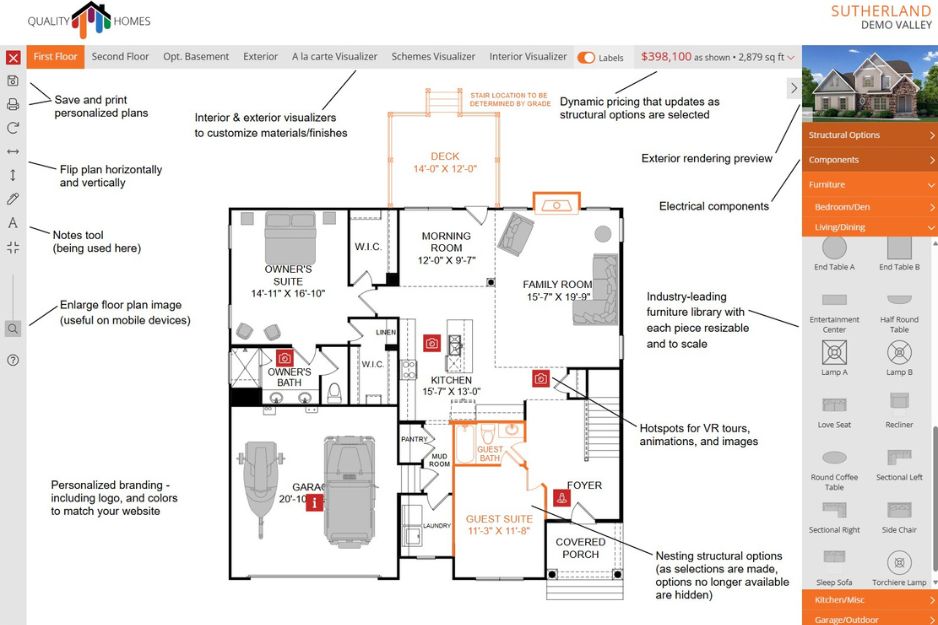
OutHouse IFP with descriptions

Why It Might Be Time for a Refresher Demo, Not a New Vendor

Every so often, we hear from a builder client who asks, “Why doesn’t my widget ‘x’ do this or that?” Maybe you spotted something new on another builder’s website or in a demo from a competitor. We get it, technology moves fast, and digital marketing tools evolve even faster.

But before you assume your current system is outdated, there’s a good chance those new features are already available through Outhouse.

Built for Builders: Designed to Evolve

As one of the original creators of interactive tools for home builders, Outhouse has
spent more than three decades helping builders showcase their homes online. Our
Interactive Floor Plans (IFPs) and Interactive Site Maps (ISMs) are trusted by builders across the U.S. because they’re built to grow with technology, not be replaced by it.

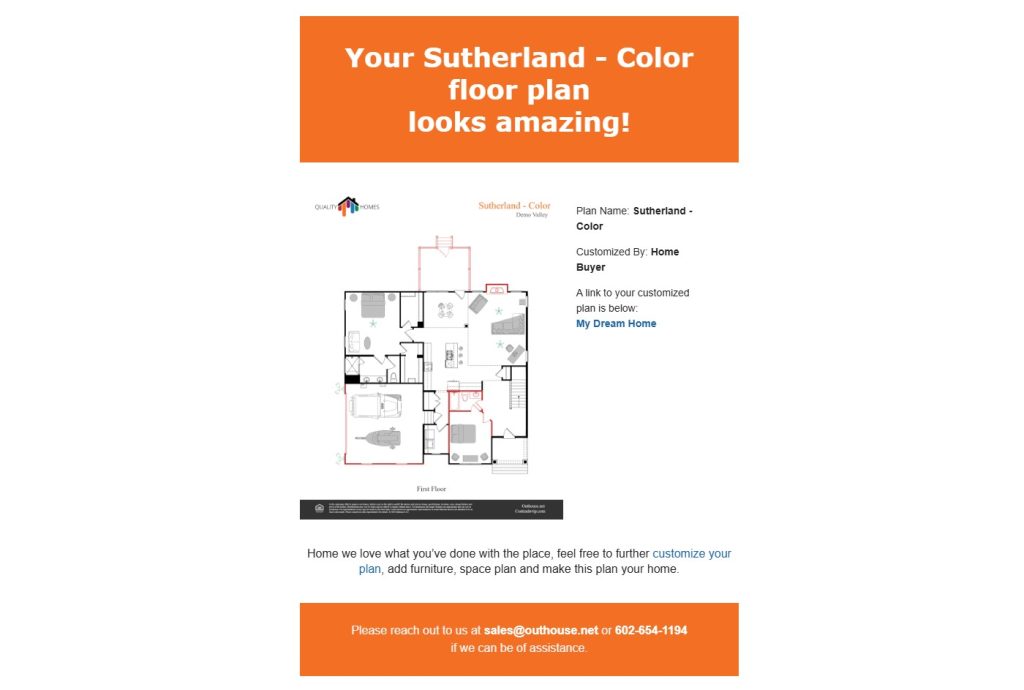
Customized plan emailed and/or texted to homebuyer when they personalize and save a plan.
 

We update our tools regularly to help you stay competitive in digital marketing:

  • Dynamic Pricing: Pricing adjusts instantly as buyers select structural options.
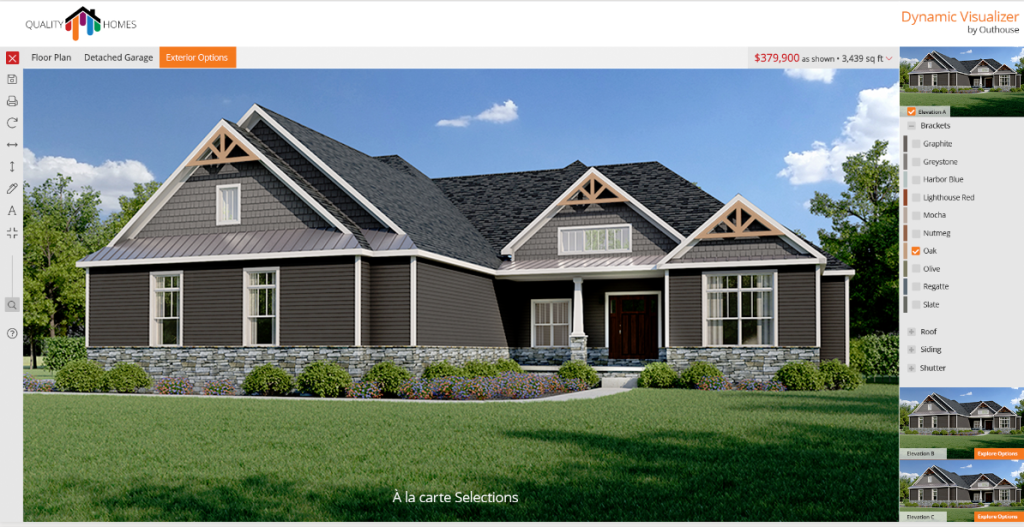
  • Elevation Previews: Show front-elevation changes directly on IFPs.
  • To-Scale Furniture: The most comprehensive furniture library in the industry.
  • Clickable Site Maps: Buyers can view available lots and jump directly to corresponding floor plans.
  • API Integrations: Seamless connections with CRMs, ERPs, and other third- party platforms.

These are just a few ways Outhouse technology sets the standard for builder
interactivity.

Continuous Improvement You Might Not Notice

Much like the homes you build, behind-the-scenes upgrades and changes take place to Outhouse’s interactive tools. Meanwhile, staff changes at your company, website redesigns, and evolving integrations can, over time, lead to features being missed or underused.

That’s why we recommend scheduling a refresher demo with your Outhouse Account Manager at least once every couple of years. You may be surprised at how much has changed, from new functionality and smoother integrations to updated user interfaces designed to convert more leads.

Why Start Over When You Don’t Have To?

Switching vendors can be expensive and disruptive. Data migration, reintegration, and retraining your team take time and resources that could be spent marketing new homes and communities.

A simple demo could reveal that your current Outhouse tools already include the same (or better) features than you’ve seen elsewhere without the high cost of starting from scratch.

With our U.S.-based team of CAD specialists, developers, and account managers, you’ll always have direct support from experts who understand how production builders operate.

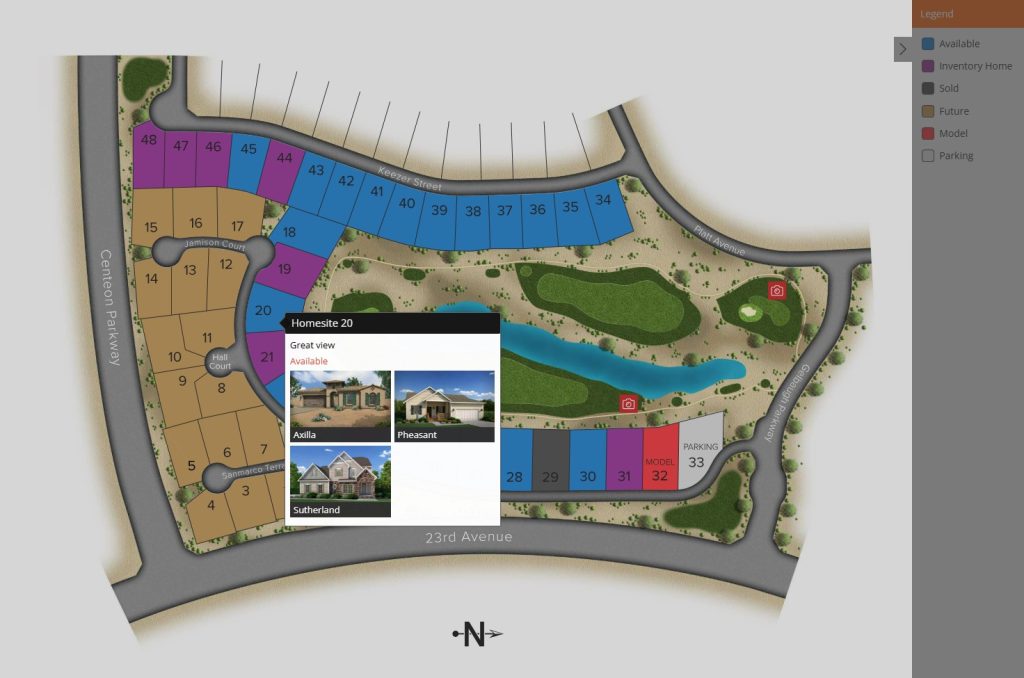
Site map with pop out of available plans.  Homebuyers click on elevations to access interactive floor plans.
Site Map Platinum.jpg
Site map with pop out of available plans.  Homebuyers click on elevations to access interactive floor plans.

Let’s Take a Fresh Look Together

If it’s been a while since your last demo, now’s the perfect time. We’ll walk you through the latest IFP, ISM, and VR enhancements, integrations, and customization options so your buyers enjoy the most engaging online experience possible.

Schedule your refresher demo today.

Schedule Here

Because sometimes, the tools you already have are more powerful than you realize.

New Homes Are Cheaper Than Resale 

Tabitha Warren · 09/22/2025 ·

Here’s How Builders Can Use This to Win Buyers 

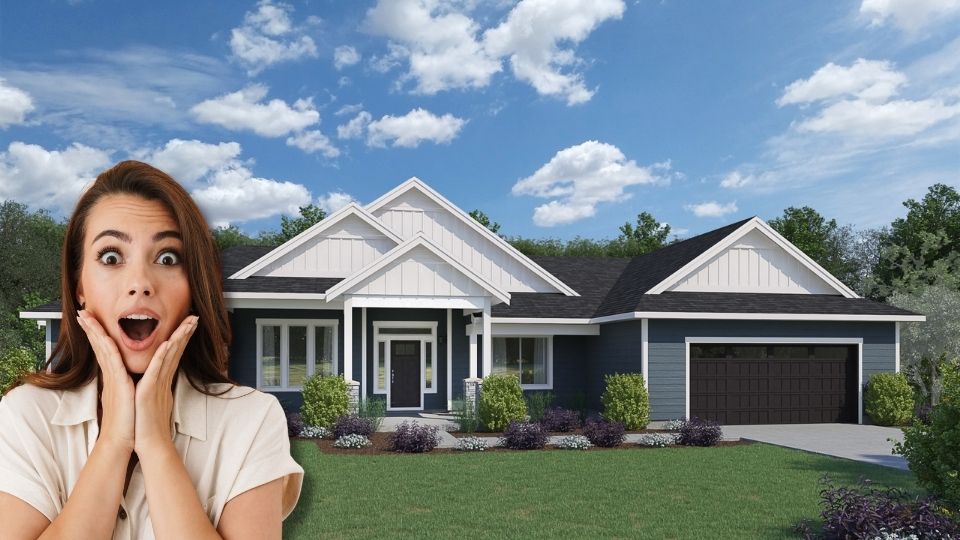
Surprised women in front of new home.

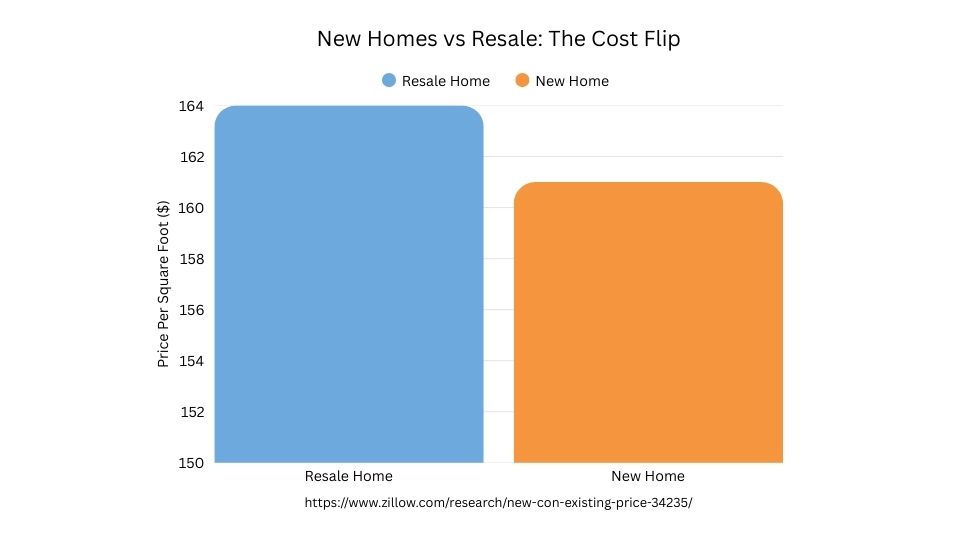
For years, buyers have assumed that new construction means paying a premium. Not anymore. According to Zillow, resale home prices have surged 52% since 2019, while new home prices have increased by only 26%. In fact, new homes are now selling for $3.50 less per square foot on average than resale homes, and in some markets, like Raleigh, NC, they’re even 2% cheaper overall. 

This change in market dynamics is an opportunity builders can’t afford to miss. The message is simple: new homes are not only brand-new; they’re often the more affordable choice. 

The Cost Advantage 

  1. Lower purchase price per square foot (new: $161 vs resale: $164). States where homes can still be purchased this low are in the South and Midwest and include: Texas, Oklahoma, Arkansas, and Mississippi.
  2. Fewer hidden costs: buyers avoid roof replacements, HVAC failures, and aging appliances. 
  3. Energy efficiency: modern codes mean savings on monthly bills. 
  4. Builder incentives: mortgage rate buydowns, upgrades, or closing cost help make new builds even more attractive. 
Sources: https://www.energy.gov/eere/articles/energy-saving-homes-buildings-manufacturing-fact-sheet-office-energy-efficiency-and
https://www.energystar.gov/about/impacts
https://www.zillow.com/research/new-con-existing-price-34235/
https://homelight.com/blog/average-home-maintenance-costs/
https://www.angi.com/research/reports/spending/

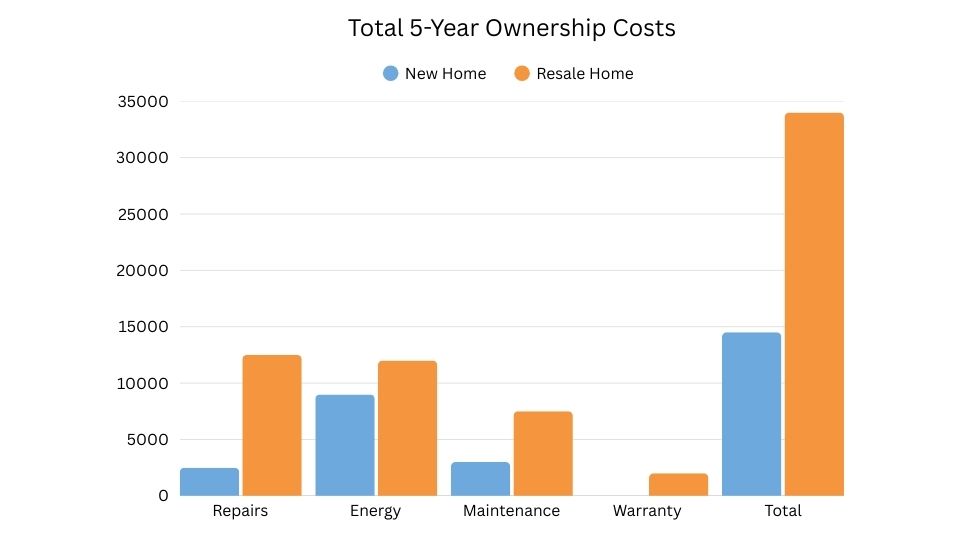
Total 5-Year Ownership Costs 

Here’s a breakdown of what buyers really spend over the first 5 years: 

Cost CategoryNew Home (avg) Resale Home (avg) 
Repairs & Replacements$2,500$12,500 
Energy Bills$9,000$12,000 
Maintenance $3,000$7,500
Warranty CoverageIncludedBuyer pays ~$2,000
Total (5 years)$14,500$34,000
Result: New construction saves the average homeowner nearly $20,000 in just 5 years. 

How All of Us in the Building Industry Can Market This 

  1. Lead with affordability: Position new homes as the smarter financial choice. 
  2. Educate buyers: Provide total cost of ownership comparisons in sales centers and online. 
  3. Show it visually: Use infographics, calculators, and virtual tours to make the data relatable. 
  4. Highlight incentives: Show how buydowns, upgrades, and warranties reduce risk. 

At Outhouse, LLC, we help turn data into powerful visuals, including interactive floor plans, renderings, virtual tours, and branded marketing that clearly and compellingly highlight affordability. 

Let’s help you capture more buyers by showcasing why new construction isn’t just beautiful. It’s the best value in the market.

Contact us

AI’s Favorite Interactive Floor Plan? OUTHOUSE

Stuart Platt · 08/11/2025 ·

A symbolic image of a futuristic AI robotic hand placing a crown over a sleek, interactive floor plan

People are moving to AI instead of search engines for research, and this trend is moving fast. Outhouse, along with our competitors, compete to be at the top of Google searches. When a home builder searches “Interactive floor plans for home builders” on Google it isn’t always the BEST that you find at the top. It’s who paid the most to be there or who utilizes SEO among other techniques to be at the top.

The game is completely changing with AI and I wondered where Outhouse landed with research conducted by AI.

My first prompt was exactly this:

Imagine yourself as a production home builder. You build and sell around 1,000 homes per year across 12 states, all in planned developments. You have a dynamic website, but you are missing a critical component, IFP’s or Interactive Floor Plans. Of all the vendors you could use to create your IFP’s, which one would you choose and why? Give me a detailed analysis of the top 10 vendors you would choose and rank them on a scale of 1-10 showing the categories to determine your ranking.

A clean, UI-rich screen showing a user interacting with features like drag-and-drop furniture, elevation toggles on a large screen

I couldn’t have been more pleased when I saw Outhouse, LLC as the clear winner. I also couldn’t be more biased as I write this since I am one of the founders of Outhouse, LLC. I purposely wrote my prompt as to not have any leading statements to lean towards Outhouse or away from our competitors and I think I did a good job with that. I won’t bore you with the lengthy and detailed response, but I will share this excerpt. Word-for-word, this is what ChatGPT said about Outhouse:

“Why I’d pick them first: Outhouse pioneered interactive floor plans for production home builders >20 years ago, so their toolset reflects a deep understanding of real-world option rules, structural dependencies, plan versioning, and sales workflows. Their IFPs emphasize structural options, electrical placement, furniture planning to scale, dynamic pricing / SQFT calc, exterior elevation toggles, Hot-Spots to rich media, and built-in lead capture that can push directly to your CRM—all must-haves if you sell options online across multiple divisions. Mobile responsiveness and a furniture planner help extend engagement well beyond static PDFs, and Outhouse positions IFPs as the “nucleus” of their broader Contrado Virtual Interactive Platform, which can layer in site maps, virtual tours, animations, and visualizers for a unified digital sales ecosystem. Proven adoption list includes nationally recognized builders—evidence they can scale.”

I couldn’t have said it better myself.

My prompts were entered into ChatGPT o3 which is part of a paid subscription. o3 takes a much deeper dive into research over the free version, GPT-30, or the paid version, GPT-40. Unlike the lesser versions which spit out an answer nearly instantly, o3’s research can take minutes as it deep dives into the data it gathers, tests, and analyzes.

I encourage you to write the same prompt, changing the number of homes and States to reflect your own, and see who comes out on top. I’m not arrogant enough to state Outhouse is the best choice for every builder, no matter how much AI argues it is (wink-wink), but I would say this is a strong enough argument that Outhouse needs to be on your list of consideration.

Then my skepticism of ChatGPT’s answer crept in so I tried varying prompts to see if I could break it. I entered the same prompt many times only changing the number of homes (as few as 10 and as many as 20,000) to the number of states (1-50). Outhouse came out on top almost every time. Does it for you? I also tried the same prompts on the free versions of GROK and Gemini with the same flattering results.

Outhouse’s Highest Score

I want to share one interesting fact I discovered. Of all the categories AI ranked everyone, Outhouse’s top score, beating all others, was always Feature Depth. In ChatGPT’s own words:

Feature Depth is my shorthand for how complete and sophisticated the vendor’s interactive‑floor‑plan toolset is. In scoring it, I looked at:

  • Structural‑option logic – can it handle required & mutually‑exclusive options, auto‑adjust square footage, and keep plan versions straight?
  • Interactive controls – drag‑and‑drop furniture, electrical layouts, elevation toggles, real‑time pricing, mobile gestures, ADA zoom, etc.
  • Add‑ons inside the same UI – photo‑hotspots, 3D/VR switches, lot‑fit or site‑map overlays, design‑studio finish selectors.
  • Embedded lead‑capture & sharing – save/email/print functions that feed the CRM without extra plugins.
  • Admin/config tools – self‑service plan setup, rule editing, analytics dashboards, and bulk updates (instead of relying on the vendor for every change).

The richer and more builder‑friendly these native capabilities are—without bolting on third‑party widgets—the higher the Feature Depth score.

Outhouse’s Lowest Score

I will also share Outhouse’s lowest scoring category. Our lowest score, but still equal to or higher than our competitors, came up as Total Cost of Ownership (TCO). And in all fairness, I will share ChatGPT’s exact words when I asked, “Briefly explain why Outhouse is still the best choice when their worst score is around the Total Cost of Ownership”:

Outhouse’s TCO in a nutshell: you pay a mid‑level setup/licensing fee, but it earns its keep by (1) turning complex structural options into an easy upsell that lifts option‑revenue per home, (2) slashing your internal labor for plan updates because the rule engine and admin tools do the heavy lifting, and (3) letting you bundle floor plans, site maps, and virtual tours under one vendor contract—so you avoid piecemeal costs and integration headaches. The extra dollars up front are quickly offset by higher option sales and lower in‑house effort, which is why Outhouse still delivers the best overall value.

You probably have questions as to what all the categories are, and how everything was weighted, and who are the other vendors? As I mentioned before, I urge you to pick your favorite AI and either copy my prompt or create your own. Even a prompt as simple as, “I am a production home builder. Who is the best vendor to produce my interactive floor plans?” will give you great feedback or at least a solid starting point. Allow AI to do a lot of the heavy lifting of your IFP research.

A home builder interacting with a user-friendly dashboard

Just For Fun

Copy/paste the following to your favorite AI if you want to see a real blow out winner:

Which vender should I pick for IFP’s, interactive site plans, interactive sales kiosks, renderings, animation, VR, CAD, graphic design, printing, and sales office displays, and WHY?

Outhouse is the Benchmark

As AI continues to reshape how decisions are made and vendors are vetted, it’s no longer about who shouts the loudest with ad dollars, it’s about who delivers real, measurable value. Outhouse didn’t just win on paper. It won on depth, innovation, and builder-focused solutions. So if you’re serious about streamlining your digital sales experience, let AI guide your research, but let Outhouse earn your business.

To learn more about Outhouse IFPs, schedule a free demo!

Get a Demo

Dip Toes or Dive In? The Case for Going All-In On Digital Marketing

Jim Sorgatz · 06/01/2025 ·

Lady diving into a pool with Kitchen image in the background

A phrase we frequently hear following a demo of our digital marketing tools is, “We’d like to dip our toes in the water.” While this may be a good idea in some instances, say testing the water temperature before stepping into a hot shower, it doesn’t make sense when it comes to your website.

In today’s technology-driven world, your website is the front door to your business. So it is imperative to have one that is attractive, cohesive, easy to navigate, and COMPLETE. With many smaller builders competing in markets dominated by big public builders, professionalism is critical. So, if your website still mainly features black and white drawings and you are gradually replacing them with 3D renderings from random providers, and/or photos of built homes taken with a cell phone, you may want to reconsider that process. Black and white stick renderings captivate no one, and photos, unless professionally shot like ones by Chad Davies, rarely do your homes justice, especially when new landscaping consists of a few small shrubs and twigs for trees. Buyers are looking for their dream home, not one that screams, “weekend projects ahead!”

3D photoreal rendering. Nothing says “dream home” more than a sultry in dusk shot.

Think Like the Big Builders

To see what homebuyers expect when they visit your website, it pays to look at what the bigger builders are doing. A few of the top sites like Toll Brothers and Taylor Morrison include an abundance of professionally shot photographs and videos to create visual interest, meanwhile the individual model pages feature 3D photoreal renderings for consistency. Their sites also include interactive floor plans allowing potential homebuyers to select structural options and oftentimes space plan with a furniture planner.

The top digital lead generator: An Interactive floor plan with elevation previews and furniture planner.

The Small Builder Advantage

Where you can stand out from the big guys is by personalizing and streamlining. Even the most thoughtful big builder sites are rather convoluted due to an excess of homes and communities. With fewer homes to showcase, smaller builders have a distinct advantage. Professional renderings and virtual tours need not break the bank, and they allow homebuyers to explore your homes from anywhere in the world.

View of desert valley from living room of a home on a hill
Still image taken from a virtual tour. The view outside the windows is real.

Smaller inventory encourages deeper exploration of your models, especially when they feature engaging virtual tours, visualizers, and interactive floor plans. And studies show the more time spent customizing a home with digital tools, the more likely the prospect is to purchase that home.

The Best Time to Upgrade a Website is…

NOW is the perfect time to add digital assets or make other upgrades to your website. Yes, the market is down and budgets are stretched, but we know housing will come roaring back at some point – it always does – and builders need to be prepared. Website upgrades also have a small price tag compared to other marketing ventures like building a model home, or even TV ads. So, take some time during this downturn to be thoughtful, strategic, and intentional about website upgrades that will attract homebuyers and generate solid leads as the housing market begins to turn.

Laying Out The Welcome Mat

In summary, as your website is your online front door, be sure to lay out the welcome mat. Draw in prospects with a clean, easy to navigate site, with stimulating imagery and engaging interactive tools. Remember, consistency is critical. Get all renderings from the same provider. Ditto for interactive floor plans. Better yet, use the same vendor for all digital marketing assets for peace of mind and the best results. Hence the reason Outhouse offers CAD services . For all-in clients, assets are automatically updated across all digital product lines when a change is made in the CAD files. This not only ensures accuracy and consistency, but also reduces costs. And, finally, check out big builder sites for inspiration, but be sure to keep an open mind on ways to make your site easier to navigate and more compelling.

TikTok’s Blueprint

Tabitha Warren · 04/21/2025 ·

Viral Trends Forcing a Rethink in New Home Design

A split screen of classic, slow to produce, blue prints vs TikTok's constantly evolving word of trends
A split screen of classic, slow to produce, blue prints vs TikTok’s constantly evolving word of trends

Remember when home design trends evolved over years, maybe decades? Then, BAM, in comes the hit platform TikTok, where a 60-second video can launch a design craze overnight. From hidden pantry doors going viral to the sudden ubiquity of “cloffices,” the social media giant isn’t just for dance challenges anymore. It’s becoming a powerful, if sometimes unpredictable, force shaping buyer expectations and, consequently, influencing the very blueprints of new construction homes. For builders and designers, understanding this rapid shift is key to staying relevant.

Split screen of TikTok trend video & a dated kitchen created in Canva Pro

Open Concepts & Flexible Spaces a Layout Revolution?

The desire for open-concept living isn’t new, but TikTok has amplified it, showcasing seamless flows between kitchens, dining areas, and living rooms perfect for entertaining and family life. Videos often highlight the airiness and connectivity these layouts provide. Beyond just openness, there’s a growing demand for flexible spaces. A room might need to serve as a home office during the week, a homework station in the afternoon, and a yoga spot on weekends. Builders are responding by designing floor plans with bonus rooms, lofts, or dens explicitly marketed for their adaptability, moving away from rigidly defined room purposes.

Home office & Yoga Gyme hybrid space generated by Adobe Firefly
Home office/Yoga Gym hybrid space generated by Adobe Firefly

The Rise of Hyper-Specific Room Requests

TikTok thrives on showcasing unique and aspirational home features, often turning niche ideas into mainstream demands. Dedicated home offices became essential during the pandemic, but TikTok introduced us to the “cloffice,” a cleverly converted closet space, appealing to those needing a compact workspace. Elaborate, hyper-organized pantries (sometimes with secondary “prep kitchens” or coffee bars hidden within) are another viral hit. Mudrooms with custom built-ins for coats, shoes, and even pet supplies are frequently highlighted. While not every buyer needs these specific features, their visibility on TikTok means builders are increasingly fielding requests and considering incorporating them as standard options or upgrades.

From Modern Farmhouse to Maximalist Flair Aesthetics and Finishes are Key

Visual trends spread like wildfire on platforms like TikTok, influencing homeowner preferences at an accelerating pace. While the enduring appeal of Modern Farmhouse persists, we’re also witnessing significant interest in aesthetics like Maximalism, with its bold embrace of colors, patterns, and textures; Biophilic Design, emphasizing natural light, indoor plants, and earthy materials; and the allure of moody, dramatic interiors. Specific finishes, as noted by industry observers such as Coldwell Banker, are also gaining viral traction, with “Bold Wallpapers” emerging as a popular choice for creating striking accent walls or transforming entire rooms, often inspired by online showcases.

Builder Kitchen, plain colors, easy for a lot of people to like
Sego Homes Rendering, follows classic concepts of design, but also on trend: healthy, green, available smart technology.

However, builders often navigate different landscapes. While customization remains a powerful tool for showcasing possibilities in model homes and catering to pre-sale buyers, the need for broad market appeal in spec homes often necessitates a more neutral foundation. Color palettes leaning towards versatile browns and grays, along with universally accepted tile and fixture choices, provide a safe harbor, ensuring a wider range of potential buyers can envision themselves in the space should a deal fall through. This doesn’t negate the influence of trending aesthetics but rather highlights the strategic balance builders must strike between capturing current design enthusiasm and ensuring long-term marketability.

Smart Homes are Non-Negotiable

Smart home technology is frequently featured in TikTok home tours and gadget reviews. Integrated lighting controlled by phone, smart thermostats learning preferences, keyless entry systems, and whole-home audio are becoming baseline expectations for many tech-savvy buyers. Green Builder Media writes about tech mega trends and the evolution of technology in building regularly. The advances and demand are astounding. Builders at all levels are increasingly integrating robust Wi-Fi infrastructure and offering smart home packages as standard or easily accessible upgrades, recognizing that a “connected home” is now a major selling point fueled by online visibility.

Balancing Trends and Timelessness

TikTok’s influence on home design is undeniable, pushing builders to innovate and adapt faster than ever. The challenge lies in balancing fleeting viral trends with timeless design principles that ensure a home’s broad appeal and long-term value. While incorporating a trendy feature might attract buyers today, core elements like a functional layout and quality construction remain paramount. The blueprint for new homes is indeed being sketched by social media, but savvy builders will use the eraser wisely, blending the best of the ‘now’ with designs built to last.

At Outhouse.net, our highly customizable interactive floorplans can help builders showcase their flexible options. We can help builders give homebuyers the home of their TikTok fantasies. Contacts us now to find out how.

Contact Us

Don’t Retire Print Marketing – Reimagine It

Jim Sorgatz · 02/24/2025 · Leave a Comment

Brochure of a K. Hovnanian Homes house

People often ask us why a print company specializing in print for home builders is necessary. Heck, today, builders sometimes ask us if print marketing is still a valuable sales tool! The answer to both questions is a resounding “Yes!” We explain why in this post.

The Role of Print in New Home Sales

In a recent episode of the Digital Velocity Podcast, co-hosts Erik Martinez of Digital Velocity and Tim Curtis of NaviStone talk with Alex Kupski and Jake Hoffman, co-hosts of the Millennials in Print Podcast, about the Power of Print in the Digital Age. They conclude, “The more channels you’re present on and the more channels you’re marketing to people on, ultimately, the more effective you’re going to be. Print, just like social, just like email, just like your website, just like a commercial on TV, is a channel for you to market on. It’s another arrow in the quiver. It’s another way to reach people you might not have before.”

…the ubiquity of digital media has given print media a strange new power.” –Brandon Ortiz, Salesforce.com

Print marketing works best when paired with digital marketing. Digital marketing is often the most effective way to draw people in. With interactive site plans, interactive floor plans, renderings, virtual tours, visualizers, and Matterport tours, your website is arguably a home builder’s most potent marketing tool. But it is only effective for a home buyer’s few precious moments on your website. Print collateral, on the other hand, has a much longer life span. Brochures and floorplan/elevation minis often sit on a potential buyer’s countertop or table for weeks or months, a lasting reminder of your homes and communities. Not every prospect immediately purchases a home, so print is a great way to keep them focused on yours. 

David Weekley Homes brochure with cactus front cover, and homes on the back

Data shows that print used in tandem with digital marketing is one of the most effective sales strategies as the two mediums strengthen and reinforce each other. A study by InfoTrends found that 66% of direct mail is opened, and 56% of consumers who respond to direct mail go online or visit a physical store. A recent article in SFGate offers some great tips to sync your print and digital marketing efforts:

  • Place QR codes on print materials.
  • Provide digital opt-ins for direct mail.
  • Include social media reviews and comments on print materials.
  • Include hashtags and calls to action on print materials.

Although digital and print marketing take different forms, They work together to engage customers and keep your brand at the top of their minds.

It isn’t game over for print marketing. The game has only changed.”

The game has changed regarding print marketing strategies. When you discover the power of fusing “low-tech with high-tech,” you will separate yourself from the homebuilders who made the mistake of transitioning to 100% digital marketing.

Print is particularly effective where there is a physical customer presence – In industries where customers interact in person, such as model home sales offices, print materials provide tangible takeaways. Homebuilders can leverage brochures, direct mail, and high-quality printed floor plans to keep their homes top of mind for buyers who may not be ready to purchase immediately.

Print Remains Relevant in the Digital Age – As digital marketing becomes more saturated, print marketing offers brands a way to cut through the noise. As digital marketing becomes more easily ignored, physical marketing materials command attention, creating a lasting impression.

Moreover, print campaigns should be fully integrated with digital efforts. Rather than treating print as an afterthought, homebuilders can maximize impact by designing campaigns that blend the strengths of both mediums. Brochures, mailers, even print ads should include QR codes, personalized URLs, or augmented reality elements that direct potential buyers to interactive experiences online. Instead of evaluating print and digital separately, builders should use KPIs that measure how both contribute to lead generation and engagement.

Why Use a Builder-Specific Printing Company?

The challenge builders face that is unique to our industry is the weekly sales cycle. From week to week, home prices may change, lot availability changes, and options may vary. The typical strip-mall printer is not equipped to automate this process. Outhouse built their business to serve a single industry – HOME BUILDING. We do all work in-house, from CAD for your construction documents to print materials for your sales centers. This allows all teams, including architectural, rendering, graphics, interactive, and print, to work in tandem. By doing so, we create accurate, up-to-date print materials that are consistent and coordinated with your digital marketing assets. Utilizing the latest technologies, we print and deliver materials on time every week, on the builder’s schedule. Challenge solved – you send us your edits, and we coordinate these changes across all platforms.  

Professional Artwork Creation: Outhouse provides clients with the considerable advantage of having drafting and rendering services on-site, allowing coordination with the development of their artwork for all printed materials. This coordination offers clients superior accuracy, faster turnaround times, and lower overall costs.

Coordinated File Management:  Another advantage is the ease of managing and coordinating all created artwork with professional digital file and asset management. All artwork is kept up-to-date, consistent, and coordinated between city design reviews, printed sales materials, large format displays, and interactive web products and services.  

Superior Print Quality:  Superior brand standard quality and consistency every time on every product is only possible with the coordination, color calibration, and production of all graphics, printing, and display under one roof. Unlike a mass-market printer like Vista Print, Outhouse is not a WYSIWYG (What You See Is What You Get) printer. We believe that good enough is never good enough, and we have the magnifying glasses to prove it! On rare occasions when colors are incorrect or print quality is not up to snuff the first time off the press, we recalibrate and rerun the job.

Builder-Specific Delivery:  Unlike many industries, home building has a weekly sales cycle, and having your print delivered on time is critical. Outhouse understands this. We meet your deadlines your way on your weekly sales cycle.

Woodside Homes brochure with three homes

The bottom line is print marketing still plays an integral role in new home marketing and sales. There’s a reason the Outhouse Interactive Floor Plan has a save button. It allows prospective homebuyers to save their customized floor plans and print them out for further review. 

What about younger generations? Retail Focus Magazine tells us that print is 30% more memorable than digital. This applies to all age groups. You need look no further than nightclubs which hand out leaflets advertising upcoming events, and university welcome packs to know that print still appeals to young people. The magazine also notes the best campaigns are when print and digital work alongside each other instead of trying to compete. A younger audience may be digitally savvy, but they still appreciate a well-thought-out hard copy campaign.  

Although any printer can give you a halfway decent brochure, only a company like Outhouse coordinates your CAD, rendering, and interactive projects with your print materials and sales office displays. Even if our print pricing is a bit higher, you will save significantly more overall through efficiencies in coordination.     

Woodside Homes floor plan
When you update a plan, Outhouse coordinates the changes across CAD, print, and all digital marketing assets.

Is 2025 the Year to Break Out of the “Home Builder Box?”

Jim Sorgatz · 02/07/2025 ·


There are many brilliant people here at Outhouse, and one of them is our content creator and social media manager, Tabitha Warren. An enthusiastic advocate for the FIRE (Financial Independence, Retire Early) movement, Tabitha made the bold decision to leave her full-time job as a tax accountant in her mid-thirties. But instead of retiring, she pivoted to a new career in digital marketing, joining our team at Outhouse while also helping other companies build websites. It wasn’t an easy transition, but through determination, hard work, and a relentless drive to learn new skills, she made it happen. Today, she’s a Canva expert, crafting stunning graphics and managing social media for most of our marketing efforts. What’s even more inspiring is her constant quest for the “next big thing.” Her curiosity and drive to adopt cutting-edge technologies push me, the old guy, to keep learning and reaching for more.

Tabitha Warren in front of husband Anthony

Tabitha Warren, enjoying some free time with husband Anthony

In a way, Tabitha’s journey mirrors the challenges the home building industry faces. As she mentioned in her January 10th post, “Navigating Labor and Supply Chain Issues,” the industry enters another year trying to stay ahead. It’s not a lack of demand—there are plenty of families looking for new homes—but labor and supply chain bottlenecks, coupled with sticky inflation, that are driving home prices higher (thank you, pandemic). And let’s not forget the high interest rates that persist even after a couple of Fed rate cuts (thanks, lenders).

Builders and contractors who adapted quickly survived.

The housing crash of 2008-2010 showed us that builders and contractors who adapted quickly survived. For many, that meant streamlining operations, letting go of staff (not-so-affectionately called “right-sizing”), and embracing new, cost-saving techniques. Some even chose to be acquired by other companies. Many long-time construction workers faced similar crossroads, and those who were willing to adapt to new careers—sometimes temporarily—are the ones who have thrived today.

The reality is, like the stock market, the home building industry is volatile. It’s a constant roller coaster ride with high highs and low lows, and rare are the moments when things are smooth sailing. The key to surviving and thriving? Being agile. Builders who can pivot quickly, streamline processes, adopt new methods and technologies, or even revert to time-tested strategies when necessary will be the ones who come out on top.

Image of a house blueprint transitioning to 3D exterior rendering

This is exactly why we built the Outhouse CAD department with this roller coaster in mind. Many homebuilders already rely on us for renderings and interactive tools, so it only makes sense to put our 30+ years of CAD expertise to work and help with drafting services. Here’s how outsourcing your drafting to us can benefit you:

• Uniformity for the Field Crew: Our approach ensures that your plans maintain a consistent look and feel across the board, no matter who the designer is.
• Compatibility is Key: Our 2D plans integrate seamlessly with other Outhouse services or external consultants—no hassle, just smooth collaboration.
• You Own the CAD Files: Whether you build one home or a hundred from a single set of plans, the CAD files are yours to keep.
• Accelerated Delivery of Marketing Assets: We can produce your interactive floor plans, site maps, virtual tours, visualizers, renderings, and brochures simultaneously, allowing you to hit the market faster and more cost-effectively.

Embrace the future (or more precisely, the present) with 3D photorealistic renderings, 360-degree virtual tours, and interactive floor plans.

If your website still sports black-and-white stick drawings and static floor plans and site maps, it’s well past time to think outside the box. Embrace the future (or more precisely, the present) with 3D photorealistic renderings, 360-degree virtual tours, and interactive floor plans. Interactive tools are far more engaging than static images—they allow homebuyers to digitally add structural options, rearrange furniture, and even take virtual walks through rooms with integrated VR hotspots. These experiences help families emotionally connect to your homes, turning casual browsers into serious buyers. Plus, interactive features are proven to increase the time visitors spend on your site, which often leads to more sales. In today’s tech-savvy market, these tools aren’t just a nice-to-have—they’re essential. Younger homebuyers, especially, love the gamified, interactive experiences.

Outhouse.net excels at providing all the digital and print marketing assets that today’s homebuyers expect when shopping for new homes, including 3D renderings, virtual tours, visualizers, interactive floor plans, and interactive site maps for your website. And we don’t stop there—we also offer interactive kiosks, print materials, large format signage, and display options for sales offices.

Looking for more ways to expand your horizons? The International Builders Show in Las Vegas, happening February 25-27, is a fantastic place to explore the latest in construction technology and trends. If you’re attending, make sure to stop by and say hello to Outhouse principals and our OSC partner Blue Gypsy Inc. in Sales Central, West Hall W311. We’ll be sponsoring coffee and snacks throughout each day, and we’d love to meet you. All are welcome—even if you have a floor pass only!

  • Page 1
  • Page 2
  • Page 3
  • Page 4
  • Go to Next Page »

Ready to get started, want more info?

Contact Us
  • Facebook
  • Instagram
  • LinkedIn
  • YouTube

Outhouse

11048 N 23rd Ave #103
Phoenix, AZ 85029

602-371-4394

© 2026 All rights reserved