• Skip to primary navigation
  • Skip to main content
Outhouse logo

Outhouse

The Outsource Hub for Home Builders

  • Home
  • Products & Services
    • Architectural/CAD
    • Rendering
    • Virtual Reality
    • Interactive Floor Plans
    • Interactive Site Maps
    • Interactive Kiosks
    • Print Marketing
    • Sales Office Displays
  • Partners
  • News
    • Events
    • Blog
    • Podcast
  • About Us
  • Contact Us
  • Show Search
Hide Search

Interactive Floor Plans

This is what my home will look like? I was blind and now I can see! Hallelujah!

Stuart Platt · 01/20/2025 ·

—probably said by around 75% of new homeowners using interactive floor plans.

Outhouse video of site map, to interactive floor plan using furniture to scale floor planner

Buying a new home is a rollercoaster ride of emotions. From the excitement of picking out the perfect neighborhood to the dread of deciphering traditional blueprints that look like a game of Tetris gone wrong, it’s a process that could use a little less stress and a lot more fun. Enter interactive floor plans—the unsung hero of homebuying, making lives easier and dreams closer to reality.

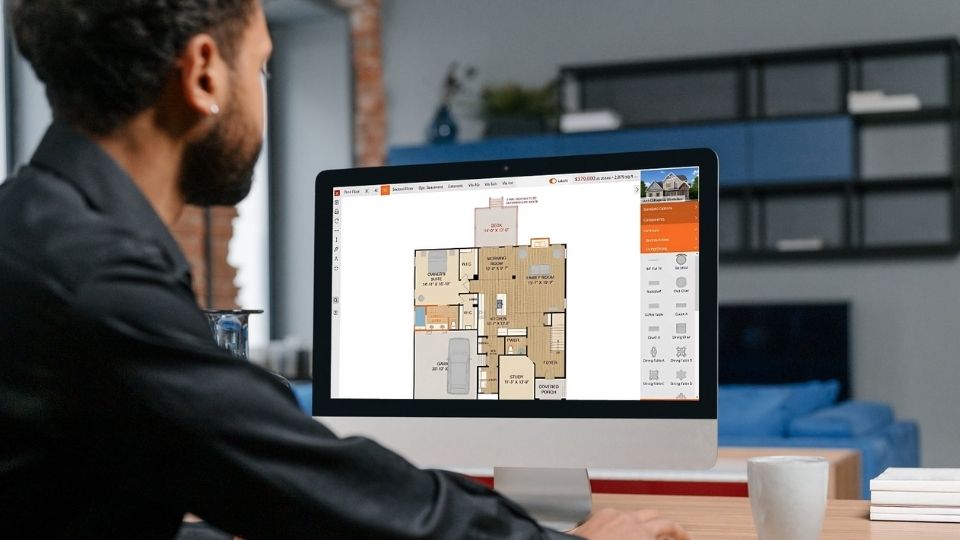
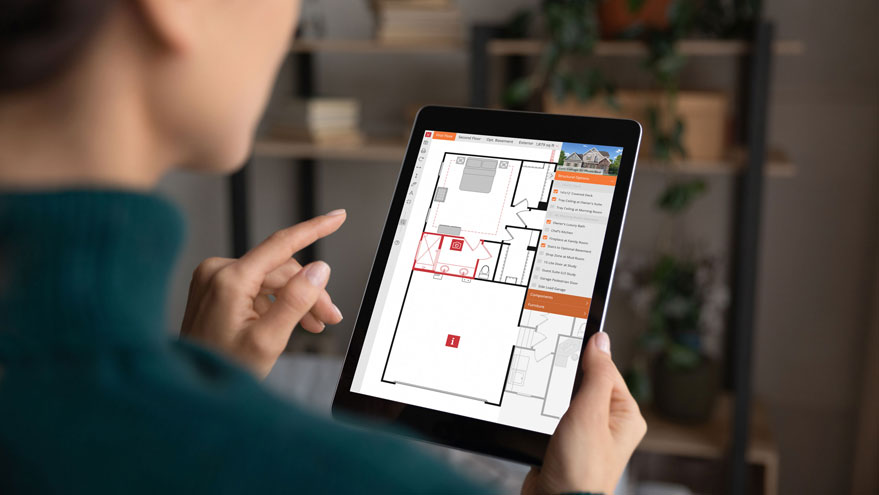
Interactive floor plans are like a crystal ball for future homeowners. Instead of squinting at static floor plans that seem more suited for engineers than everyday folks, you get an immersive, easy-to-use tool that shows you exactly what your new home could look like. Whether it’s a 2D layout or a 3D walk-through, these plans let you explore every nook and cranny of your potential palace.

Wait, so this is what my bedroom will look like with an actual bed in it? And I still have room for a yoga mat? This is sorcery!” —probably said by every millennial buyer ever.

With features that let you zoom in and customize layouts, interactive floor plans put the power back in your hands. Suddenly, picking a home doesn’t feel like a guessing game; it feels like designing your personal dream space—without the confusion and uncertainty.

The Stress of “What Ifs”? Gone.

Happy Homeowners, man and woman hugging. Man lifts woman into the air. Boxes scattered around room ready to unpack.
Happy homeowners courtesy of Adobe Stock

Buying a home comes with a million “what if”s. What if the kitchen’s too cramped? What if the living room doesn’t fit our couch that is basically a family heirloom? Interactive floor plans kick those doubts to the curb by letting you visualize your future home in a way traditional tools never could.

I’m sorry, I can just drag and drop then resize furniture to see how it fits? I feel like a one-person moving company!” —an exasperated but thrilled first-time buyer.

Customization for the Win

Interactive floor plans are more than just pretty pictures. They’re customizable, allowing you to play around with layouts, options, and even kitchen appliances. Want an open-concept kitchen? Boom, done. Thinking about adding a home office? See exactly how it fits before committing.

I just turned my three-bedroom into a four-bedroom with an office nook, all before my second cup of coffee. Take that, HGTV!” —a suddenly confident buyer.

Not only does this customization make the process fun, but it also reduces miscommunications with builders. When you know exactly what you want, there’s no room for “I thought you meant this” moments. It’s a win-win.

It’s like visiting the model home, minus the awkward small talk with the sales agent.” —an introverted and happy new homeowner.

I was sick, and I designed my future house in my pajamas with a tissue stuffed in one nostril. Modern technology really peaked here.” —a satisfied buyer who fully recovered and is now living their best life.

Builders, Take Note: Happy Buyers = Happy Sales

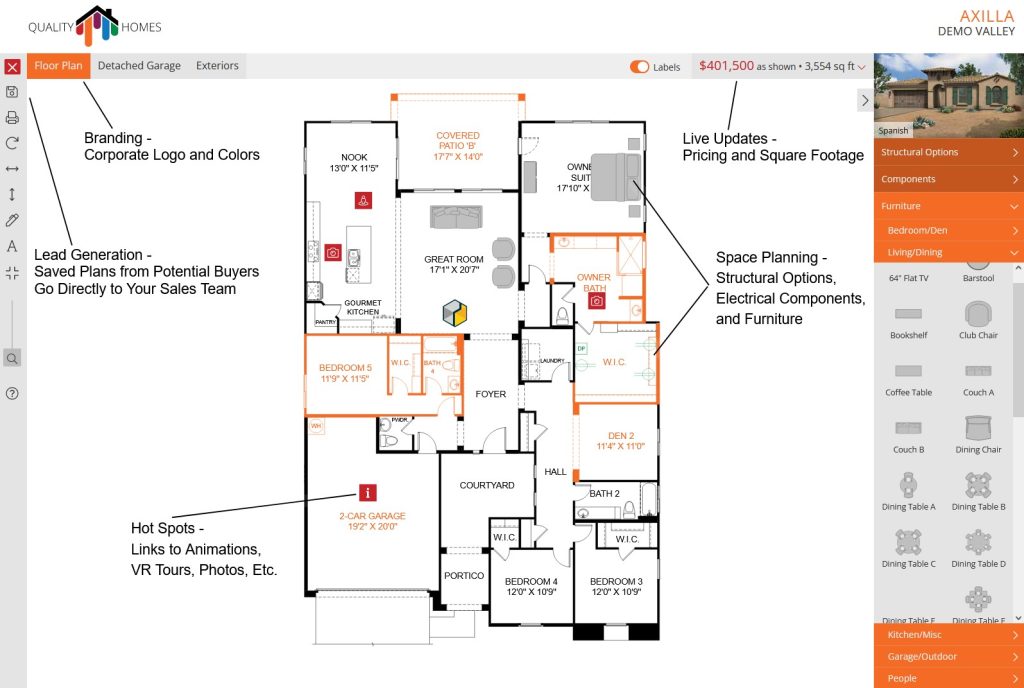
Interactive Floor Plan labeled with many of the pros for both builder and buyer

For builders, offering interactive floor plans isn’t just a nice-to-have; it’s a must. Buyers are more likely to commit when they feel confident in their choices. And nothing boosts confidence like being able to see, tweak, and explore your home before it even exists. Since the first IFP was created decades ago, Outhouse.net is leading the charge, helping builders provide these tools that make buyers swoon.

Conclusion: The Homebuying Hero We Deserve

Interactive floor plans aren’t just about convenience—they’re about transforming the homebuying journey into something exciting and stress-free. They bring clarity to the chaos and turn dream homes into tangible realities. And hey, if you’re lucky, they might just save you from buying a house with a kitchen island that’s one cupboard short of perfect.

Thanks to interactive floor plans, I found my dream home and avoided a layout disaster. Now I’m just wondering if they can help with furniture shopping, too.”—a relieved new homeowner and soon-to-be dedicated IKEA customer.

Head Shot of Outhouse Partner Stuart Platt

Stuart Platt, Managing Partner at Outhouse LLC restructured his 25+ year company to an Office Optional (OffOp) business model in 2018. Stuart’s version of the OffOp model enabled the company of nearly 40 employees to downsize its physical office from 14k sf to 6k sf. Based in Phoenix, local employees desiring to work in the office for a few days, weeks or months can reserve any open desk whenever they want. The remaining employees work from home, fulltime across 10 different states and counting. Schedule time to talk with Stuart at IBS by emailing him at [email protected].

Want to work smarter, not harder? The Outhouse/Blue Gypsy Coffee Station in Sales Central has just what you need:
• Coffee and snacks to improve hustle
• Relaxation to improve recall
• A chance to schedule time with your favorite Home Builder Digital Assets Expert, Kevin Weitzel, here :
https://calendly.com/kevin-weitzel/sales-central-meeting

Navigating Labor and Supply Chain Issues in Home Building

Jim Sorgatz · 01/10/2025 ·

Challenges Faced by an Aging Construction Worker Due to Delayed Retirement Age and Physical Strain. Concept Retirement Age, Physical Strain, Aging Workers, Construction Challenges, Delayed Retirement generated using AI by Anastasiia on Adobe Stock
Aging Construction Worker Image Generated by AI for Adobe Stock

The home building industry is facing some rough seas. Labor shortages and supply chain disruptions are rocking the boat, messing with project timelines and profits. The industry lost a ton of construction jobs during the pandemic – over a million, in fact. Things have picked up, but the homebuilding industry was still short almost half a million workers at the end of 2023. And it’s not just finding people; getting materials is a headache too. Construction costs have jumped by almost 40% since 2020, and supplies take forever to show up on site. It used to take under 7 months to build a typical house, but now it’s over 8 – all thanks to these problems.  

This isn’t just a temporary storm; it’s a whole new weather pattern for home builders. Builders might want to adjust their sails if they want to stay afloat. In this post, we’ll dive into what’s causing these issues, how they’re affecting the industry, and what can be done about it. Plus, we’ll look at how Outhouse can help builders work smarter, not harder.

Where Have All the Workers Gone?

The labor shortage is a big problem with deep roots. One reason is the “silver tsunami” – experienced workers are retiring, and not enough young folks are stepping up to take their place. For every five retirees, the home building industry only gets about two new workers. That gap is getting wider and wider, leaving home building high and dry, especially for skilled trades. Across the U.S., the construction industry has about 8.3 million construction workers, with 3.4 million in home building, but it’s not enough. A whopping 65% of builders can’t find enough finish carpenters. This drives up labor costs and throws off schedules. To put it in perspective, the industry needed over half a million extra workers in 2024 just to keep up. This is even worse than the shortage during the housing boom back in the mid-2000s, even though fewer homes are being built now. Something has to give!  

Image courtesy of CanvaPro

So, why aren’t young people interested in construction?

  • College Craze: Many young people think a college degree is the only ticket to success, so they’re not going to trade schools.
  • Tough Job: Construction can be tough on the body and sometimes dangerous, which doesn’t appeal to everyone.
  • Competition: Other industries like manufacturing are also scrambling for workers, so everyone isl fighting over the same talent pool.

Supply Chain Snags

The pandemic really showed the world how fragile our supply chains are. Closed borders, factories shutting down, and transportation issues created a real mess, making it hard to get materials and driving up prices. It didn’t help that everyone started panic-buying, which made things even worse .  

Lumber prices went through the roof. Appliances, windows, and doors were like gold dust. Projects got delayed, and costs went up all around.  

Even though the pandemic is mostly behind us, the supply chain is still tangled. The war in Ukraine, high energy costs, and ongoing shipping problems are keeping things unpredictable. Some companies are turning to tech to help, using things like “control towers” to track materials and adjust to changes quickly.  

close up architect showing new house project with tablet, empty land plot background generated by AI for Adobe Stock
Tablet computer showing new build generated by AI for Adobe Stock

Strategies for Success

Builders should consider being proactive to navigate these challenges. Here are some strategies that can help:

Finding and Keeping Skilled Workers

  • Invest in the Future: Builders can create apprenticeship programs and on-the-job training to bring in new talent and keep our current workers sharp. Some industry groups like the Home Builders Institute (HBI) and Lowe’s Foundation are putting money into training programs to get more people into the trades. Programs like The House That She Built work to educate young people about the opportunities available in the building industry. 
  • Cast a Wider Net: Look beyond the usual places to find workers. Reach out to women, veterans, and people who were formerly incarcerated. Partnering with community groups and schools can help us connect with potential employees.  
  • Show Appreciation: To keep good workers, consider offering competitive pay, offer great benefits, and give them chances to grow. Think health insurance, retirement plans, paid time off, and opportunities for promotions.  
  • Embrace Technology: Technology can help do more with fewer people. This includes things like automation, prefabrication, and digital tools for managing projects . By investing in technology, home builders can make jobs more efficient and appealing.  

Getting Needed Materials

  • Team Up with Suppliers: Strong relationships with suppliers are key to getting needed materials on time. Open communication and working together can help everyone in the supply chain anticipate problems and find solutions.  
  • Don’t Put All Your Eggs in One Basket: Have backup plans. Find new suppliers and consider using different materials if current suppliers run into shortages or hike up prices.  
  • Plan Ahead: Ordering materials in advance and keeping enough on hand can help avoid delays and price swings.  

Working Smarter, Not Harder

  • Simplify Choices: One way to ease the strain on the supply chain is to offer fewer product choices, sticking with materials that are readily available .  
  • Package Deals: Offering pre-selected material packages can make things easier for everyone and ensure that everything works together.  
  • Order Early: For important things like windows ordering them six months ahead of time and storing them can prevent delays. This takes some planning and space, but it can be worth it.  
  • Speak Up: Advocate for policies that can help fix supply chain problems. This includes supporting efforts to increase production of things like electrical transformers.  

How Outhouse Can Help

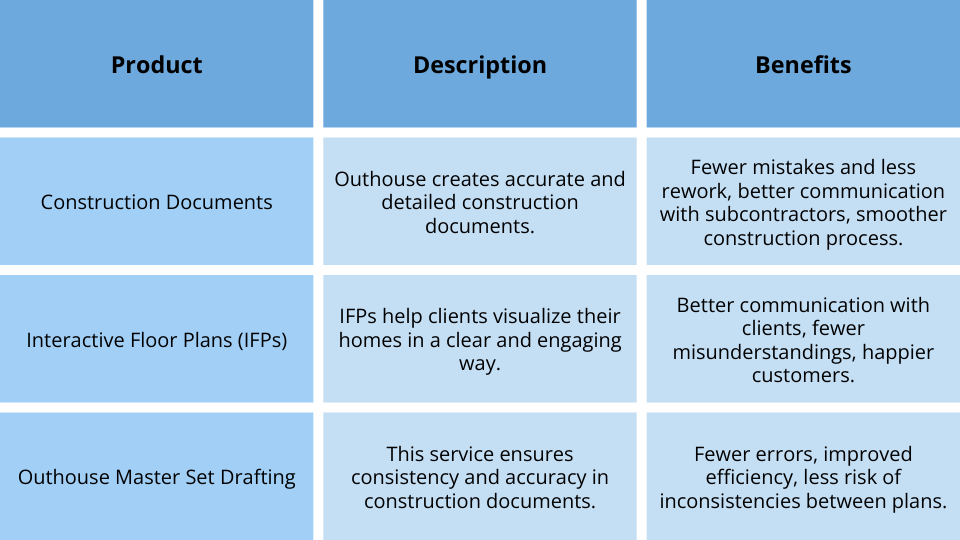
Outhouse.net has some great tools that can help home builders work more efficiently and deal with labor and supply chain issues. By outsourcing your drafting to Outhouse, you can save money and get top-notch expertise .  

Here’s a quick look at what we offer:

Here’s how these tools can help:

  • Less Rework: Accurate plans mean fewer errors and less time and money wasted on fixing mistakes.
  • Clearer Communication: IFPs and other visual tools help everyone understand the plan, preventing confusion and delays.
  • Smoother Operations: Outhouse products help streamline the design and construction process, making things more efficient.

Riding the Wave

The labor shortage and supply chain disruptions are tough challenges, but home builders can overcome them. By investing in the workforce, building strong relationships with suppliers, using technology wisely, and taking advantage of tools like those offered by Outhouse, home builders can weather this storm and continue building quality homes efficiently and profitably.

A La Carte or Package Deal? Lessons Home Builders Can Borrow from Automakers

Tabitha Warren · 01/05/2025 ·

interactive site map zooming in on home site.

When it comes to marketing and visualization tools, home builders often face a familiar question: Should I buy individual products a la carte or go with a bundled package?

At first glance, buying just what you need seems efficient. Maybe you only need renderings right now or just a few virtual tours for your latest community. But over time, a piecemeal approach can lead to higher costs, inconsistent results, and more time spent managing vendors than building homes.

The auto industry figured this out long ago.

Built to Standard, Not to Chaos

When you buy a new car, you don’t choose every nut, bolt, and feature separately. A team thoughtfully designed the trim package you selected to meet your needs, whether it’s an affordable commuter or a luxury performance vehicle.

That’s not just convenience. It’s a strategy. The buyer inherits the cost savings delivered by standardized packages, simplified production, and streamlined quality control.

Home builders can benefit from that same mindset.

When Outhouse tools are created together, design, scale, and branding stay perfectly aligned.

Efficiency Through Bundling

Bundling services, like interactive floor plans, renderings, virtual tours, and interactive site maps, can lower costs in the long run. Procurement in quantity allows teams like Outhouse to offer competitive pricing while ensuring consistent design, branding, and technical accuracy across every asset.

For example:

  • Renderings & Interactive Floor Plans: When the same team creates both, they align perfectly in scale and style, saving time on revisions.
  • Interactive Floor Plans (IFPs) & Virtual Tours: These tools share data and visual assets, which means your buyers see the same details online that they’ll experience in person.
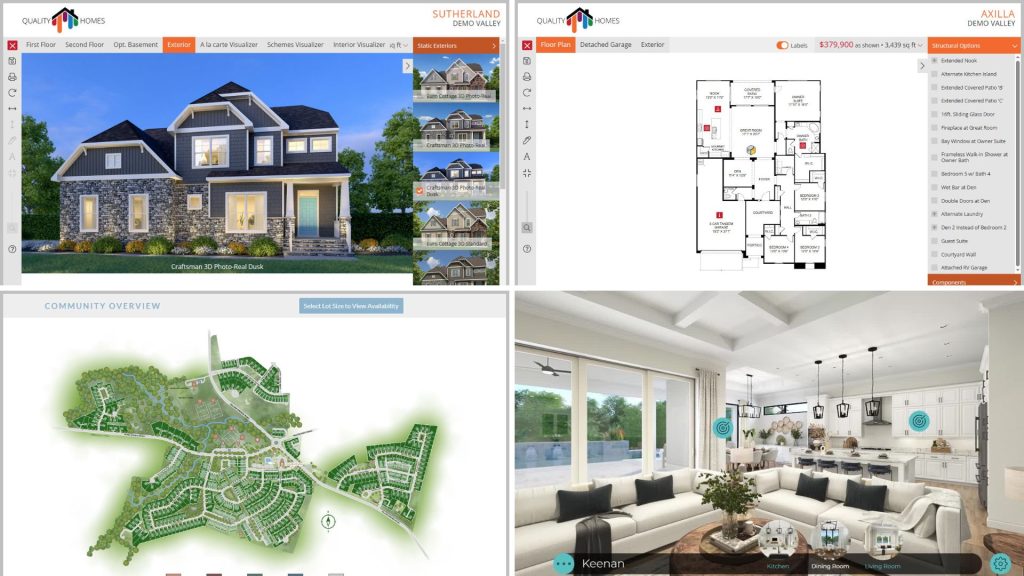
  • Sitemaps & Interactive Floor Plans: When designers create these tools at the same time, your buyers experience a seamless journey, from understanding where a home sits on the site to exploring how they would live inside, reinforcing brand consistency and improving usability.

And just like in the auto industry, bundling creates a smoother, more predictable workflow. You spend less time managing separate vendors and more time focusing on what you do best: building dream homes for your buyers.

Simplifying the Buyer’s Journey

A well-structured package also makes things easier for your customers. When your digital tools, renderings: interactive floor plans (IFPs), interactive site maps, work together seamlessly, buyers can visualize their new home faster and with more confidence.

That consistency builds trust and reduces confusion, helping potential buyers move from browsing to building more quickly.

3D rendering, interactive floor plan, interactive site map

How Outhouse Can Help

At Outhouse, we understand that every builder’s needs are different, but efficiency doesn’t have to mean compromise. Whether you’re ready for a full-service visualization package or want to start small and grow, we’ll help you find the right fit.

We offer bundled solutions that bring consistency, quality, and savings together under one roof, just like the auto industry’s most trusted brands. From renderings to virtual tours to interactive tools, our products work together beautifully.

When you keep your marketing materials built to the same standard, you’ll see better results: faster, smoother, and more affordable.

Want to learn more about choosing the right level of service?

Check out our blog: Good, Better, Best: Finding the Right Fit for Your Builder Marketing Needs.

Contact Outhouse, LLC to find out how we can help with all your home-building website needs

Contact Us

Design Inspiration: The High Line, NYC

Jim Sorgatz · 08/08/2024 · Leave a Comment

Bring Your Home Designs to Fruition at Outhouse

Sculpture by NYC artist Danny Cole.

Have you ever stumbled upon a place so unexpected and exhilarating that it floods your mind with creative ideas and inspiration? That’s exactly what I experienced on a recent trip to New York City while exploring the High Line, an elevated linear park built on a former rail line. This isn’t just any public park; the High Line is a unique blend of art, architecture, and urban design. Stretching 1.45 miles through Manhattan’s West Side it offers stunning views of the city’s skyline and showcases some of its most innovative buildings.

Iconic Architectural Landmarks

From the elevated perch, high above the crowds, the view of iconic buildings, like the Empire State Building, is astonishing. Here are a few of the wonderful buildings you see along the way:

  • The Eleventh (BIG): Designed by the Bjarke Ingels Group, this striking complex features two twisting towers at 76 Eleventh Avenue. Known for its bold geometry and expansive glass walls, The Eleventh offers panoramic views and a modern twist on traditional skyscraper aesthetics​.
The Eleventh – designed by the Bjarke Ingels Group.
  • 520 West 28th Street (Zaha Hadid Architects): A hallmark of contemporary design, this building is noted for its curving metallic façade and futuristic appeal. It is one of the last projects by the legendary architect Zaha Hadid, making it a significant landmark on the High Line​.
Condo designed by Zaha Hadid.
  • Chelsea Market: Originally a factory for the National Biscuit Company, this historic building now serves as a vibrant market with various food vendors and shops. The High Line runs through the building, showcasing its blend of old and new architectural elements​.
The High Line making it’s way through Chelsea Market.
  • 10 Hudson Yards (Coach Building): This skyscraper marks the northern terminus of the High Line and is a central part of the Hudson Yards development, a massive urban revitalization project often compared to Rockefeller Center in scale and impact​.
10 Hudson Yards building in the distance.

Unique Experiences and Sights

Walking along the High Line offers more than just architectural wonders. The park itself is a showcase of landscape design, featuring over 500 species of plants. Areas like the Gansevoort Woodland and the Washington Grasslands offer serene green spaces amidst the urban hustle​

Gansevoort Woodland

The High Line also functions as an outdoor art gallery. With installations like Paola Pivi’s “You know who I am” and Nina Beier’s “Women & Children,” the park provides a continuous rotation of thought-provoking art that enhances the visitor experience​.

Mural by renowned Brazilian street artist Eduardo Kobra.

Although some people don’t love these, beauty is in the eye of the beholder and I found “The Vessel,” and a whimsical sculpture by artist Danny Cole to be quite entertaining as well.

The Vessel – centerpiece of Hudson Yards. This interactive sculpture was imagined by British designer Thomas Heatherwick.

What’s The Connection Here to Home Building?

Wherever you find inspiration for new homes, whether it be the High Line in Manhattan, an out-of-this-world experience elsewhere, or a simple walk in the neighborhood park, Outhouse, the outsource hub for home builders, can help bring your wildest ideas to fruition. Give us a sketch on a napkin, and our architectural team will produce a full set of construction documents.

While plans are in progress, our rendering team will meticulously craft your 3D exterior and interior elevations, virtual tours, and visualizers. Our interactive team works their magic to build digital tools like interactive floor plans and interactive site maps that will engage your homebuyers. We can also coordinate digital assets with your web designer including industry experts Blue Tangerine, Bokka Group, Group Two, Meredith Communications, and Adlanta Creative,

All of this can be accomplished simultaneously in a compressed timeline bringing your homes to market faster, and increasing your ROI. 

The juxtaposition of old and new is striking. The iconic Empire State Building in the background.

Conclusion

The High Line is a testament to New York City’s ability to innovate and adapt, transforming an old rail line into a vibrant public space that seamlessly blends nature, art, and architecture. Whether you’re an architecture enthusiast or just looking for a unique urban experience, the High Line offers a fascinating journey through some of the city’s most captivating sights.

If you visit the High Line, or anywhere else that inspires some fresh design ideas, draw a quick sketch, and send it over to Outhouse.  We will take it from there to bring your idea to life!

Strategies for Staying on Top of Home Builder Software Integration: With Insights from Kevin Weitzel

Jim Sorgatz · 07/22/2024 · Leave a Comment

Outhouse Partner Shares Game-Changing Approaches for Streamlining Operations and Enhancing Customer Experience

In the rapidly evolving world of home building, integrating cutting-edge software solutions has become crucial for success. Kevin Weitzel, a partner at Outhouse, brings his expertise to the forefront, highlighting three key areas where technology integration can significantly impact a home builder’s operations and customer experience. From streamlining lead management to revolutionizing visual asset presentation, Weitzel’s insights offer valuable strategies for home builders looking to stay competitive in today’s market. This blog post explores three critical areas of software integration that can transform how home builders operate and interact with potential buyers.

The CRM Conundrum: Automating Lead Capture

If you have more than a couple leads coming in each day, importing them directly to your Customer Relationship Manager (CRM) is essential… why would anybody want to clerk the consumer given information into their CRM, again, from whatever platform is generating your leads.

–Kevin Weitzel, Outhouse Partner

This is an important point that highlights a critical aspect of efficient lead management and customer relationship management in the home building industry. Here’s why it’s so significant:

Efficiency and Data Integrity: Automatically transferring leads directly into a CRM eliminates the need for manual data entry. This saves time and reduces the risk of human error in transcribing information.

2. Speed of Response: Immediate lead import allows sales teams to respond quickly to potential customers. In the competitive home building market, rapid response times can be crucial in securing a sale.

3. Resource Allocation: By eliminating the need to “clerk” or manually enter consumer information, staff can focus on more valuable tasks like follow-ups and relationship building.

4. Customer Experience: Consumers expect a seamless experience. Having to provide information multiple times can be frustrating and may negatively impact their perception of the builder.

5. Data Consistency: Automated lead imports ensure that all leads are handled consistently, regardless of their source or the time they come in.

6. Scalability: As a home builder’s business grows, manually entering leads becomes increasingly time-consuming and impractical. Automation is essential for scaling operations efficiently.

7. Analytics and Reporting: Direct lead imports allow for more accurate tracking of lead sources and conversion rates, which is crucial for optimizing marketing strategies.

8. Integration Benefits: When leads automatically flow into the CRM, it’s easier to integrate with other systems like marketing automation tools, further streamlining the sales process.

9. Competitive Advantage: Builders who can quickly and accurately process leads are better positioned to outperform competitors who rely on manual processes.

In essence, the statement underscores the importance of streamlining the lead capture process in the home building industry. It emphasizes that in today’s fast-paced, technology-driven market, manual data entry is an unnecessary and potentially detrimental step that can be easily eliminated with proper system integration.

The ERP Challenge: Overcoming Obstacles to Real-Time Pricing

Integrating your Enterprise Resource Planning (ERP) system with your interactive floor plans to achieve real-time pricing is a great idea.  Often easier said than done, the lynch pin in this process is almost always the ERP.  The desire from the home builder is there, but far too often, the ERP itself is intentionally lacking in the ability to feed the data, via an Application Programming Interface (API), into other platforms.  Once implemented, the biggest issue is the ERP provider breaking the feed connections; sometimes regularly.”

Kevin Weitzel, Outhouse Partner

The importance of ERP data for real-time pricing in home building cannot be overstated, and the challenges Kevin highlights are significant. Here’s why his point is crucial:

1. Accurate and Dynamic Pricing: Real-time ERP data enables home builders to adjust pricing instantly based on current costs, market conditions, and inventory levels. This ensures competitive and profitable pricing strategies. [6]

2. Customer Satisfaction: Up-to-date pricing information allows sales teams to provide accurate quotes to potential buyers, improving customer trust and satisfaction. [7]

3. Efficient Resource Management: Real-time data helps with better resource allocation and inventory management, reducing waste and improving profitability. [6]

4. Informed Decision Making: Access to current data allows management to make quick, informed decisions about pricing, promotions, and product offerings. [8]

5. Competitive Advantage: Builders who can offer real-time pricing are better positioned to respond to market changes and competitor actions swiftly. [9]

These issues underscore the need for home builders to carefully evaluate ERP solutions, prioritizing those that offer robust API capabilities and reliable data integration. It also highlights the importance of ongoing dialogue with ERP providers to address these challenges and push for more open, flexible systems that truly support the needs of modern home builders.

Revolutionizing Visual Assets: The Power of Integration

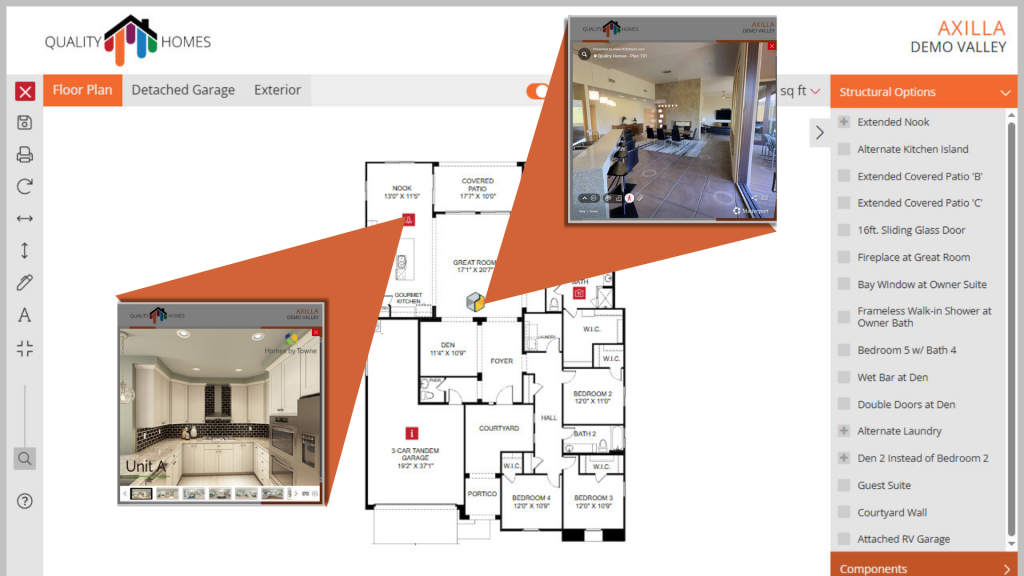
“An easy integration for any homebuilder website is to put all visual home assets on one web page. Why have various assets for a particular home/plan on separate pages?  It is quite easy to integrate all of the home’s assets onto a single page.  As an example, images and/or virtual tours can be linked as hotspots on both Interactive AND static floor plans.  When not linked, a menu of a gallery accessible on a floor plan is easy and garners engagement.”

Kevin Weitzel, Outhouse Partner

Interactive floor plans, renderings, visualizers, and virtual tours for a single home should all be on one page of a homebuilder website for several key reasons:

1. Improved user experience: Combining these elements on a single page allows potential buyers to easily access and navigate between different visualization tools without leaving the page. This creates a seamless, intuitive experience that keeps users engaged. [10][4]

2. Enhanced information retention: By offering multiple visual representations in one place, homebuyers are more likely to retain information about the home. This multi-faceted approach caters to different learning styles and preferences. [10][12]

3. Increased engagement and time on site: Interactive elements like floor plans and virtual tours are known to keep visitors on a website longer. Grouping these features on one page encourages extended exploration, increasing the chances of conversion. [12][13]

4. Streamlined communication: Having all visual tools in one location simplifies the process of sharing information with potential buyers. It reduces the need for multiple meetings or explanations, saving time for both builders and customers.[13]

5. Competitive advantage: Offering a comprehensive, interactive experience on a single page demonstrates a homebuilder’s commitment to innovation and customer service. This can set them apart from competitors and appeal to tech-savvy buyers. [13]

6. Personalization opportunities: Integrated interactive elements allow for easier customization. Buyers can explore different options and visualize changes more effectively when all tools are accessible in one place. [12][13]

By consolidating these features on a single page, homebuilders can create a more effective, engaging, and user-friendly online experience that better serves potential buyers and increases the likelihood of conversions.

Conclusion: Embracing Integration for Future Success

Kevin’s insights underscore the importance of embracing integrated software solutions in the home building industry. By addressing challenges in CRM lead capture, ERP data integration, and visual asset presentation, home builders can significantly enhance their operations and customer experience, positioning themselves for success in an increasingly competitive market.

Citations:

[1] https://subcusa.com/5-reasons-why-construction-companies-need-a-crm-today/

[2] https://blog.velocity23.com/blog/making-home-builder-crm-plan-nhbj

[3] https://www.builderdesigns.com/resources/blog/maximizing-roi-why-a-reliable-crm-system-reigns-supreme-for-homebuilders

[4] https://www.motionops.com/blog/importance-of-crm

[5] https://info.builderfunnel.com/what-is-the-best-crm-for-home-builders

[6] https://www.priority-software.com/blog/how-does-an-erp-real-time-data-support-business-growth/

[7] https://www.silkcommerce.com/epicor/maximizing-the-use-of-erp-data-for-real-time-pricing-for-quotes/

[8] https://www.linkedin.com/pulse/improve-your-reporting-real-time-erp-data-sagesoftware

[9] https://www.vialaurea.com/en/blog/blog-posts-3/the-power-of-real-time-data-in-erp-systems-21

[10] https://truplace.com/real-estate/3-reasons-floor-plans-are-great-virtual-tours/

[11] https://rextheme.com/real-estate-floor-plans/

[12] https://graphiclanguage.net/blog/benefits-of-interactive-floorplans/

[13] https://www.ecisolutions.com/blog/residential-construction/revolutionizing-home-buying-the-power-of-interactive-floor-plans/

Know Your Homebuyer Audience

Jim Sorgatz · 05/31/2024 · Leave a Comment

Are you surprised by the new home construction trends in your own city?

Two homes, one much bigger than the other.
Guess which house is the newbie?!

Having been in the industry for nearly 30 years, it is not often that I am surprised by trends in new home construction. The goal is to sell to anyone who financially qualifies. And, in these times of elevated interest rates and home prices the buzz is all about affordability, which typically translates to smaller homes. So, I am shocked to see the newest homes being built in my “affordable” neighborhood are 50%+ larger and significantly more expensive than my home that was built in the fall of 2022. The families shopping for homes right now are, apparently, looking for space, and have the means to afford a bigger house. And I guess that makes sense. Although there genuine efforts by cities and builders to create affordable housing, with a median price of $430,000 nationally per realtor.com, there really aren’t many homes that are affordable right now for first-time homebuyers. This hammers home the importance of knowing your core audience, building for them, and marketing to them appropriately.

There are many builders who do this well and adapt to the changing environment. One example is Arizona based Meritage Homes whose mission today is, “To design and build homes that are innovative, built with care and superior craftsmanship, which deliver enduring value.” Contrast that with their mission a couple years back, “To build move-in-ready affordable homes for entry-level and first move-up buyers,” and you can see the evolution to better reflect the current new home market.

How can you be sure you are targeting the right audience? Begin with a review of your overall marketing strategy. Do your website, sales offices, and print marketing appeal to the potential buyers you are attempting to attract? Although first-time and luxury home buyers are both seeking out their dream homes, the marketing for these two distinct groups looks very different. This is where consultation with marketing experts like Denim Marketing, Blue Tangerine, Adlanta Creative, and Bokka Group to name a few, can be highly beneficial.      

Next, review your digital marketing tools, and upgrade them if necessary. If you are still using static floorplans and stick renderings, think again. Interactive floor plans, renderings, virtual tours, animations, and visualizers all play an integral role in engaging homebuyers and selling homes.

Interactive Floor Plans (IFPs) have universal appeal, and every builder website should feature them. Buyers of all demographics love to select structural options and customize their living spaces with the interactive furniture planner. 

Interactive floor plan with furniture.
Outhouse’s new colorized Interactive Floor Plan

Quality renderings are essential for all builders as well. Black and white stick drawings are never a good option, even for the simplest of homes. Standard 3D (Outhouse Bronze and Silver) renderings are perfectly acceptable for homes at lower price points. For move-up and luxury homes, you will want to implement 3D photoreal renderings (Outhouse Gold). Luxury and custom builders may want to opt for Platinum renderings that can be further enhanced and customized.

Should your budget for digital marketing tools be a bit larger, investing in animations and virtual tours pays off in two significant ways. First, they enable homebuyers to digitally explore your homes from anywhere. Second, both are available at a fraction of the cost of constructing a model home. Your target buyer should be the top consideration when choosing which format to offer. Younger buyers prefer user-controlled virtual tours. Buyers over 50 typically gravitate towards video format animations.

Visualizer showing a before and after kitchen
Visualizer’s allow home buyers to customize interiors and exteriors

Another online tool appealing to home buyers at all price points is the Visualizer. With both interior and exterior versions available, buyers can mix and match colors and finishes to achieve the desired look and feel. The visualization process is so much easier than making selections for an entire house based on one-inch paint chips and tiny floor, counter, and cabinet samples. It also removes some of the pressure and stress from the design center visit.

Here are a couple more ideas to help you connect with your appropriate audience:

Elevate your brand with distinguished print marketing. Consider the hotel industry when investing in print—the swankier the property, the more excellent the print collateral. The manager of the high-end hotel presents you with a “folio” at checkout, not simply hands or emails you a bill. Although print appeals greatly to buyers in the luxury home market, even younger homebuyers like to walk away from the sales center with a brochure featuring their preferred floor plan and elevations at a minimum. In today’s digital world, people still appreciate a tangible marketing piece when making one of their biggest life purchases. Why not present them with something sophisticated or fun, and memorable?         

Printed brochure showing families participating in various activities
A great print piece makes a lasting impression!

Today, the most progressive builders are transforming their websites with artificial intelligence (AI) to better understand and target their audience. Like that provided by openhouse.ai, AI offers home buyers a personalized shopping experience and predicts where your unique market is going with more accuracy.

So take some time during this evolving housing market to understand your homebuyer and determine if your current marketing strategy is meeting their needs. If not, consider working with online marketing experts to determine which digital and on-site tools will move the needle most with your target audience to increase your new home sales.   

Optimizing the Design-Market-Sell Continuum: Tips for Home Builders – Part 2

Jim Sorgatz · 03/16/2024 · Leave a Comment

In the dynamic world of homebuilding, a term that often echoes through the corridors of innovation is “value engineering.” Investopedia defines it as a strategic method aimed at delivering essential project functions at the minimum possible cost. This approach champions swapping out materials and methods for more cost-effective alternatives while maintaining the integrity of functionality—and, we’d argue, quality, too.

At Outhouse, this principle is at the heart of our Design-Market-Sell methodology. Our suite of services—from drafting to visual aids and digital innovations to print solutions—caters to builders across the spectrum. Yet production home builders crafting anywhere from 30 to 3,000 homes annually, stand to gain the most from our holistic approach. By integrating our seasoned Computer-Aided Design (CAD) expertise, builders can forego the hefty expense of maintaining an in-house drafting team. As our CAD wizards work their magic, our graphics and rendering teams get cracking on interactive floor plans, site maps, virtual tours, and much more, paving the way for a seamless transition to print media and sales office displays. This cohesive strategy not only accelerates your market entry but does so with significant cost efficiency. And therein lies the secret to mastering the Design-Market-Sell continuum.

In the first chapter of this series, we unpacked the foundational tools every builder needs to design, market, and sell new homes. Now, let’s dive into the digital realm that captivates homebuyers and enriches their purchasing journey.

Crafting Emotional Connections: The Power of Interactive Floor Plans and Site Maps

Outhouse has been at the forefront of Interactive Floor Plans (IFPs) and Interactive Site Maps (ISMs) for over two decades, boasting a portfolio that’s as robust as it is innovative. Optimized for mobile use, these tools work like a dream on any device, aligning perfectly with the preferences of over 70% of today’s homebuyers.

Headshot of Outhouse VP of National Accounts Erin Kearney against a wood plank backdrop with the words, "Helpful Tips - Visualizers"
Erin Kearney, VP of National Accounts

Erin Kearney, our VP of National Accounts, emphasizes the importance of understanding buyer needs and adopting a personalized sales narrative. The ability to swiftly capture and analyze consumer preferences sets a builder apart in a market brimming with competition. IFPs and ISMs are more than mere marketing gimmicks; they are bridges to potential buyers’ hearts and minds, allowing them to visualize and tailor their future homes. This emotional engagement is akin to the bond formed during a car’s test drive, transforming a potential purchase of “your house” into “my home.”

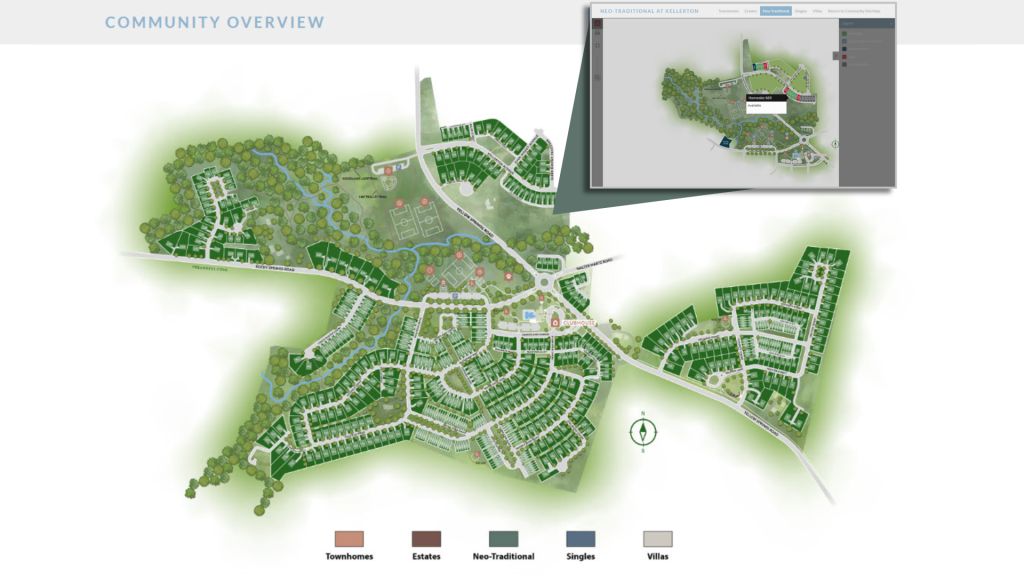
Moreover, ISMs offer a comprehensive view of available lots, linking directly to elevations, IFPs, virtual tours, and more, thus streamlining the journey from lot selection to home customization.

Marrying market insights with interactive tools is critical to truly excel in sales. These technologies elevate customer interaction and deepen the emotional bond with their future homes, positioning builders as pioneers in their field.

Sketch of Marilyn Monroe against a wood plank backdrop with the words, "Helpful Tips - Interactive"

Maximizing Engagement with IFPs and ISMs

Success with IFPs and ISMs hinges on precise construction documents and strategic website placement. Marcy Smith, our incredibly talented but media-averse Graphic Department Production Manager, shares invaluable tips for optimizing these tools:

  • Ensure clarity and accuracy in your CAD files before engaging with a digital tools provider. Autodesk offers a free ‘DWG TrueView’ for this purpose.
  • Incorporate a PDF version of your CAD files for ease of reference.
  • For IFP projects, detailed CAD files minimize back-and-forth, saving time and resources.
  • Clearly delineate desired lots for ISMs, especially in master-planned communities, to avoid unnecessary costs.
  • The placement of these tools on the website is crucial; they should be prominently displayed for easy access by potential buyers, enhancing engagement and site retention.
Headshot of Outhouse partner Stuart Platt against a wood plank backdrop with the words, "Helpful Tips - Visualizers"
Outhouse partner Stuart Platt

Virtual Reality: The Frontier of Digital Engagement

Virtual Reality (VR) stands as the latest marvel in digital homebuilding tools, offering virtual tours, animations, and visualizers that transport the model home experience to buyers worldwide. Stuart Platt, an Outhouse partner, advises:

  • For interior VR projects, consider selecting from Outhouse’s extensive library of interior designs to save on costs, unless custom designs are necessary.
  • Utilize color and material visualizers to give buyers a comprehensive view of their customization options, though it’s wise to limit exterior color schemes to maintain community aesthetics.

As a quick VR refresher: Virtual Tours are user-controlled tours – buyers click from room to room. Animations are essentially a video tour. And, Visualizers are customization tools that allow buyers to select options, colors, and finishes whether it be interior cabinets and countertops, or exterior roofing, stone, and siding.

In Summary

The key to optimizing the design-market-sell continuum is to work with a sole provider like Outhouse – the outsource hub for home builders. Whether launching a new community or seeking innovative cost-saving strategies, Outhouse is here to guide you through optimizing your design, market, and sell process. Reach out today to explore how we can transform your homebuilding journey.

What a Move to Small Town America Taught Me About the Marketing Potential of Small Volume Builders

Jim Sorgatz · 01/27/2024 · Leave a Comment

a caboose in snow hosing the Railway Cafe
Railway Cafe. One of the first places you see when you enter downtown Blaine.

When my spouse and I decided to leave the hustle and bustle of Phoenix, Arizona and head to the Pacific Northwest, we were pretty clueless about where exactly we wanted to settle down. It was a couple of our long-time friends who suggested we check out Bellingham, WA, a city of around 100,000 people that I knew absolutely nothing about. This city, tucked away in the northwestern corner of Washington State, is primarily known for its vibrant brewery scene and its closeness to Vancouver, BC. I found the idea intriguing, especially since our friends had also moved here from a big city and were loving every moment of it. My main concern was whether I’d miss the conveniences I’d gotten used to during my 45 years in a bustling metropolis.

Soon enough, I realized that Bellingham has a surprising cosmopolitan flair for a city of its size. This is partly due to its proximity to Canada and the presence of Western Washington University, both of which add a certain liveliness to the place. Bellingham has quite a lot going for it, including a multiplex movie theater, Costco, Target, Trader Joe’s, Whole Foods, Home Depot, Lowe’s, Macy’s, Dick’s Sporting Goods, a decent dining scene, and an impressive farmers market. This makes it feel much bigger than many cities of similar size. The only thing missing from Phoenix is Sprouts! The stunning ocean views and the abundance of nature sealed the deal. Or so I thought!

two small dogs, one tan and one white in front of a Canadian obelisk sign
My pups walking across the US/Canadian border in Peace Arch State Park.

As fate would have it, we ultimately fell head over heels for Blaine, a cozy town of just 6,000 people located a mere 18 miles further north, right on the Canadian border; and that is where we settled. Was it a culture shock? Absolutely, but when you’re used to driving in Phoenix, a 20-minute commute to the “big city” is a walk in the park. We chose this area because of its breathtaking surroundings and a home in a neighborhood that stole our hearts. Blaine is nestled around Drayton Harbor and is adjacent to Birch Bay, both of which are absolutely unique. Every time I make the drive between the two, I can’t help but appreciate how fortunate we are to live in this picturesque seaside community.

a loaf of chive dill pickle sourdough bread
Anna’s Sourdough Bread which comes in some interesting flavors!

Despite not having all the amenities of a big city, Blaine has its own charm that makes it an amazing place to live. We’ve got L & L Bakery with some of the most scrumptious cakes and macaroons you’ll ever taste, Anna’s Bread that comes in the most unusual flavors (Dill Pickle or Taco Tuesday anyone?), and The Vault Wine Bar with a wine list that rivals most big-city fine-dining establishments. There’s even a trendy speakeasy that recently opened in the lower level of the 1890 Taphouse. The Semiahmoo Resort is located on a picturesque spit reaching out into the bay. And then there’s the Railway Cafe, housed inside a caboose, which is one of the cutest and most meticulously designed spots I’ve ever seen. Adding to Blaine’s uniqueness is Peace Arch State Park, the only park in the country where you can stroll freely between two countries, Canada and the USA. And remember, we’re just a short 20-minute drive away from all those big-city conveniences in Bellingham, and 30 minutes to Vancouver B.C.

a walkway of paves in front of boats in a harbor
Blaine Harbor.

Now, you might be wondering, what does all of this have to do with home building? Well, the lesson here is that you can be a small builder and still pack a punch. For starters, smaller builders often have more control over the quality of their homes. The biggest challenge I see for both small and some larger builders is in the online sales and marketing department. It mainly boils down to a lack of staff and the misconception that having a comprehensive digital marketing strategy is prohibitively expensive. This is where it really pays to seek help from the experts.

Did you know that for as little as $2,700, plus subscription fees, you can have a top-notch digital marketing firm like Blue Tangerine design and manage a professional, high-performing website for you? It’s a website that seamlessly integrates Search Engine Optimization (SEO) tools and comes with ongoing support. Since your website is frequently the first point of contact for potential buyers, investing in one that’s done right and generates leads is crucial. As Greg Bray, President of Blue Tangerine, puts it, “A website visitor’s first goal is to eliminate you! A cluttered website with too much information and a lack of focus can easily turn them away.” Never underestimate the power of your website when it comes to selling new homes.

bar with a rack of bottles wall in front of a wall of windows
Packers Bar at the Semiahmoo Resort.

While you’re upgrading your website, don’t forget to incorporate digital marketing tools like interactive floor plans, site maps, 3D photorealistic renderings, virtual tours, and visualizers. These are engagement tools that bigger builders already have on their websites. The good news is that these assets don’t have to break the bank. Interactive floor plans from Outhouse, LLC, the most robust in the industry, start at just $285 per plan. Virtual tours of pre-built homes kick off at $2,800. Compare that to the cost of constructing a physical model, and virtual tours and visualizers become a no-brainer.

In today’s digital age, with homebuyers doing most of their research online, another tool that larger builders use is AI chatbots, such as those provided by AtasRTX, or human-powered live chat services from providers like CommVersion. You don’t necessarily need to hire additional sales personnel to answer homebuyer questions around the clock. As more and more buyers turn to the internet to purchase homes, having an exceptional Online Sales Counselor (OSC) is crucial. To ensure success, you might want to consider training from a consultant like Blue Gypsy, Inc., or outsourcing the role of OSC entirely to a provider like Shared Drive.

old stone bridge over a stream
Whatcom Falls Bridge in Bellingham.

The bottom line is this: being a smaller builder with a limited budget doesn’t mean you have to settle for an inferior online marketing program. If you prioritize digital marketing and invest a bit upfront, you’ll likely recoup the costs with the sale of just one or two homes. With the rapid advancements in artificial intelligence, it’s essential to bring your website and online marketing tools into the digital age if you want to thrive in the world of new home sales.

horse pulling carriage down street in a small town
Carriage rides at Blain’s downtown holiday celebration.

From Clicks to Community: Mastering Visitor Engagement Using Your Home Site Blog

Tabitha Warren · 01/08/2024 · Leave a Comment

Classic Home Builder Website, theoretical banner for dream homes

Alright, buckle up because we’re diving into the wild world of website success! Hey, you’ve decked out your website with new site maps and floor plans. That’s step one. You’re off to a great start!

You’re imagining the floodgates of customers, right? Well, hold on to your blueprint! It’s a bit more intricate than that.

First off, these shiny interactive floor plans (IFPs) and interactive site maps (ISPs) are stellar, no doubt. They’re like the red-carpet welcoming buyers, but they won’t drive the traffic there.

Enter SEO, the wizardry behind getting eyeballs on your site. Sure, it’s a complex dance with algorithms, but here’s a nifty trick—blogging. Yes, yes, you might be rolling your eyes at the thought of writing, but bear with us!

Think about it. You’ve got these incredible interactive tools showcasing house layouts, upgrades, and the whole spiel. But why stop there? Your site maps aren’t just about the house, they’re your gateway to the neighborhood. Nearby eateries, local schools, hangouts—all the soul of community life.

That’s where blogs become your ace in the sleeve! Write about the hidden gems around your communities. Neighborhood secrets, the best tacos in town, or where to grab the perfect latte on a Sunday morning. Take screen shots of your ISPs to show homebuyers what is in the area, helping them feel like they are already living there and how to plan a perfect day out. It’s not just about homes; it’s about crafting a lifestyle!1

So, next time you grumble about blogging, remember you’re not just selling houses; you’re curating experiences. Give it a whirl. Who knows, your blog might just be the key to unlocking a new world of buyers!2


Now, about the magic of blogs—they aren’t just there for show. Businesses that blog rake in more traffic. It’s a magnet for potential buyers scouring the web for their dream home. Plus, it gives your website some serious SEO brownie points.2

The thing is your website isn’t merely a digital property catalogue. It’s an immersive experience—a sneak peek into a potential life. Every blog post isn’t just a blurb; it’s an invitation, a snippet of the world they could be stepping into.3

See, the key isn’t just in flashing your interactive tools; it’s in telling a compelling story. So, the next time you sigh about blogging, think about the universe you’re creating for your buyers—one engaging post at a time.4

Get tapping those keys; your buyers might just be scrolling, waiting to discover their new home sweet home!

Remember, it’s not just about selling houses; it’s about selling a lifestyle. Cheers to blogging beyond the blueprints!

Tabitha Warren was an Income Tax Accountant for 15+ years.  In the first months of the pandemic, she took a chance and re-careered to freelance in Marketing.  She currently, and very happily, works with video and photo editing, social media marketing, and now blog writing.

  1. (Source: Moz – SEO Basics)
  2. (Source: HubSpot – The Benefits of Business Blogging)
  3. (Source: Forbes – Blogging for Business)
  4. (Source: WordStream – 55 Blogging Statistics and Facts)

Why Interactive Floor Plans are a Must

Stuart Platt · 11/06/2023 · Leave a Comment

From “It’s Neat” to “It’s Needed,” Why IFPs are a Must

Remember in the spring of 2020, when literally no one was out looking at new homes, and home builders finally began going all-in on digital marketing? The big question once the world opened back up was whether or not websites would retain the same level of prominence. That question has been answered, and it is an emphatic “Yes!” Even homebuyers who visit model homes typically conduct a majority of their research online before they ever drive to one of your communities.

What was once a rare luxury on a builders’ website, Interactive Floor Plans (IFP’s) have become an industry expectation. Builders who thought IFP’s were more novelty than a functional sales tool can no longer argue the overwhelming evidence that IFP’s engage buyers, resulting in: 

  • Increased time on their websites. 
  • Increased qualified homebuyer leads. 
  • Increased number of options sold. 
  • Creating positive emotional connections to your plans.  
  • Converting leads to active prospects in a faster timeline.   
Analytics help builders see who their potential buyers are, where they are coming from, the most popular options, and a whole lot more.

Builders also find IFP’s equally as valuable to their sales team as they are to the homebuyer. Why? One reason is that comprehensive IFP’s can answer 80% of the questions your sales staff needs to field. The buyer experience is tremendously better when the simple questions are already answered, allowing the sales team to focus on selling instead of trying to help figure out how furniture will work, how options change square footage and price, “…and why do I lose the casita option when I choose the expanded garage?” 

Picking the right IFP vendor the first time is of the greatest importance.

Not all IFP’s are created equal 

When choosing a vendor to build and host what is arguably your most important online sales tool, in addition to the basics, make sure the platform you select has ALL the following advanced features: 

  • Branding – First and foremost, ensure your IFP’s are skinned and colored to match your website, logo, and corporate colors.
  • Lead Generation – The ability to save a custom plan that not only tracks these leads, but also pushes them to your CRM. 
  • Space-Planning – A detailed furniture library with scalable items for every room, including the garage and outdoor living areas. 
  • Live Updates – Dynamic pricing and square footage so as buyers add options the price and square footage automatically reflect that. 
  • Hot Spots – Clickable icons within your plan allowing buyers to open renderings, photos, videos, virtual reality and any other eye candy to keep them engaged. 
  • Device Agnostic – Regardless of the brand of computer, laptop, tablet or phone, your IFP’s work on ALL of them. 
Today’s homebuyers expect advanced features when designing their homes and planning furniture layouts with an Interactive Floor Plan.

Picking the right IFP vendor from the start is of the greatest importance. Select a company that knows what they are doing because this is not a process you want to go through a second or third time. If you find yourself dissatisfied with your IFP’s (or vendor) after creating them, they can’t simply be transferred to another vendor. You must pay to have them rebuilt from scratch again.

20-years ago Outhouse was one of the first to offer IFP’s to home builders. Our platform continues to deliver the most mature, dependable, feature-rich, engaging user experience in the industry. Our IFPs are designed to incorporate your renderings, virtual tours, visualizers and more, making it easy for homebuyers to engage with all of your digital tools. Click here for an example. In 2023, we also gave our administrative backend a massive upgrade, so your interactive floor plans, interactive site plans, and interactive kiosks are now housed in the sleek, intuitive, new Outhouse Interactive Control Center. Contact us today to learn more

About the Author: Stuart Platt is Managing Partner at Outhouse LLC, an industry leader dedicated to providing an extensive and integrated menu of products and services to production home builders across the world. These services include but are not limited to Architectural Drafting, 3D Renderings, Virtual Tours, Animations, Interactive Floor Plans, Interactive Site Plans, Interactive Sales Office Displays, Interior and Exterior Visualizers, Graphic Design, Commercial Printing, and more. Outhouse is the ONLY company in the nation providing all of these services in house.

Join Stuart Platt at the Home Builder Digital Marketing Summit this October 23-24th! He’ll be diving deep into the strategies discussed in this blog, sharing insights on how to create an online experience that resonates with potential buyers on an emotional level. Don’t miss this opportunity to connect with Stuart and other industry leaders to elevate your digital marketing game.

Unlocking Success in the Competitive Home Sales Market: How Interactive Tools and Incentives Make New Builds a Smart Choice

Tabitha Warren · 10/09/2023 · Leave a Comment

Architect checking house floor plan for new build on tablet device
Architect checking new build floor plan on tablet courtesy of Envato Elements

For the past few years, potential homeowners have been facing a challenging scenario – soaring mortgage rates that threaten to make their dream of owning a home harder and harder to reach. The low supply of existing inventory due to families not moving from their low-interest-rate homes is making the situation even worse. The financial waves of the housing market have left many potential buyers contemplating their options.  Is it still feasible to dive into the deep waters of mortgage loans when the rates are riding too high? Or should they seek the calmer shores and consider a different route altogether?

In this blog, we’ll explore why the alternative path that more and more prospective homeowners are setting their sights on, purchasing a new build home, might be a better option. We’ll also talk about some of the most alluring incentives that home builders can leverage to take advantage of this market. Finally, we’ll talk about the need for home builders to have an effective website with engaging digital tools to set themselves apart from their competitors.

New builds come with some advantages to existing properties. Among these advantages might be the ability to customize the home, energy efficiency, warranty coverage for the initial year of ownership, and lower immediate maintenance costs. Builders that can market these advantages as cost saving advantages might just win prospective buyers from the resale market.  What home buyer doesn’t want to save on every aspect possible of homeownership?

So, what home builder incentives are the most attractive to new home buyers? As mortgage loan interest rates soar, there are two stand out incentives.  First, closing cost assistance can reduce the financial burden of a new home buyer at the time of closing.  This makes homeownership much more attainable to buyers at these heightened rates. The second is interest rate buydowns! Some builders are offering to buy down the buyers’ mortgage rate to get the prospective buyer to a more manageable monthly mortgage payment. From this writer’s logic, this frees the buyer to only need finances for one of the two things themselves. They either need enough money for a down payment or an interest rate buy down if they want a nice low payment for the term of their dream home.

Housing market affordability is so strained that this Fortune 500 homebuilder is offering a fixed 4.25% mortgage rate in some communities

Check out this article from Forbes!

Builders have a myriad of other incentives aside from these two.  They can offer base price discounts on specific homes. This usually happens with the first few homes in a new development.  They can offer free or discounted upgrades, customizations, or appliance packages.  They can also offer to pay HOA fees for the first year. These are just a few of the incentives available that can make new construction more financially attractive than purchasing an existing home.

Never Underestimate the Value of a Good First Impression.”

You’re with me this far. You’re a builder. You offer some of these incentives, but you want to know how to set yourself apart from other builders when marketing to potential homebuyers. Interactive tools may be key in the real estate market.  These tools offer a more engaging and informative experience to potential buyers, making it easier for them to visualize themselves in a potential new home. It can also make sure they clearly understand what the properties have to offer. 

Don’t believe us?  Here’s some statistical proof provided by the Content Marketing Institute:

  • 88% of marketers say interactive content differentiates them from competitors giving them a significant advantage in a crowded market.
  • 93% of marketers agree that interactive content is effective in educating buyers as compared to 70% for static content.
  • Interactive content attracts 2x the engagement of similar static content.

Those numbers are hard to refute, and they are just some highlights. If you want more information, head over to the Content Marketing Institute’s website to read more of their studies.

Some of the best interactive tools come in a few different categories: visualization, personalization, and lead generation, to name a few. When it comes to visualization, the most useful tools for new home buyers tend to be interactive floor plans, virtual tours, and real-time online booking and scheduling. Interactive floor plans (IFPS) allow buyers to customize layouts and explore different design options. Buyers can visualize a space and personalize it to their needs.  This can be a powerful selling point for new construction homes where there are often many customization options.

Interactive Floor Plans Top New Buyers’ Useful Tools Lists

Virtual tours or 3D tours allow a homeowner to experience a home, whether it is real or 3D rendered, from the comfort of their own home.  Builders can showcase the home in detail. This is incredibly important in times when physical access may be limited or just plain inconvenient.

Further, websites can integrate features that allow buyers to schedule appointments, book showings, or attend virtual open houses. This is a convenience for both the buyer and the home builder!

Once the potential buyer is interested in a builder, the best interactive tools need to be personalized; this can be achieved with real-time updates on available homes, pricing, and promotions. After all, everything else on the builder’s site hooked this potential home buyer; the builder will want to keep them interested! A great addition after purchase might be online sales tools. Many websites allow buyers to complete the purchase process online, including signing contracts and making payments.

Finally, lead generation might be the final piece of the interactive tool puzzle. Home builders can use website analytics to gain insights into user behavior. A data-driven approach can help them refine their marketing strategies and help them understand what features are most appealing to buyers. They might use this information to improve their sales tactics. Moreover, valuable data about user engagement and preferences can be provided to builders from their interactive tools. When potential buyers engage with these tools, builders can collect information and follow up with targeted marketing and sales efforts specific to individual buyers.  

Modern websites can capture leads and integrate with customer relationship management (CRM) systems. Sales teams can use this information to effectively nurture leads and follow-up. The best way to turn a potential buyer into a homeowner is with timely and personalized information. Search Engine Optimization (SEO) and social media integration might be the bow on the package. A well-optimized website can rank higher in search and make it easier for potential buyers to find and explore a builder’s properties.  SEO strategies can drive organic traffic to the builder’s site.  With the addition of well-thought-out social media integrations, builders can leverage social networks for marketing and referrals.

To sum it up, modern website assets empower homebuilders to provide a superior online experience, engage potential buyers effectively, and leverage data to optimize their sales strategies.  By staying up-to-date with the latest web technologies and user experience trends, homebuilders can gain a competitive edge in this competitive home sales market. There is definitely room for new home sales to outpace resale with the proper online strategies!

If all of this sounds a little mind blowing to you, a great place to learn about all of these digital tools, and the corresponding analytics would be from the experts at The Home Builders Digital Marketing Summit, and some of the amazing companies sponsoring and hosting the event.

http://buildermarketingsummit.com

Tabitha Warren was an Income Tax Accountant for 15+ years.  In the first months of the pandemic, she took a chance and re-careered to freelance in Marketing.  She currently, and very happily, works with video and photo editing, social media marketing, and now blog writing.

The Importance of a Digital Marketing Ecosystem: A Lesson from Tesla

Jim Sorgatz · 09/18/2023 · Leave a Comment

 Blue Electric Vehicle charging at Tesla Station.
Tesla Image Adobe Stock

When you think of leaders in the electrical vehicle movement, I believe even the Elon haters would have to give props to Tesla. They have moved into a position of power that is rare. One of the chief reasons for this is their self-contained ecosystem. From batteries to auto parts to charging stations and software, Tesla is in control. There is little that is outsourced. 

This streamlined approach makes them significantly more profitable than other auto manufacturers. They also have one of the most powerful computer systems in the world, enabling drivers to control everything from a sleek touchscreen. Tesla also gathers data from their vehicles. Paired with AI, the data from every mile driven gives them the lead in autonomous driving. No one knows when robo taxis will make their grand entrance, but the probability of it happening in my lifetime is exciting!

Tesla Touchscreen Controls
Tesla Touchscreen Controls Adobe Stock

The Ecosystem

What does all this have to do with homebuilder sales and marketing, you ask? It all comes down to the ecosystem. While some builders use individual vendors for renderings, interactive floor plans, print materials, etc., savvy builders understand the benefits of working with a full-service provider like Outhouse. In addition to digital marketing assets like interactive floor plans (IFPs), interactive site plans (ISPs), renderings, virtual tours, visualizers, animations, and digital kiosks, we also have an in-house print and signage shop and a full-service computer-aided design (CAD) department. Clients who use all our services benefit from significant time and cost savings. When you make changes in CAD, those edits carry across our entire ecosystem.  

Our “Touchscreen” – the Interactive Control Center

Like Tesla, Outhouse now has a slick “touchscreen,” our new Interactive Control Center. With the launch of this intuitive administrative back end for our interactive platform, we are setting the stage for a new future in interactive control. A few of the features include:

  • A new look with upgraded graphics for ease of use and improved navigation
  • A clean template with easy-to-see project permissions
  • Choice between light and dark themes, similar to our IFPs
  • The ability to personalize by setting your home page – perhaps a specific community or your interactive floor plan list
  • No more pagination. The plan list is fluid. While not a huge issue for builders with only a few IFPs, builders with dozens will appreciate this time-saver
  • Seamless movement between IFPs and ISPs in the same community. No more toggling between lists of IFPs and ISPs
  • Simplified self-serve reports and the ability to export data in Excel, CSV, JSON, and XML
  • A search box and filters to make it easy to find what you are looking for.

Also coming soon to the Control Center are a dashboard, and everyone’s favorite – widgets. Everything is designed to simplify the management of your interactive tools and data collection from potential clients. 

Tesla’s Super Chargers in a line Adobe Stock

Integration

Integration makes life easier. Ask the owners of EVs manufactured by companies other than Tesla. There’s a reason the most prominent auto manufacturers are signing contracts to access Tesla’s Supercharger network. Constructed in secret, Tesla unveiled their first six Supercharger stations in 2012. From there, they have continued building a Supercharger network nationwide. They understood the need for a strong network of Superchargers for EVs to compete with gas-fueled vehicles. Tesla also fixes and improves their cars simply by issuing a software update. Their ecosystem is fully integrated, from construction to batteries to software to charging stations.

In recent years, Outhouse has enhanced our interactive products to achieve full integration with each other. Starting with our interactive site plan, your home buyers can click on a lot to reveal renderings of the available homes. Click on a rendering, and it opens an interactive floor plan. While engaging with the IFP, home buyers can also view virtual tours and select colors and finishes with interior and exterior visualizers. All of our interactive tools can be neatly packaged into an interactive kiosk for potential homebuyers to peruse while at your sales center.

Outhouse Interactive Site Plan

Before you start your next community, consider how your company might benefit from implementing a complete interactive ecosystem rather than just a few pieces and parts. Today’s home buyers are shopping online; your website should make it easy for them to decide your homes and communities are the right fit for their families. As the EV market grows, you may also want to consider where to place a Supercharger!

  • « Go to Previous Page
  • Page 1
  • Page 2
  • Page 3
  • Page 4
  • Go to Next Page »

Ready to get started, want more info?

Contact Us
  • Facebook
  • Instagram
  • LinkedIn
  • YouTube

Outhouse

11048 N 23rd Ave #103
Phoenix, AZ 85029

602-371-4394

© 2026 All rights reserved