• Skip to primary navigation
  • Skip to main content
Outhouse logo

Outhouse

The Outsource Hub for Home Builders

  • Home
  • Products & Services
    • Architectural/CAD
    • Rendering
    • Virtual Reality
    • Interactive Floor Plans
    • Interactive Site Maps
    • Interactive Kiosks
    • Print Marketing
    • Sales Office Displays
  • Partners
  • News
    • Events
    • Blog
    • Podcast
  • About Us
  • Contact Us
  • Show Search
Hide Search

marketing

Vision, Launch, Shift, Vanilla?

Kevin Weitzel · 04/13/2026 ·

Indian Motorcycle traded distinctiveness for familiarity

Two red Indian Motorcycles in the middle of the desert.
Photo courtesy of Indian Motorcycle.

By Kevin Weitzel

When Indian Motorcycle was relaunched in 2011 under the stewardship of Polaris Inc., the opportunity seemed enormous. The heavyweight American cruiser market had long been dominated by Harley-Davidson, a company whose visual language, teardrop tanks, blacked-out V-twins, and low-slung silhouettes had become synonymous with the category itself. For Polaris, reviving Indian wasn’t simply about selling motorcycles. It was about reintroducing one of America’s oldest motorcycle marques and offering something visually and culturally different.

At lunch, it felt like they might do exactly that.

Indian Motorcycles War bonnet.
Featured Accessory: Aeromach War Bonnet LED Fender Light via Billet Proof Design.

Early modern-era models such as the Indian Chief Classic and Indian Chieftain leaned heavily into design elements that made the brand historically recognizable: valanced fenders, prominent war-bonnet styling, deeply skirted bodywork, and flowing lines that looked almost art deco compared to the industrial minimalism common in Harley’s lineup. They were unmistakably Indian. Even at a distance, the bikes carried a silhouette that separated them from Milwaukee’s machines.

For a moment, the strategy seemed clear. Don’t “me too” Harley. Be Indian.

This approach also served a practical purpose. The cruiser and touring market is famously brand-loyal and competing head-on with Harley-Davidson using similar aesthetics is difficult. A distinct design language allowed Indian to appeal to riders who wanted something American but different, as well as those drawn to the brand’s heritage without wanting a visual clone of the dominant player.

But over the next decade, something shifted.

As Indian expanded its lineup, with models like the Indian Scout Bobber, Indian Challenger, and various stripped-down cruiser variants, the design philosophy began to drift. Valanced fenders disappeared from many models. Bodywork became simpler and darker. Blacked-out engines and minimalist styling cues, long associated with Harley’s modern strategy, became common across Indian’s catalog.

Individually, none of these changes were shocking. Motorcycle design trends are evolving, and manufacturers respond to market demand. Collectively, though, they represented a gradual visual convergence with the company Indian once had the chance to stand apart from.
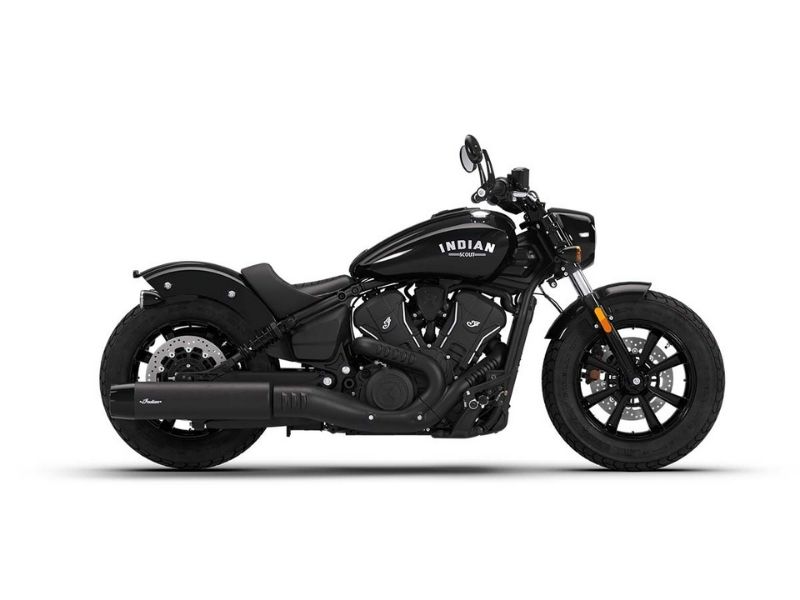
Side View of black indian motorcycle
Photo Courtesy of Indian Motorcycle UK

By the early 2020s, many Indian models, particularly in the midweight cruiser segment, began occupying the same aesthetic territory long defined by Harley’s Harley-Davidson Softail and Harley-Davidson Sportster families: muscular tanks, short fenders, black finishes, and stripped-down silhouettes. The design signatures that once separated Indian from its rival became less consistent across the lineup.

The result is not that Indian motorcycles became bad motorcycles. Far from it. By most technical measures, engines, reliability, and build quality, the modern lineup is strong and competitive. The question is more philosophical than mechanical.

When Indian returned, it carried over a century of history and a visual identity unlike anything else in motorcycling. That heritage gave Polaris a rare opportunity to build a modern American motorcycle brand that did not simply mirror the market leader.

Fifteen years after the relaunch, Indian remains successful, respected, and widely recognized. But the brand that once looked unmistakably different now often blends into the visual language defined by its biggest competitor.

The vision was distinctive.
The launch was bold.
The shift was gradual.

The result, some might argue, is a little more vanilla.

A brand’s visual identity is its most valuable asset until it starts to fade. Don’t let your community’s vision blend into the background. Let Outhouse help you define a look that remains unmistakable.

Explore Rendering Services

How Photoreal Renderings & Virtual Tours Sell Homes

Jim Sorgatz · 04/23/2023 · Leave a Comment

Marketing insights from photos of an expedition to Antarctica

Black and white photo of two sets of jagged rocks forming a saddle.  Old fence posts in the foreground.   Reminiscent of a moonscape.
Deception Island – the caldera of an active volcano. Although taken in black and white, this photo accurately represents the starkness and other-worldly feel of the island.

With even the smallest home builders moving heavily into 3-D photoreal renderings, virtual tours, and animations, I thought it might be interesting to revisit this post from a year ago. This update includes additional information on rendering and virtual reality (VR) tools, plus new images of the latest photoreal renderings, and links to virtual tours. This also is one of my favorite posts, combining my career with my favorite pastime – travel.

A bucket-list trip to Antarctica is one of the most incredible and inspirational journeys. Seeing thousands of penguins and other animals, yet not a single plant anywhere is mind-boggling. The football field-sized+ icebergs, especially the tabular varieties, are astounding. And the monochromatic landscape is other-worldly. I came away with a desire to take better care of our planet, a greater appreciation of finding peace in solitude (this place is desolate!), and the realization I can enjoy summer when the high is just above freezing.

Colorful kayaks and kayakers in water with floating bits of ice, and dark clouds overhead.
Kayaking in Neko Harbor.
Penguins surrounding bright orange duffel bags on a large rock, set on a rocky beach with snow in the background.
The inquisitive penguins.

I also gained some key marketing insights. A recent post, Rules of Engagement, discusses the powerful lesson we learn from penguins, who are the stars of the Antarctic show. They captivate visitors as they gather stones to build nests, guard their chicks, run en masse along the beach to dive for food, and shuffle around checking out us humans. Likewise, digital marketing tools, including Interactive Floor Plans, Interactive Site Plans, and Visualizers, play a starring role on builder websites and are integral to the new home journey. Captivating and engaging homebuyers, digital tools create strong emotional connections and lead to an increase in closing sales.

A lesson also came on the importance of color and texture and how it relates to visual marketing tools like renderings, virtual tours, and animations. Against a backdrop of grey and white, the most captivating photos include glimpses of vivid color, most often provided by humans. Pops of red, orange, and yellow on ships, clothing, and kayaks look stunning in the barren landscape.

Bow of a ship with red trim cracking a giant ice sheet.
Cracking a massive ice sheet in Wilhelmina Bay. Note the power or red.
An expedition team, wearing bright orange and yellow jackets, on an inflatable Zodiac boat cruising through water with chunks of ice
Traveling by Zodiac in the Antarctic Sound.

Colors from nature include teal from glacial ice; clear blue skies; orange, pink, red, and purple emanating from the stunning midnight sunsets; bits of orange and yellow on penguin beaks, necks, and feet; and an occasional rainbow. That’s about it! What really makes Antarctica so dramatic are the textures. Smooth snow, jagged rocks, fluffy clouds. Constantly changing due to weather, they overwhelm the senses.

A black ship with red and white trim next to a giant, triangular, blue-tinted iceberg.
Our ship, anchored next to a massive, blue-tinged iceberg.
Blue icebergs floating in front of a rocky mountain with snow. Clouds overhead, and reflecting in the water.
Cool blue on an iceberg and purple-tinged skies add rare bits of natural color in Neko Harbor.
Bright orange sunset over the ocean against a backdrop of grey clouds.
The most color at any one time, a vibrant sunset, sometime around midnight.

And that brings us to the importance of photoreal renderings, virtual tours, and animations in new home sales. Colors and textures appeal to everyone. They move and motivate us, playing an essential role in marketing strategies. Photoreal imagry brings colors and textures to your pre-built homes. It gives potential buyers a realistic view of your homes, often generating sales before a model is ever built. 3-D Renderings are the first place to start. We still see builder websites with flat, black/white stick drawings. Yuck! These in no way engage the senses like a proper photoreal rendering.

Photoreal rendering for Winslow Homes – daylight.
Same elevation for Winslow Homes – a dramatic dusk shot.

Even more engaging are virtual tours and animations. What’s the difference? Virtual tours, like the ones for DeLuca Homes and KLMR Homes shown here, are user-controlled. Viewers click into a room and then turn the image for a 360° view. Animations, on the other hand, are video tours. Both bring your “model homes” to buyers around the world. Virtual Tours tend to be the most popular as they are more cost-effective, and most users enjoy the hands-on experience.

Invite your buyers to discover your homes with virtual tours. Click the DeLuca Homes kitchen to explore their Mayfair plan.
A stunning home with spectacular views. KLMR Homes Bellos at the Summit.

People love to explore and engage. These are the reasons many of us enjoy discovering the world. When it comes to purchasing a new home, your buyers also want to personalize. By implementing digital and visualization tools on your website, you invite homebuyers to do all three. Contact Outhouse today to learn more about our interactive floor plans, interactive site plans, virtual tours, animations, visualizers, and renderings, plus our interactive kiosks, which incorporate all.

Clouds and a rainbow between two jagged hills straddling a channel with water.
A rainbow – the perfect ending to a storm in the Lemaire Channel.

Why Should I Attend Trade Shows and Summits?

Tabitha Warren · 08/01/2022 · Leave a Comment

Digital Marketing Summit Panel

Imagine being a market leader when your company emerged; you held 10% of market share.  A couple of years later, that number grew to 20%!  But you decided that you didn’t need to evolve.  You stuck to what always worked.  You thought that the innovations coming out were quirky.  You thought they would quickly fail because of design flaws.  You had such a following of dedicated customers that you thought, “I don’t need to invest in strategic, creative marketing.”

Meanwhile, your two top competitors put millions into research.  One became known for being the leader in new and exciting technologies.  They developed their flaws away, vied for market share, found fun new ways to market their products, and this company nurtured “super-fans,” to quote Meredith Oliver.

Moreover, you don’t even think that some projects they are working on are real.  Why would you invest in replicating innovations like that? 

Some of you may already recognize this cautionary tale.  This is the story of Blackberry and iPhone.

What Blackberry never learned that Mac, Steve Jobs, and iPhone did is how to pivot.  Home builders could learn from Apple’s clever moves.  The company not only entered a market that wasn’t their primary market.  They moved away from computers and iPods and into the cell phone market.  Then, they continued to pivot away from being a product company to a service company.  Their phones are only secondary to the apps and services sold through their various platforms. 

What does all of this have to do with the title of this blog?  Well, the answer is everything.  Trade shows and summits bring together top industry partners and competitors.  They put research and innovation all under one roof.  If your research shows that your number one competitor is blowing you out of the water regarding sales and wait lists, go to a summit they are attending.  You may have a chance to discuss strategy with them or at least overhear it.  Maybe they won’t be there, but some of the services they use in their digital marketing strategy will be.  These events are your chance to casually talk to vendors and experts in one place.  They provide the opportunity to talk to other builders using those same products and see how the services have helped them succeed. 

Are there holes in your online presence?  You are bound to find a solution to digital brand equity.  One thing we learned at a recent summit is that Google reviews are the new word of mouth.  The difference is that word of mouth disappears; online reviews live on forever.  You could learn how to get that 3-star review to a 4-star. 

Wait a minute, you say you aren’t using Google to maximize your online marketing yet?  Do you know exactly how much revenue should be attributed to your email marketing campaign?  To that last Google Ad you ran?  There is going to be a speaker who addresses that.  You might overhear that a sponsor there offers those services.  Google is at the center of sales and marketing these days.  Every company needs to know how Google reviews help their company’s Google marketing plan.  Google Analytics is the place to understand those metrics.  If your company isn’t using Analytics, they should be.  If you don’t have staff that understands Analytics, there is a speaker to help you get started.  There are also companies to run those numbers for you.  Industry events give your company a place to start. 

Summits and trade shows aren’t just excellent places to find solutions and to keep up with industry innovations in a competitive market.  They are also a fantastic place to take new employees to train them.  Did you poach a brand new OSC or sales team from another industry?  They know a lot about sales but not in the home building industry.  Here is where you can throw them into the deep end.  They will train with you, but that new OSC will learn a lot from networking with others in the industry.  They will learn about technologies.  They will hear stories about what others have done wrong and what they have done right.  This strategy doesn’t only work for OSCs and sales teams.  Your marketing team and many other employees can benefit from summits, expos, and trade shows as well.  We live in the digital age, and your marketing team needs to know how to utilize their marketing budget to bring your sales teams the best leads.

One upcoming event that offers a deep dive into home builder online marketing and sales is the Home Builder Digital Marketing Summit. Taking place September 21-22, 2022, in Phoenix AZ, full details are available here.

Tabitha Warren was an Income Tax Accountant for 15+ years.  In the first months of the pandemic, she took a chance and re-careered to freelance in Marketing.  She currently, and very happily, works with video and photo editing, social media marketing, and now blog writing.

Growing Sales With OpenHouse.ai – a Case Study with Trico Homes

Bill Gelbaugh · 10/26/2020 · Leave a Comment

What Does OpenHouse.ai Offer?

At OpenHouse.ai, we believe that it is essential for growth and success within the homebuilding industry to understand a homebuyer’s stage of life, motivation, and needs. Therefore, we offer homebuilders a data-driven marketing solution to connect with homebuyers and maximize the opportunity for sales.

Graph showing OpenHouse.ai rate for online visitors to lead conversion across all clients growing from 0.85% to 1.24% from February 2020 to August 2020.

Our platform uses data science and artificial intelligence to offer both an insights dashboard and an engagement platform. The engagement platform tracks a customer’s real-time behavioral patterns to predict the likelihood of purchase, and amenity, location, and price preferences. With this understanding, our system updates inventory search results and creates recommendations for each unique website visitor in real time. This allows homebuilders to put their best foot—or maybe we should say floorplan—forward, for each customer. Our platform also offers a comprehensive analytic insight dashboard, which provides a birds-eye view of homebuilder’s customers and operations. We pair the real-time behavioral data gathered from the engagement platform with changing market trends, to provide the most up to date and relevant insights into a homebuilder’s customers and communities. Builders can leverage our platform to optimize marketing spend, increase lead conversion, improve operational planning and promote data-driven sales and marketing procedures.

Trico Homes – A Lead Nurturing Case Study

Beautiful white kitchen with island n Trico Home.

BACKGROUND

In 1992, Wayne Chiu founded Trico Homes in Calgary, Alberta with the commitment of being a different kind of homebuilding company; one with an extra degree of care to create the best place to live for every individual at every life stage. Trico’s communities have now expanded into Cochrane, Airdrie, Chestermere and Okotoks bringing their quality designs, craftsmanship and customer care to each and every project. Trico Homes continues to show the utmost commitment to improving the homebuilding industry, the city of Calgary, and the homebuying experience. 

CHALLENGE

Trico Homes was in search of a solution to further improve the homebuyer’s web experience, while simultaneously bringing in more potential customers to Trico’s show homes. As 51% of people buy homes they found online, it is essential for Trico, and other homebuilders, to optimize the online experience. Trico in particular needed a new tactic to educate and nurture customers earlier in the homebuying process. 

Homebuilders alike also face the challenge of making high impact decisions on a daily basis, from floor plan selection to land development, solely based on intuition. Trico wanted to ensure confident decision making through the use of data and needed a technological platform that empowers data-driven decisions within homebuilding.

SOLUTION

Trico Homes embraced OpenHouse.ai’s data-driven approach of using adaptable experiences, nudges and a host of other tools to help homebuyers find what they want, faster. OpenHouse.ai’s platform provides the capability of directing prospective buyers to the most relevant products in real time. The user-friendly dashboard uses descriptive, diagnostic, predictive and prescriptive analytics, ultimately helping Trico better understand their homebuyers and provide a scalable customer experience.  

  • Accurately target buyers through improved segmentation using advanced analytics
  • Produce community specific campaigns to increase conversions 
  • Select the optimal product and floor plan designs for each segment based on geographic, demographic and community data
  • Focus on nurturing leads and, overtime converting these prospects to leads
  • Utilize OpenHouse.ai’s dashboards as the hub for all data analytics to provide powerful insights to understand customers needs and the changing market
  • Create an optimized and personalized website experience for online shoppers

RESULTS

  • 45% increase in organic search traffic
  • 41% increase in direct search
  • Increase of over 4 additional homes sold
  • 41% reduction in marketing spend 
  • Contact to conversion rate increased by 29% with no additional training to sales staff
  • 18% reduction in cost/lead
  • 18% increase in foot traffic 

CLOSING THOUGHTS

OpenHouse.ai’s marketing platform ultimately empowered Trico Homes to utilize data and technology to drive high impact decision-making within homebuilding. OpenHouse.ai’s technology enabled Trico to provide a personalized experience from website to sales center; as Trico’s website now learns and grows with every interaction, ultimately narrowing down homebuyers search to homes in the price range, style and community they want. Through utilizing AI-technology, Trico is able to better nurture and educate their leads and offer them a superior home shopping experience in the digital space.

Trico’s improved lead nurturing is also recognized in the acceleration of their sales process. As the integration of OpenHouse.ai’s technology drives more qualified buyers and a higher volume of foot-traffic to their show homes, Trico has seen an additional 4 homes sold per month compared to their previous monthly forecasts.

The adoption of OpenHouse.ai’s technology has ultimately improved the homebuying experience, shortened the sale cycle and enabled data-driven decision-making. OpenHouse.ai’s platform provides robust dashboards that serve as the hub for all of Trico’s data, providing powerful and meaningful insights to drive these informed business decisions. OpenHouse.ai’s technology delivers dynamic analytics and detailed demographics to ensure Trico and their marketing team are effectively and accurately understanding their customer segment and market. The integration of OpenHouse.ai’s technology has created lasting value for Trico Homes, ultimately advancing their marketing function and driving sales while simultaneously improving the homebuying experience for each of their valued clients.

Ready to get started, want more info?

Contact Us
  • Facebook
  • Instagram
  • LinkedIn
  • YouTube

Outhouse

11048 N 23rd Ave #103
Phoenix, AZ 85029

602-371-4394

© 2026 All rights reserved