

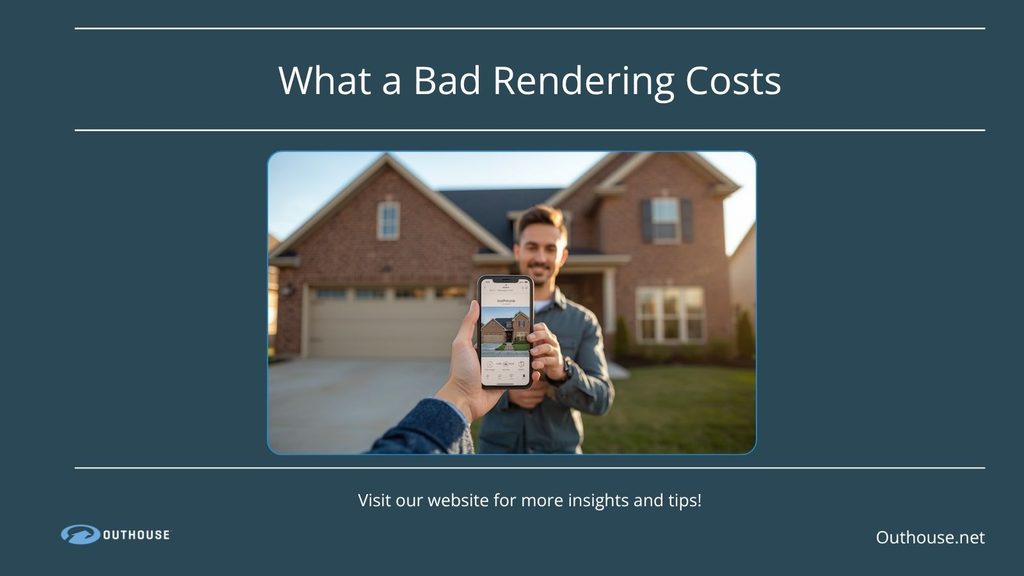
There is a specific kind of post that shows up on homebuyer forums, and once you have seen one, you start noticing how many there are. A buyer stands in front of their finished home, phone out, comparing it to the rendering they approved months earlier. The rendering showed deep, dramatic brick with real contrast against the trim. The actual house is pale, flat, almost yellow. “So very disappointing,” one buyer wrote. Another said something that stuck with me more than the complaint itself: she would never buy a home off a rendering again, not after seeing how far the image drifted from the product.
That is not a comment about brick. That is a comment about trust, and it did not cost the builder a single dollar in materials. It cost them something much harder to rebuild.
The Paragraph Every Builder Now Needs
Here is something worth sitting with: nearly every new construction sales package in the country now includes a version of the same disclaimer. “Features may vary from the rendering. Materials, finishes, and configurations are subject to change. The image is an artist’s impression, provided strictly for illustrative purposes.”
Think about what that paragraph actually is. It is not boilerplate for boilerplate’s sake; it is a legal shield built because enough renderings failed to match reality that builders needed protection from the fallout. An entire industry standardized a disclaimer to manage a problem that a good rendering should never have created in the first place. Nobody writes defensive language for a risk that does not exist. The disclaimer is the industry telling on itself.
Where the Real Cost Hides
Every business owner has run into the same math at some point: the vendor quote that comes in well under everyone else’s, promising the identical result for a fraction of the price. Sometimes that math works out fine. And sometimes you find out six weeks later, when the real cost of that decision finally surfaces, exactly why the number looked too good.
Rendering is no different. The quote that looks like a bargain is often priced for stage one only; the resolution you actually need, the revision beyond the first round, the rush fee when the project scope shifts (and it always shifts) show up later, itemized separately. And the single biggest driver of those extra rounds is not complexity. It is an unclear project scope going in: a Project Proposal that leaves camera angles, lighting conditions, or material finishes loosely defined invites exactly the kind of back-and-forth that eats the revisions you already paid for. You end up paying twice for something that should have been right the first time.
Cut-rate providers make this worse, not better. Take a rock-bottom quote from an overseas studio and you are usually paying for exactly what the price implies: lower labor costs, yes, but also language friction, time-zone lag, and assets recycled from someone else’s project because volume, not precision, is the business model there. The rendering technically gets delivered. It just does not do the job it was supposed to do, and now you are choosing between living with something that undersells the home or paying for a second studio to fix what should have been right the first time.
The Time Cost
There is a cost here that never makes it onto an invoice at all. The actual render can take three days to produce; the back-and-forth afterward, spent nailing down a project scope that was never locked in, takes another three weeks. That delay does not show up as a line item. It shows up as a web site that has no images, a sales center that opens without its hero image on the wall, a launch that goes out quiet instead of strong. The invoice says the rendering cost what it cost. The calendar tells the real story.
The Same Problem, Twice
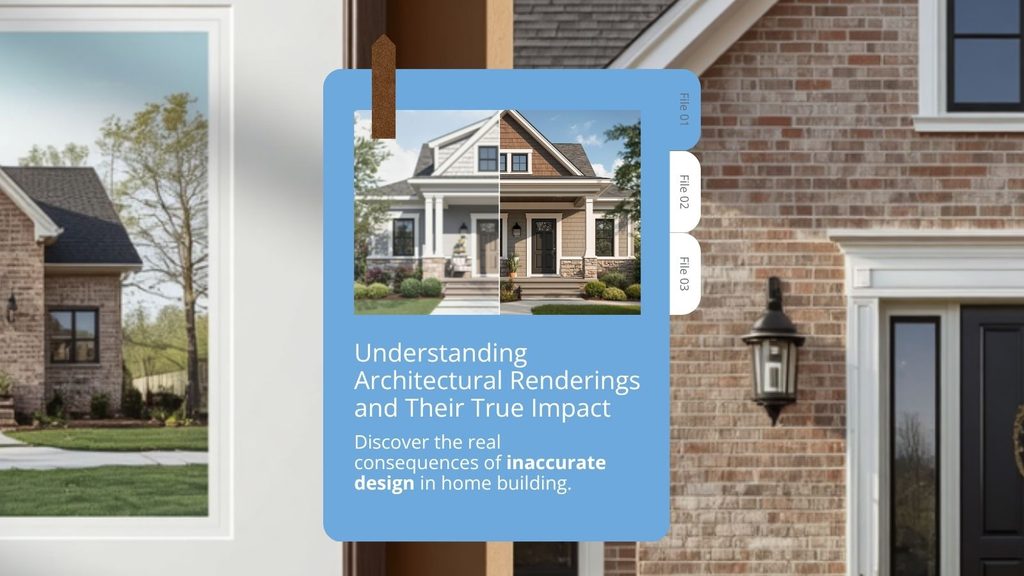
We have written before about how well-done early renderings prevent change orders and buyer regret; a rendering, done well, lets a buyer sign off on something real before the framing goes up, so there is no gap between what they imagined and what they will be living in. A bad rendering does not just fail to close that gap. It creates a version of the problem that is harder to fix, because the buyer thinks the gap is already closed.
They approved something. They believe they know what they are getting. And when the finished home does not match, the change order conversation does not happen mid-build, where it is at least still fixable; it happens after closing, when the only tools left are a disclaimer paragraph and a disappointed customer who tells eleven friends about it before they tell you.
Two Ways to Get It Wrong
A bad rendering fails in one of two directions, and builders should watch for both. The first is a rendering that is too crude to be useful: flat lighting, generic materials, nothing that helps a buyer feel the space. The second is a rendering that is too polished to be honest, so photorealistic that the buyer expects an exact photographic match, and any deviation (even a reasonable one) reads as betrayal rather than the normal variation any construction project carries. The goal was never maximum realism for its own sake. The goal is calibrated accuracy: a rendering close enough to build real trust, honest enough that trust survives contact with the finished home.
What Thirty Years Buys You
At Outhouse, this is the problem we have built our process around solving: not producing the flashiest image, but producing the accurate one, on the first pass, at a price that does not have a hidden second stage. Thirty years in this specific corner of visualization means the project scope gets defined right before anyone opens a rendering file, which is the single biggest lever for avoiding the revision spiral that turns a good deal into an expensive one. It also means the rendering that gets approved is one the finished home can actually stand behind.
That is not a claim about being fancier than the next option. It is a claim about not needing the disclaimer paragraph to do the work the rendering should have done itself.
The Bottom Line
The real cost of a bad rendering rarely shows up on the invoice. It shows up in the buyer who stands in their new kitchen holding their phone next to the picture they were shown, in the review that gets written before the first weekend in the house is over, in the disclaimer paragraph every builder now needs because too many renderings could not be trusted on their own. A good rendering is not just a sales tool. It is a promise, and the cost of breaking it is paid long after the invoice is closed.
To see how renderings can bring your project to life head to outhouse.net.
Sources
¹ Buyer forum reactions to rendering-to-finished-product mismatches: RedFlagDeals Forums, homebuilder rendering discrepancy thread. redflagdeals.com
² Standard “artist’s impression” disclaimer language in new-construction sales materials: Tallbox Design, “Red Flags in New Construction: A Buyer’s Guide to Quality Homes.” tallboxdesign.com
³ Hidden staged pricing, revision cost structures, and offshore/cut-rate provider risk in rendering services: DesignBlendz, “Cheap vs. High-Quality Architectural Renderings.” designblendz.com
⁴ Ambiguous project scope as the primary driver of rendering cost overruns, including project-timeline examples: Render 3D Quick, “How Much Does 3D Rendering Cost?” render3dquick.com
Leave a Reply