• Skip to primary navigation
  • Skip to main content
Outhouse logo

Outhouse

The Outsource Hub for Home Builders

  • Home
  • Products & Services
    • Architectural/CAD
    • Rendering
    • Virtual Reality
    • Interactive Floor Plans
    • Interactive Site Maps
    • Interactive Kiosks
    • Print Marketing
    • Sales Office Displays
  • Partners
  • News
    • Events
    • Blog
    • Podcast
  • About Us
  • Contact Us
  • Show Search
Hide Search

OutThink

Nurturing Emotional Motivators in Homebuyer Engagement

Stuart Platt · 10/21/2024 ·

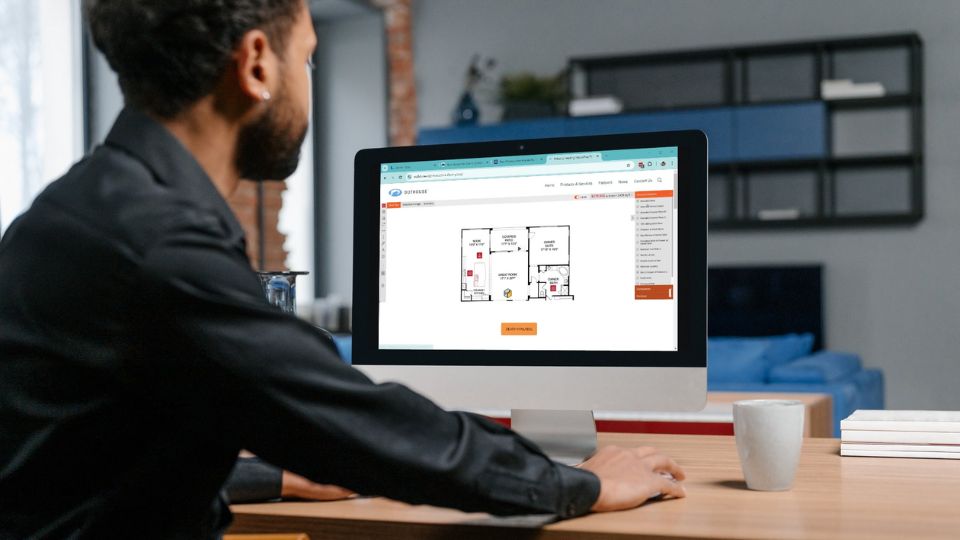
Man looking at interactive floor plan with multiple homebuilder browsers open

Human emotions are a powerful force, especially when it comes to purchasing a home. While homebuyers may believe their decisions are primarily driven by logic, the truth is, how they feel plays a significant—often subconscious—role. And in today’s digital-first world, that emotional connection begins long before the first in-person meeting; it starts online, the moment they visit your website.

Production home builders across the country offer similar baseline information on their websites—square footage, pricing, number of bedrooms, garage options. These metrics are essential, but they don’t differentiate you from competitors. To stand out in a crowded marketplace, your website must engage potential buyers on an emotional level. The builders who succeed will be those that move beyond data points and create an experience that resonates deeply with the emotions that drive purchasing decisions.

Breaking Through the Research-Only Mindset

Every homebuyer begins their journey in research mode, focused on gathering data to compare builders. They have a checklist—square footage, budget, number of rooms—and they visit one builder website after another, reviewing their options. The challenge for your marketing team is to disrupt that research-driven mindset and inspire potential buyers to linger, explore, and imagine themselves living in one of your homes.

This shift happens when your website transcends utility and starts tapping into the emotional motivators that drive decisions. Features like interactive floor plans (IFPs), 3D visualizations, and space planning tools can evoke creativity and excitement, encouraging users to move beyond simple data collection. The longer they stay engaged, the more likely they are to envision their future in one of your homes—and ultimately, to contact you.

The Power of Emotional Motivators

Emotional motivators are the psychological triggers that influence buyer behavior. According to Harvard Business Review, over 300 emotional motivators impact purchasing decisions, from choosing a brand of gum to selecting a home. For the homebuilding industry, the following five motivators are critical in shifting homebuyers from a research mindset to one of creativity and emotional investment:

  • Freedom: Buyers want to feel empowered. Websites that restrict access to information—whether through mandatory registration or withholding key details—stifle this sense of freedom. Open access to pricing, floor plan options, and even premium lot fees makes buyers feel in control. When buyers can freely explore, they are more likely to create emotional connections.

Freedom encourages creativity… Creativity encourages fantasy…
Fantasy encourages emotions… and emotions encourage purchases”.

  • Excitement: Excitement heightens emotions and accelerates decision-making. Tools like virtual walkthroughs and interactive site plans allow buyers to visualize their future, creating an emotional response that drives action. By fostering excitement early in the process—before they even speak with a salesperson—you increase the likelihood of a conversion.
  • Ownership: Empowering buyers to customize their future home—choosing finishes, adjusting floor plans, selecting options—instills a sense of ownership. This emotional attachment strengthens their commitment and increases their willingness to move forward with a purchase.
  • Security: Homebuyers are naturally anxious. They want to know the details: costs, layouts, school districts, and lot availability. The fewer questions a buyer has to ask, the more secure they feel. Your website should anticipate and answer these questions, reducing uncertainty and building trust.
  • Confidence: Confidence is the culmination of effectively nurturing all the previous motivators. When a homebuyer feels secure, excited, and in control, their confidence in both the decision and the builder solidifies. A website that fosters this confidence will convert visitors into buyers before they’ve even stepped foot in a model home.

Create an experience that inspires people to believe, “I CAN DO IT”
…and they will.

Interactive Floor Plans: The Cornerstone of Emotional Engagement

Of all the tools available to home builders, interactive floor plans (IFPs) are the most powerful for engaging emotional motivators across all demographics. While other features like virtual tours and 3D renderings are valuable, IFPs provide a unique opportunity for buyers to personalize their future home, creating a sense of freedom, ownership, and security—all in one experience.

However, not all IFPs are created equal. To truly leverage their potential, your IFPs must include:

  1. Accessibility on All Devices: Buyers should be able to explore floor plans on their phone, tablet, or desktop, seamlessly. If the experience is clunky or limited to certain devices, you risk losing valuable engagement.
  2. Dynamic Pricing: The best IFPs show live pricing that adjusts based on selected options and upgrades. This transparency enhances feelings of freedom and security, as buyers can immediately understand how their choices impact the final price.
  3. Advanced Space Planning: An IFP should allow buyers to visualize their own furniture and fixtures in the space, giving them the freedom to design their home as they see fit. The more detailed and customizable this feature is, the stronger the sense of ownership and emotional connection. The best space planners will even have a library of electrical components (lights, outlets, security cameras, etc.).
  4. Lead Generation Integration: Buyers who invest time customizing their dream home are prequalified leads. The IFP should seamlessly collect contact information and feed it into your CRM, ensuring your sales team can follow up with engaged, motivated buyers. If you do not utilize CRM, make sure the IFP platform has an integrated lead management system.

The right Interactive Floor Plans will nurture all Emotional Motivators.

Conclusion

In today’s competitive homebuilding market, it’s not enough to simply meet the needs of your buyers—you have to connect with them on an emotional level. By harnessing the power of emotional motivators and incorporating the right digital tools into your website, you’ll not only engage potential buyers, but inspire them to envision a future in one of your homes. After all, when you create an online experience that fosters freedom, excitement, ownership, security, and confidence, the decision to choose you becomes

Stuart Platt

Stuart Platt is Managing Partner at Outhouse LLC, an industry leader dedicated to providing an extensive and integrated menu of products and services to production home builders across the world. These services include but are not limited to Architectural Drafting, 3D Renderings, Virtual Tours, Animations, Interactive Floor Plans, Interactive Site Plans, Interactive Sales Office Displays, Interior and Exterior Visualizers, Graphic Design, Commercial Printing, and more. Outhouse is the ONLY company in the nation providing all of these services in house.

Join Stuart Platt at the Home Builder Digital Marketing Summit this October 23-24th! He’ll be diving deep into the strategies discussed in this blog, sharing insights on how to create an online experience that resonates with potential buyers on an emotional level. Don’t miss this opportunity to connect with Stuart and other industry leaders to elevate your digital marketing game.

Join us back here at OutThink in November for Part 3 of Bill Gelbaugh’s Unlocking Outhouse’s Potential with OKRs .

Unlocking Outhouse’s Potential with OKRs 

Bill Gelbaugh · 09/26/2024 ·

Courtesy of Adobe Stock By Kattika

2. Preparing for the OKR Journey 

In our first post, we explored why your company might want to adopt OKRs. Now, as we move forward, it’s time to focus on preparation. Just like building a home, laying a solid foundation is crucial before you start raising the walls. The same holds true for OKRs. A little preparation goes a long way in ensuring a successful implementation. And remember, OKRs are a journey, not a one-time event. 

This guide is tailored to help home builders, trade contractors, suppliers, architects, engineers, and others in the housing industry adapt OKRs to your unique company culture. Most of us don’t have a Silicon Valley mindset, so adaptation is key. However, there are some basic questions every company should address to get started on the right path: 

The Planning Phase 

Who Will Champion OKRs? 

Every successful OKR implementation starts with a passionate champion. This person, often a senior executive, must be deeply committed to rolling out the OKR strategy. Without this sponsorship, no initiative will survive. Who in your company has the drive and influence to lead this charge? Identify your champion, and make sure they have the backing they need to succeed. 

What Is the Most Critical First Step? 

Before diving into the nuts and bolts of OKRs, it’s essential to secure buy-in from your team. Everyone needs to be on board with the OKR program. This step isn’t just about understanding the framework, philosophy, and goals—it’s about fostering a collective commitment to the process. By the end of this series, you should feel confident in reviewing OKRs with your team and ready to get them excited about the journey ahead. 

What Matters Most? 

OKRs aren’t about doing everything; they’re about focusing on what’s most important. The beauty of OKRs lies in their ability to help you isolate the most critical business issues and dedicate your efforts to solving them. What are the fundamental priorities for your company right now? Your OKRs should zero in on these key areas, driving your business forward with purpose. 

How Will We Create Transparency? 

One of the greatest strengths of OKRs is their transparency. Ideally, OKRs should be visible throughout the organization, allowing everyone to see what’s being measured and provide feedback. This openness not only fuels collaboration but also ensures alignment and strategy execution across all levels of the company. 

How Will We Live Our OKRs? 

The real magic of OKRs comes from integrating them into the daily life of your company. They aren’t just set and forgotten—they should be part of your daily, weekly, and quarterly routines. From initial planning meetings to status updates and dashboards, OKRs need to be lived and breathed by your entire team. 

The Development Phase 

Once you’ve answered these foundational questions, it’s time to roll up your sleeves and start developing your first set of OKRs. Here’s how to approach this next phase: 

  1. Mission, Vision, and Strategy: Your OKRs should be deeply rooted in your company’s mission, vision, and strategy. These elements are the bedrock of your OKRs, driving the achievement of your long-term goals. Make sure they’re solid before moving forward. 
  2. Corporate-Level OKRs: Start at the top by creating OKRs at the corporate level. You might involve a small team, gather input from employees through surveys, or conduct executive interviews. However you approach it, the key is to ensure that these OKRs align with your broader strategy and are communicated clearly to the entire organization. 
  3. Presenting OKRs: Don’t just send out an email and call it a day. Use multiple channels to communicate your OKRs—share them electronically, post them on your intranet, and most importantly, discuss them in person. An all-hands meeting, for example, can be a great way to facilitate dialogue and ensure everyone understands the OKRs and the reasons behind them. 
  4. OKR Education: While OKRs are simple in theory, they require proper education to implement effectively. Take the time to educate your team not just on the fundamentals, but on why you’re choosing to use OKRs now, success stories from other firms, and what they can expect along the journey. 
  5. Monitoring OKRs: OKRs are not a “set it and forget it” tool. You need to monitor them regularly, using an OKR Scorecard and following a quarterly, monthly, or weekly schedule—whatever cadence works best for your organization. 
  6. Reporting Results: At the end of each quarter, score your OKRs and communicate the results across the organization. This isn’t just about accountability; it’s about learning and improving as you move forward. 
Courtesy of Adobe Stock By SakdaSong

The Strategy Alignment Phase 

OKRs should never exist in isolation—they need to reflect your company’s broader purpose, long-term goals, and strategy. Here’s how to ensure alignment: 

  • Company Mission: Your mission statement defines your core purpose—why your company exists. It’s your organization’s guiding light, constantly pursued but never fully achieved. Aligning your OKRs with this mission ensures that the work you do today contributes to your long-term purpose. 
    Your mission isn’t just a lofty ideal—it’s the compass that guides every decision your company makes. It reflects why your employees show up every day and serves as a reminder of the bigger picture, the greater good your company is striving to achieve. Whether it’s building homes that stand the test of time or creating communities where families thrive, your mission should be the foundation upon which your OKRs are built. 
    Unlike a vision or a strategy that may evolve over time, your mission remains a constant. It’s the steady north star that ensures every OKR you set is aligned with the core purpose of your organization. When your mission is clear and compelling, it’s much easier to steer the company in the right direction, keeping your OKRs in sync with the ultimate goal. 
  • Long-Term Vision: While your mission defines your company’s purpose, your vision paints a picture of where you want to be in the future. This vision is the bridge between your mission and your strategy—it’s the destination on the horizon that everyone in your organization is working toward. 
    Your vision statement should be a vivid, concrete picture of your desired future state, whether it’s five, ten, or fifteen years down the line. It’s not just about imagining a better tomorrow; it’s about providing a clear, tangible target that informs your strategy and your OKRs. Without this vision, your team might work hard, but without a clear direction, their efforts could be scattered and less impactful. 
    When your vision is well-defined, it fuels motivation and aligns your team’s efforts. Every OKR should serve as a stepping stone towards achieving this vision, ensuring that your short-term actions contribute to long-term success. It’s this alignment that transforms a collection of individual goals into a cohesive, strategic push towards a shared future. 
  • Annual Strategy: Your strategy is your game plan for achieving your vision. It’s about making tough decisions—choosing which markets to target, which customers to serve, and which opportunities to pursue or pass on. This is where the power of “No” becomes critical. Not every opportunity is worth chasing, and your strategy helps you focus on what matters most. 
    An effective strategy clarifies your priorities and sets the stage for your OKRs. It answers the critical questions: What are our preferred markets? Who are our optimal customers? What are their most pressing needs? By addressing these, your strategy guides the creation of OKRs that not only align with your vision but also address the real-world challenges and opportunities your company faces. 
    When your OKRs are directly tied to your annual strategy, they become a powerful tool for executing that strategy. They provide clarity, focus, and a roadmap for achieving your strategic goals, ensuring that every part of the organization is working in harmony towards the same objectives. 
    Finally, remember that a great strategy isn’t static—it evolves as your market changes, as new challenges arise, and as you learn from your successes and setbacks. Your OKRs should reflect this dynamism, allowing your company to remain agile and responsive while staying true to your mission and vision. 

Ready to start developing your OKRs? With a clear understanding of your most critical objectives and how to adapt OKRs to fit your company’s culture, you’re now ready to take action! 

Next up… Crafting Great OKRs – Part 1. 

Bill Gelbaugh Outhouse Senior Partner

Bill Gelbaugh is one of our Senior Partners here at Outhouse and champions our OKR efforts.

Unlocking Outhouse’s Potential with OKRs 

Jim Sorgatz · 09/20/2024 ·

Prologue

A few years ago, I found myself at a crossroads. As a partner at Outhouse, I had always prided myself on being a hands-on leader who could inspire creativity and innovation. But despite our successes, I started to feel like we were missing something—a clear, cohesive strategy that could unite our diverse teams around common goals. We were a group of talented individuals, but without a consistent framework to guide our efforts, we often struggled with direction, focus, and accountability. 

Meetings would drag on without concrete outcomes, projects would lose momentum, and our best ideas sometimes got lost in the shuffle. It was frustrating, and I knew we needed a change—a way to harness the full potential of our team and drive Outhouse forward. 

That’s when I discovered OKRs—Objectives and Key Results. I came across them while reading about how companies like Google and Intel had used this framework to achieve remarkable success. The concept was simple but powerful: set clear, ambitious objectives, define measurable key results to track progress, and align everyone around these goals. 

The idea sparked something in me. I saw OKRs as the path forward—a way to bring clarity and purpose to every level of our organization, from leadership to management, product development, and our creative teams. 

Implementing OKRs wasn’t without its challenges. It required a shift in how we thought about goals and accountability. But once we committed to the process, the transformation was undeniable. Suddenly, we had a shared language for success. Our objectives were no longer vague aspirations—they were clear, actionable targets that everyone understood and could rally around. 

OKRs didn’t just help us set goals; they changed how we worked together. Our teams became more focused, our meetings more productive, and our projects more impactful. We were no longer pulled in a hundred different directions—instead, we moved forward with purpose and confidence. 

In this series of blog posts, I’ll share the journey we took at Outhouse to implement OKRs and how they helped us thrive in a competitive market. If you’ve ever felt like your team could achieve more but just needed the right framework, then this series is for you. 

Let’s explore how OKRs can make a real difference—not just in theory, but in the day-to-day realities of running a successful business. 

1. Introducing OKRs: Understanding Why You Should Adopt Them 

Why write a series of blog posts about Objectives and Key Results, or OKRs? At first glance, OKRs might seem like just another goal-setting methodology. But let me tell you, they are so much more. OKRs are a powerful tool that can transform how you execute your business strategy, driving focus, alignment, contribution, and velocity within your team. 

When Silicon Valley startups realized that OKRs were behind the meteoric rise of companies like Google, LinkedIn, and Amazon, a wave of businesses rushed to adopt them, hoping to capture even a fraction of that success. And here at Outhouse, we’ve experienced firsthand the impact OKRs can have, especially in the competitive home-building market. 

In this first post, we’ll explore how the best companies use OKRs to harness that magic. We’ll start with the basics: the OKR framework, the philosophy behind it, the four goals of OKRs, and the incredible benefits you might be missing out on by not adopting them in your organization. 

Let’s Start with a Question—or Four! 

As Ken Coleman wisely said, “Good questions inform. Great questions transform.” Throughout our OKR journey at Outhouse, we’ve discovered four key questions that help us set successful OKRs: 

  1. What do we most want to achieve?
    What’s the right objective for our current goals and challenges? 
  2. How do we want to measure success?  
    What metrics will best show our progress and success? 
  3. What initiatives will get us there?  
    Are we working on the right initiatives to achieve this objective? 
  4. What’s the most efficient way to accomplish this?  
    Are we completing these initiatives as efficiently as possible?   

Is your objective to create a thriving business? What does “thriving” mean to you? Is it growing your user base? By how much? Is it increasing revenue? By what percentage? Is it improving retention? For how long? Combining an aspirational objective with quantitative results and focused initiatives allows you to set inspiring, measurable, and achievable goals. 

But setting a great goal is only half the battle. As a leader, your challenge is ensuring that your organization lives that goal every day. The real power of the OKR system lies in figuring out how to embed those goals into the daily, weekly, and quarterly rhythm of your company—into everything from planning meetings and status updates to celebrating achievements along the way. 

Are you ready to start implementing OKRs in your business? Let’s dive into the basics! 

The OKR Framework 

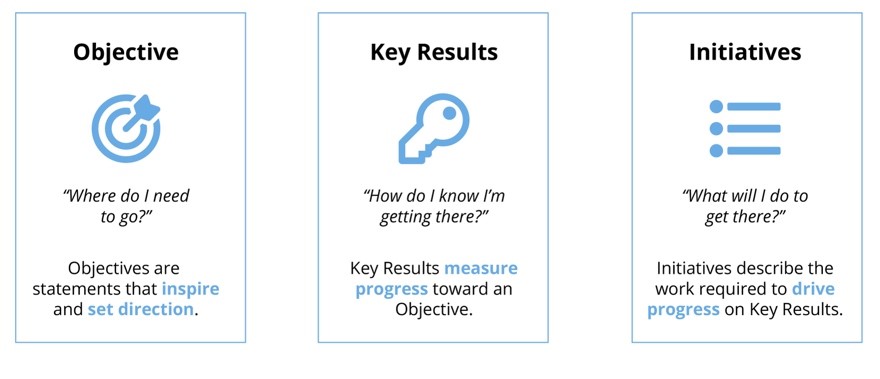
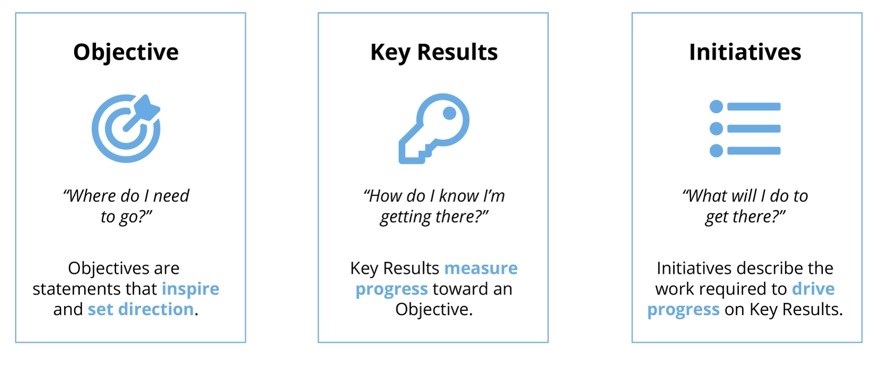
OKRs are built around three core elements: 

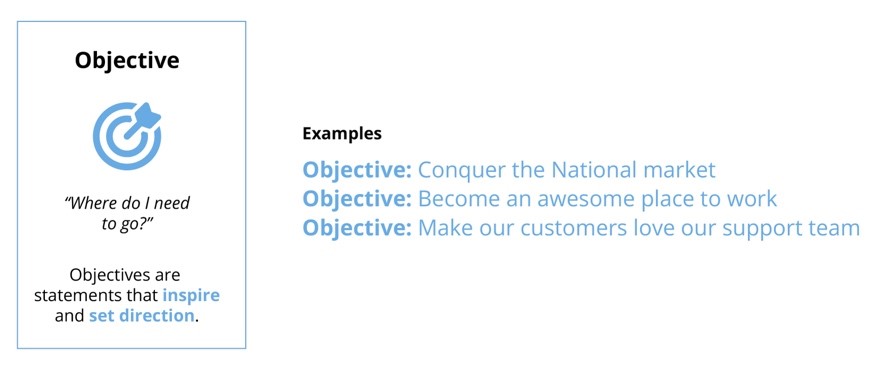
  1. Objective: Where do we want to go? 
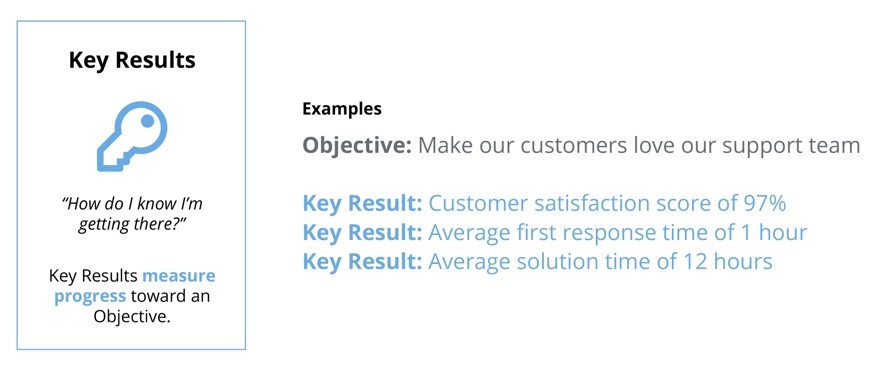
  2. Key Results: What are the measurable outcomes we need to get there? 
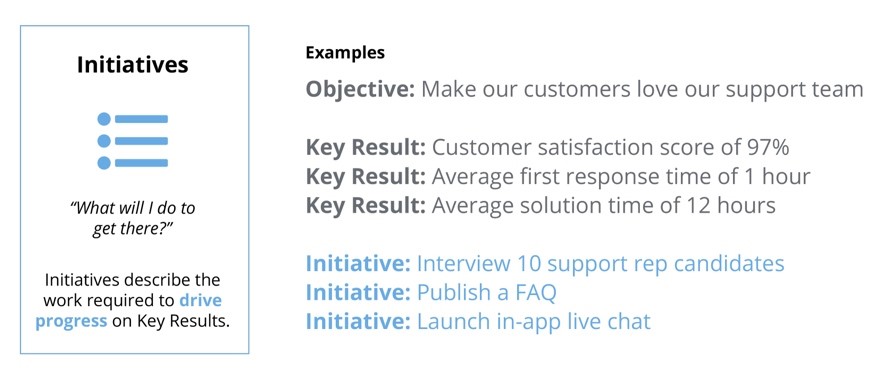
  3. Initiatives: What do we need to do to achieve those results? 

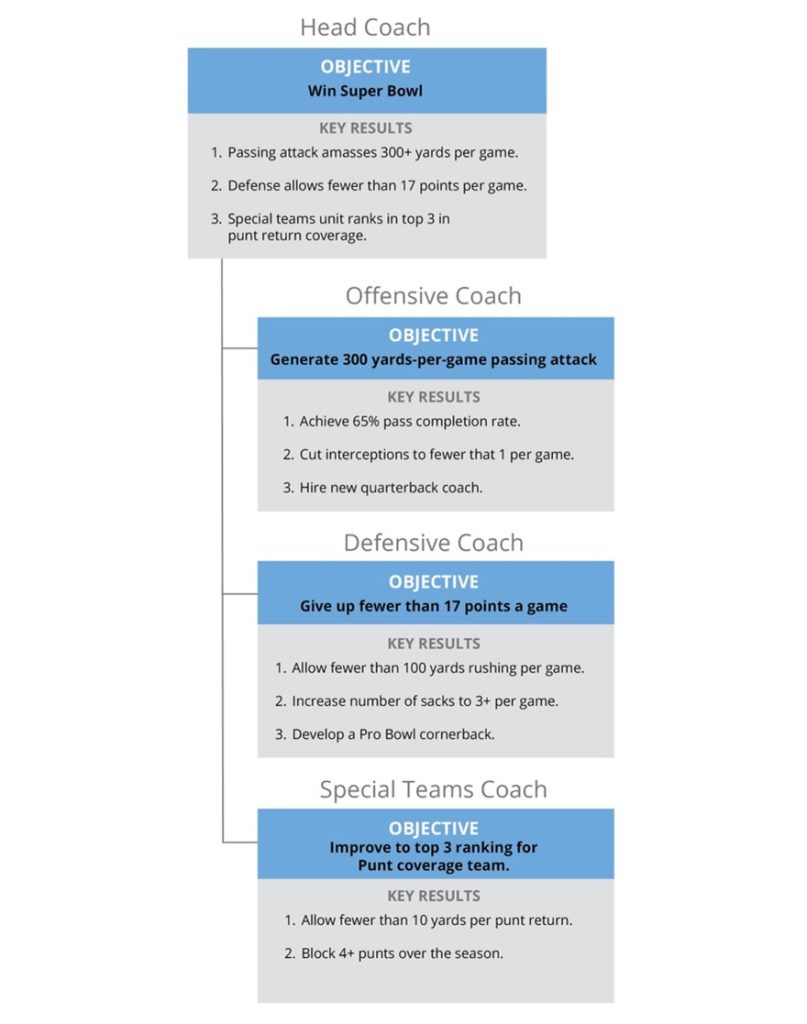
The Objective is the goal of the company, team, or individual. Key Results are the measurable benchmarks that indicate progress toward the Objective. Initiatives are the tasks you need to perform to achieve those results—essentially, your “to-do list.” This framework is applied from the top of the organization down. Starting with an overall company Objective, each group or team sets their OKRs, and individual employees often have OKRs as well. This cascading interplay of goals keeps everyone aligned and moving in the same direction. 

The OKR Philosophy 

OKRs aren’t just about setting goals—they embody a unique belief system that sets them apart from other goal-setting methodologies: 

  • Ambitious: Objectives are meant to inspire, set just beyond what seems possible. Achieving 70-80% of a stretch goal is considered a success, not a failure. The idea is to push boundaries and aim high. 
  • Measurable: Key Results are tied to tangible milestones and outcomes. They remove ambiguity, providing a clear picture of progress. 
  • Transparent: OKRs are visible across the organization, from the CEO down to the newest intern. This openness fosters accountability and alignment, ensuring everyone is pulling in the same direction. 

This approach to goal setting was pioneered by Andy Grove at Intel and was later popularized by John Doerr, who introduced OKRs to Google. Today, thousands of organizations—from Spotify to the United States Navy—use OKRs as a central part of their management strategy. 

The Goals of OKRs 

When setting OKRs, it’s not just about listing tasks—it’s about strategic focus and collaboration: 

  • Focusing Efforts: OKRs are designed to be strategic rather than a mere checklist of tasks. They help identify the most critical business objectives, ensuring that your team’s efforts are concentrated on what truly matters. Strategy, as they say, is as much about deciding what not to do as it is about deciding what to do. With OKRs, discipline is key—only the most essential objectives should make the cut. 
  • Ensuring Team Collaboration: OKRs are structured to maximize teamwork, driving focused collaboration across the organization. The transparency inherent in OKRs, where everyone can see each other’s objectives and key results, fosters a culture of openness and alignment. It’s about everyone rowing in the same direction. 
  • Making Measurable Contributions: Key Results should be quantitative, providing clear evidence of progress. This removes subjectivity, allowing your team to see exactly how they’re advancing toward their goals. 
  • Driving the Company Forward: Ultimately, the success of your company hinges on achieving your goals. OKRs are the roadmap that keeps you moving forward, ensuring that every step you take is in the right direction. 

The Benefits of OKRs 

There’s a saying that “the simpler, the better,” and OKRs embody this philosophy, bringing tremendous benefits to those who implement them: 

  • OKRs Are Easy to Understand: Their simplicity is one of the biggest advantages. With just three elements—Objectives, Key Results, and Initiatives—OKRs cut through the noise. Unlike other performance management frameworks bogged down by jargon, OKRs are straightforward, making them easy to grasp and adopt. 
  • OKRs Demand Focus on What Matters Most: OKRs help you zero in on the most crucial priorities, guiding your team’s energy toward what truly matters. This focus not only drives performance but also empowers you to say no to tempting distractions that don’t align with your strategic goals. 
  • OKRs Foster Agility and Readiness for Change: OKRs typically operate on a quarterly cycle, allowing for frequent reassessment of priorities. In a fast-changing world, this shorter cadence ensures that your business remains agile, able to adapt quickly to new information and evolving circumstances. 
  • OKRs Promote Transparency and Alignment: With OKRs, transparency is key. Corporate-level objectives are visible to everyone, and team or departmental OKRs are shared across the organization. This openness encourages cross-functional collaboration and alignment, ensuring synchronization of every team’s efforts. 
  • OKRs Facilitate Conversation and Drive Engagement: OKRs aren’t just handed down from the top—they involve input from all levels of the organization. This inclusive approach fosters engagement, as team members feel ownership over their goals. When it comes time to review results, these conversations can boost morale and reveal opportunities for growth and development. 
  • OKRs Encourage Visionary Thinking and a Growth Mindset: At Outhouse, we believe in the power of a growth mindset—a belief that success comes from hard work, learning from failure, and continuously striving for improvement. OKRs embody this philosophy, encouraging audacious goal-setting and a willingness to step out of comfort zones. This mindset is crucial for thriving in today’s competitive environment. 

In Summary 

At Outhouse, we’re fortunate to have a team full of visionary, intelligent, and creative people. But over time, we realized that great ideas alone weren’t enough—we needed a better way to organize and prioritize our efforts. It’s easy to fall into the trap of starting too many projects at once, spreading ourselves too thin. OKRs have allowed us to continue pushing the envelope on innovation while forcing us to focus on the ideas that will have the greatest impact on our company and our clients. 

We believe your business can benefit from implementing OKRs as well. With the right focus, alignment, and execution, you can achieve extraordinary results. 

Next up… Preparing for Our OKR Journey! 

Bill Gelbaugh is one of our Senior Partners here at Outhouse and champions our OKR efforts.

Bill Gelbaugh is one of our Senior Partners here at Outhouse and champions our OKR efforts.

The Fibonacci Sequence and The Golden Ratio in Home Design

Tabitha Warren · 09/05/2024 · Leave a Comment

The Secret Formula Behind Beautiful Homes: The Fibonacci Sequence and the Golden Ratio Use Math to Create Beauty in Your Home

Examples of the Fibonacci spiral: stair cases, grapefruit, shells, sunflower, plants
Fibonacci spirals in a variety of contexts courtesy of Canva Pro

Coming from a financial background, when I think about the Fibonacci sequence, I think of a mathematical tool that market analysts use to understand and project market trends. I think of debatable market theory that sparks hot button discussions. For me, the Fibonacci sequence elicits thoughts of pie charts and trend lines. It’s an interesting tool in a market analyst’s toolbox.

When a colleague mentioned it to me in the realm of homebuilding, art, and aesthetics, my mind was blown. I had to learn more about this versatile sequence.

A Bit About the Fibonacci Sequence

The origin of the Fibonacci sequence is much discussed, but it’s believed that it has a hodgepodge evolution with both ancient Indian and medieval European ancestry. The mathematical concept itself seems to have appeared in Indian history as early as 200BC. Sanskrit poetry suggested the sequence in its rhythmic patterns.

In the West, the sequence became more widely known around 1202 as a result of Leonardo of Pisa, aka Fibonacci, when he introduced it to discuss the nature of rabbit population growth. The name “Fibonacci Sequence” wasn’t made popular until much later by a French mathematician named Edouard Lucas. Lucas conducted extensive research on the sequence. He realized that it had deeper relationships with other mathematical concepts. His formalization of this mathematical study allowed for a broader understanding of underlying mathematical structures and eventually led to his development of his own sequences, Lucas sequences, as well as the Lucas-Lehmer primality test.

Vector Set by Studioworkstock courtesy of AdobeStock

The Journey from Mathematics to Nature and Art

The Fibonacci sequence is a series of numbers in which each number is the sum of the two preceding numbers (0, 1, 1, 2, 3, 5, 8, 13). In nature, it is often seen in the arrangement of leaves, petals, seeds, and even galaxies. The Golden Ratio is a mathematical constant approximately equal to 1.618. It can be found in plenty in nature from the ratio of the length of a human arm to the length of the forearm, to the ratio of the length of a snail shell to its width, to the ratio of the distance between branches of a tree to the distance between the trunk and its branches.

If you look around you, you’re bound to notice the repeating patterns at work. Scientists hypothesize that the Fibonacci sequence and the Golden Ratio often lead to the most efficient arrangement for space-saving in nature. An example of this might be the number of seeds that can fit into the head of a sunflower, any other arrangement would not allow this maximized number of seeds. If you take the time to explore, you’ll notice this same thing in pinecones, lilies, and tree branches. All these things grow in spirals and often demonstrate Fibonacci patterns. Beyond plant life, you can observe this pattern in honeybee colonies and the nautilus shell. Look around, and you’ll be surprised to see mathematical sequences everywhere adding to the beauty of the visuals we assume happen at random.

In art, one need only look for a subtle spiral flow to recognize the influence of the Fibonacci sequence, guiding the viewer’s eye through the piece. Artists have embraced the Fibonacci sequence and the Golden Ratio for centuries. Master artists like Leonardo da Vinci had an affinity for mathematics, incorporating it into their art. The Mona Lisa and The Last Supper create a sense of balance and harmony that have captured the hearts and minds of audiences across the world. Leonardo employed the Golden Ratio to create a visual flow that captivates viewers.

The Fibonacci House by Square Three Architecture

Fibonacci Sequence and the Golden Ratio in Architecture and Home Design

Ancient structures like the Parthenon in Greece are testament to the Golden Ratio as far as showcasing adherence to proportions. The influence of these mathematical principles lends a timeless elegance to historical structures. Modern architects can draw inspiration from these architectural beauties when designing for enduring appeal. The golden ratio helps create a balance that makes sure that buildings are both visually pleasing and functional.

In home design, the Golden Ratio and the Fibonacci sequence offer a blueprint for creating spaces that feel instinctively balanced and inviting. Room dimensions, furniture placement, window and door sizes, and even decorative elements can all be guided by these principles. Notably, some architects have even designed entire homes based on the Fibonacci sequence. If you have a chance, take a look at this home by Square Three Architecture. They call it the Fibonacci House, and it is designed entirely around a Fibonacci spiral, incorporating the sequence throughout. The Fibonacci House is an extreme example, but it effectively demonstrates how the sequence and the Golden Ratio can be used to create pleasing flows within a design.

Other Ratios in Home Design

The Golden Ratio and the Fibonacci sequence may be the most used ratios in home design, but there are other mathematical sequences that can be used to create aesthetically pleasing spaces. Another approach to explore might be the Rule of Thirds. This rule divides a space into nine equal parts, with the points of intersection serving as focal points for furniture or decor. While not directly related to the Fibonacci sequence, the Rule of Thirds offers a similar approach to achieving visual balance and appeal.

The Fibonacci sequence and the Golden Ratio are more than just mathematical tools or systems; they are the underlying architects of wonder and coherence in our physical environments. From the beauty of nature to the style of art and the hygge of our homes, their influence is everywhere. A timeless aesthetic can be brought into our designs through balance and proportion if we understand these principles and incorporate them into our designs properly. The next time you’re awestruck by the sunsetting over the ocean, a fascinating painting, or a stunning room design, consider the Fibonacci sequence and the Golden Ratio. They might just be the underlying mathematical forces that harmonize the beauty you sense.

Curious how builders are putting these principles into practice? See real examples in From Blueprint to Buyer: How Builders Use the Fibonacci Sequence and Golden Ratio to Captivate Homebuyers.

Generative AI Unleashed: Real-World Applications and Implications of Generative AI for Businesses

Tabitha Warren · 08/26/2024 · Leave a Comment

In an era where tech is sprinting forward, generative AI is shaking things up across the board. Companies are using it for all sorts of things, like whipping up content or fine-tuning their workflows. This game-changing tech is totally reshaping how businesses innovate and stay ahead. In this blog, we’ll investigate the possibilities and hurdles that come with generative AI, and how savvy companies can harness its power.

Opportunities with Generative AI

Generative AI can create text, speech, images, music, video, and even code, making it a versatile tool for various applications. Here are some key opportunities:

1. Content Creation: Businesses can produce a consistent online presence by using Generative AI to help develop high-quality content.

Nike, known for its innovative digital marketing, leverages AI technology to add emotional depth to its campaigns. By using AI to analyze the emotional traits of audience segments, Nike creates ad content that deeply resonates with consumers, boosting ROI.

One of their campaigns driven by AI-powered emotional analysis was the launch of Serena William’s sports apparel and the celebration of women in sports. Nike showcased a successful blend of influencer marketing and advanced technology. This approach has been a key factor in the brand’s ongoing success. Much of the content could have been produced without AI.

2. Customer Service: Human agents can find more time for complex issues by leveraging AI-driven chatbots and virtual assistants to handle repetitive customer inquiries. Sometimes, the technology can even produce high quality customer services in an environment where none existed before.

Sephora makes innovative use of AI to enhance the customer experience. Recognizing that many shoppers felt overwhelmed by their extensive product range, Sephora implemented an interactive chatbot-driven quiz to guide users through the shopping process. This not only personalizes the experience but also makes it more enjoyable.

Their success led to the launch of an AI-powered shopping service on Facebook Messenger, featuring tools like a virtual color match assistant and KikBot, an AI makeup expert offering tips. The results are impressive: Sephora has seen a 44% increase in customer engagement, and their chatbot now handles 72% of routine inquiries autonomously. This blend of technology and personalization truly sets Sephora apart in the beauty industry.

Sephora Chat Bot Images
Photo Credit: https://www.chatbotguide.org/sephora-bot

3. Product Design: Generative AI is transforming physical product design by significantly shortening design cycles and sparking unprecedented innovation.

This technology enables rapid generation and high-fidelity visualization of design concepts, making it easier to gather precise consumer feedback and refine designs. McKinsey estimates that generative AI could unlock $60 billion in productivity within product research and design alone.

3. Product Design: Generative AI is transforming physical product design by significantly shortening design cycles and sparking unprecedented innovation.

This technology enables rapid generation and high-fidelity visualization of design concepts, making it easier to gather precise consumer feedback and refine designs. McKinsey estimates that generative AI could unlock $60 billion in productivity within product research and design alone.

4. Marketing: AI can improve customer engagement and conversion rates by personalizing marketing campaigns.

Heinz A.I Ketchup, ‘Draw Ketchup’ campaign, property of Heinz Ketchup

Heinz has taken a creative approach to customer engagement by leveraging AI image generators following the success of their ‘Draw Ketchup’ campaign, which saw a remarkable 1,500% uplift. The brand encouraged both employees and fans to use AI tools to create artistic interpretations of their iconic ketchup bottle.

This initiative not only produced a wealth of amusing content (both user and AI generated) but also fostered a deeper connection with customers, as they actively participated in the brand’s narrative. The creative use of modern digital technologies has led to high engagement levels, showcasing Heinz’s ability to stay relevant and innovative in the marketing landscape.

Challenges and Ethical Considerations

While the potential of generative AI is vast, it also comes with significant challenges:

1. Bias and Fairness: AI systems can inherit biases from the data they are trained on, leading to unfair or discriminatory outcomes.

AI systems can pick up on hidden patterns that exist in our minds, leading to unintended consequences in how they operate. These biases can sneak in at different points during the AI’s creation, from gathering the initial data to teaching it how to work and finally putting it into action. It’s important to recognize both the obvious biases we know about and the more subtle ones we might not be aware of. Both types can interfere with the results an AI system gives us and even make existing unfairness worse.

Selection bias occurs when the training data is unrepresentative. Confirmation bias arises from over-reliance on existing trends. Measurement bias results from systematic data collection errors. Stereotyping bias reinforces harmful stereotypes, while out-group homogeneity bias leads to inaccurate handling of minority groups.

For more on this, check out this article from Forbes that discusses how racial bias can exist in AI systems: Forbes

Addressing these biases involves using mindful language, seeking diverse perspectives, and continuously monitoring AI systems to ensure they are fair and just.

2. Privacy and Transparency: The use of personal data in AI systems raises concerns about privacy, data security, and how that information will be used.

As AI technology advances, privacy and transparency are crucial. Governments and organizations worldwide are tightening controls to ensure ethical AI development and data protection. For instance, Europe’s upcoming AI Act sets new standards for AI usage.

Addressing AI privacy involves several strategies. Secure account management, robust data encryption, and regular security updates are essential for protecting sensitive information. Allowing users to customize privacy settings and access their data ensures transparency and control. Embedding privacy measures in AI systems from the design stage and having dedicated security teams to address threats are also key practices.

Educating users about AI technologies and adhering to regulations like General Data Protection Regulation (GDPR) and the California Consumer Privacy Act (CCPA) further bolster privacy efforts. By prioritizing these measures, AI can be developed and used ethically, safeguarding personal data and fostering user trust.

3. Job Displacement: The automation of tasks could lead to job losses.  This will make it necessary to have strategies for reskilling the workforce.

AI is likely to transform our lives in profound ways, reshaping how we work, live, and play. AI is predicted to add up to $15.7 trillion in global GDP by 2030. This statistic alone makes it crucial to cut through the hype and understand its real impact on the job market.

AI will influence jobs in two fundamental ways: automation and augmentation. Routine tasks like data entry and basic customer service will likely be automated, streamlining workflows and freeing humans from repetitive work. More complex tasks will see AI augmenting human abilities, such as helping healthcare professionals analyze medical images or assisting lawyers in summarizing documents.

The balance between automation and augmentation will determine AI’s impact on jobs. Automation will handle everyday tasks, while augmentation will, hopefully, improve human creativity and problem-solving. This shift will make roles requiring human ingenuity more valuable, whereas manual, repetitive jobs may face higher risks of automation.

The future of work could turn out in a couple of ways. One possibility, AI handles all routine tasks, allowing humans to focus on deep and creative work. This will hopefully lead to a happier, more productive society. Another possibility is that people displaced by AI will struggle to transition into new roles, worsening inequalities and straining social support systems.

The reality will probably fall between these possibilities. Companies might want to think about the social consequences of automation, not just what they might gain in efficiencies. This includes assessing AI’s impact on their workers, and companies may want to put measures in place to help workers transition to higher-skilled roles. Governments could also play a role in supporting workers through legislation and frameworks.

Overall, generative AI holds tremendous potential for companies who are willing to explore.  And this includes home builders!  Check out our recent webinar with Al Trellis, President of Home Builders Network, where he discusses AI in home building with Bill Gelbaugh and Kevin Weitzel from the Outhouse team.


Design Inspiration: The High Line, NYC

Jim Sorgatz · 08/08/2024 · Leave a Comment

Bring Your Home Designs to Fruition at Outhouse

Sculpture by NYC artist Danny Cole.

Have you ever stumbled upon a place so unexpected and exhilarating that it floods your mind with creative ideas and inspiration? That’s exactly what I experienced on a recent trip to New York City while exploring the High Line, an elevated linear park built on a former rail line. This isn’t just any public park; the High Line is a unique blend of art, architecture, and urban design. Stretching 1.45 miles through Manhattan’s West Side it offers stunning views of the city’s skyline and showcases some of its most innovative buildings.

Iconic Architectural Landmarks

From the elevated perch, high above the crowds, the view of iconic buildings, like the Empire State Building, is astonishing. Here are a few of the wonderful buildings you see along the way:

  • The Eleventh (BIG): Designed by the Bjarke Ingels Group, this striking complex features two twisting towers at 76 Eleventh Avenue. Known for its bold geometry and expansive glass walls, The Eleventh offers panoramic views and a modern twist on traditional skyscraper aesthetics​.
The Eleventh – designed by the Bjarke Ingels Group.
  • 520 West 28th Street (Zaha Hadid Architects): A hallmark of contemporary design, this building is noted for its curving metallic façade and futuristic appeal. It is one of the last projects by the legendary architect Zaha Hadid, making it a significant landmark on the High Line​.
Condo designed by Zaha Hadid.
  • Chelsea Market: Originally a factory for the National Biscuit Company, this historic building now serves as a vibrant market with various food vendors and shops. The High Line runs through the building, showcasing its blend of old and new architectural elements​.
The High Line making it’s way through Chelsea Market.
  • 10 Hudson Yards (Coach Building): This skyscraper marks the northern terminus of the High Line and is a central part of the Hudson Yards development, a massive urban revitalization project often compared to Rockefeller Center in scale and impact​.
10 Hudson Yards building in the distance.

Unique Experiences and Sights

Walking along the High Line offers more than just architectural wonders. The park itself is a showcase of landscape design, featuring over 500 species of plants. Areas like the Gansevoort Woodland and the Washington Grasslands offer serene green spaces amidst the urban hustle​

Gansevoort Woodland

The High Line also functions as an outdoor art gallery. With installations like Paola Pivi’s “You know who I am” and Nina Beier’s “Women & Children,” the park provides a continuous rotation of thought-provoking art that enhances the visitor experience​.

Mural by renowned Brazilian street artist Eduardo Kobra.

Although some people don’t love these, beauty is in the eye of the beholder and I found “The Vessel,” and a whimsical sculpture by artist Danny Cole to be quite entertaining as well.

The Vessel – centerpiece of Hudson Yards. This interactive sculpture was imagined by British designer Thomas Heatherwick.

What’s The Connection Here to Home Building?

Wherever you find inspiration for new homes, whether it be the High Line in Manhattan, an out-of-this-world experience elsewhere, or a simple walk in the neighborhood park, Outhouse, the outsource hub for home builders, can help bring your wildest ideas to fruition. Give us a sketch on a napkin, and our architectural team will produce a full set of construction documents.

While plans are in progress, our rendering team will meticulously craft your 3D exterior and interior elevations, virtual tours, and visualizers. Our interactive team works their magic to build digital tools like interactive floor plans and interactive site maps that will engage your homebuyers. We can also coordinate digital assets with your web designer including industry experts Blue Tangerine, Bokka Group, Group Two, Meredith Communications, and Adlanta Creative,

All of this can be accomplished simultaneously in a compressed timeline bringing your homes to market faster, and increasing your ROI. 

The juxtaposition of old and new is striking. The iconic Empire State Building in the background.

Conclusion

The High Line is a testament to New York City’s ability to innovate and adapt, transforming an old rail line into a vibrant public space that seamlessly blends nature, art, and architecture. Whether you’re an architecture enthusiast or just looking for a unique urban experience, the High Line offers a fascinating journey through some of the city’s most captivating sights.

If you visit the High Line, or anywhere else that inspires some fresh design ideas, draw a quick sketch, and send it over to Outhouse.  We will take it from there to bring your idea to life!

Strategies for Staying on Top of Home Builder Software Integration: With Insights from Kevin Weitzel

Jim Sorgatz · 07/22/2024 · Leave a Comment

Outhouse Partner Shares Game-Changing Approaches for Streamlining Operations and Enhancing Customer Experience

In the rapidly evolving world of home building, integrating cutting-edge software solutions has become crucial for success. Kevin Weitzel, a partner at Outhouse, brings his expertise to the forefront, highlighting three key areas where technology integration can significantly impact a home builder’s operations and customer experience. From streamlining lead management to revolutionizing visual asset presentation, Weitzel’s insights offer valuable strategies for home builders looking to stay competitive in today’s market. This blog post explores three critical areas of software integration that can transform how home builders operate and interact with potential buyers.

The CRM Conundrum: Automating Lead Capture

If you have more than a couple leads coming in each day, importing them directly to your Customer Relationship Manager (CRM) is essential… why would anybody want to clerk the consumer given information into their CRM, again, from whatever platform is generating your leads.

–Kevin Weitzel, Outhouse Partner

This is an important point that highlights a critical aspect of efficient lead management and customer relationship management in the home building industry. Here’s why it’s so significant:

Efficiency and Data Integrity: Automatically transferring leads directly into a CRM eliminates the need for manual data entry. This saves time and reduces the risk of human error in transcribing information.

2. Speed of Response: Immediate lead import allows sales teams to respond quickly to potential customers. In the competitive home building market, rapid response times can be crucial in securing a sale.

3. Resource Allocation: By eliminating the need to “clerk” or manually enter consumer information, staff can focus on more valuable tasks like follow-ups and relationship building.

4. Customer Experience: Consumers expect a seamless experience. Having to provide information multiple times can be frustrating and may negatively impact their perception of the builder.

5. Data Consistency: Automated lead imports ensure that all leads are handled consistently, regardless of their source or the time they come in.

6. Scalability: As a home builder’s business grows, manually entering leads becomes increasingly time-consuming and impractical. Automation is essential for scaling operations efficiently.

7. Analytics and Reporting: Direct lead imports allow for more accurate tracking of lead sources and conversion rates, which is crucial for optimizing marketing strategies.

8. Integration Benefits: When leads automatically flow into the CRM, it’s easier to integrate with other systems like marketing automation tools, further streamlining the sales process.

9. Competitive Advantage: Builders who can quickly and accurately process leads are better positioned to outperform competitors who rely on manual processes.

In essence, the statement underscores the importance of streamlining the lead capture process in the home building industry. It emphasizes that in today’s fast-paced, technology-driven market, manual data entry is an unnecessary and potentially detrimental step that can be easily eliminated with proper system integration.

The ERP Challenge: Overcoming Obstacles to Real-Time Pricing

Integrating your Enterprise Resource Planning (ERP) system with your interactive floor plans to achieve real-time pricing is a great idea.  Often easier said than done, the lynch pin in this process is almost always the ERP.  The desire from the home builder is there, but far too often, the ERP itself is intentionally lacking in the ability to feed the data, via an Application Programming Interface (API), into other platforms.  Once implemented, the biggest issue is the ERP provider breaking the feed connections; sometimes regularly.”

Kevin Weitzel, Outhouse Partner

The importance of ERP data for real-time pricing in home building cannot be overstated, and the challenges Kevin highlights are significant. Here’s why his point is crucial:

1. Accurate and Dynamic Pricing: Real-time ERP data enables home builders to adjust pricing instantly based on current costs, market conditions, and inventory levels. This ensures competitive and profitable pricing strategies. [6]

2. Customer Satisfaction: Up-to-date pricing information allows sales teams to provide accurate quotes to potential buyers, improving customer trust and satisfaction. [7]

3. Efficient Resource Management: Real-time data helps with better resource allocation and inventory management, reducing waste and improving profitability. [6]

4. Informed Decision Making: Access to current data allows management to make quick, informed decisions about pricing, promotions, and product offerings. [8]

5. Competitive Advantage: Builders who can offer real-time pricing are better positioned to respond to market changes and competitor actions swiftly. [9]

These issues underscore the need for home builders to carefully evaluate ERP solutions, prioritizing those that offer robust API capabilities and reliable data integration. It also highlights the importance of ongoing dialogue with ERP providers to address these challenges and push for more open, flexible systems that truly support the needs of modern home builders.

Revolutionizing Visual Assets: The Power of Integration

“An easy integration for any homebuilder website is to put all visual home assets on one web page. Why have various assets for a particular home/plan on separate pages?  It is quite easy to integrate all of the home’s assets onto a single page.  As an example, images and/or virtual tours can be linked as hotspots on both Interactive AND static floor plans.  When not linked, a menu of a gallery accessible on a floor plan is easy and garners engagement.”

Kevin Weitzel, Outhouse Partner

Interactive floor plans, renderings, visualizers, and virtual tours for a single home should all be on one page of a homebuilder website for several key reasons:

1. Improved user experience: Combining these elements on a single page allows potential buyers to easily access and navigate between different visualization tools without leaving the page. This creates a seamless, intuitive experience that keeps users engaged. [10][4]

2. Enhanced information retention: By offering multiple visual representations in one place, homebuyers are more likely to retain information about the home. This multi-faceted approach caters to different learning styles and preferences. [10][12]

3. Increased engagement and time on site: Interactive elements like floor plans and virtual tours are known to keep visitors on a website longer. Grouping these features on one page encourages extended exploration, increasing the chances of conversion. [12][13]

4. Streamlined communication: Having all visual tools in one location simplifies the process of sharing information with potential buyers. It reduces the need for multiple meetings or explanations, saving time for both builders and customers.[13]

5. Competitive advantage: Offering a comprehensive, interactive experience on a single page demonstrates a homebuilder’s commitment to innovation and customer service. This can set them apart from competitors and appeal to tech-savvy buyers. [13]

6. Personalization opportunities: Integrated interactive elements allow for easier customization. Buyers can explore different options and visualize changes more effectively when all tools are accessible in one place. [12][13]

By consolidating these features on a single page, homebuilders can create a more effective, engaging, and user-friendly online experience that better serves potential buyers and increases the likelihood of conversions.

Conclusion: Embracing Integration for Future Success

Kevin’s insights underscore the importance of embracing integrated software solutions in the home building industry. By addressing challenges in CRM lead capture, ERP data integration, and visual asset presentation, home builders can significantly enhance their operations and customer experience, positioning themselves for success in an increasingly competitive market.

Citations:

[1] https://subcusa.com/5-reasons-why-construction-companies-need-a-crm-today/

[2] https://blog.velocity23.com/blog/making-home-builder-crm-plan-nhbj

[3] https://www.builderdesigns.com/resources/blog/maximizing-roi-why-a-reliable-crm-system-reigns-supreme-for-homebuilders

[4] https://www.motionops.com/blog/importance-of-crm

[5] https://info.builderfunnel.com/what-is-the-best-crm-for-home-builders

[6] https://www.priority-software.com/blog/how-does-an-erp-real-time-data-support-business-growth/

[7] https://www.silkcommerce.com/epicor/maximizing-the-use-of-erp-data-for-real-time-pricing-for-quotes/

[8] https://www.linkedin.com/pulse/improve-your-reporting-real-time-erp-data-sagesoftware

[9] https://www.vialaurea.com/en/blog/blog-posts-3/the-power-of-real-time-data-in-erp-systems-21

[10] https://truplace.com/real-estate/3-reasons-floor-plans-are-great-virtual-tours/

[11] https://rextheme.com/real-estate-floor-plans/

[12] https://graphiclanguage.net/blog/benefits-of-interactive-floorplans/

[13] https://www.ecisolutions.com/blog/residential-construction/revolutionizing-home-buying-the-power-of-interactive-floor-plans/

It’s Never Too Late to Pivot: Embracing New Technologies in Home Building

Jim Sorgatz · 07/03/2024 · Leave a Comment

In a rapidly evolving world, the ability to adapt and embrace change is more crucial than ever. While some industries may seem to move at lightning speed, others, like home building, can sometimes be slower to adopt new technologies. However, history and recent innovations teach us that it’s never too late to pivot and find success. Drawing inspiration from people who find success late in life, and groundbreaking companies like Tesla, this post aims to encourage home builders to embrace new technologies, including AI, to stay competitive and thrive.

Late Bloomers: Success Can Come at Any Time

Facing a milestone birthday this month, and always looking for ways to improve and innovate, I found this article in The Atlantic titled “You Might Be a Late Bloomer” fascinating.  In it we learn about remarkable individuals who found success later in life. This includes figures like Paul Cézanne, who, despite facing rejection early in his career, became one of the most influential painters of the 19th century. Another late blooming icon is Colonel Sanders, who founded KFC in his 60s after a series of career failures.

These stories remind us that success isn’t confined to the early years and that it’s possible to achieve greatness at any stage of life. This is a powerful message for many home builders who may feel hesitant to embrace new technologies, thinking it might be too late to change established methods. The reality is that there is always room for growth and innovation.

AI generated oil painting in the impressionist style of Paul Cezanne.

Tesla: Interrupting the Interrupters

Tesla serves as a prime example of a company that disrupted the auto industry with electric vehicles and is now being disrupted itself. Tesla’s innovative approach redefined what was possible in a sector long dominated by traditional combustion engines. Their road to electrification of vehicles and potential autonomous driving has been rocky to say the least.  But they have made tremendous progress over the past few years, operating like a fine-tuned engine. Then BAM!  Along comes Chat GPT and other large language models. Tesla is now pivoting towards artificial intelligence, demonstrating their commitment to staying ahead of the curve.  If successful, AI will bring autonomous vehicles to the road much sooner than expected, plus lead Tesla to success in their quest to build robots capable of performing the most complex tasks. It’s incredible to realize that since they began producing cars at scale, Tesla’s meteoric rise to the top of the auto industry and subsequent pivot to AI has taken place in a span of ten short years.

Tesla Optimus Bot – Interrupting the Interrupter

This ability to continually evolve and integrate new technologies is what keeps companies like Tesla at the forefront of their industries. Home builders can draw inspiration from Tesla’s journey, recognizing that adopting new technologies, even later, can lead to significant advancements and success.

Embracing New Technologies in Home Building

For home builders, integrating new technologies can seem daunting, especially if they have been following traditional methods for years. However, the benefits of embracing innovations like AI and other digital tools far outweigh the challenges. Here are a couple of home building-specific examples of new technologies that can revolutionize the industry:

  1. Interactive Floor Plans and Virtual Tours: These tools allow potential buyers to explore homes in detail without physically being there. Interactive floor plans enable users to visualize different layouts and customize their future homes. Virtual tours provide an immersive experience, showcasing the property’s features and finishes. These technologies can significantly enhance the buyer’s experience, making the decision-making process smoother and faster.
  2. AI-Powered Project Management: AI can streamline various aspects of the construction process. For instance, AI-powered project management tools can predict potential delays, optimize scheduling, and manage resources more efficiently. This not only improves productivity but also reduces costs and enhances the overall quality of the project.
  3. AI Enhancements for Homebuilder Websites: Industry partners like chatbot provider AtlasRTX, and home sales optimization expert Openhouse.ai provide AI tools for builder websites to increase user engagement and generate more sales. The Openhouse.ai platform also works with Outhouse interactive floor plans to guide homebuyers to the perfect home.
Layered interactive condo/townhouse map. Click to explore the buildings.

Case Studies: Builders Embracing Change

Consider the example of a small, hypothetical home building company, XYZ Builders, which decided to integrate AI-powered project management tools into their operations. Initially hesitant, they soon discovered that these tools significantly improved their workflow. They were able to complete projects faster and with fewer errors, resulting in increased customer satisfaction and a 20% boost in sales.

Another example is ABC Construction, which adopted virtual tours and interactive floor plans. Despite initial resistance from their VP of finance, the company quickly saw the benefits. Their online engagement skyrocketed, and they attracted a broader audience, including out-of-state buyers who could now explore properties remotely.

For home builders, adopting new technologies can open up new opportunities and lead to greater success.

At the 2024 International Builders Show, home building consultant Al Trellis, President of Home Builders Network, gave a presentation to a sold out crowd on the power of artificial intelligence for home builders. Real life examples of AI making a positive impact for his clients include:

  • Rapid development of a comprehensive training program for superintendents, including scopes of work for various jobs and trades.
  • Development of an HR program.
  • Marketing campaign for inventory homes.
  • Creation of a private placement memorandum.
  • Generation of ideas to stimulate sales of a stalled condominium project.

The uses for AI in home building are limitless. In addition to marketing and operations, we are seeing the start of AI innovations in CAD and the construction process as well.

Conclusion: It’s Never Too Late to Pivot

The stories of late bloomers like Paul Cézanne and Colonel Sanders, along with the innovative journey of Tesla, illustrate that it’s never too late to pivot and embrace change. For home builders, adopting new technologies can open up new opportunities and lead to greater success. Whether it’s integrating AI for project management or using interactive tools to enhance the buyer’s experience, the key is to stay open to innovation and continually seek ways to improve.

So, take the leap. Embrace the new technologies that can transform your business and stay competitive in an ever-evolving market. Remember, it’s never too late to pivot and achieve greatness.

The Power of Consistency: What Won’t Change in the Next Decade?

Jim Sorgatz · 06/17/2024 · Leave a Comment

In an era marked by rapid technological advancements and constant change, it’s easy to get caught up in predicting the future. Jeff Bezos once said, “I very frequently get the question: ‘What’s going to change in the next 10 years?’… I almost never get the question: ‘What’s not going to change in the next 10 years?’ And I submit to you that that second question is the more important of the two.” This insight highlights the critical importance of focusing on the constants that underpin lasting success.

One need look no further than to Katerra, the now defunct technology-driven off-site construction company founded in 2015.  Katerra seemingly held so much promise for streamlining the construction process.  Its demise ultimately came down to not-so-great management, but another contributor was lack of enthusiasm by the home building industry to make a major shift in construction methods.  Who knows, with AI coming into play we may see change in the next 10 years, but that won’t happen unless home builders and homebuyers begin to look at housing in a new light.  A house is one of the few things that is still entirely handmade here in America, and therefore a career choice and point of pride for many.

Image by Katerra Group courtesy of LinkedIn

The Foundation of Enduring Success

Success isn’t just about anticipating the next big trend or technological breakthrough; it’s equally about understanding and leveraging the fundamental principles that remain stable over time. These enduring elements form the bedrock of resilient and adaptable strategies.

Institutional Knowledge: The Unchanging Asset

One such constant is the value of institutional knowledge. This encompasses the collective expertise, experiences, and insights accumulated within an organization over time. Institutional knowledge is a critical asset that, when effectively harnessed, can guide decision-making, foster innovation, and provide a competitive edge.

Like any other industry, decision makers in home building often change roles, move to another company, or retire at some point.  New people coming onboard often have “new” ideas.  Sometimes the ideas are truly innovative, but often they have already been explored.  Whether it be in new home marketing, construction, or sales, this is where institutional knowledge is beneficial.  Long term employees and adequate documentation prevent companies from spinning their wheels, keeping them on the road to progress.

Unlike fleeting trends, institutional knowledge represents the enduring wisdom that an organization has built. It includes documented processes, historical data, and the nuanced understanding of market dynamics that only comes with experience. Preserving and utilizing this knowledge ensures continuity and stability, even as external conditions change.

Resilience: The Human Element

Another unchanging element is the human capacity for resilience. As Bezos emphasized, the ability to endure and adapt is crucial. This resilience is not just about weathering storms but thriving amid them. It involves cultivating a mindset that embraces challenges, learns from failures, and remains flexible in the face of uncertainty.

Will anyone ever forget 2020?  Builders moved their offices home, stopped construction for a short while, retooled their product, then charged ahead constructing new homes as the housing market boomed!  The ability of home builders to quickly pivot in 2020, and subsequent years as housing needs rapidly change, is a shining example of resilience.    

Building a resilient organization means fostering a culture where employees are encouraged to innovate, take risks, and learn continuously. This adaptability allows an organization to pivot and respond effectively to new opportunities and threats, ensuring long-term success.

The Intersection of Technology and Human Insight

While technology continues to evolve, the intersection of advanced tools with human insight remains a constant driver of innovation. Technologies like artificial intelligence and machine learning can process vast amounts of data and generate actionable insights. However, the interpretation and application of these insights still rely heavily on human expertise and intuition.

Check out this article from Denim Marketing about “Buy Now” buttons in home building!

With the rapid advance of technologies, builders have been exploring the potential of selling homes online with the click of a button.  Unlike most other products, there are many hurdles to clear when it comes to buying/selling a home.  Securing funding, credit checks, title searches, home inspections, appraisals, additional credit checks, construction and loan delays, pages of documents to sign, and last-minute snafus all come into play making human expertise essential – at least for the foreseeable future.   

Organizations that successfully integrate technological advancements with institutional knowledge and human resilience create a powerful synergy. This combination enables them to navigate complexities, anticipate changes, and maintain a strategic advantage.

Practical Strategies for Leveraging Constants

1. Document and Share Knowledge:

   – Create robust systems for documenting processes, best practices, and lessons learned.

   – Encourage knowledge sharing across departments to foster a collaborative environment.

2. Invest in Employee Development:

   – Provide continuous learning opportunities to help employees adapt to new technologies and methodologies.

   – Cultivate a growth mindset that values resilience and innovation.

3. Balance Technology with Human Insight:

   – Leverage AI and data analytics to enhance decision-making processes.

   – Ensure that human expertise guides the interpretation and application of technological insights.

4. Foster a Culture of Adaptability:

   – Encourage experimentation and risk-taking within a supportive framework.

   – Recognize and reward resilience and innovative thinking.

The Future of Stability

As we look to the next decade, the challenge lies not just in predicting change but in identifying and leveraging the elements that will remain constant. By focusing on institutional knowledge, human resilience, and the balance between technology and human insight, organizations can build a foundation for enduring success.

While the specifics of the future may be uncertain, the principles that drive success remain steadfast. By understanding and harnessing these constants, organizations can navigate the complexities of change and emerge stronger, more resilient, and better prepared for whatever the future holds.

Written by Jim Sorgatz and Tabitha Warren

Know Your Homebuyer Audience

Jim Sorgatz · 05/31/2024 · Leave a Comment

Are you surprised by the new home construction trends in your own city?

Two homes, one much bigger than the other.
Guess which house is the newbie?!

Having been in the industry for nearly 30 years, it is not often that I am surprised by trends in new home construction. The goal is to sell to anyone who financially qualifies. And, in these times of elevated interest rates and home prices the buzz is all about affordability, which typically translates to smaller homes. So, I am shocked to see the newest homes being built in my “affordable” neighborhood are 50%+ larger and significantly more expensive than my home that was built in the fall of 2022. The families shopping for homes right now are, apparently, looking for space, and have the means to afford a bigger house. And I guess that makes sense. Although there genuine efforts by cities and builders to create affordable housing, with a median price of $430,000 nationally per realtor.com, there really aren’t many homes that are affordable right now for first-time homebuyers. This hammers home the importance of knowing your core audience, building for them, and marketing to them appropriately.

There are many builders who do this well and adapt to the changing environment. One example is Arizona based Meritage Homes whose mission today is, “To design and build homes that are innovative, built with care and superior craftsmanship, which deliver enduring value.” Contrast that with their mission a couple years back, “To build move-in-ready affordable homes for entry-level and first move-up buyers,” and you can see the evolution to better reflect the current new home market.

How can you be sure you are targeting the right audience? Begin with a review of your overall marketing strategy. Do your website, sales offices, and print marketing appeal to the potential buyers you are attempting to attract? Although first-time and luxury home buyers are both seeking out their dream homes, the marketing for these two distinct groups looks very different. This is where consultation with marketing experts like Denim Marketing, Blue Tangerine, Adlanta Creative, and Bokka Group to name a few, can be highly beneficial.      

Next, review your digital marketing tools, and upgrade them if necessary. If you are still using static floorplans and stick renderings, think again. Interactive floor plans, renderings, virtual tours, animations, and visualizers all play an integral role in engaging homebuyers and selling homes.

Interactive Floor Plans (IFPs) have universal appeal, and every builder website should feature them. Buyers of all demographics love to select structural options and customize their living spaces with the interactive furniture planner. 

Interactive floor plan with furniture.
Outhouse’s new colorized Interactive Floor Plan

Quality renderings are essential for all builders as well. Black and white stick drawings are never a good option, even for the simplest of homes. Standard 3D (Outhouse Bronze and Silver) renderings are perfectly acceptable for homes at lower price points. For move-up and luxury homes, you will want to implement 3D photoreal renderings (Outhouse Gold). Luxury and custom builders may want to opt for Platinum renderings that can be further enhanced and customized.

Should your budget for digital marketing tools be a bit larger, investing in animations and virtual tours pays off in two significant ways. First, they enable homebuyers to digitally explore your homes from anywhere. Second, both are available at a fraction of the cost of constructing a model home. Your target buyer should be the top consideration when choosing which format to offer. Younger buyers prefer user-controlled virtual tours. Buyers over 50 typically gravitate towards video format animations.

Visualizer showing a before and after kitchen
Visualizer’s allow home buyers to customize interiors and exteriors

Another online tool appealing to home buyers at all price points is the Visualizer. With both interior and exterior versions available, buyers can mix and match colors and finishes to achieve the desired look and feel. The visualization process is so much easier than making selections for an entire house based on one-inch paint chips and tiny floor, counter, and cabinet samples. It also removes some of the pressure and stress from the design center visit.

Here are a couple more ideas to help you connect with your appropriate audience:

Elevate your brand with distinguished print marketing. Consider the hotel industry when investing in print—the swankier the property, the more excellent the print collateral. The manager of the high-end hotel presents you with a “folio” at checkout, not simply hands or emails you a bill. Although print appeals greatly to buyers in the luxury home market, even younger homebuyers like to walk away from the sales center with a brochure featuring their preferred floor plan and elevations at a minimum. In today’s digital world, people still appreciate a tangible marketing piece when making one of their biggest life purchases. Why not present them with something sophisticated or fun, and memorable?         

Printed brochure showing families participating in various activities
A great print piece makes a lasting impression!

Today, the most progressive builders are transforming their websites with artificial intelligence (AI) to better understand and target their audience. Like that provided by openhouse.ai, AI offers home buyers a personalized shopping experience and predicts where your unique market is going with more accuracy.

So take some time during this evolving housing market to understand your homebuyer and determine if your current marketing strategy is meeting their needs. If not, consider working with online marketing experts to determine which digital and on-site tools will move the needle most with your target audience to increase your new home sales.   

Growing New Home Sales By Casting the Widest Net Possible

Jim Sorgatz · 05/12/2024 · Leave a Comment

Shortly after moving to Blaine Washington, a small city sitting right on the United States and Canadian border, my spouse suggested we head to the Night Market located in Richmond, a suburb of Vancouver. I happily went along knowing nothing about this event other than it ran from 7:00 PM to Midnight, and and there would be food vendors. I was hoping the food might be better than the the typical state fair, and I wondered if the market would look a bit like a renaissance fair with turkey legs and all. When we arrived I saw this!

Night market packed with people between two rows of food booths.
The Richmond Night Market

There are more than 600 food booths here, and 90%+ of them are Asian. A quick search on Google and I learned Richmond is home to 230,000 people, three quarters of whom are Asian Canadian. The food was amazing, and I’m ready to fight the crowds again this summer. Having never been to Asia, I finally had a taste of the infamous night markets that friends tell me offer some of the tastiest delights.

In the stretch of the Pacific Northwest between Vancouver and Seattle, there are significant populations of immigrants from around the globe. China, Japan, Korea, India, Mexico, Europe, Ukraine, Russia, and many more. In my neighborhood in Blaine which sits right on the border, we have residents from both Canada and the U.S. as many families lives take place in both. This is often due to marriage, jobs, or immigration status. Peace Arch state park which is an open space between the two countries was one of the only places along the border where families could meet during the pandemic. I love taking the pups there, and jokingly warn them not to say “Eh” when we are on the Canadian side.

What does all this have to do with home building? North America is a melting pot of immigrants and cultures. Unless you are Native American, most of our families traveled from other countries to get here. And as more immigrants arrive, put down roots, and start their own families, home builders may need to look a little differently at the design, sales, and marketing of new homes. Just as men and women, families, singles, and various generations seek out different amenities in new homes and neighborhoods, people from various cultures often have unique wants and needs as well. North America also has home builders founded by immigrants including Outhouse clients Couto Homes in Texas where the Couto family hails from Portugal, Trico Homes in Alberta founded by Wayne Chu who came to Canada from Hong Kong, and K. Hovnanian Homes whose founder is from Iraq. There are also builders owned by foreign entities like Woodside Homes (Sekisui House), and Stanley Martin Homes (Daiwa House USA).

What it all boils down to is, like the diversity within our industry, the pool of homebuyers is vast. Casting the widest net possible to reach buyers is essential for sales. And that means thinking outside the proverbial box, and diversifying our sales and marketing strategies.

To continue this conversation, On Tuesday, May 21, 2024 at 11:00 AM PST, Outhouse invites you to join us for a webinar featuring Magda Esola from Brookline Homes, Ingrid Prince from Shared Drive, and Safiyyah Siddiqui from DHS Realty. Coming from varied backgrounds they will share their thoughts and experiences on selling homes with diverse buying groups. If you miss the webinar, you will find the program posted on our YouTube Channel following. REGISTER TODAY!

From Income Tax Accounting to Web Design: Navigating Career Shifts and New Opportunities

Tabitha Warren · 04/23/2024 · Leave a Comment

Accounting Female to Video Editing Female Courtesy of Canva Pro

During the global pandemic, many of us found ourselves reevaluating our career paths, seeking new opportunities, and embracing change in unexpected ways. My journey from being an income tax accountant to venturing into the realms of web design and social media coordination is a testament to the transformative power of adaptation and seizing new avenues for growth.

As a former income tax accountant, I never imagined myself delving into the creative realms of web design and digital marketing. Honestly, web design was my husband’s area. However, the pandemic presented unforeseen challenges and opportunities that compelled me to explore alternative career paths. With the traditional job market feeling dangerous to an immunocompromised woman, I decided to leverage my skills in finance and analytical thinking to venture into the digital landscape.

One of the most rewarding aspects of this transition has been the opportunity to collaborate with small businesses and the people that run them, particularly in the realms of homebuilding and trail racing. These industries, often operating on tight budgets and with limited digital presence, were initially hesitant to entrust their online presence to a relatively inexperienced designer and marketer. However, through open communication, dedication, and a willingness to learn, we embarked on a journey of growth and success together. Three years later, we continue to work together and implement new technologies and data to strengthen their strategies.

Shendo Cat Racing Home Page

A reader might be thinking, “Homebuilding and trail racing? What do these two markets have in common? How did this woman end up working in two markets that are so completely different?” The truth is twofold. First, I was a little bit lucky. The first project, the home builder marketer, fell in my lap through social connections. The second project, the trail race event coordinator, came by word of mouth after an employee from the home builder marketing company admired what I was doing and recommended me to a friend. But second, the heart of the businesses was the same. Both businesses want to help customers live happier, healthier lives. To achieve this, they needed to generate leads. They need to get their service offerings seen online.

Small and medium-sized homebuilders, in particular, stand to benefit immensely from embracing digital transformation and investing in a robust online presence. A well-designed website serves as the virtual storefront, offering a platform to showcase past projects, highlight expertise, and engage potential clients. Moreover, leveraging analytics and SEO practices can significantly enhance visibility and attract qualified leads, ultimately driving business growth and expansion.

Many people, new to web design and social media believe that having a digital presence will be cost prohibitive, but that isn’t true. The addition of a website and social media often pays for themselves. Especially, if you find a designer or coordinator that is the right fit for your company. Don’t be afraid to outsource to a designer or marketing firm that can help you grow.

According to a survey by Clutch, 46% of small businesses still do not have a website, representing a significant untapped market for digital growth.  Although many small builders have a website, some include little more than a logo, a couple of pictures, and contact info. By harnessing the power of web development and digital marketing, homebuilders can differentiate themselves in a competitive landscape, reach new audiences, and establish credibility in the industry.

Outhouse – The outsource Hub for Home Builders Home Page

In my experience, working closely with homebuilders and race coordinators to develop and optimize their websites has been immensely gratifying. By incorporating user-friendly design elements, compelling content, and strategic SEO tactics, we have witnessed tangible results, from increased website traffic to higher conversion rates. Moreover, the ability to track and analyze data enables us to refine our strategies continuously, ensuring maximum ROI.

As we navigate an ever-changing post-pandemic world, the importance of digital presence and online visibility cannot be overstated. Small companies that embrace innovation and adaptability stand poised to thrive in this evolving landscape. By partnering with skilled web developers and digital marketers, small businesses can harness the full potential of the digital realm, driving growth, and success in the years to come.

My journey from income tax accounting to web design symbolizes embracing change, adaptation, and accepting new opportunities. By collaborating with small businesses, I have not only found success but also forged meaningful partnerships built on trust, creativity, and mutual growth. As I look to the future, the potential for innovation and transformation in the digital sphere is limitless, offering boundless opportunities for those willing to seize them.

Tabitha Warren was an Income Tax Accountant for 15+ years.  In the first months of the pandemic, she took a chance and re-careered to freelance in Marketing.  She currently, and very happily, works with video and photo editing, social media marketing, website building, and now blog writing.

  • « Go to Previous Page
  • Page 1
  • Interim pages omitted …
  • Page 3
  • Page 4
  • Page 5
  • Page 6
  • Page 7
  • Interim pages omitted …
  • Page 10
  • Go to Next Page »

Ready to get started, want more info?

Contact Us
  • Facebook
  • Instagram
  • LinkedIn
  • YouTube

Outhouse

11048 N 23rd Ave #103
Phoenix, AZ 85029

602-371-4394

© 2026 All rights reserved